Artwork
Twelve Roundels with Landscapes
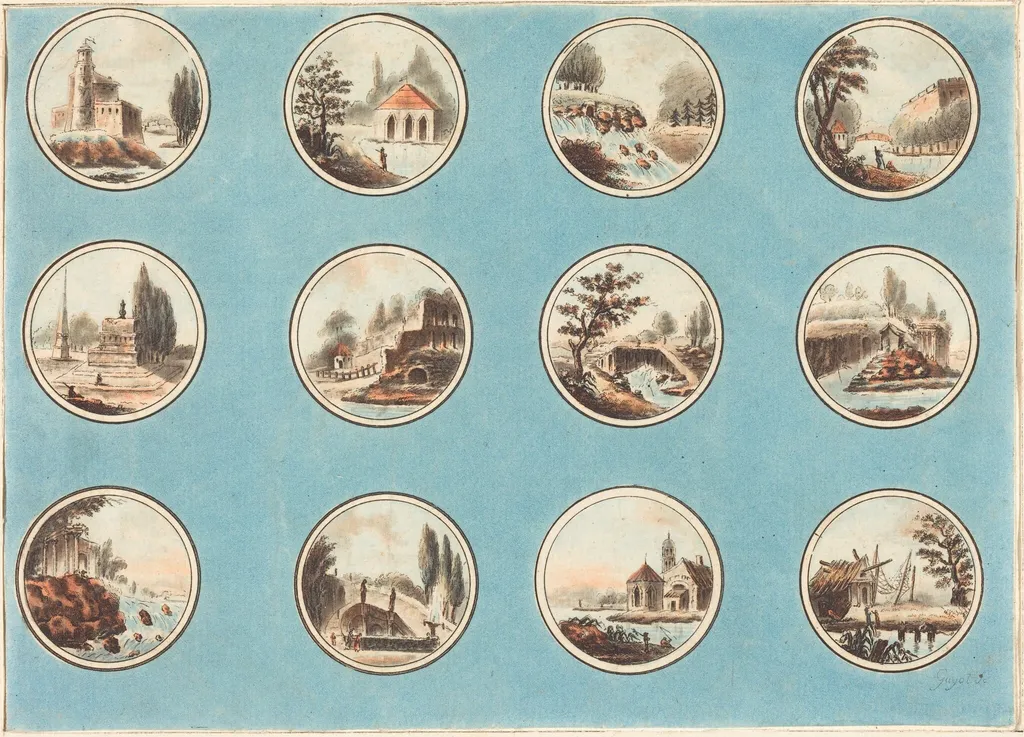
Twelve Roundels with Landscapes is an ink print by the Romanticist artist Laurent Guyot. It dates from 1788 and is held in the collection of the National Gallery of Art.
About this work
Overview
Each roundel, bordered in black, depicts a distinct scene—rolling hills, rivers, or clusters of buildings—rendered in subdued tones of brown, gray, and blue.
This print by Laurent Guyot, dated around 1788, presents twelve circular landscapes arranged in a grid of four rows. Each roundel, bordered in black, depicts a distinct scene—rolling hills, rivers, or clusters of buildings—rendered in subdued tones of brown, gray, and blue. Executed in color etching with additional wash and roulette work, the composition achieves a quiet, cohesive effect through its repetitive format and restrained palette.
Subject & Meaning
The twelve roundels offer varied landscapes, suggesting a celebration of nature’s diversity within a structured framework. While some scenes include architectural elements or waterways, others focus on undisturbed terrain. The repetition of circular forms may imply cycles or harmony, aligning with Romantic ideals of contemplation and emotional response to the natural world.
Technique & Style
Guyot employed color etching combined with wash manner and roulette on laid paper, later mounted onto wove paper. The technique allowed for delicate tonal gradations and fine detail, while the muted palette reinforces a sense of tranquility. The work reflects late 18th-century printmaking methods, balancing precision with atmospheric effects characteristic of Romantic landscape imagery.
History & Provenance
Created circa 1788, the print entered the collection of the National Gallery of Art, Washington. Its exact early ownership remains unrecorded, though its survival suggests it was valued as both a decorative and artistic work. The mounting on wove paper may indicate later preservation efforts, common for prints of this period.
Context
The late 18th century saw a growing interest in landscape as an independent subject, particularly within Romanticism. Guyot’s roundels reflect this shift, moving away from grand historical or mythological themes toward intimate, evocative scenes. The format also echoes decorative traditions, where repeated motifs served both aesthetic and functional roles in interior spaces.
Artist & collection


 Gilet décor Louis Gillet parlant avec 2 paysans et leur fille, projets de broderies de gilet, XVIIIème siècle
 The Four Seasons
 Thirteen sketches for Tapestry Cartoons
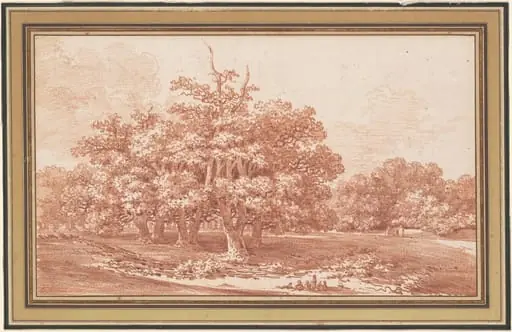 The Carrefour de l'Aiguille in the Forest of Fontainebleau
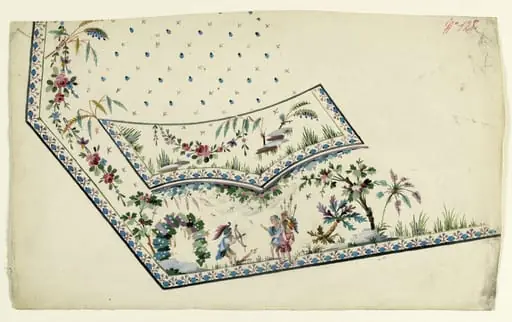 Gilet décor de paysage avec guerriers, projets de broderies de gilet, XVIIIème siècle
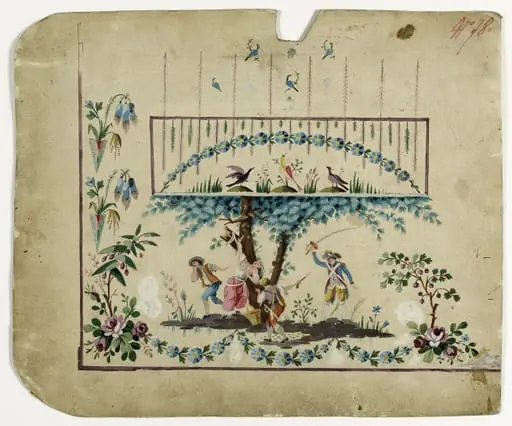 Gilet décor Louis Gillet délivrant une paysanne, projets de broderies de gilet, XVIIIème siècle
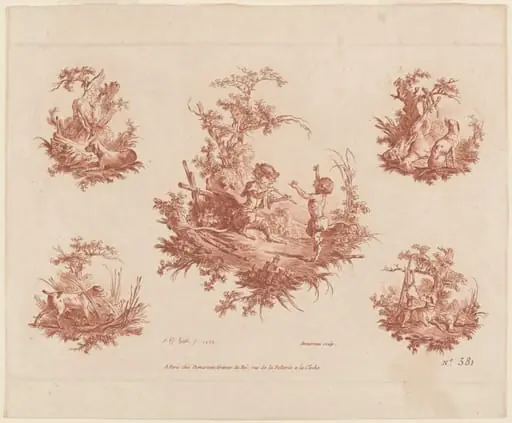 Singerie with Four Vignettes of Dogs Hunting
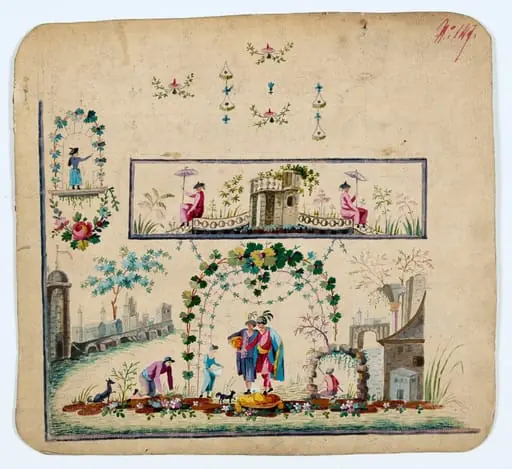 Gilet avec personnages traversant la rivière, projets de broderies de gilet, XVIIIème siècle
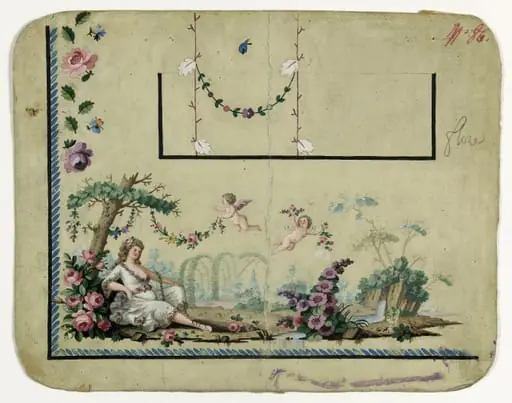 Gilet décor la déesse Flore dans un paysage, projets de broderies de gilet, XVIIIème siècle
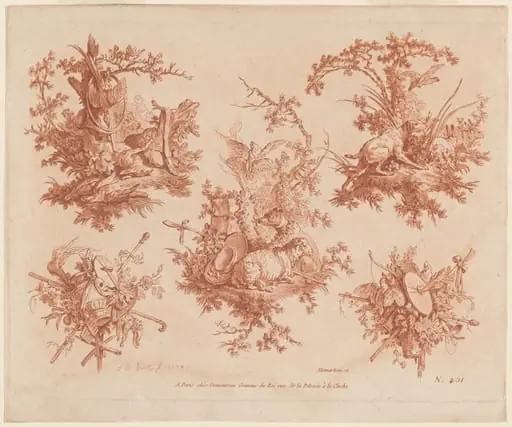 Five Trophies with Themes of Hunting, Love, and Folly
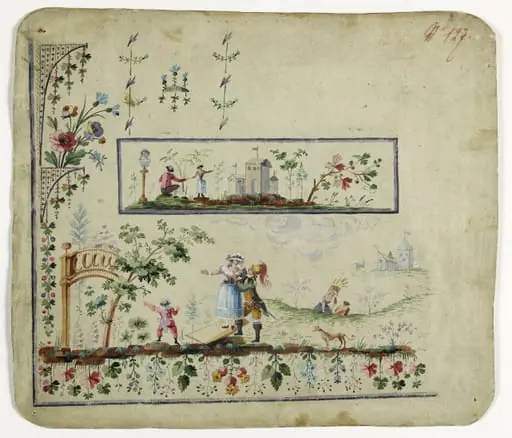 Gilet décor séduction entre un officier et une paysanne, projets de broderies de gilet, XVIIIème siècle
 Gilet décor couple avec enfants, projets de broderies de gilet, XVIIIème siècle