Artwork
The Fish Monger
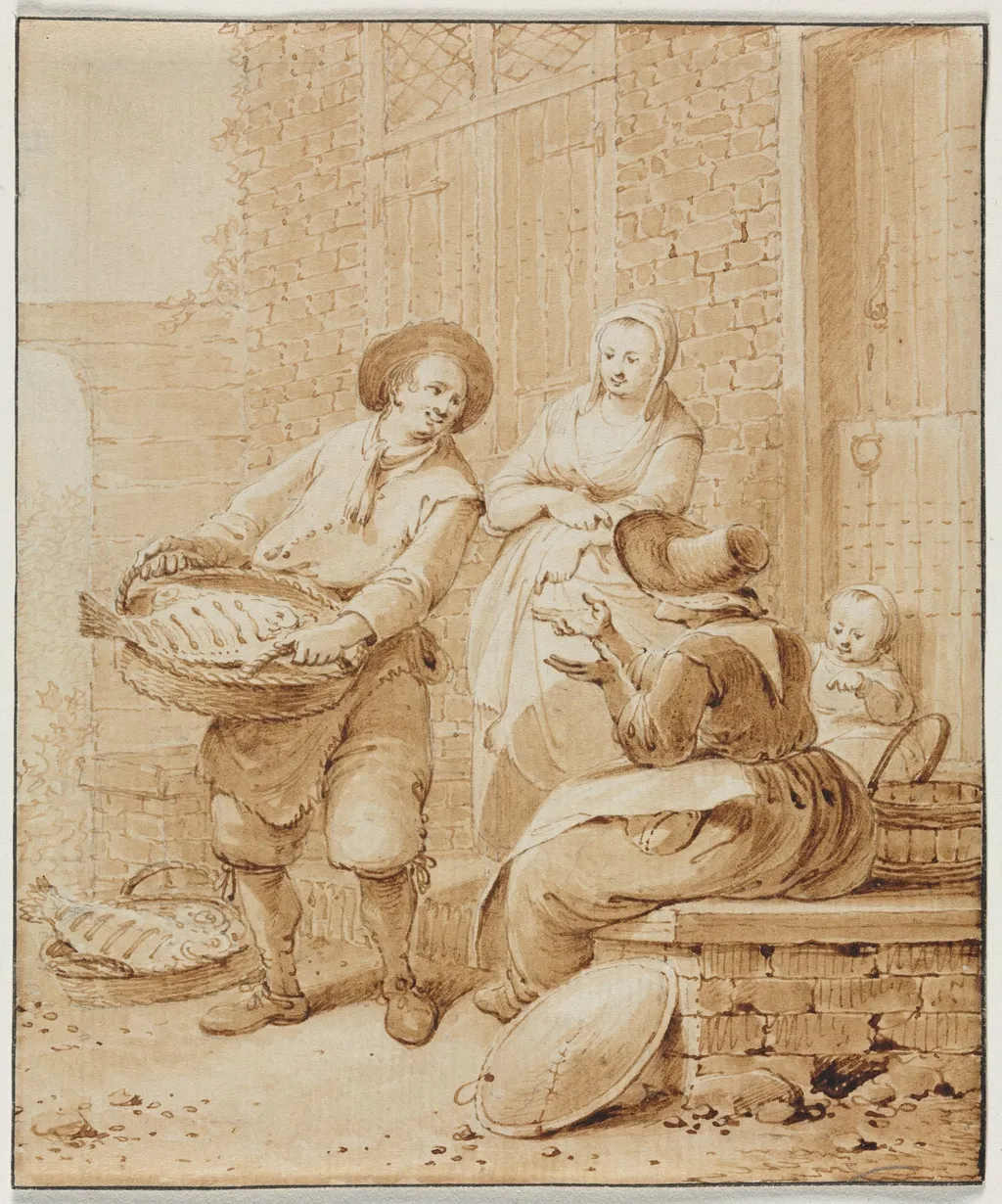
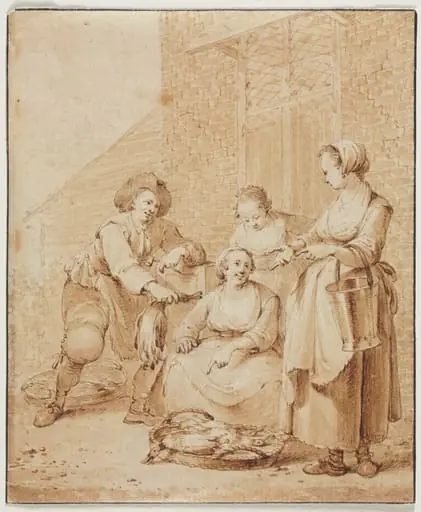
The Fish Monger is a drawing by the Romanticist artist Hendrik Meijer. It dates from 1775 and is held in the collection of the Cleveland Museum of Art.
About this work
Overview
The work is part of the collection at The Cleveland Museum of Art, where it is preserved as an example of 18th-century Dutch genre drawing.
The Fish Monger is a pencil and ink drawing by Hendrik Meijer, dated 1775. It depicts a quiet domestic moment in a working-class setting, centered on a fish vendor and a woman with an infant. The work is part of the collection at The Cleveland Museum of Art, where it is preserved as an example of 18th-century Dutch genre drawing. Its modest scale and intimate composition reflect a focus on everyday life rather than grand narrative.
Subject & Meaning
The scene portrays a fishmonger standing beside a bench where a woman sits with her infant. The child reaches toward the vendor, suggesting a moment of connection between stranger and family. The woman’s downward gaze implies quiet attention, possibly to the child or the exchange underway. The image conveys ordinary human interaction without sentimentality, emphasizing dignity in labor and domestic routine.
Technique & Style
Meijer employs subtle tonal contrasts to model form, using light and shadow to define the figures against a textured brick wall. The clothing and surfaces are rendered with delicate hatching and soft gradations, avoiding sharp outlines. Warm browns and beiges dominate, with the woman’s white headscarf and the baby’s garment providing gentle contrast. The chiaroscuro enhances spatial depth without dramatic effect, grounding the scene in quiet realism.
History & Provenance
Created in 1775, the drawing entered The Cleveland Museum of Art’s collection through documented acquisition, though its earlier ownership remains unrecorded. It is one of few surviving works by Hendrik Meijer, a lesser-known Dutch artist active in the late 18th century. Its preservation suggests it was valued by collectors for its intimate observation of daily life, though it never achieved widespread recognition during Meijer’s lifetime.
Context
In late 18th-century Holland, genre scenes depicting market life and working families gained traction among artists and patrons. Meijer’s drawing aligns with this trend, reflecting a broader cultural interest in the dignity of labor and the quiet rhythms of urban existence. Unlike grand historical paintings, such works offered a grounded view of society, often overlooked by academic traditions of the time.
Legacy
The Fish Monger remains a quiet testament to the observational skill of a minor Dutch draftsman. While Meijer’s oeuvre is limited, this work contributes to the understanding of how everyday scenes were rendered with sensitivity in the pre-industrial era. It stands as a representative example of genre drawing that valued authenticity over spectacle, influencing later studies of social realism in Dutch art.
Artist & collection

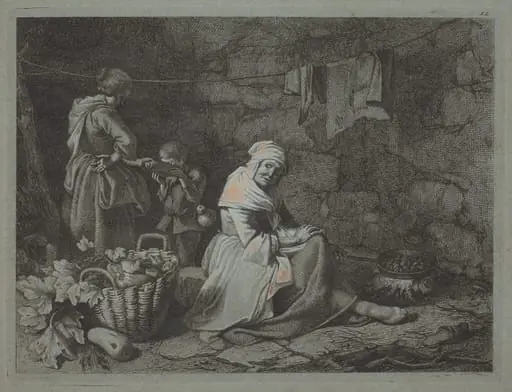 Interior of a House
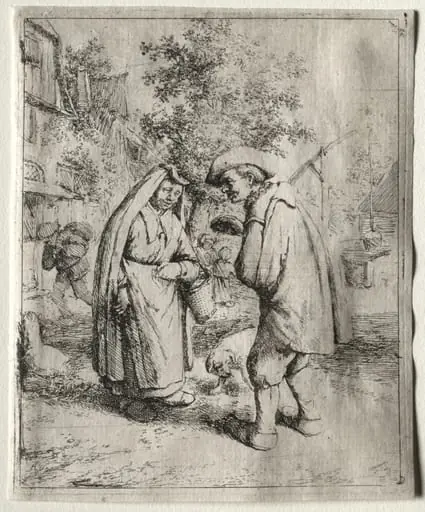 Man Conversing with a Woman
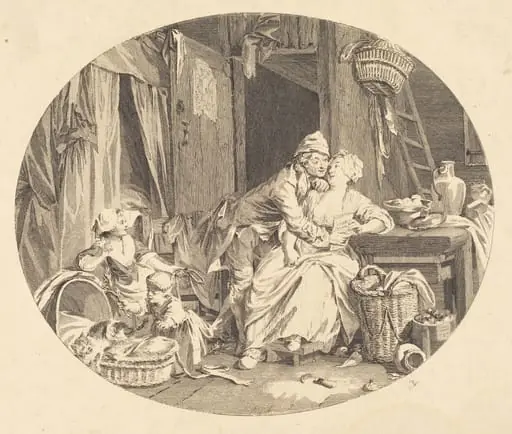 La Félicité villageoise
 The Dancing Dog
 Scene in a tavern
 The fiddler and the hurdy-gurdy boy
 Market Scene with a Fantastic Sculpture
 Rose et Colas
 The Tale of the Cooper's Wife
 The Spectacle Seller
 The Dozing Fishmonger (Le marchand de poissons endormie)
 The Poultry Woman