Artwork
Untitled
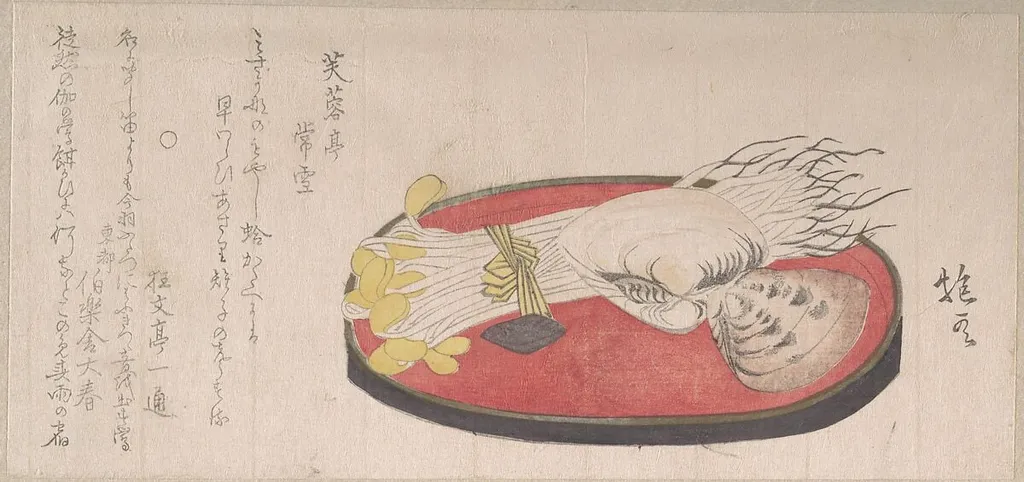
Untitled is an ink print by the Baroque artist Hōyū. It dates from 1800 and is held in the collection of the Metropolitan Museum of Art.
About this work
Overview
This woodblock print, part of a small album of surimono, was produced around 1800 by the artist Hōyū. Created with ink and subtle color on paper, it belongs to a genre favored for private, seasonal distributions rather than public sale. The work is currently held in the collection of The Metropolitan Museum of Art, where it is preserved as an example of early 19th-century Japanese printmaking.
Subject & Meaning
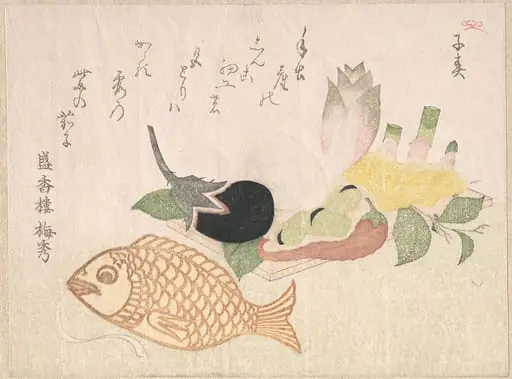
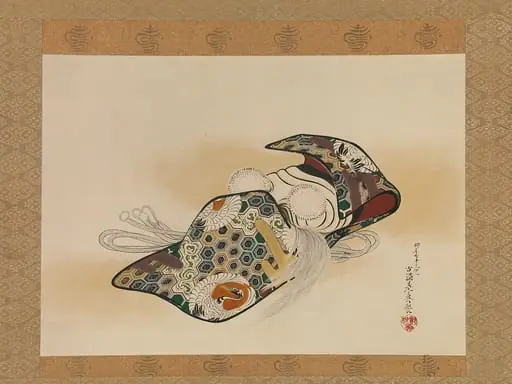
The composition presents a modest still life: a slender white fish resting on a red tray, accompanied by yellow vegetables.
The composition presents a modest still life: a slender white fish resting on a red tray, accompanied by yellow vegetables. These elements suggest a seasonal offering, possibly linked to New Year or ceremonial dining customs. The restrained selection of ingredients implies quiet reverence for daily fare, a common theme in surimono that elevates ordinary objects through careful arrangement and symbolic association.
Technique & Style
Hōyū employed clean, precise lines and flat areas of color typical of surimono, emphasizing clarity over realism. The fish and vegetables are rendered with minimal detail, their forms defined by bold contours. The light beige background serves as a neutral field, allowing the red tray and yellow vegetables to stand out with quiet contrast. The print’s simplicity reflects the genre’s focus on elegance rather than elaborate decoration.
History & Provenance
The print originated as one of several in a privately commissioned album, likely produced for literary or poetic circles. Surimono were often distributed as New Year gifts among patrons and artists, making them rare and personal. This particular sheet entered the Metropolitan Museum of Art’s collection through documented acquisitions, preserving its context within a larger set of works from the same period.
Context
Surimono emerged in the late 18th century as luxury prints for elite audiences, combining poetry, imagery, and fine printing techniques. Unlike mass-produced ukiyo-e, they were limited in number and often commissioned to celebrate events or literary achievements. Hōyū’s work fits within this tradition, using restrained visual language to evoke seasonal and cultural rituals through everyday objects.
Legacy
Though Hōyū’s output was modest and largely confined to private print albums, this work contributes to the understanding of Edo-period print culture beyond commercial ukiyo-e. Its preservation in major collections highlights the artistic value placed on intimate, poetic compositions. The print remains a quiet testament to the aesthetic of restraint and seasonal awareness in early 19th-century Japan.
Artist & collection

 Untitled
 Untitled
 Untitled
 小大君 「藤房本 三十六歌仙絵巻」 断簡|The Poet Koōgimi, from the “Fujifusa Version” of Thirty-six Poetic Immortals (Fujifusa-bon Sanjūrokkasen emaki)l
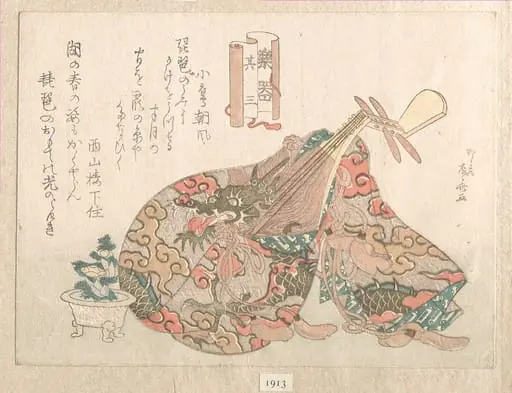 「楽器其三」|Biwa with Brocade Cover, from the series Musical Instruments
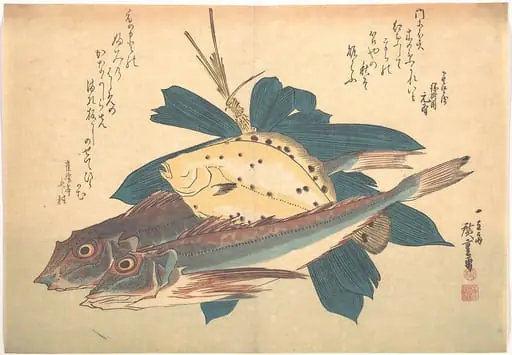 魚づくし かれい かながしらに笹|Kanagashira and Karei Fish, from the series Uozukushi (Every Variety of Fish)
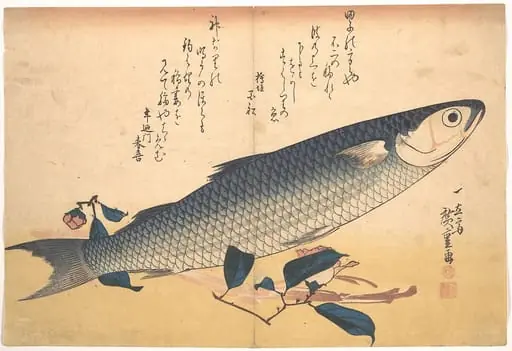 魚づくし ぼらにうど|Bora Fish with Camellia, from the series Uozukushi (Every Variety of Fish)
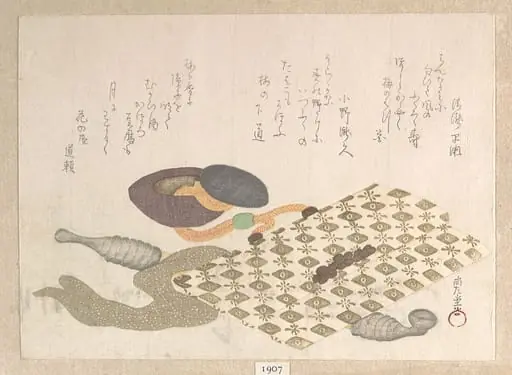 窪俊満画 煙草入れ袋と煙管『春雨集』 摺物帖|Pipe and Tobacco PouchFrom the Spring Rain Collection (Harusame shū), vol. 1
 柴田是真作 翁面図|Mask for the Noh Play Okina