Artwork
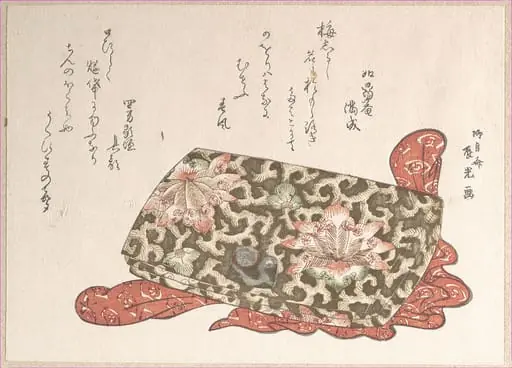
「楽器其三」|Biwa with Brocade Cover, from the series Musical Instruments
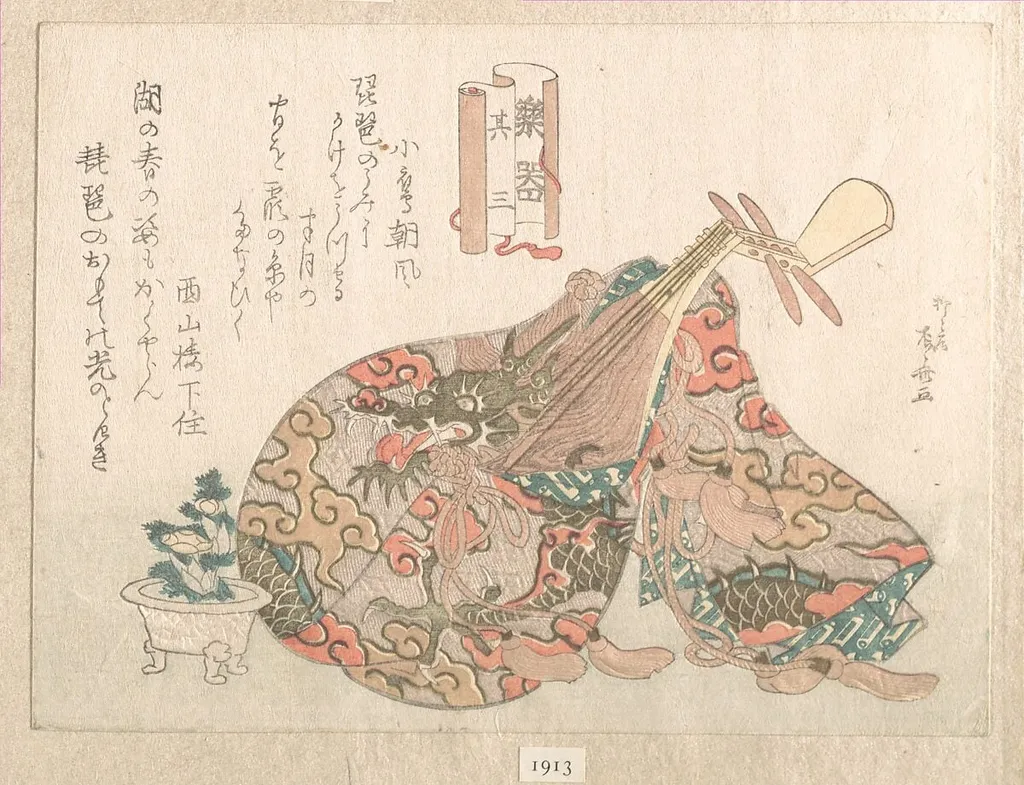
「楽器其三」|Biwa with Brocade Cover, from the series Musical Instruments is an ink print by the Romanticist artist Ryūryūkyo Shinsai. It dates from 1808 and is held in the collection of the Metropolitan Museum of Art.
About this work
Overview
Rendered in ink and color on paper, it belongs to the surimono genre—privately commissioned prints often produced for literary or seasonal occasions.
Created around 1808 by Ryūryūkyo Shinsai, this woodblock print is one of several in a series dedicated to traditional Japanese musical instruments. Rendered in ink and color on paper, it belongs to the surimono genre—privately commissioned prints often produced for literary or seasonal occasions. The composition centers on a biwa, its surface draped in an ornate brocade, surrounded by subtle domestic elements that suggest quiet contemplation.
Subject & Meaning
The biwa, a pear-shaped lute historically linked to narrative storytelling and courtly performance, is depicted not in use but as an object of reverence. Wrapped in a richly patterned textile, it is accompanied by a potted plant and a rolled scroll inscribed with poetry. Together, these elements evoke a meditative atmosphere, aligning the instrument with themes of elegance, transience, and the fusion of music and literature in Edo-period aesthetics.
Technique & Style
Shinsai employed fine, controlled lines to render the brocade’s intricate swirls and floral motifs in red, green, and gold, suggesting texture through subtle gradations rather than heavy shading. The print’s delicate color palette and precise detailing reflect the refined craftsmanship typical of surimono. The scroll’s calligraphy, though not legible in reproduction, integrates literary content visually, reinforcing the print’s intellectual and artistic intent.
History & Provenance
The print was produced during the late Edo period, a time when surimono flourished among literati and patrons seeking art that blended poetry, music, and visual refinement. It entered the collection of The Metropolitan Museum of Art through documented acquisitions, likely part of a broader 20th-century interest in Japanese prints. Its survival in good condition reflects its status as a carefully preserved private commission rather than a mass-produced item.
Context
This print emerged within a cultural milieu where musical instruments were not merely tools but symbols of cultivated taste. The series to which it belongs reflects a broader Edo-period fascination with the material culture of the arts. By pairing the biwa with a plant and poetic scroll, Shinsai situates the instrument within a domestic, contemplative space, aligning it with the values of wabi-sabi and the literati ideal of refined solitude.
Legacy
Ryūryūkyo Shinsai’s work, though less widely known than that of his contemporaries, remains significant for its quiet precision and integration of literary elements into visual form. This print, along with others in the series, contributes to the understanding of how Japanese artists elevated everyday objects into vehicles for poetic expression. It continues to inform scholarly study of Edo-period print culture and the intersection of music and visual art.
Artist & collection

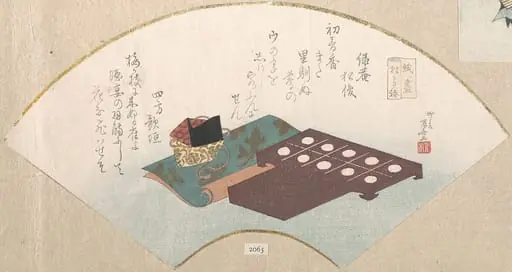 Untitled
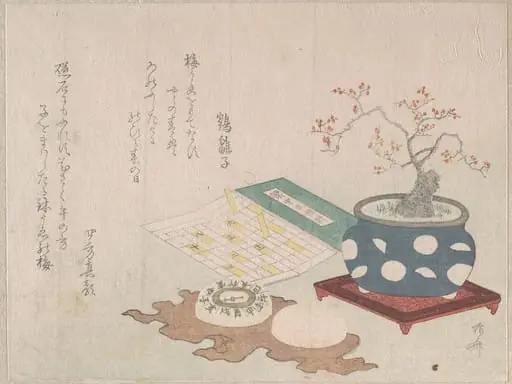 鉢梅、懐中日時計、羅針盤|Bonsai Plum, Compass, and Pocket Sundial with Design of Calendar, from Spring Rain Surimono Album (Harusame surimono-jō, vol. 3)
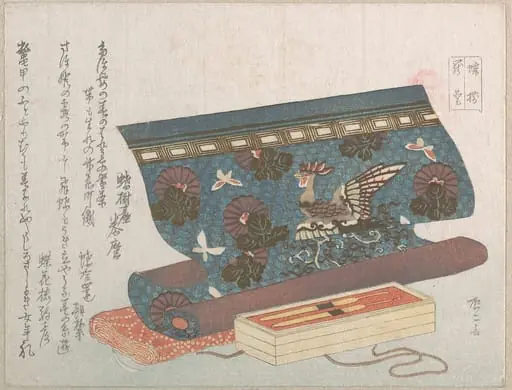 『蝶揃・寵愛』帯と簪|Roll of Cloth for an Obi and Tortoise-shell Hair Ornaments (“Presents for One’s Beloved”), from the Butterfly Series, from Spring Rain Surimono Album (Harusame surimono-jō, vol. 3)
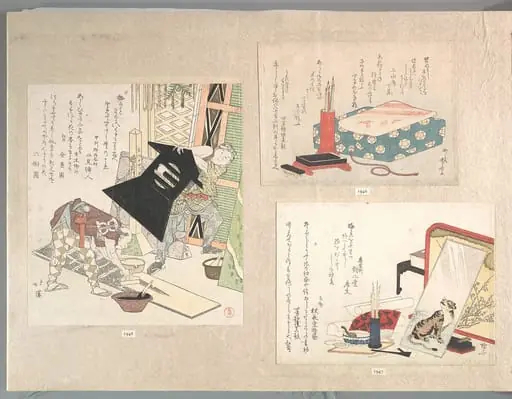 衝立、虎図、文具一式|Desk Screen, Writing Set, Painting of Tiger, and Mounting Paraphernalia, from Spring Rain Surimono Album (Harusame surimono-jō, vol. 1)
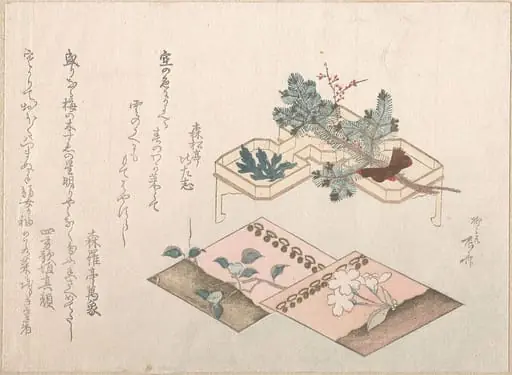 『春雨集』 摺物帖柳々居辰斎画 若松|Spring Rain Collection (Harusame shū), vol. 2: Pine Shoots and Accoutrements for New Year’s Celebrations
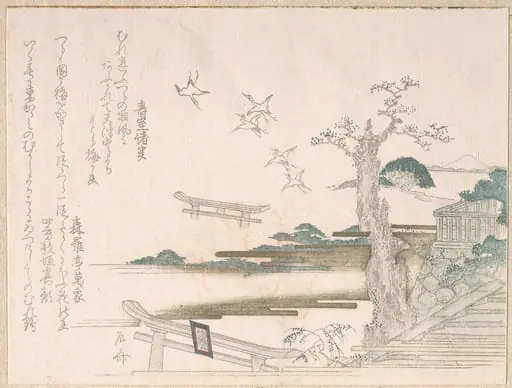 『春雨集』 摺物帖柳々居辰斎画 鎌倉の鶴岡八幡宮に鶴|Spring Rain Collection (Harusame shū), vol. 2: Cranes at Tsurugaoka Hachimangō Shrine in Kamakura
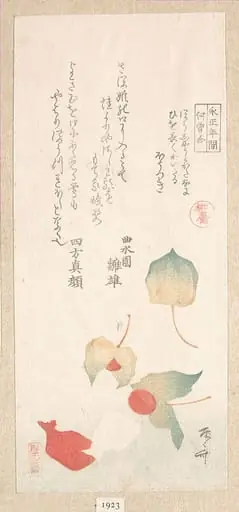 Untitled
 Untitled
 Untitled
 Untitled
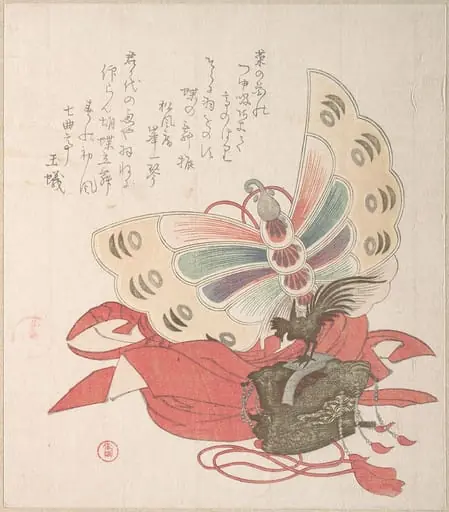 『春雨集』 摺物帖窪俊満画 胡蝶舞の衣装|Spring Rain Collection (Harusame shū), vol. 2: Costume for the Butterfly Dance (Kochō no mai)
 Untitled
 娘道成寺図の錦絵|Print of a Kabuki Dancer from the Maiden of the Dōjōji Temple (Musume Dōjōji)
 Untitled
 Untitled
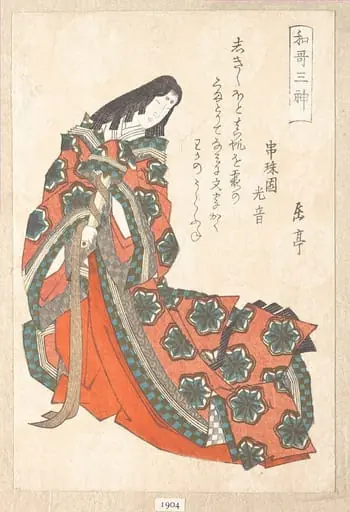 八島岳亭画 『和歌三神』 衣通姫|Sotoori-hime (early 5th century), One of the Three Gods of PoetryFrom the Spring Rain Collection (Harusame shū), vol. 1
 Untitled
 Untitled
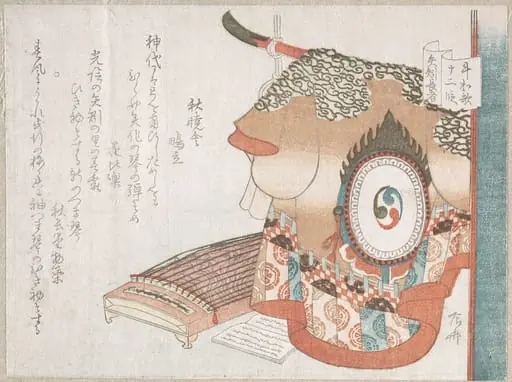 「牛和歌十二段矢矧長者」|Dance Robe and Koto (Zither) Representing the Wealthy Man of Yahagi from the Jōruri Play Ushiwaka (Minamoto no Yoshitsune)