Artwork
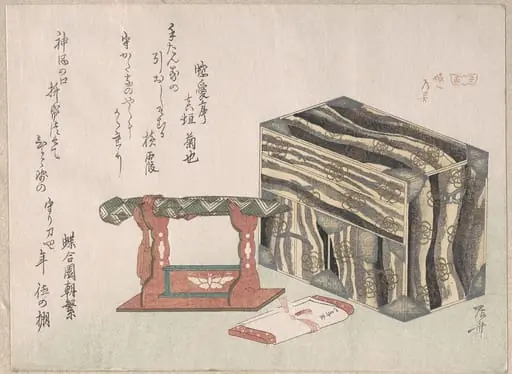
判子と赤肉箱|Seals and a Carved Lacquer Container for Seal Ink
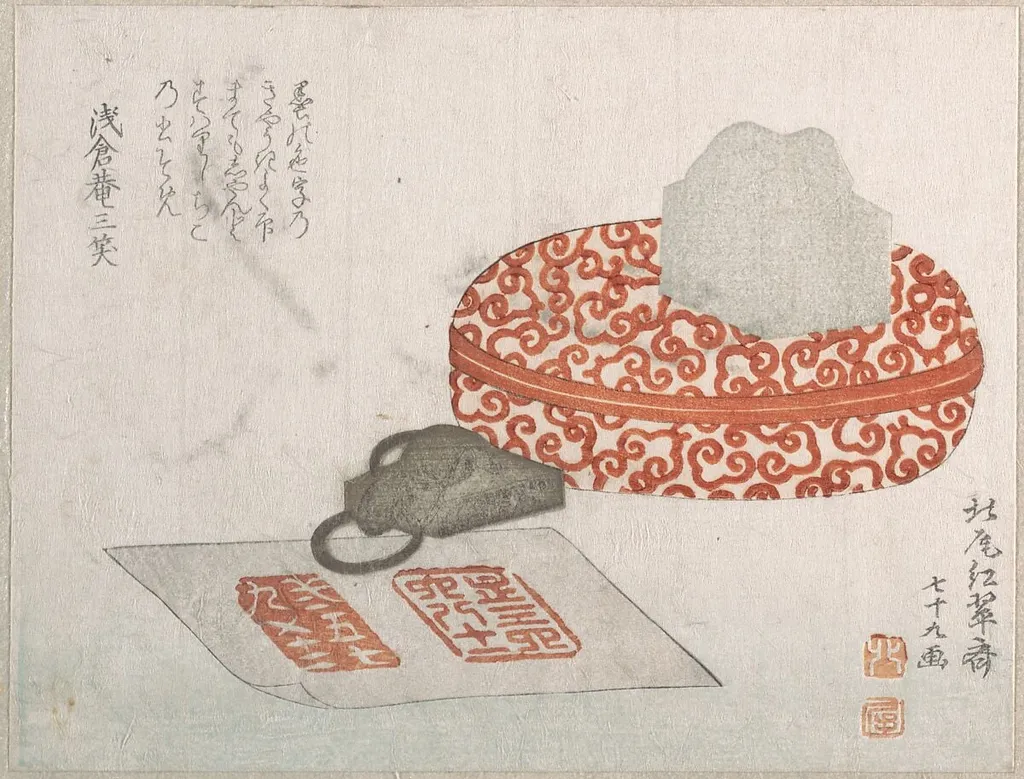
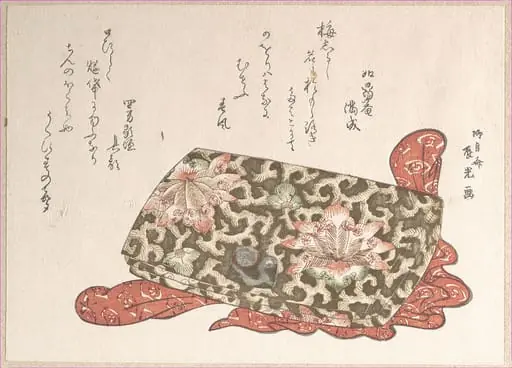
判子と赤肉箱|Seals and a Carved Lacquer Container for Seal Ink is an ink print by the Romanticist artist Kitao Shigemasa. It dates from 1817 and is held in the collection of the Metropolitan Museum of Art.
About this work
Overview
This woodblock print, titled 'Seals and a Carved Lacquer Container for Seal Ink,' is part of a surimono album created by Kitao Shigemasa in 1817.
This woodblock print, titled 'Seals and a Carved Lacquer Container for Seal Ink,' is part of a surimono album created by Kitao Shigemasa in 1817. Produced in ink and color on paper, it belongs to a refined genre of Japanese prints commissioned by poetry societies. The composition centers on two objects associated with seal use: a lacquered ink container and a metal seal holder. Its subdued palette and precise detail reflect the aesthetic values of late Edo-period elite culture.
Subject & Meaning
The print depicts a red-and-white lacquered box with a swirling pattern, likely used to store seal paste, alongside a metal seal with a ring and flat face for imprinting. A gray form atop the lid may represent a decorative knob or seal emblem. These objects, though mundane, carry cultural weight as tools of personal and official identity in Edo Japan. Their quiet arrangement suggests contemplation, aligning with the poetic and ceremonial contexts in which surimono were exchanged.
Technique & Style
Executed in fine woodblock printing, the image employs delicate lines and restrained color—primarily red, white, and gray—to render textures of lacquer and metal with subtle gradations. The background is left largely blank, enhancing focus on the objects. Japanese script appears along the left edge, likely a poetic inscription or colophon. The composition emphasizes clarity and restraint, characteristic of surimono’s intimate, non-commercial nature and its appeal to connoisseurs.
History & Provenance
Created in 1817, this print was produced as part of a limited-run surimono album, likely commissioned by a literary group for seasonal or ceremonial distribution. It entered the collection of The Metropolitan Museum of Art through documented acquisition, preserving its original context as a privately circulated artwork. Unlike mass-produced ukiyo-e, surimono were rarely sold publicly, making surviving examples rare and valuable for understanding Edo-period intellectual circles.
Context
Surimono prints emerged in the late 18th century as luxury items for poets, scholars, and artists, often distributed during New Year or other gatherings. They combined visual art with literary verse, reflecting refined tastes within urban elite circles. Unlike commercial ukiyo-e, they avoided dramatic narratives, favoring quiet, symbolic subjects like this one. The emphasis on craftsmanship and materiality here aligns with broader Edo-period appreciation for refined objects and understated beauty.
Legacy
This print contributes to the understanding of Edo-period print culture beyond popular imagery, highlighting the role of art in private, intellectual exchange. Its preservation in major collections underscores the historical value of surimono as artifacts of cultural sophistication. While not widely known outside specialist circles, it remains a key example of how art and literature intertwined in daily ritual, influencing later Japanese aesthetic traditions.
Artist & collection
Artist
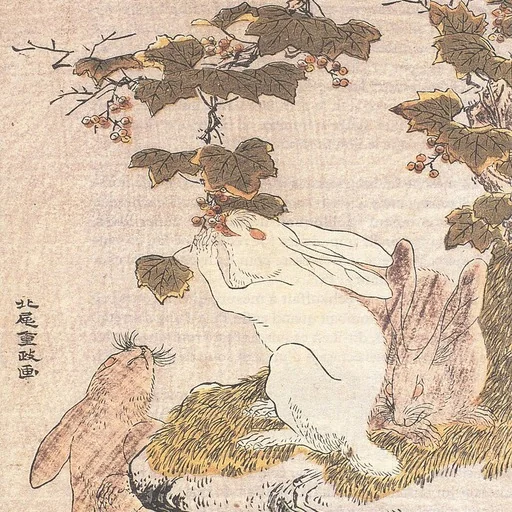
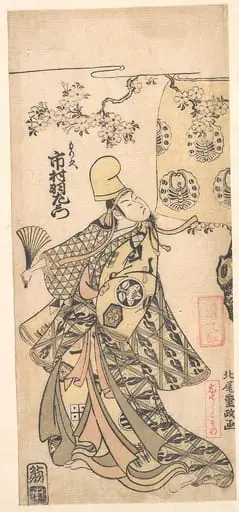
Kitao Shigemasa (北尾 重政; 1739 – 8 March 1820) was a Japanese ukiyo-e artist from Edo.


 Untitled
 Untitled
 Untitled
 Untitled
 Untitled
 Untitled
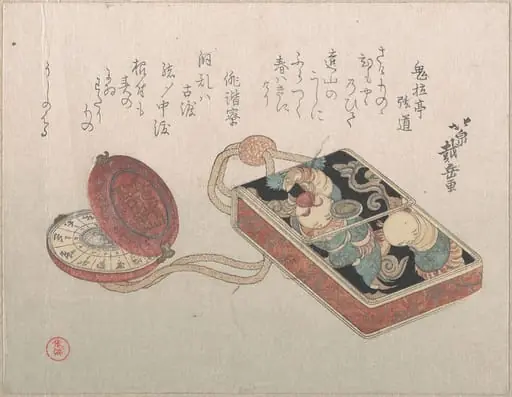 胴乱印籠と懐中時計根付『春雨集』 摺物帖|Dōran (Square Leather Box Used as an Inrō) with a Watch as a NetsukeFrom the Spring Rain Collection (Harusame shū), vol. 3
 Untitled
 Untitled
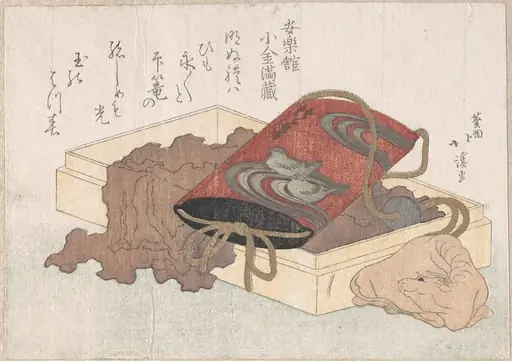 印籠と牛根付『春雨集』 摺物帖|Lacquer Inrō with Waterbirds and Ox-shaped Netsuke in a BoxFrom the Spring Rain Collection (Harusame shū), vol. 3