Artwork
Griff
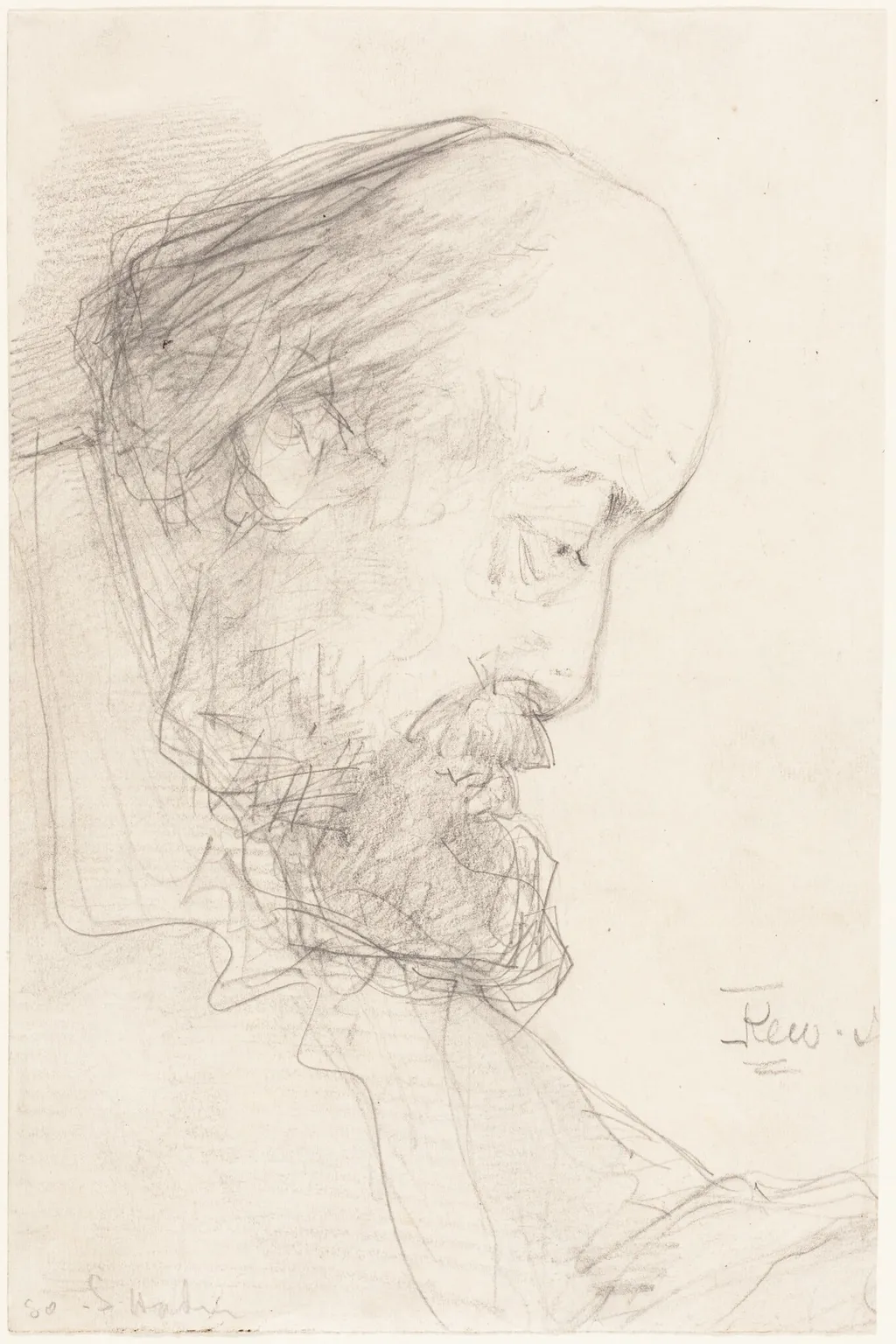
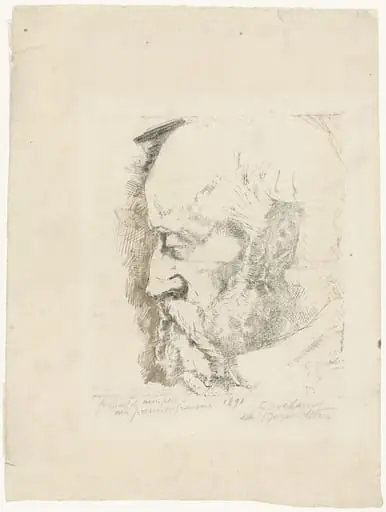
Griff is a graphite drawing by the Impressionist artist Francis Seymour Haden. It dates from 1864 and is held in the collection of the National Gallery of Art.
About this work
Overview
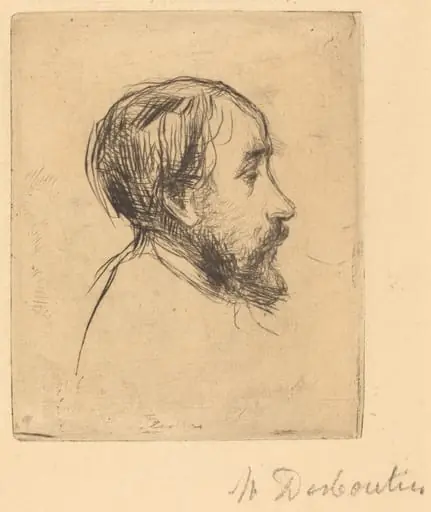
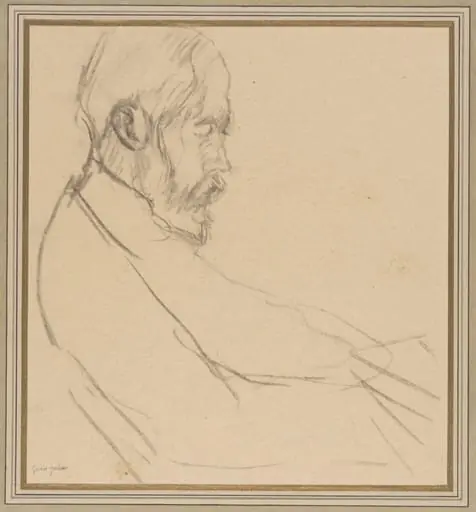
Created around 1864, this graphite drawing by Francis Seymour Haden captures a fleeting portrait of a head turned in profile.
Created around 1864, this graphite drawing by Francis Seymour Haden captures a fleeting portrait of a head turned in profile. Executed on wove paper, the work bears the marks of rapid, spontaneous observation. Its unrefined lines and absence of finish suggest it was made as a study rather than a formal portrait, reflecting the artist’s interest in capturing transient forms with minimal intervention.
Subject & Meaning
The subject is an anonymous figure, rendered without identifying features or context. The focus lies not in individual identity but in the act of seeing and recording a human form in motion. The turned head and simplified facial features emphasize posture and gesture over likeness, aligning with a broader 19th-century interest in the immediacy of human presence.
Technique & Style
Haden employed loose, undulating strokes to suggest volume and texture, particularly in the hair and neck. The graphite lines remain unblended and uneven, preserving the energy of the hand’s movement. There is no attempt at refinement or shading; instead, the drawing embraces its sketchlike quality, using minimal marks to imply form and structure.
History & Provenance
The drawing originates from Haden’s personal sketchbook practice during the 1860s, a period when he was actively engaged in printmaking and observational drawing. It was likely made in private, as part of his daily study routine. No public record of its early ownership exists, but it remains within the corpus of his known graphic works.
Context
In mid-19th-century Britain, artists increasingly turned to direct observation and informal sketches as tools for artistic development. Haden’s work reflects this shift, aligning with the Realist emphasis on unembellished representation. Such drawings were not intended for display but served as exercises in perception and technique, bridging studio practice and lived experience.
Legacy
This drawing exemplifies the value placed on preparatory work in 19th-century art. Though never meant for public exhibition, it reveals Haden’s commitment to capturing the essence of form through economy of line. Its preservation underscores a growing appreciation for the artistic integrity of sketches, influencing later generations’ understanding of the creative process.
Artist & collection


![Self-Portrait [recto], by Paul Cezanne](https://artifactworldgallery.com/img/paul-cezanne--self-portrait-recto--d76a05e14030ebd2-w320.webp)