Artwork
Self-Portrait at the Easel
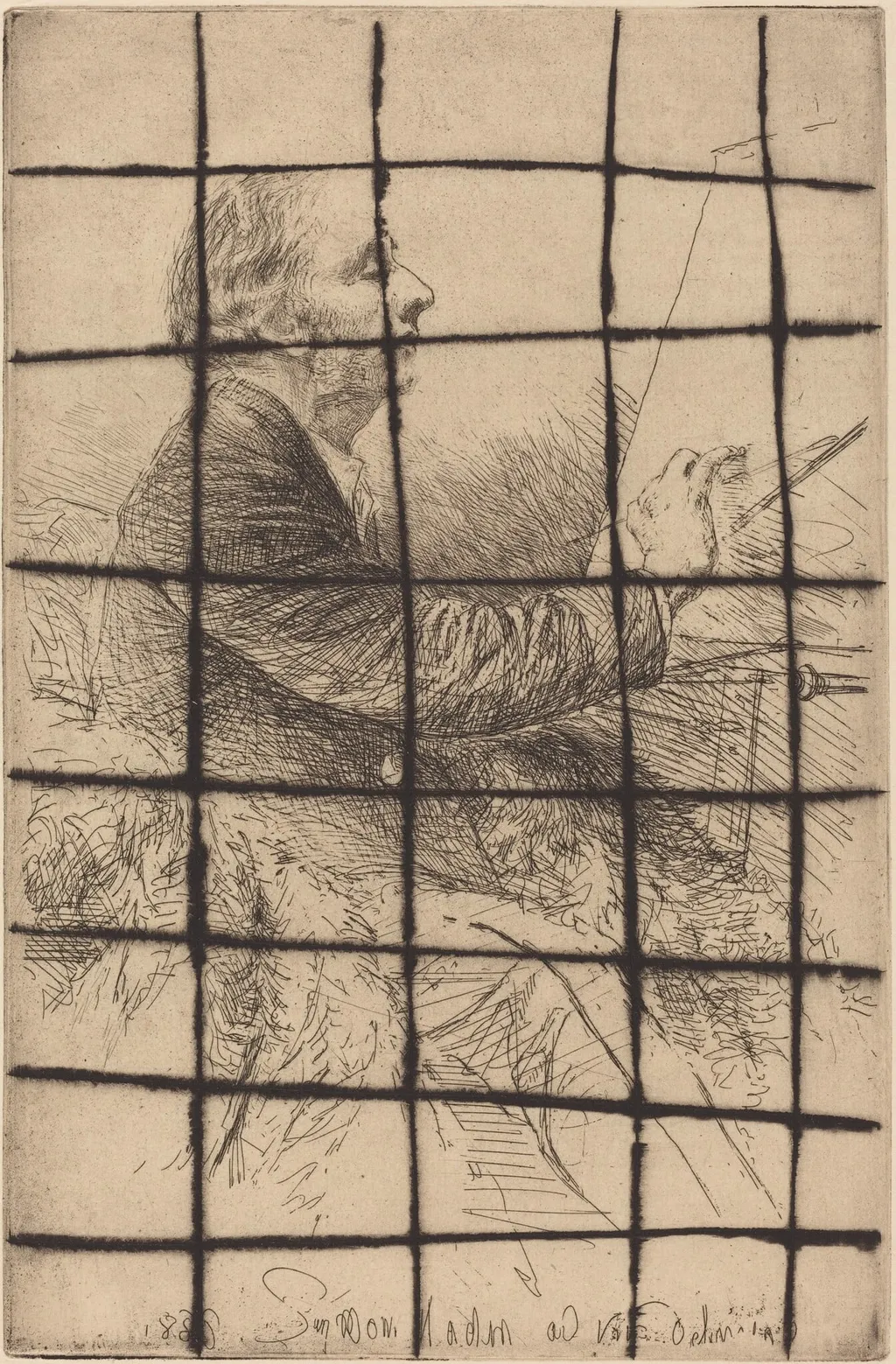
Self-Portrait at the Easel is an ink print by the Impressionist artist Francis Seymour Haden. It dates from 1883 and is held in the collection of the National Gallery of Art.
About this work
Overview
Francis Seymour Haden’s 1883 print titled *Self‑Portrait at the Easel* is a cancellation proof executed in etching combined with dry‑point on laid paper. The work consists of a series of small, loosely drawn compartments that together suggest a sketchbook spread, each compartment containing a fragment of the artist’s studio scene or ancillary studies.
Subject & Meaning
Within the grid, a figure is shown seated before an easel, engaged in drawing or painting, while adjacent squares contain bird motifs, feather sketches, and gestural marks. The juxtaposition of the working artist with these ancillary studies hints at the process of observation and the accumulation of visual notes that inform a finished composition.
Technique & Style
Haden employed dry‑point, incising the metal plate with a sharp needle to produce soft, velvety lines that retain a characteristic burr, alongside traditional etching methods. The laid paper’s textured surface and faint watermark amplify the impression of a personal sketchbook, while the rapid, sketch‑like strokes convey immediacy and spontaneity.
History & Provenance
Created as a cancellation proof—a test impression made to verify the plate’s state—this print reflects Haden’s meticulous approach to printmaking in the late nineteenth century. It remains a documented example of his self‑portraiture practice, circulating among collections that focus on British etching of the period.
Artist & collection


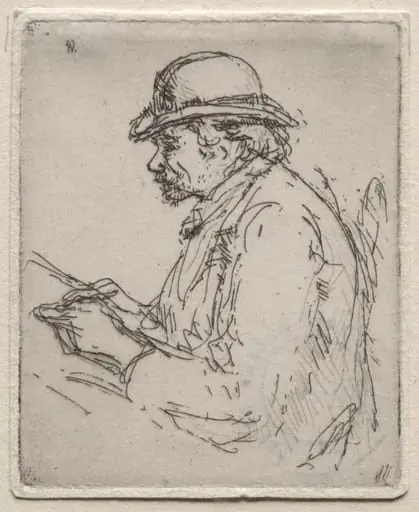 Paris: Café Artist
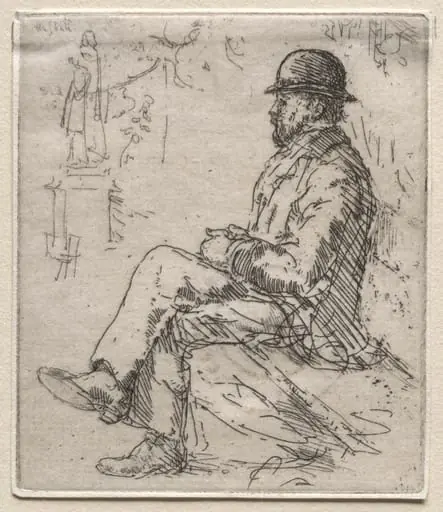 Paris: In the Luxembourg
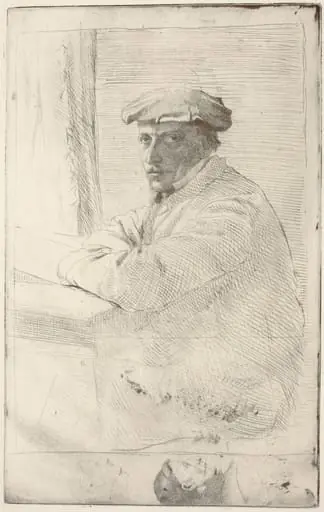 The Engraver Joseph Tourny (Le graveur Joseph Tourny)
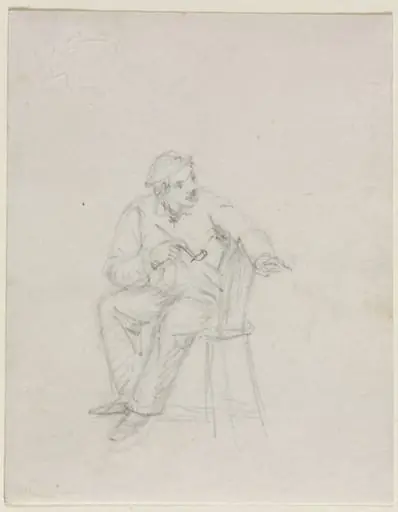 Man Smoking a Pipe
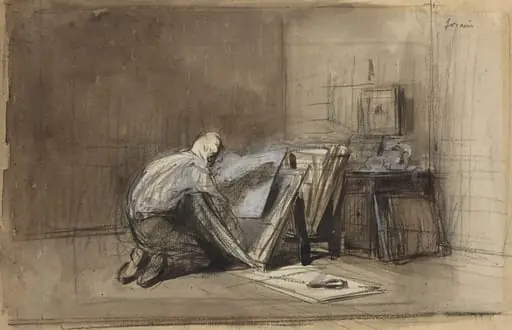 a) Print Connoisseur (recto); b) Sketch of Print Connoisseur (verso)
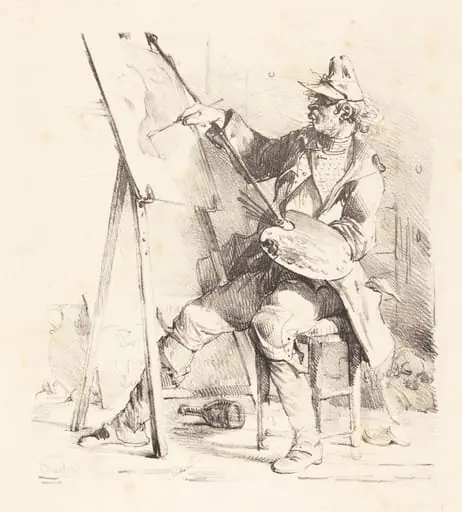 The Sign Painter (Le Peintre d'Enseignes)
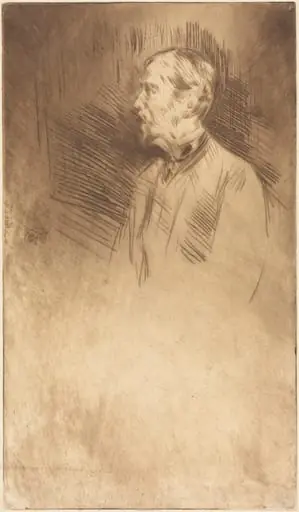 Lord Wolseley
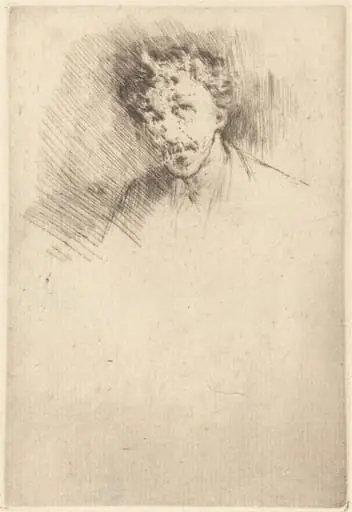 Whistler with the White Lock
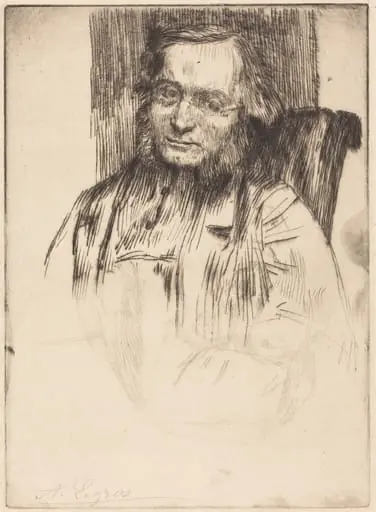 Edwin Edwards
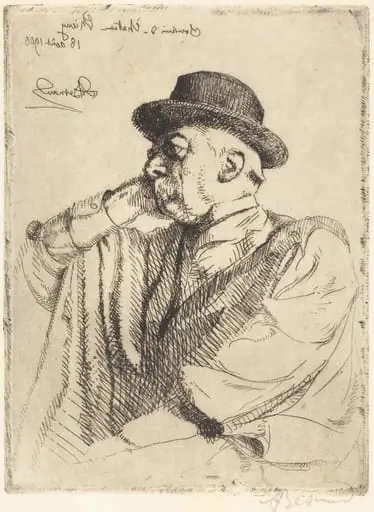 Edmond Pigalle
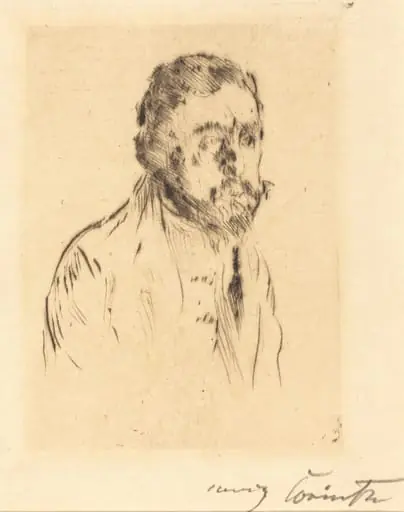 Bildnisstudie H. St. (Portrait Study of H. St.)