Artwork
The Towing Path
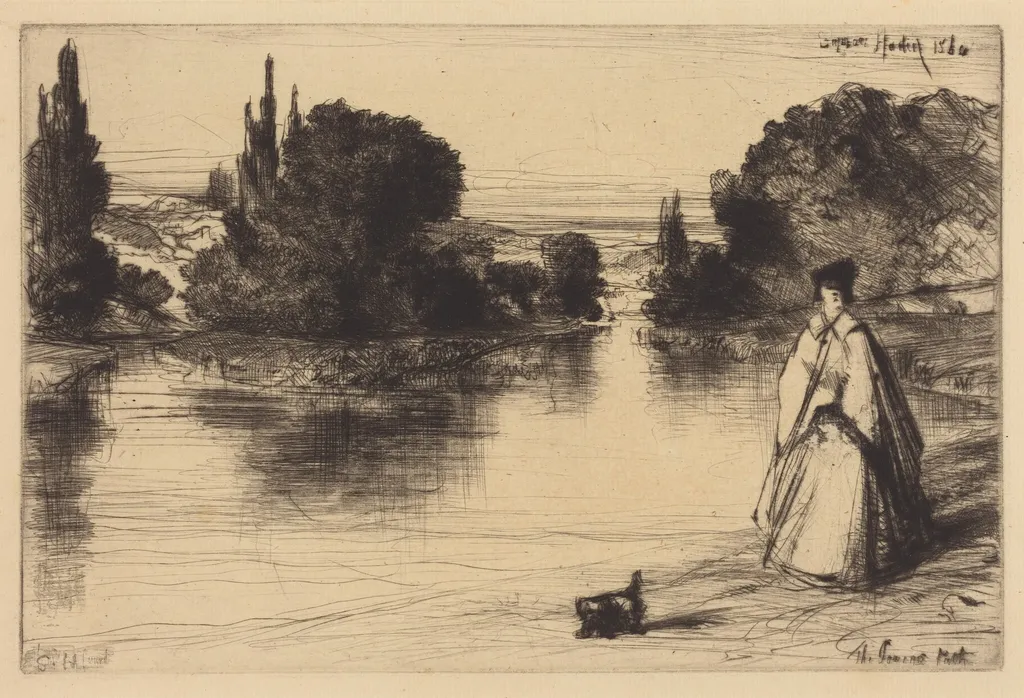
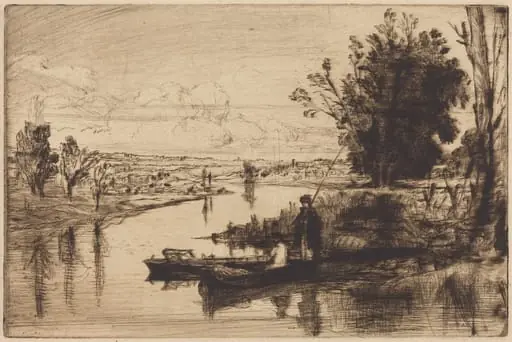
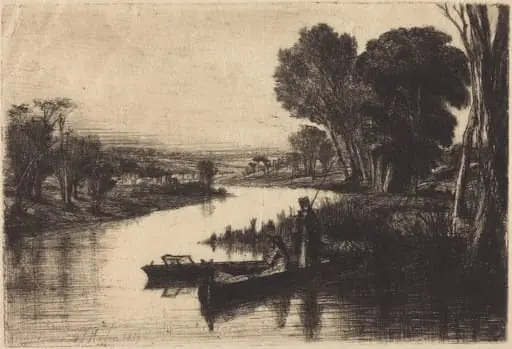
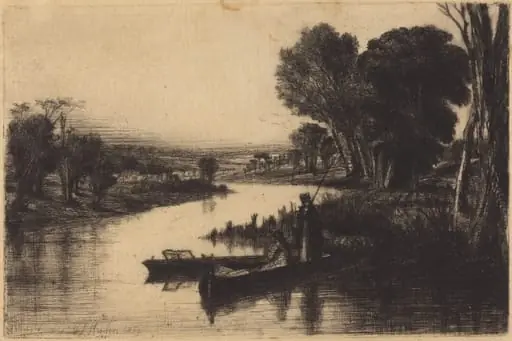
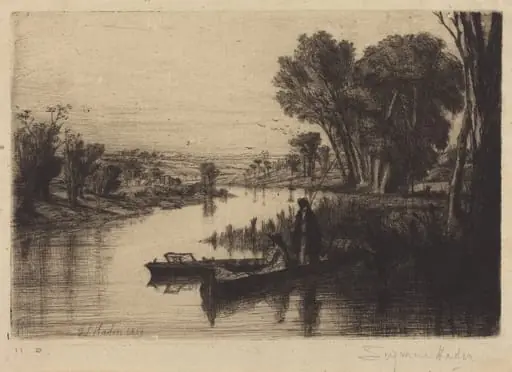
The Towing Path is an ink print by the Impressionist artist Francis Seymour Haden. It dates from 1864 and is held in the collection of the National Gallery of Art.
About this work
Overview
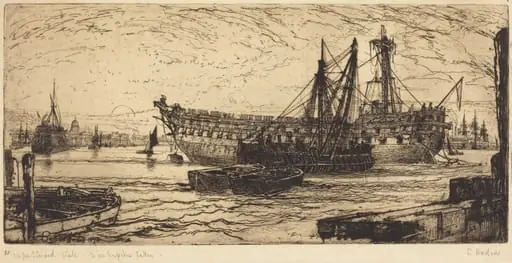
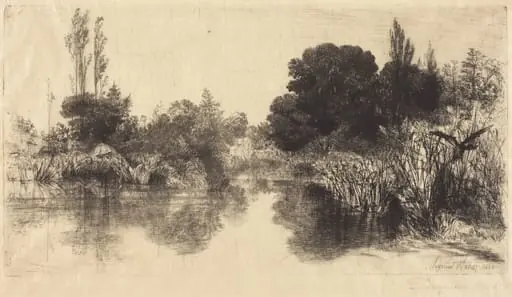
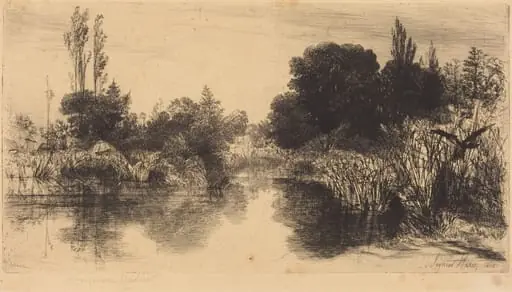
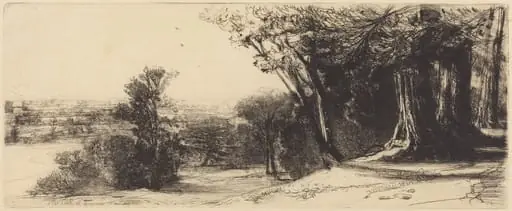
The Towing Path, executed in 1864, is a print by Francis Seymour Haden produced through a combination of etching and dry‑point on a copper plate. The work presents a solitary figure—a woman in a long coat—accompanied by a dog as they walk beside a waterway. Tall trees and shrubbery frame the path, while a dark, undulating river occupies the distance.
Subject & Meaning
The scene captures a quiet moment of everyday life, emphasizing the relationship between human and animal within a natural setting. The solitary figure, rendered in a simple, unadorned manner, suggests contemplation or routine travel along a towpath, a common feature of 19th‑century waterways used for pulling barges.
Technique & Style
The loose, scratchy marks give the composition an unfinished, expressive appearance that contrasts with the more controlled areas of the print.
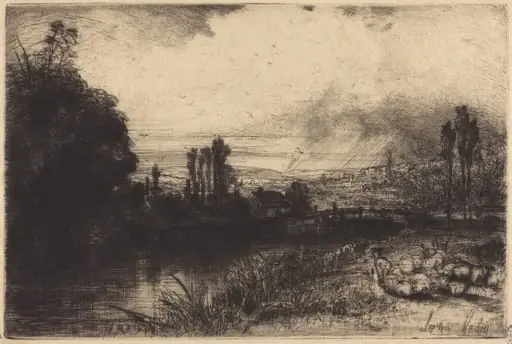
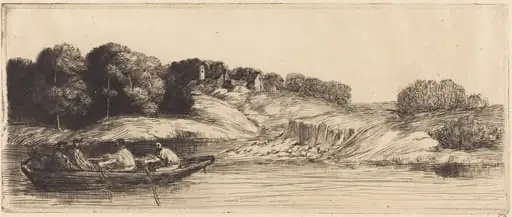
Haden employed dry‑point alongside traditional etching, incising fine, irregular lines directly into the copper surface. The resulting burr creates a characteristic roughness and a sense of immediacy, evident in the sketch‑like quality of the foliage and water. The loose, scratchy marks give the composition an unfinished, expressive appearance that contrasts with the more controlled areas of the print.
History & Provenance
Created during the mid‑1860s, The Towing Path reflects Haden’s interest in landscape and riverine subjects, a focus he shared with contemporaries in the British etching revival. The work remains documented as part of Haden’s early print output, and copies have been held in several public collections that specialize in 19th‑century printmaking.
Own this work as a print
Artist & collection