Artwork
Untitled
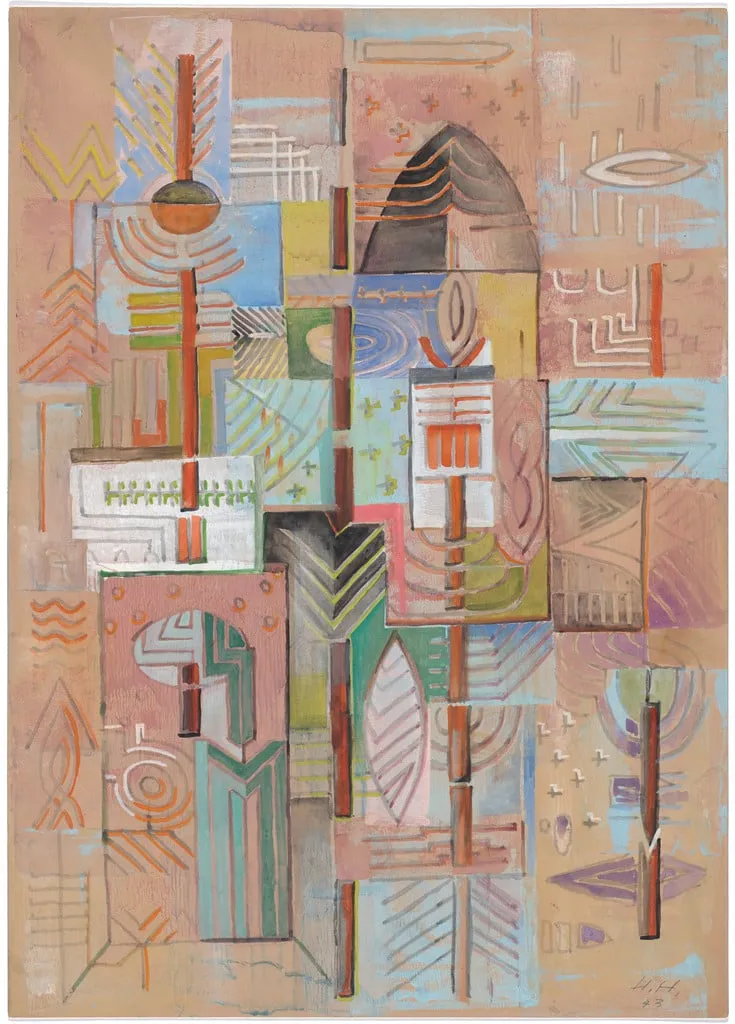
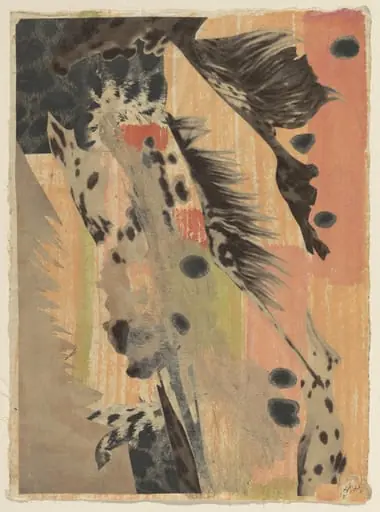
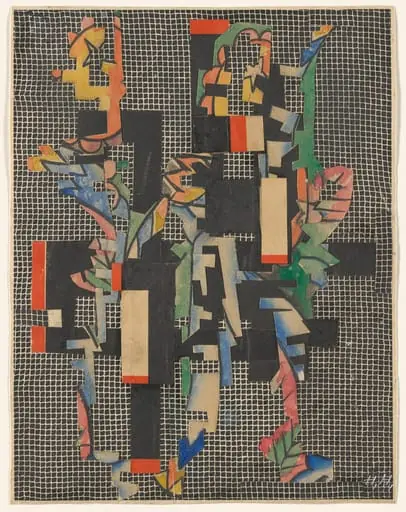
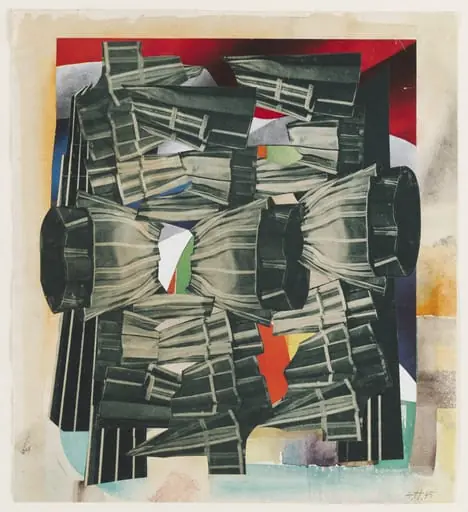
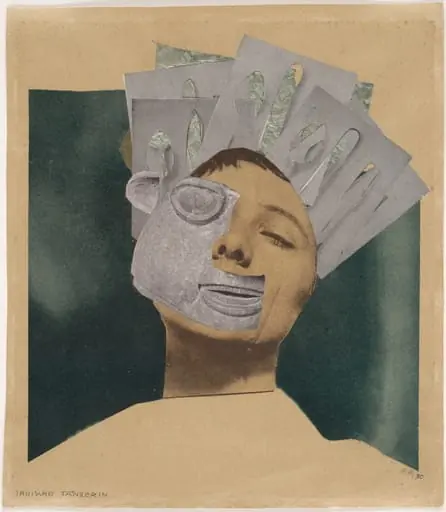
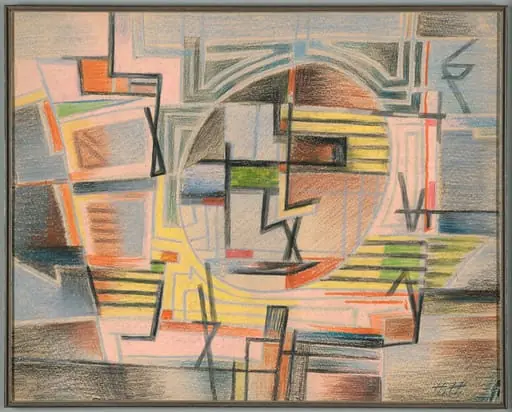
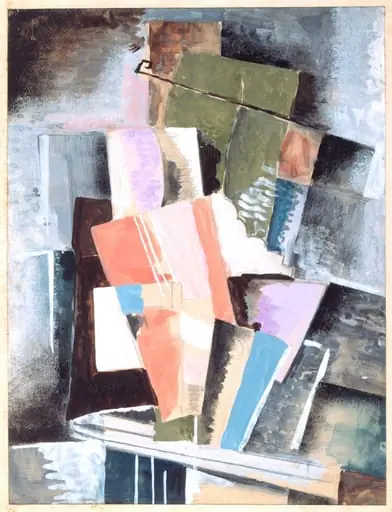
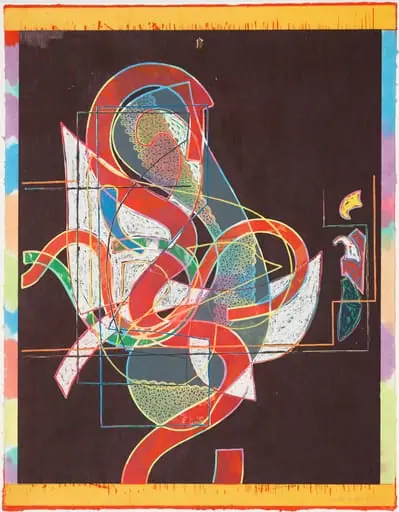
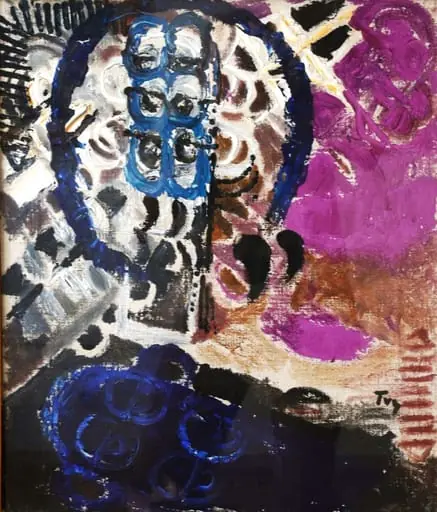
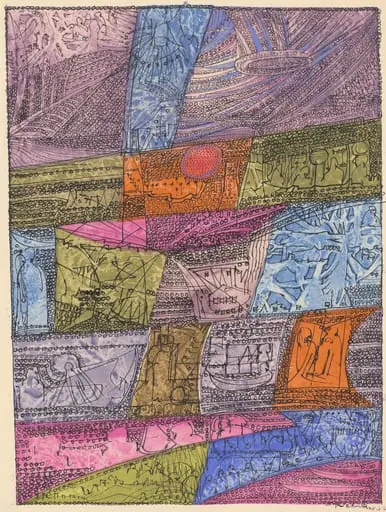
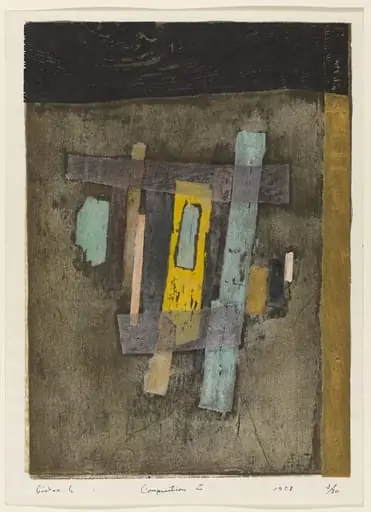
Untitled is a gouache drawing by Hannah Höch. It dates from 1943 and is held in the collection of the Museum of Modern Art.
About this work
Overview
Created in 1943, this gouache on paper work by Hannah Höch belongs to a later phase of her career, following her pioneering photomontages of the 1920s.
Created in 1943, this gouache on paper work by Hannah Höch belongs to a later phase of her career, following her pioneering photomontages of the 1920s. Though less reliant on photographic cutouts, it retains her interest in abstracted forms and layered visual language. The piece is non-representational yet evokes fragmented urban and bodily elements, suggesting a continued engagement with dislocation and reconstruction as artistic strategies.
Subject & Meaning
The composition resists clear narrative, instead presenting a constellation of abstract shapes that hint at architectural forms, facial features, and organic outlines. These elements, though disjointed, evoke the instability of identity and perception under turbulent historical conditions. Höch’s choice to avoid literal imagery reflects a critique of fixed social roles, particularly those imposed on women, through ambiguity rather than direct representation.
Technique & Style
Gouache, a water-based paint with opaque qualities, allows for flat, saturated fields of color with sharp boundaries. Höch exploited this to create bold, unmodulated planes of red, blue, and yellow that overlap without blending into naturalistic depth. The absence of shading and perspective reinforces a sense of visual fragmentation, aligning with Dada’s rejection of traditional pictorial harmony in favor of disruptive, collage-like composition.
History & Provenance
Made during World War II, the work emerged from Höch’s isolation in Berlin under Nazi rule, when her earlier Dada activities were suppressed. Though she ceased public exhibitions, she continued to produce private works. This piece, like others from the period, was not exhibited until after the war, preserving its intimate, non-propagandistic character amid a climate of state-enforced cultural conformity.
Context
In the 1940s, Germany’s cultural landscape was dominated by state-sanctioned realism and nationalist symbolism. Höch’s abstract, non-conformist approach stood in quiet opposition to these mandates. Her use of color and form echoed earlier Dada experiments but adapted them to a context of censorship and personal survival, transforming fragmentation into a subtle act of resistance.
Legacy
This work contributes to the understanding of Höch’s sustained commitment to visual disruption beyond her photomontage years. It demonstrates how her methods evolved in response to political repression, influencing later generations of artists who explored abstraction as a means of expressing psychological and social dislocation. Her persistence in private practice during wartime affirmed art’s role as a space for unregulated thought.
Artist & collection
Artist
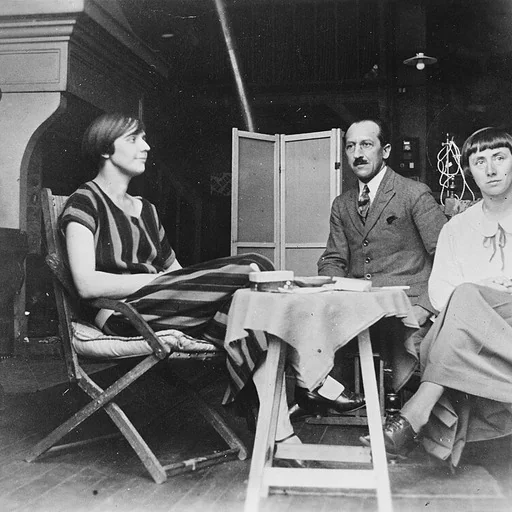
Hannah Höch (German: ; 1 November 1889 – 31 May 1978) was a German Dada artist. She is best known for her work of the Weimar period, when she was one of the originators of photomontage. Photomontage, or fotomontage, is…