Artwork
Untitled
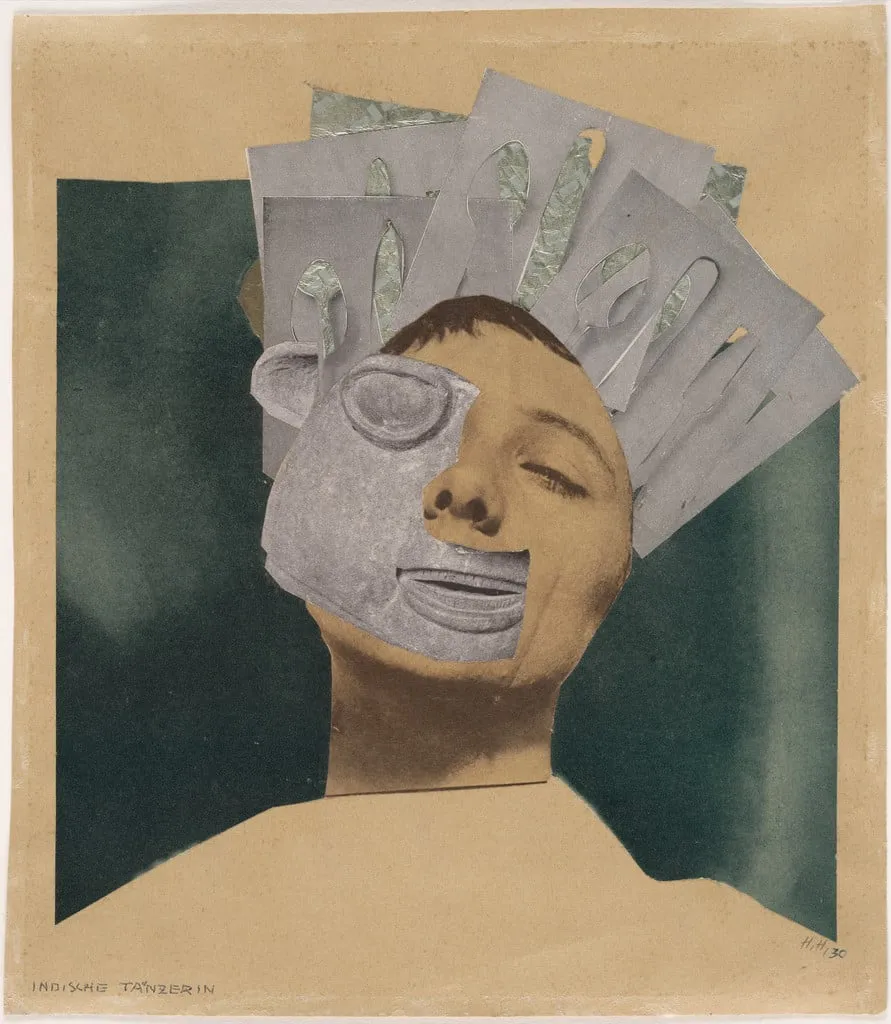
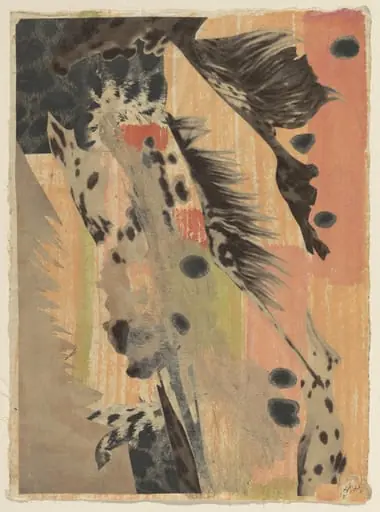
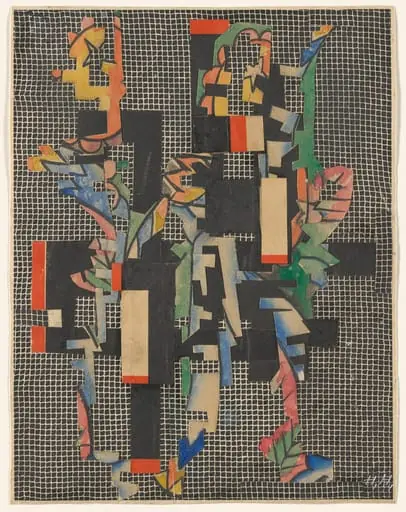
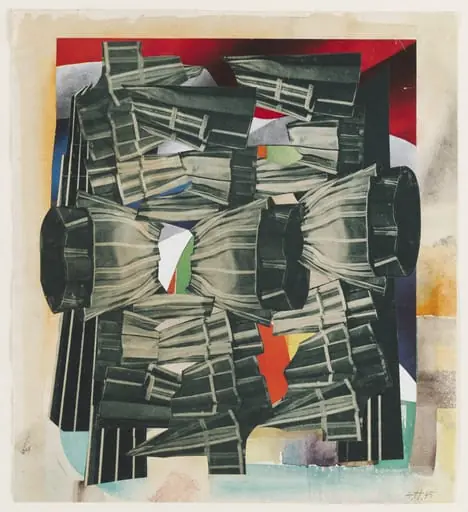
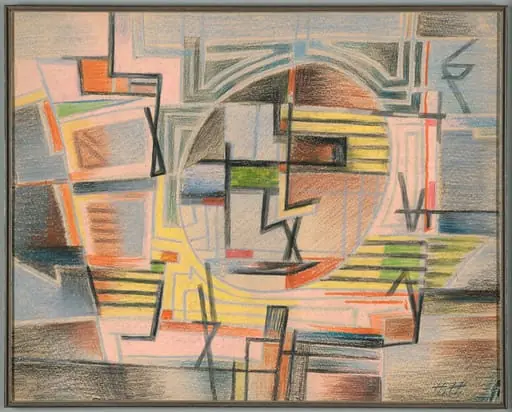
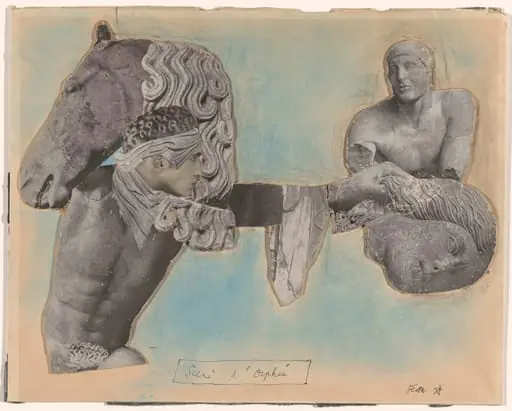
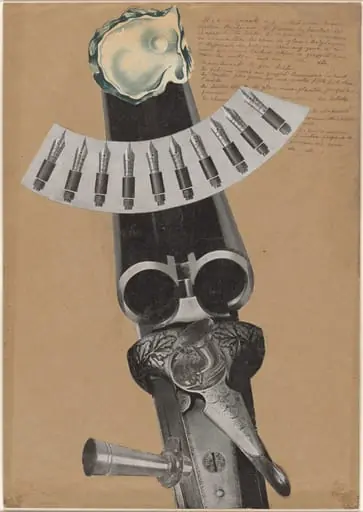
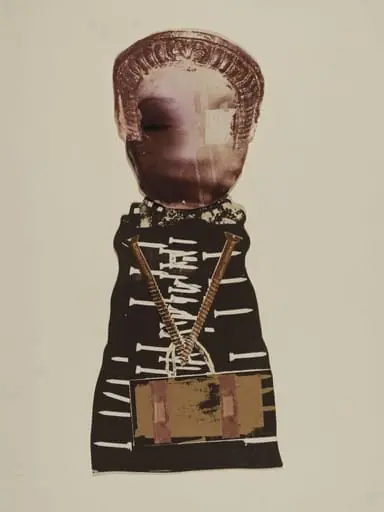
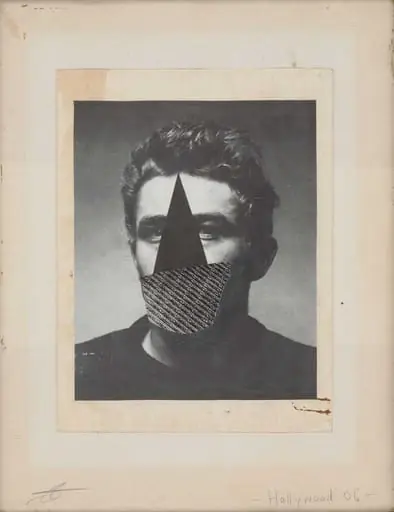
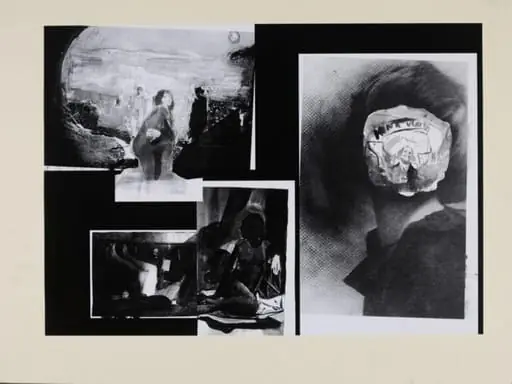
Untitled is an oil drawing by Hannah Höch. It dates from 1930 and is held in the collection of the Museum of Modern Art.
About this work
Overview
The piece is modest in scale and uses restrained materials, yet its composition invites close attention to the fragmentation and reassembly of the female image.
Created in 1930, this work by Hannah Höch is a collage made from cut and pasted printed paper and metallic foil on paper. It belongs to a body of work that emerged during the Weimar Republic, where Höch experimented with photomontage as a means of visual critique. The piece is modest in scale and uses restrained materials, yet its composition invites close attention to the fragmentation and reassembly of the female image.
Subject & Meaning
The central figure is a woman’s face, assembled from disparate printed sources, suggesting the constructed nature of female identity in modern society. The metallic foil covering one eye and cheek disrupts facial symmetry, hinting at the partial visibility or suppression of women’s agency. The neutral expression resists emotional interpretation, reinforcing the idea of the 'New Woman' as a contested, externally defined ideal rather than a fully realized individual.
Technique & Style
Höch employed precision cutting and layering to assemble the face from mass-produced imagery, a hallmark of her Dadaist approach. The use of metallic foil introduces a subtle luminosity against muted tones, drawing focus to the obscured portion of the face. The background, composed of layered green paper, provides depth without distraction, ensuring the face remains the sole narrative anchor. The technique avoids overt satire, favoring quiet dissonance.
History & Provenance
This work dates from Höch’s mature period, following her active involvement with the Berlin Dada group in the 1910s and 1920s. Though not publicly exhibited at the time, it aligns with her private explorations of gender and representation. The piece remained in her personal collection until her death in 1978, after which it entered institutional holdings through her estate, preserving its connection to her artistic process.
Context
In early 20th-century Germany, rapid social change redefined women’s roles, yet media imagery often reduced them to contradictory stereotypes—modern yet decorative, independent yet domestic. Höch’s collages responded to this tension, using fragments of advertisements and magazines to expose how mass culture shaped perception. This work reflects her quiet resistance to the visual propaganda of the era.
Legacy
Höch’s use of collage to interrogate gender norms influenced later feminist artists and theorists. Her method of deconstructing media imagery became a foundational strategy in postwar visual critique. Though this particular piece was not widely seen during her lifetime, it now stands as a quiet but persistent example of how everyday materials could be repurposed to question societal structures.
Artist & collection
Artist
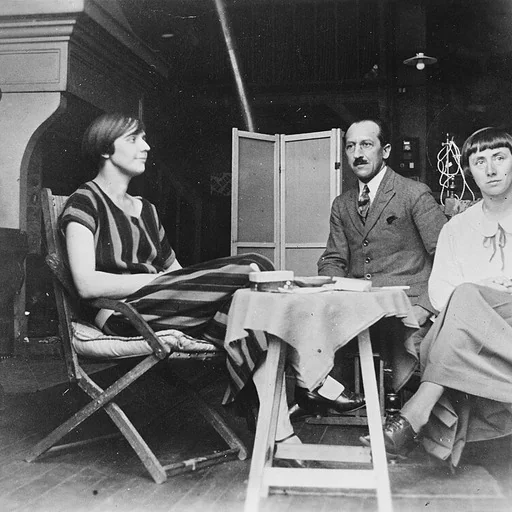
Hannah Höch (German: ; 1 November 1889 – 31 May 1978) was a German Dada artist. She is best known for her work of the Weimar period, when she was one of the originators of photomontage. Photomontage, or fotomontage, is…