Artwork
The Lovers Surprised by Death
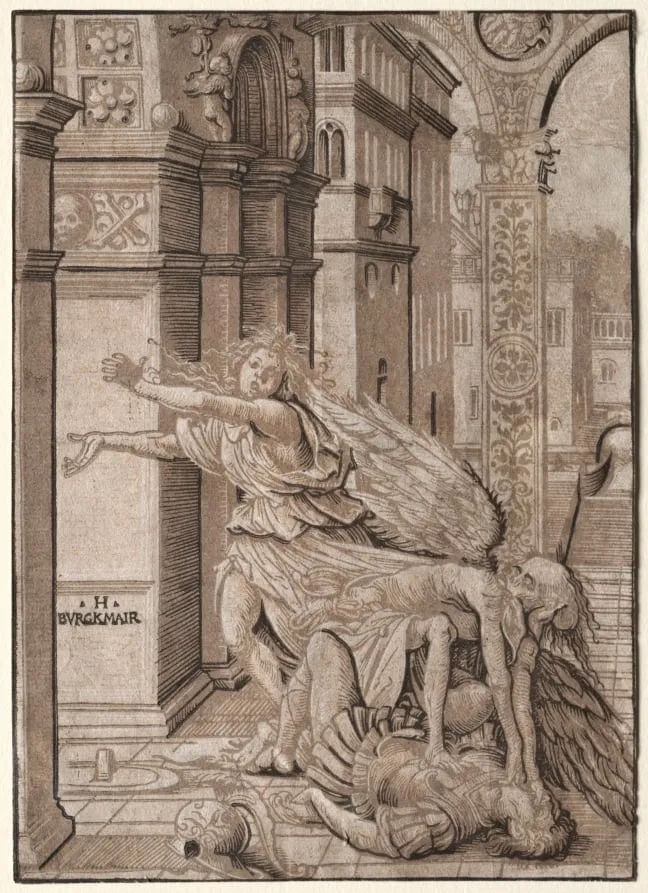
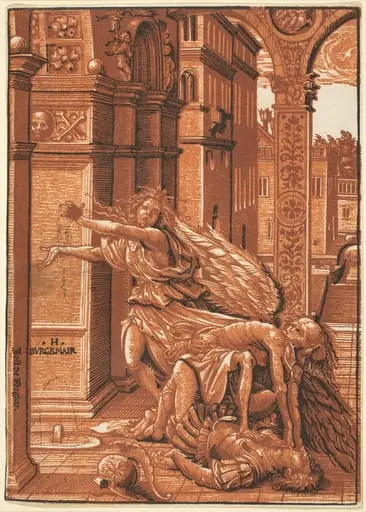
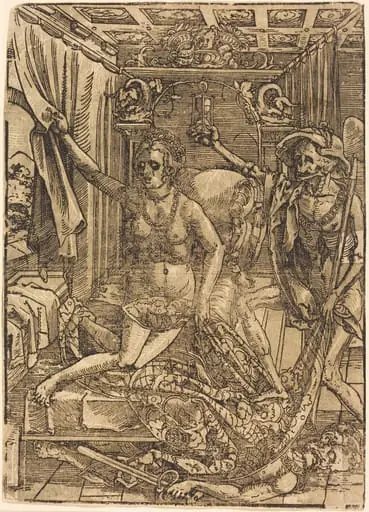
The Lovers Surprised by Death is a print by the Renaissance artist Hans Burgkmair the Elder. It dates from 1510 and is held in the collection of the Cleveland Museum of Art.
About this work
Burgkmair used two tone blocks plus a line block, and all three must print to see the full image.
A man and woman sit close together. Behind them, a skeleton with black wings floats in. The skeleton holds a tipped hourglass.
This isn’t just a scary picture. In 1510, most woodcuts used one extra color block. Burgkmair used two tone blocks plus a line block, and all three must print to see the full image. The mix of Northern death imagery and Italian-style buildings makes it unusual.
Look up chiaroscuro next.
Overview
Created around 1510, this print by Hans Burgkmair is the earliest known chiaroscuro woodcut to employ three separate blocks: one line block and two tone blocks. Unlike contemporary examples, the line block alone fails to form a legible image. Only when all three layers are printed in sequence does the full composition emerge, demonstrating an experimental approach to color and form that pushed the technical boundaries of woodcut printing at the time.
Subject & Meaning
The scene depicts a couple seated intimately, suddenly confronted by a winged skeleton holding a tipped hourglass. Death, rendered in the Italian manner with classical drapery and ethereal presence, intrudes upon a domestic moment. The woman’s pose echoes ancient depictions of Daphne fleeing Apollo, suggesting themes of vulnerability and inevitable fate. The fusion of Northern European memento mori tradition with Italianate elegance reflects the cultural interests of Burgkmair’s educated patrons in Augsburg.
Technique & Style
Burgkmair’s use of two tone blocks—likely for shadow and midtone—alongside a fine line block allowed for nuanced gradations of light and depth uncommon in woodcuts of the period. The technique required precise registration, indicating advanced workshop coordination. The interplay of sharp contours and soft tonal areas creates a dramatic, almost theatrical atmosphere, enhancing the emotional tension between the figures and the looming presence of Death.
History & Provenance
Burgkmair likely encountered Italian art during a documented stay in Venice around 1507, which informed the architectural details in this print. The gondola, canal, and distinctive chimney pots align with Venetian urban features. While the print’s early ownership is unrecorded, its technical innovation and subject matter suggest it was produced for a discerning, humanist audience in Augsburg, where Burgkmair maintained a prominent workshop.
Context
In early 16th-century Germany, chiaroscuro woodcuts were emerging as a way to mimic the tonal effects of drawings and paintings. Most relied on a single tone block; Burgkmair’s use of two was exceptional. His synthesis of Northern themes—like the personification of Death—with Italian Renaissance motifs responded to the tastes of patrons influenced by classical antiquity and humanist ideals, bridging regional artistic traditions.
Legacy
This print stands as a pivotal experiment in printmaking, demonstrating how multiple blocks could achieve painterly depth in woodcut. Though not widely imitated immediately, it contributed to the evolution of color printing in Northern Europe. Its fusion of iconography and technique influenced later artists exploring the intersection of Italian form and Northern narrative, securing Burgkmair’s role as a bridge between artistic traditions.
Artist & collection
Artist
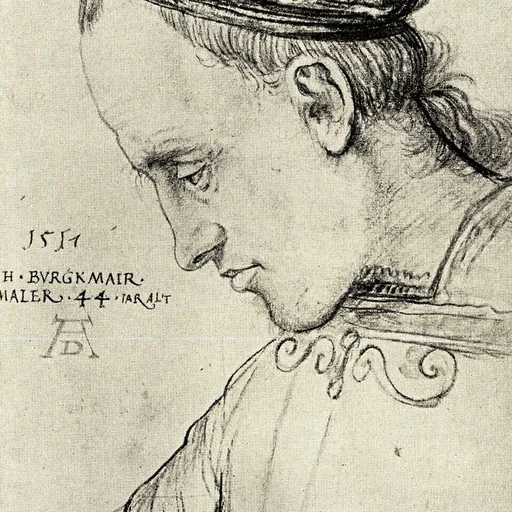
Hans Burgkmair the Elder (1473–1531) was a German artist, born in Augsburg.