Artwork
The Dream of the Doctor
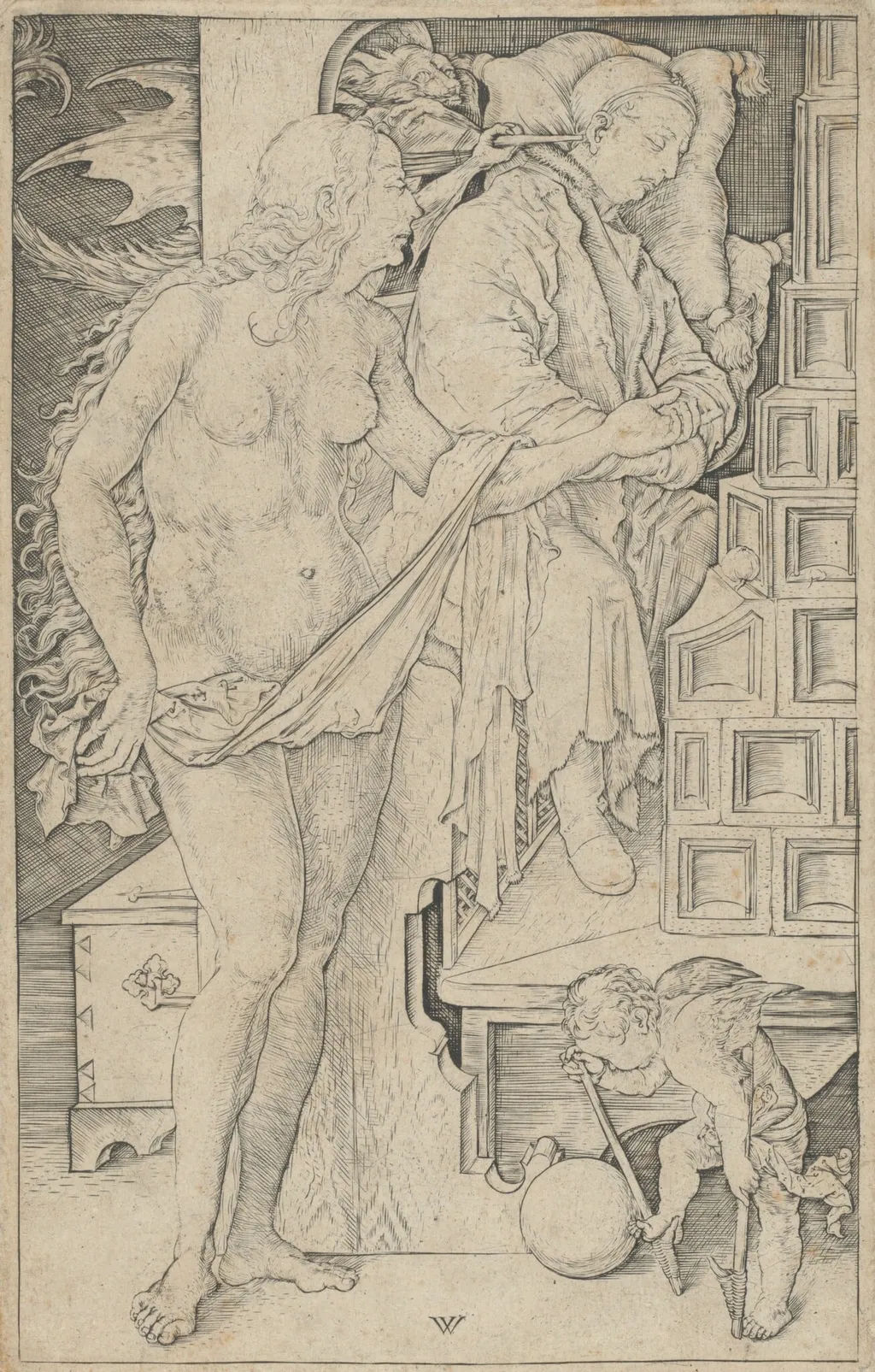
The Dream of the Doctor is an ink print by the Renaissance artist Wenzel von Olmutz. It is held in the collection of the National Gallery of Art.
About this work
Overview
The Dream of the Doctor is an early sixteenth‑century engraving attributed to Wenzel von Olmutz, dated to around 1500. Executed on laid paper that has been mounted on a wove support, the print measures a modest size typical of the period and presents a domestic interior populated by three figures.
Subject & Meaning
The scene depicts a barefoot man standing with his back turned, clutching a staff, while an older figure leans forward to adjust something on the younger man’s head. A diminutive winged child kneels nearby, holding a spherical object, lending the composition a subtle allegorical or dreamlike quality that suggests a narrative beyond the immediate action.
Technique & Style
Olmutz employs a fine, closely spaced line work to render facial wrinkles, the drapery’s folds, and the texture of the carved wooden door. The precision of the incised lines creates a sense of three‑dimensionality, while the delicate handling of the cherubic figure introduces a contrasting, ethereal element within the otherwise realistic setting.
History & Provenance
The engraving is known from a single surviving impression that has been documented in collections of early German prints. Its attribution to Wenzel von Olmutz rests on stylistic comparison with other works from the same workshop, and the piece is dated to the turn of the sixteenth century based on paper type and engraving technique.
Artist & collection


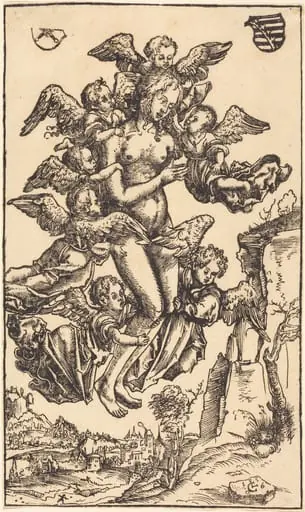 The Ecstasy of Saint Mary Magdalene
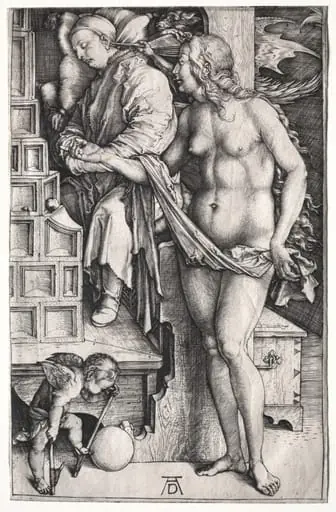 The Dream of the Doctor
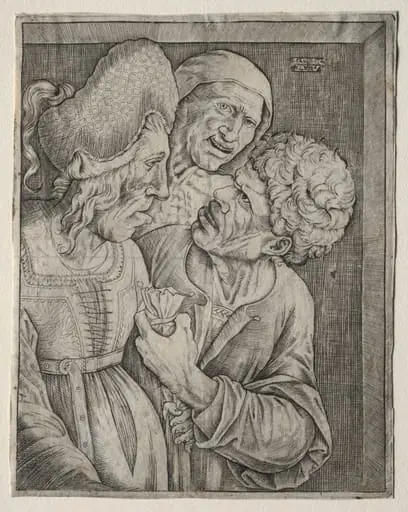 The Rich Old Woman
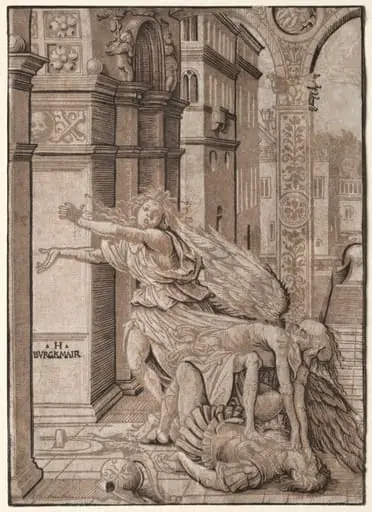 The Lovers Surprised by Death
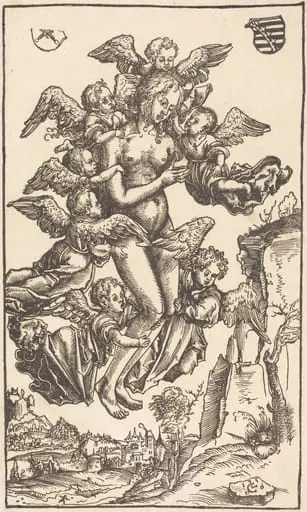 The Ecstasy of Saint Mary Magdalene
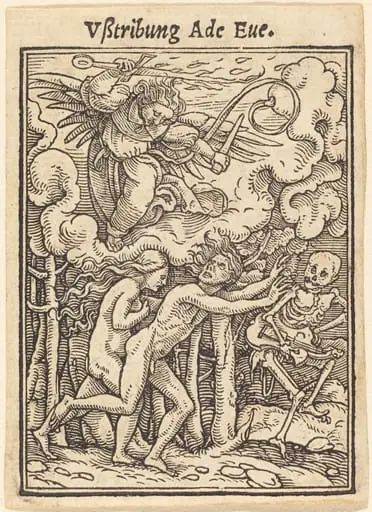 Vßtribung Ade Eue (Expulsion of Adam and Eve)
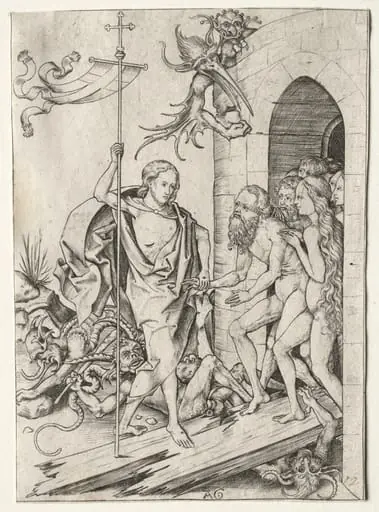 Passion of Jesus Christ: The Descent into Limbo
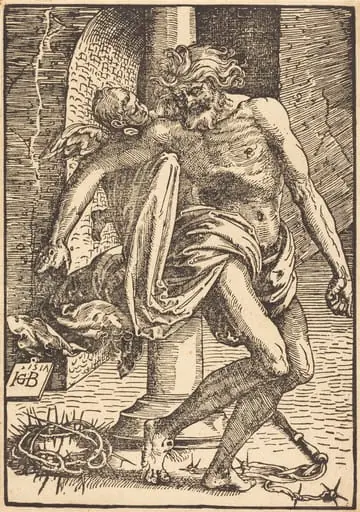 Christ on the Pillar
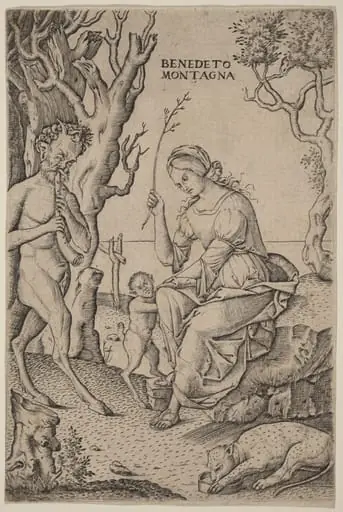 Satyr Family
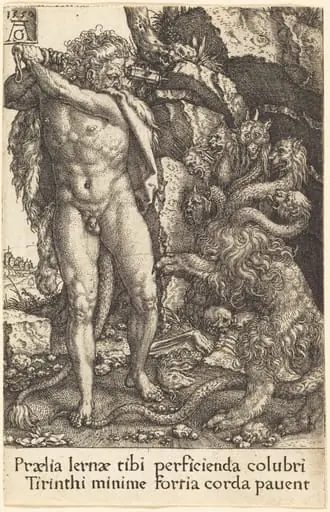 Hercules Fighting with the Hydra of Lernea