Artwork
Dance of Death: The Child
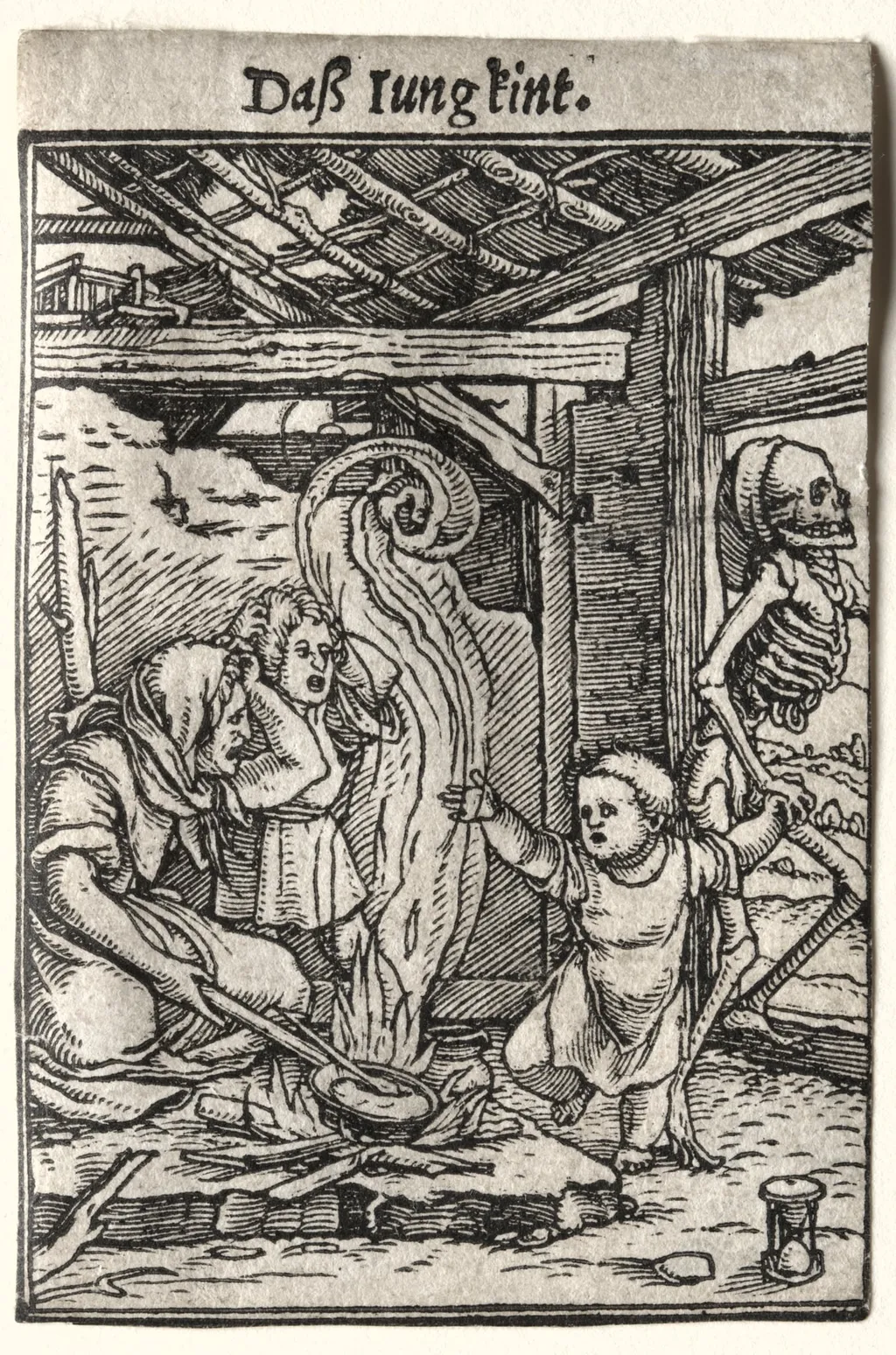
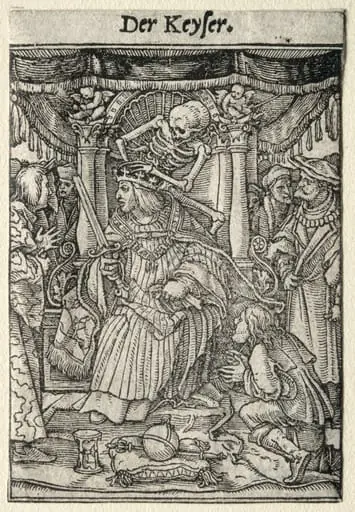
Dance of Death: The Child is a print by the Renaissance artist Hans Holbein the Younger. It dates from 1526 and is held in the collection of the Cleveland Museum of Art.
About this work
Overview
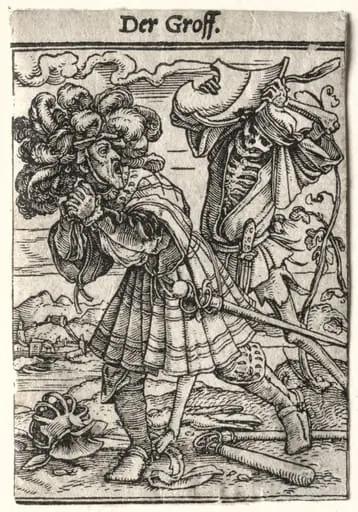
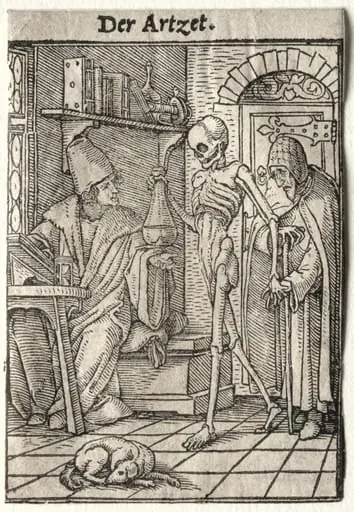
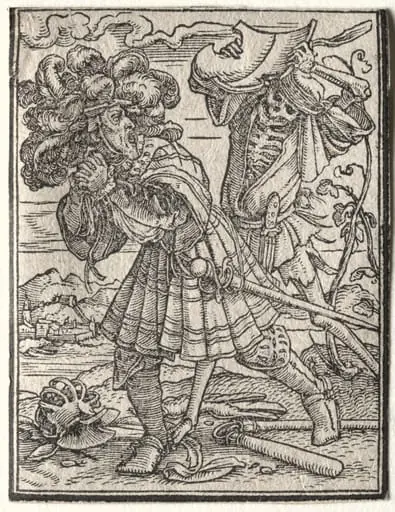
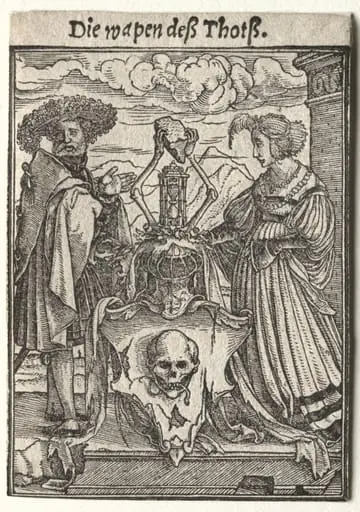
The Dance of Death is a series of forty-one woodcuts designed by Hans Holbein the Younger, carved by Hans Lützelburger between 1524 and 1526.
The Dance of Death is a series of forty-one woodcuts designed by Hans Holbein the Younger, carved by Hans Lützelburger between 1524 and 1526. Though the blocks were completed before Lützelburger’s death, the full series was not printed until 1538. Each print depicts Death interacting with individuals from all walks of life, emphasizing the universality of mortality. The child depicted in this particular image is one of many figures drawn into Death’s grim procession.
Subject & Meaning
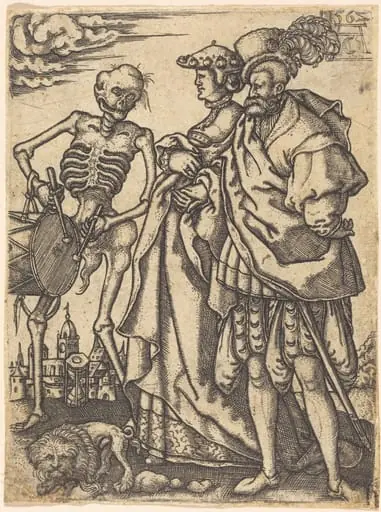
The image of a child in the Dance of Death series underscores the theme that death spares no age or station. Unlike earlier depictions that focused on the powerful or wealthy, Holbein’s inclusion of the young highlights the vulnerability of all human life. The child’s presence serves as a quiet but forceful reminder that mortality is inevitable, regardless of innocence or social standing.
Technique & Style
Holbein employed the woodcut medium with precise, linear clarity, using stark contrasts and minimal shading to convey emotional weight. Figures are rendered in simplified, almost schematic forms, enhancing the symbolic nature of the scenes. The compositions are tightly framed, directing attention to the interaction between the living and the skeletal figure of Death, whose posture and gesture are both menacing and ritualistic.
History & Provenance
The series was conceived in the aftermath of repeated plague outbreaks in 14th-century Europe, evolving from live theatrical performances in graveyards into printed images. Holbein’s woodcuts, produced in Basel, built upon this tradition by translating the moral spectacle into a portable, reproducible format. The blocks were acquired and published by the printer Johannes Froben, who released the complete set in 1538, ensuring its wide circulation across Europe.
Context
In early 16th-century Europe, the memory of the Black Death and recurring epidemics kept death a constant presence in daily life. Religious instruction emphasized preparation for the afterlife, and the Dance of Death served as a visual catechism on humility and mortality. Holbein’s prints aligned with broader Reformation-era concerns, using imagery to challenge worldly attachments and affirm spiritual accountability.
Legacy
Holbein’s Dance of Death became one of the most influential visual sequences on mortality in Western art. Its format—Death confronting individuals across social strata—was widely imitated in prints, paintings, and later illustrations. The series helped standardize the iconography of skeletal Death as a universal figure, shaping how later generations visualized the inevitability of dying.
Artist & collection
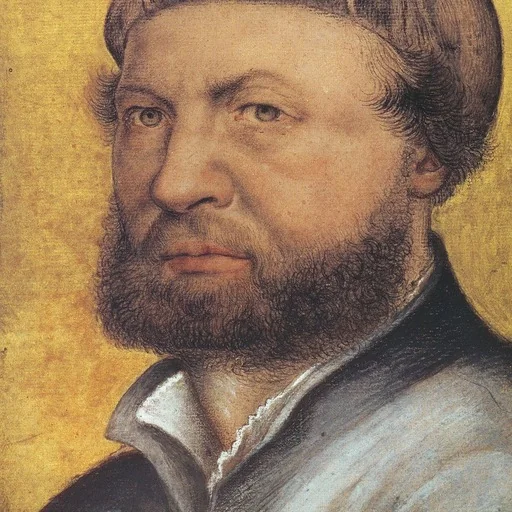
Artist
Hans Holbein the Younger (UK: HOL-byne, US: HOHL-byne, HAWL-; German: Hans Holbein der Jüngere; c.