Artwork
Dance of Death: The Emperor
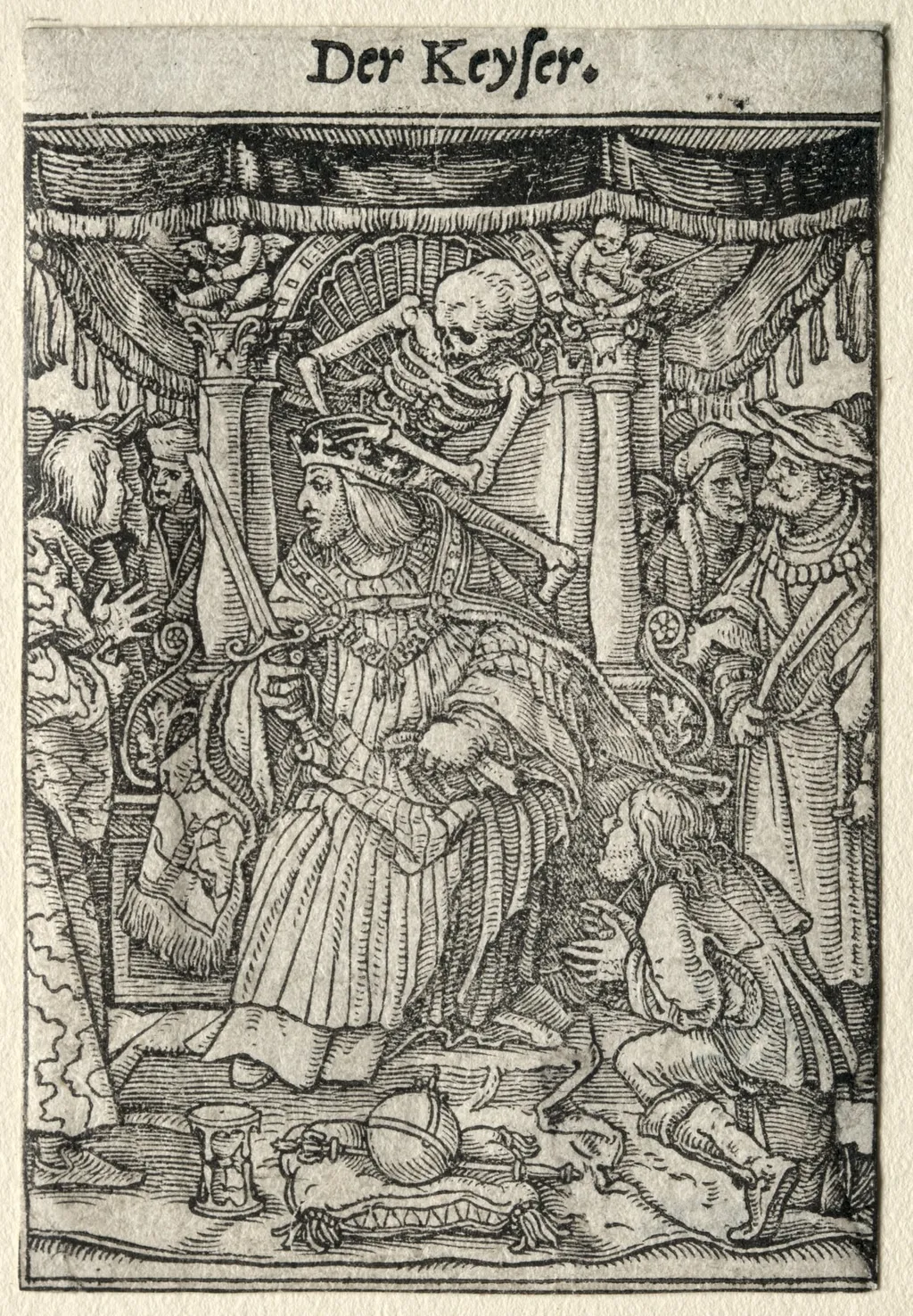
Dance of Death: The Emperor is a print by the Renaissance artist Hans Holbein the Younger. It dates from 1526 and is held in the collection of the Cleveland Museum of Art.
About this work
Overview
The work is part of the Cleveland Museum of Art’s collection and exemplifies Holbein’s skill in combining detailed figuration with moral allegory.
Created circa 1526 by Hans Holbein the Younger, this woodcut belongs to his series of *Danse Macabre* images. Executed in the Northern Renaissance idiom, the print portrays a skeletal figure guiding a procession that includes an emperor in regal attire. The work is part of the Cleveland Museum of Art’s collection and exemplifies Holbein’s skill in combining detailed figuration with moral allegory.
Subject & Meaning
The central motif shows Death, rendered as a gaunt skeleton, leading an emperor clutching a scepter, surrounded by figures from various social strata. By placing the sovereign alongside peasants and merchants, the image underscores the medieval belief that mortality spares no rank, delivering a visual reminder of the universal certainty of death.
Technique & Style
Holbein employed the precise line work characteristic of early 16th‑century woodcut printing, achieving intricate detail in clothing, architecture, and the skeletal hands. The crowded composition, dense with miniature figures and background structures, reflects the Northern Renaissance’s interest in realism and complex narrative scenes, while the stark contrast of black ink on paper heightens the dramatic effect.
History & Provenance
Holbein produced the *Dance of Death* series during his early career in Basel, a period when the allegory was popular in Europe as a response to plague and war. The particular print of the emperor entered the Cleveland Museum of Art’s holdings through a 20th‑century acquisition, where it has been catalogued as an example of Holbein’s printmaking output.
Context
The *Danse Macabre* tradition originated in the late medieval period, serving as a visual sermon on the equality of all before death. Holbein’s rendition aligns with contemporary religious reform movements that emphasized personal piety and the fleeting nature of worldly power, situating the work within broader cultural anxieties of the early Reformation.
Artist & collection
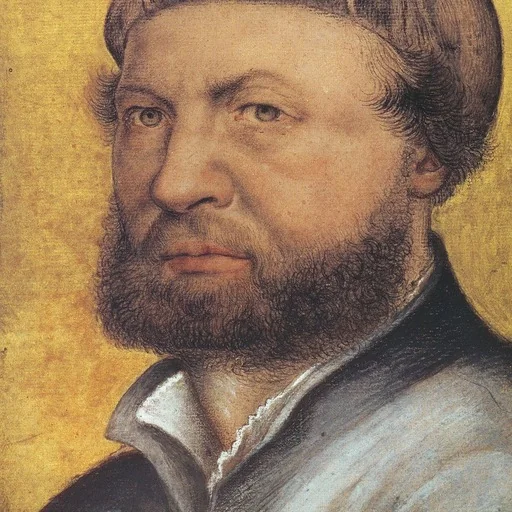
Artist
Hans Holbein the Younger (UK: HOL-byne, US: HOHL-byne, HAWL-; German: Hans Holbein der Jüngere; c.

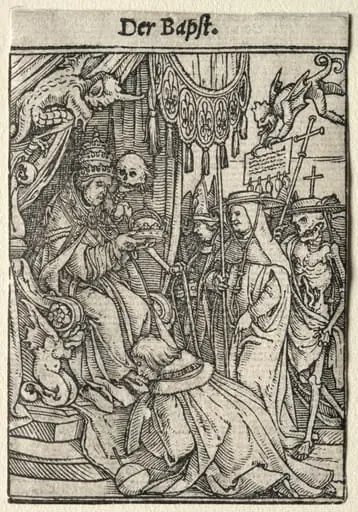 Dance of Death: The Pope
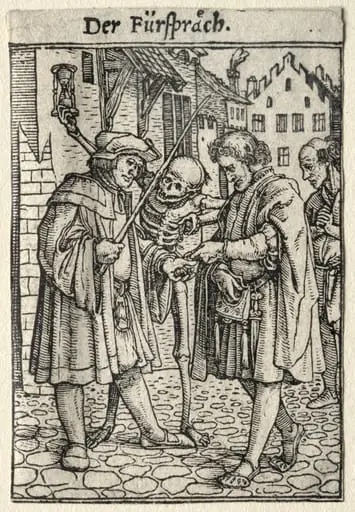 Dance of Death: The Advocate
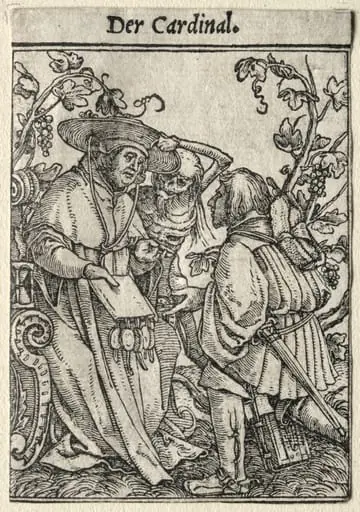 Dance of Death: The Cardinal
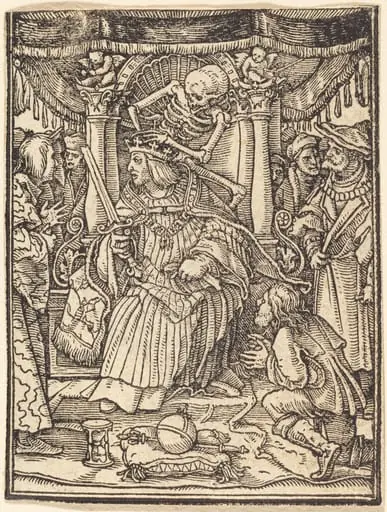 The Emperor
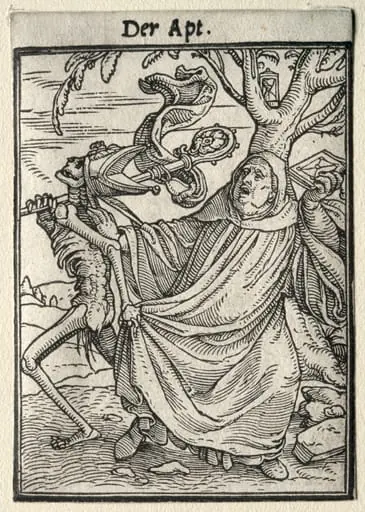 Dance of Death: The Abbot
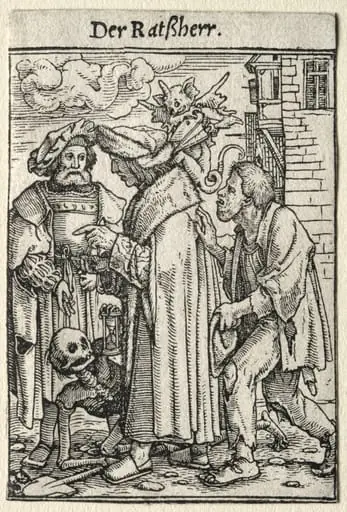 Dance of Death: The Councillor
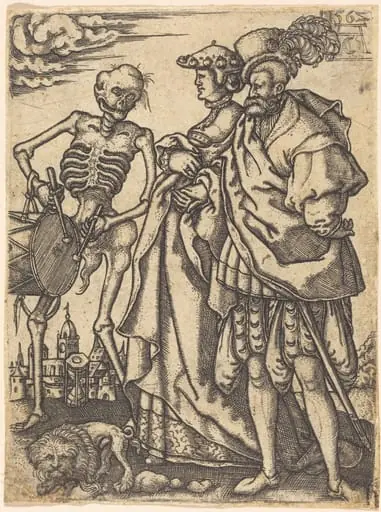 Dance of Death I
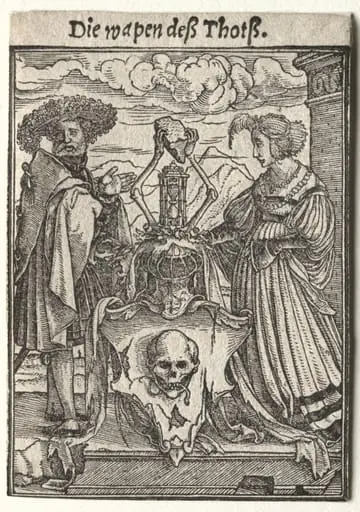 Dance of Death: The Coat of Arms of Death
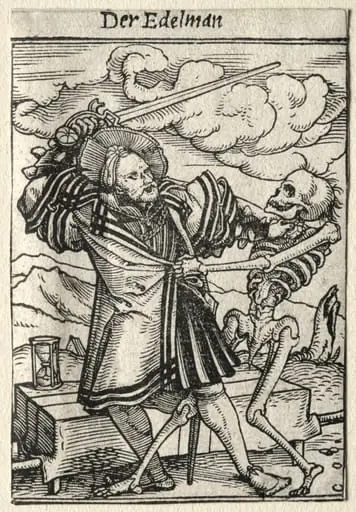 Dance of Death: The Nobleman
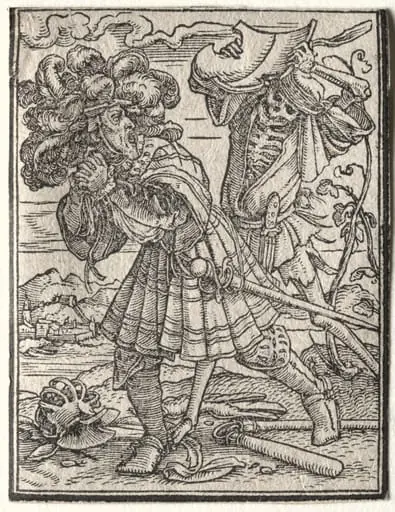 The Dance of Death: The Count
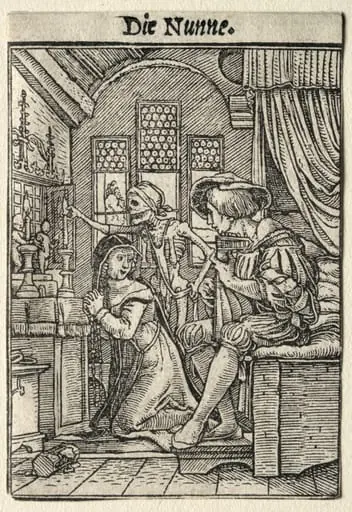 Dance of Death: The Nun
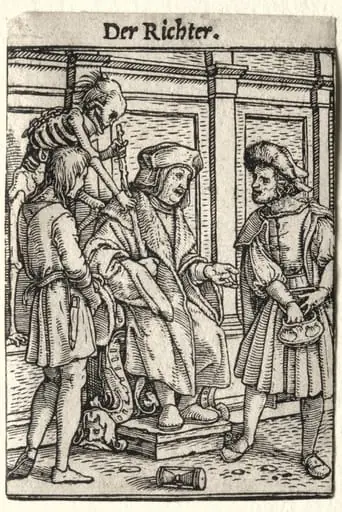 Dance of Death: The Judge