Artwork
Dance of Death I
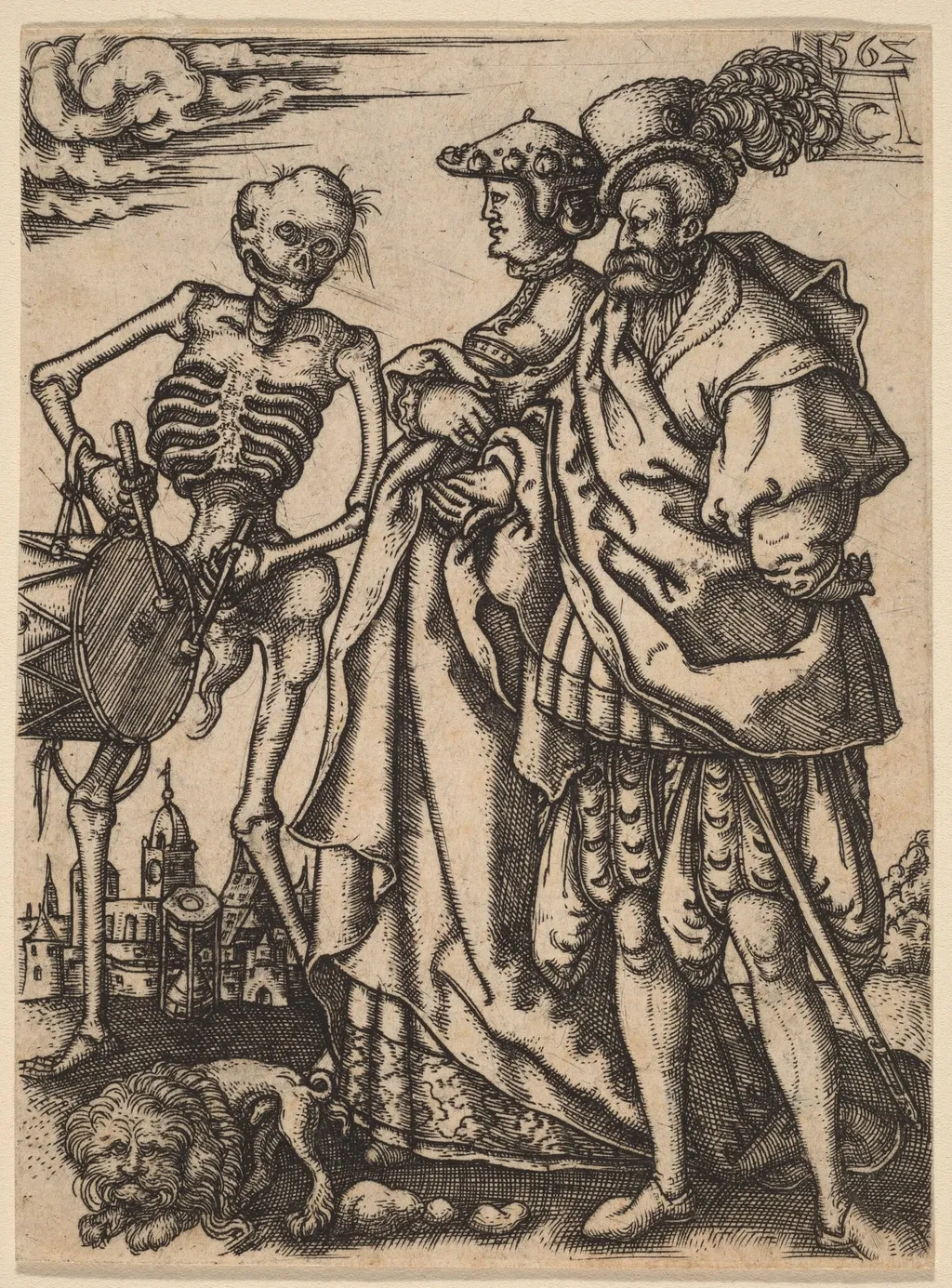
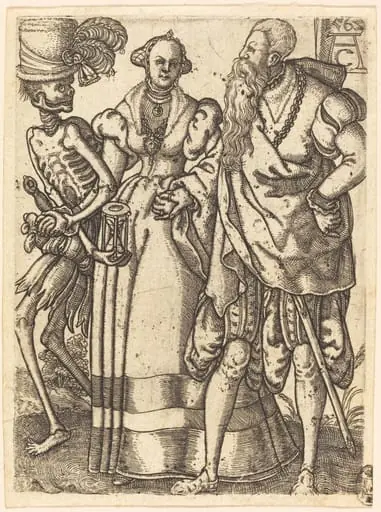
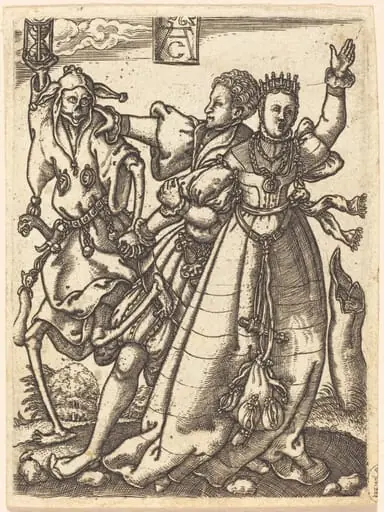
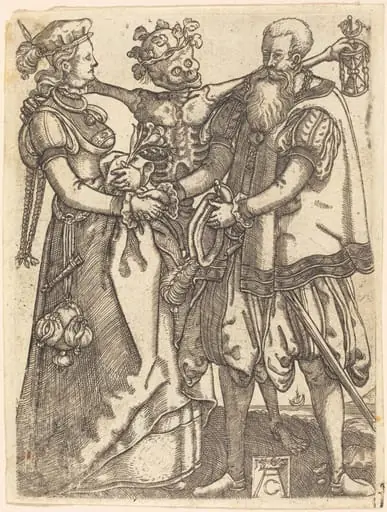
Dance of Death I is an ink print by the Renaissance artist Allaert Claesz. It is held in the collection of the National Gallery of Art.
About this work
Overview
The composition conveys a quiet, solemn rhythm, aligning with the medieval tradition of memento mori imagery.
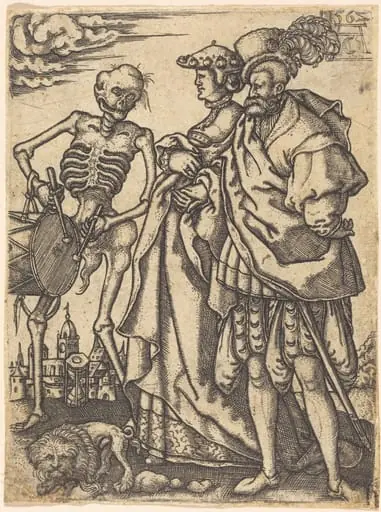
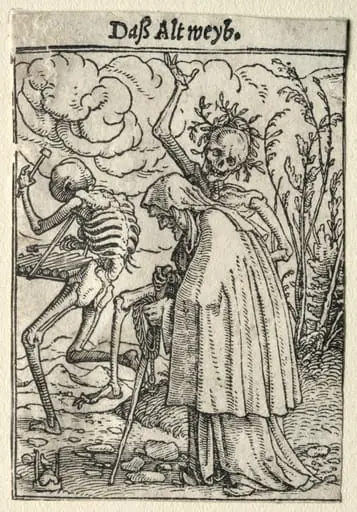
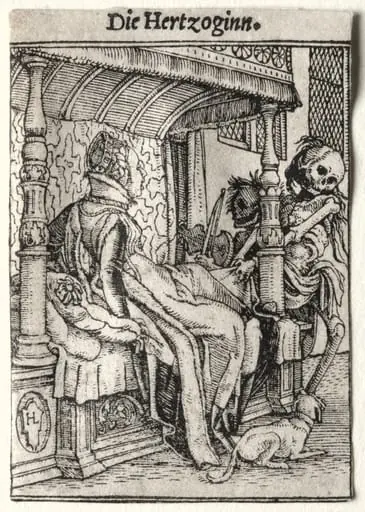
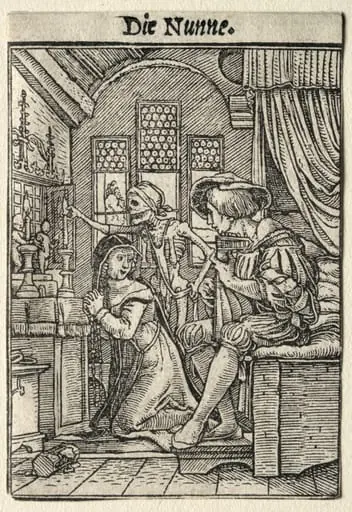
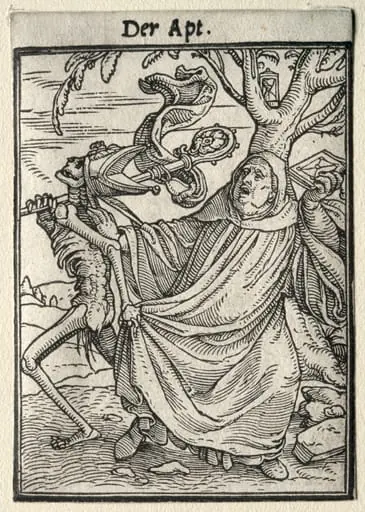
Dance of Death I is a 1562 engraving by Allaert Claesz, executed in black ink on laid paper. It depicts three figures in procession: a skeletal figure with tattered garments and a drum, flanked by two clothed men wearing elaborate headwear and flowing robes. A modest townscape with towers and a church steeple forms the backdrop. The composition conveys a quiet, solemn rhythm, aligning with the medieval tradition of memento mori imagery.
Subject & Meaning
The image presents death as an equalizing force, embodied by the drumming skeleton walking alongside two affluent men. Their composed expressions and fine attire contrast with the skeleton’s decayed form, underscoring the inevitability of mortality regardless of social status. The drum may symbolize the relentless passage of time or a call to spiritual reckoning, reinforcing the moral message that earthly wealth offers no defense against death.
Technique & Style
Claesz employed fine-line engraving on a metal plate to achieve precise, linear detail. The contrast between the dark, textured skeleton and the smoother, more refined figures highlights thematic tension. Background architecture is rendered with minimal but suggestive strokes, allowing the human figures to dominate the narrative. The monochrome palette enhances the somber tone, typical of Northern European printmaking of the period.
History & Provenance
Created in 1562, the print emerged during a time when religious upheaval and plague outbreaks heightened public awareness of mortality. As a print, it was likely produced in multiple impressions for wider distribution, possibly as devotional or educational material. Its survival in collections today reflects its enduring relevance in early modern visual culture, though its specific early ownership remains undocumented.
Context
The Dance of Death motif was widespread in late medieval and Renaissance Europe, appearing in murals, manuscripts, and prints. Claesz’s version reflects the Protestant emphasis on personal accountability and the transience of worldly life. Unlike earlier dramatic depictions, this scene is restrained, suggesting a shift toward introspective moralizing rather than overt spectacle, consistent with Northern Reformation sensibilities.
Legacy
Claesz’s engraving contributes to a broader visual language that linked art with moral instruction in early modern Europe. While not widely reproduced in later centuries, it exemplifies how printmaking democratized religious themes for lay audiences. Its quiet intensity influenced subsequent generations of Northern European printmakers who continued to explore mortality through understated, symbolic imagery.
Artist & collection