Artwork
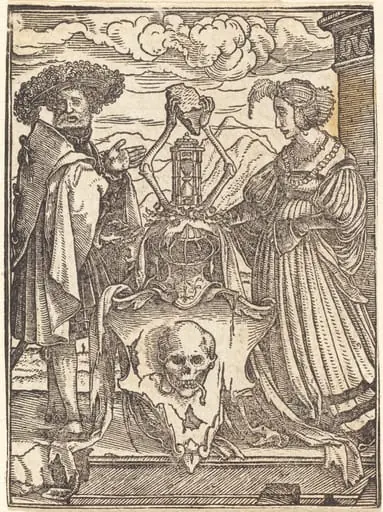
Dance of Death: The Coat of Arms of Death
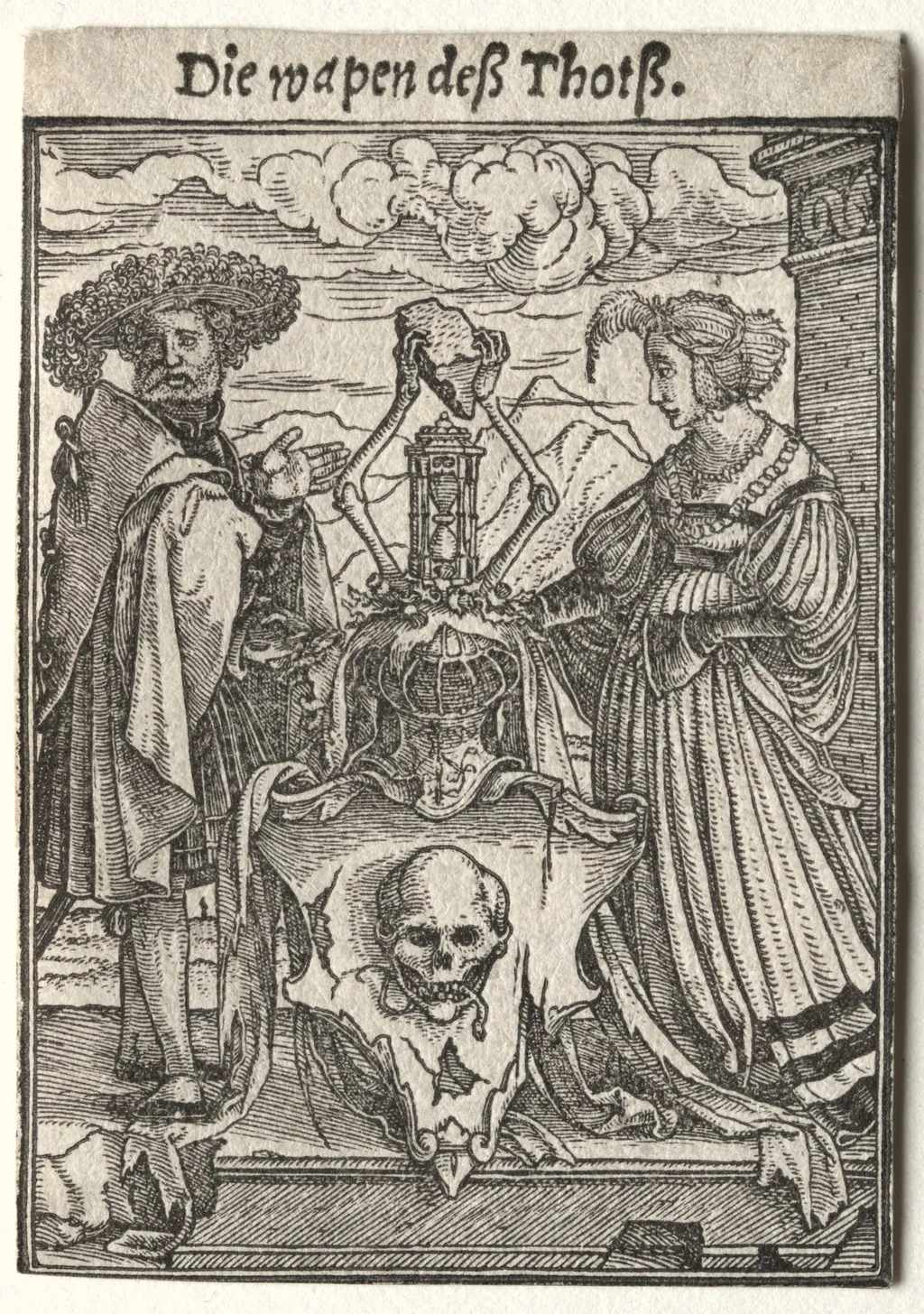
Dance of Death: The Coat of Arms of Death is a print by the Renaissance artist Hans Holbein the Younger. It dates from 1526 and is held in the collection of the Cleveland Museum of Art.
About this work
Overview
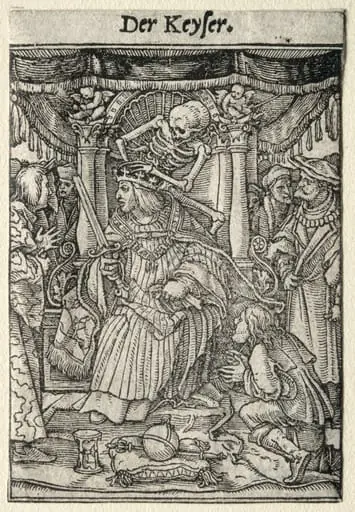
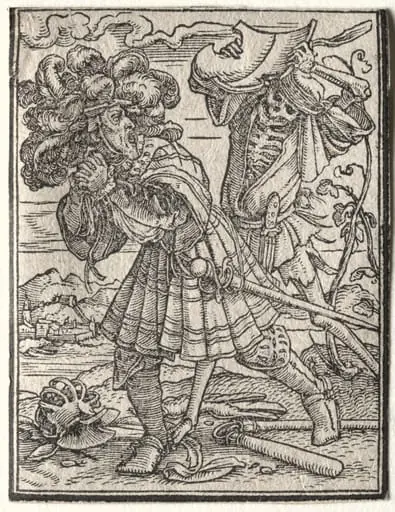
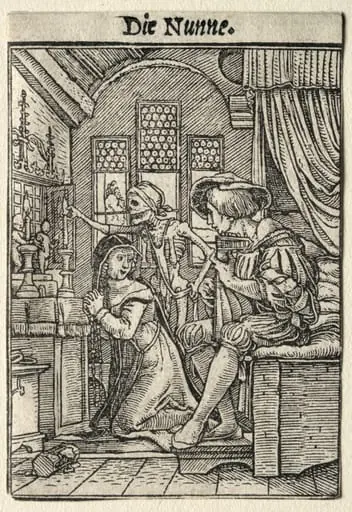
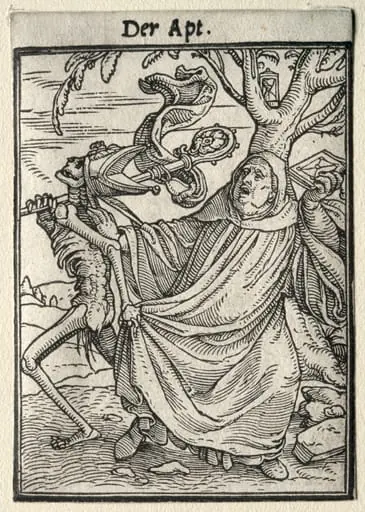
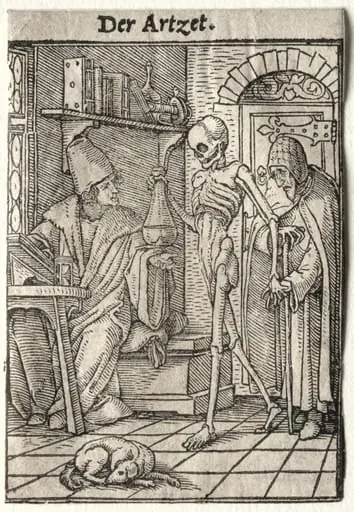
Dance of Death: The Coat of Arms of Death is a woodcut print created by Hans Holbein the Younger around 1526. It is part of a series of allegorical scenes depicting Death's interactions with various figures, characteristic of Holbein's work during the Northern Renaissance.
Subject & Meaning
The print features two figures in antiquated robes holding a coat of arms with a crown, skull, and lantern. The title 'Die wapen des Thots' plays on the concept of death, suggesting the image represents death's heraldic device rather than a familial crest. The skull is a potent mortality symbol integrated into heraldic elements.
Technique & Style
Executed in black and white, the woodcut showcases Holbein's skill in using simple tones to convey complex scenes. The style is typical of Holbein's work, blending detailed figural representation with symbolic elements, set against a backdrop of puffy clouds.
Context
The use of symbols like the skull and heraldic devices was a common practice among Renaissance artists to convey moral and allegorical themes. Holbein's work reflects the period's visual culture, where death and mortality were recurring subjects, often treated with a mix of the macabre and the ceremonial.
Artist & collection
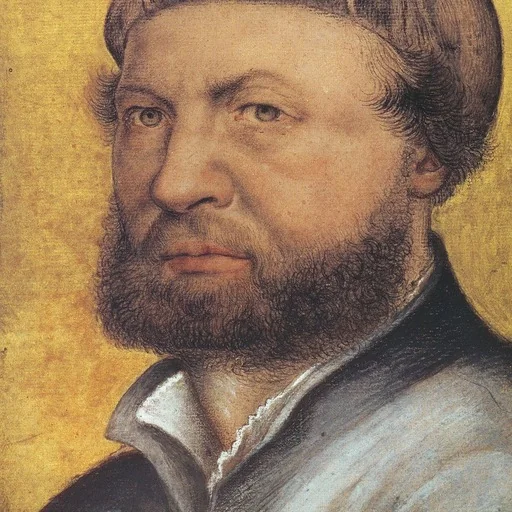
Artist
Hans Holbein the Younger (UK: HOL-byne, US: HOHL-byne, HAWL-; German: Hans Holbein der Jüngere; c.