Artwork
Dance of Death: The Nun
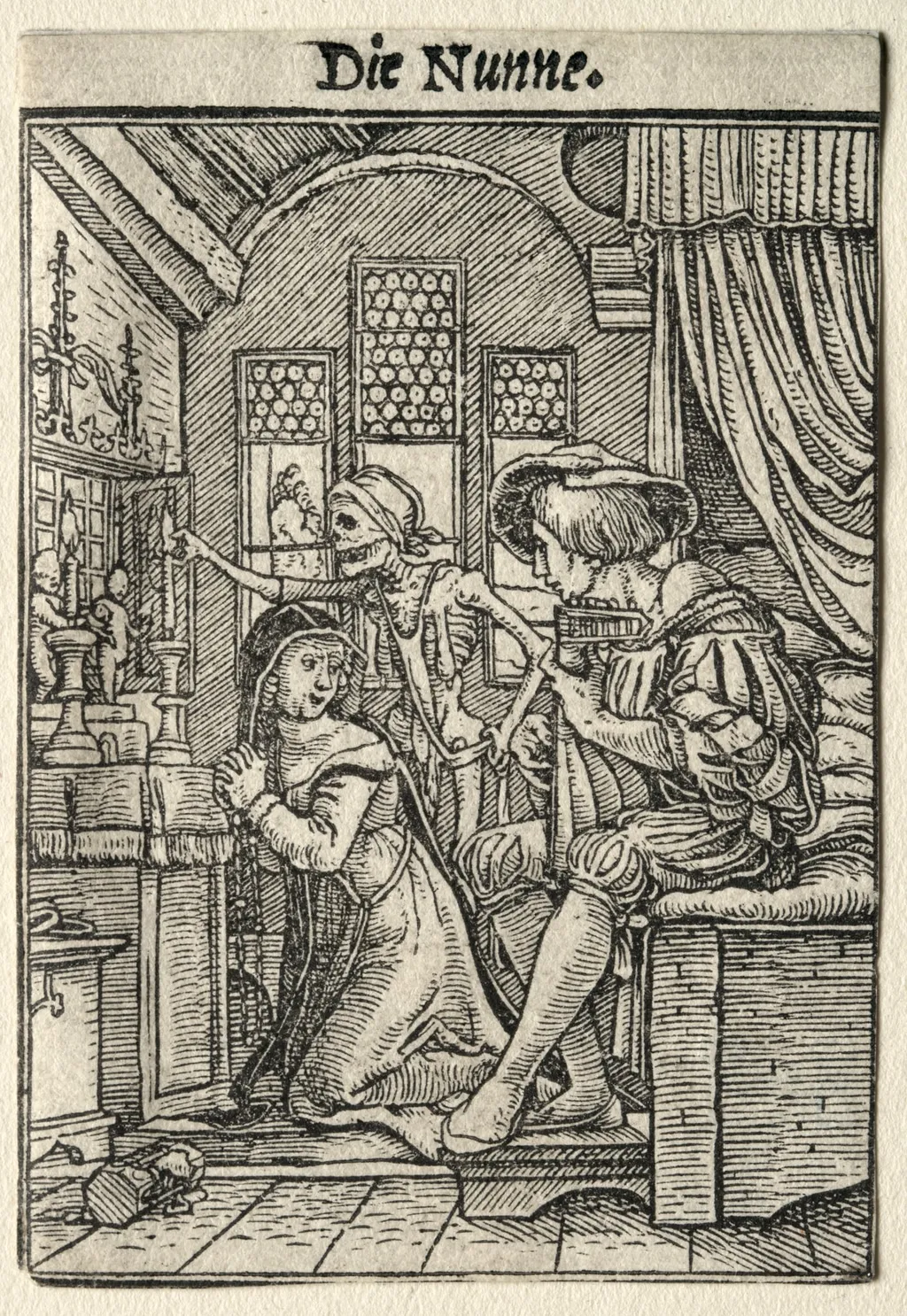
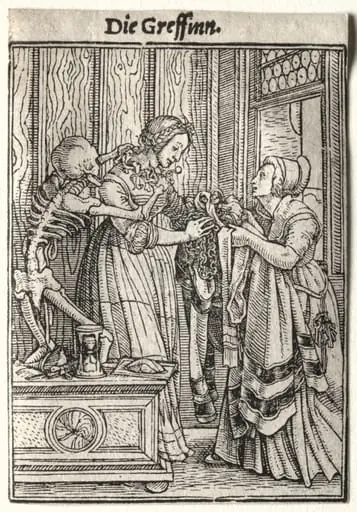
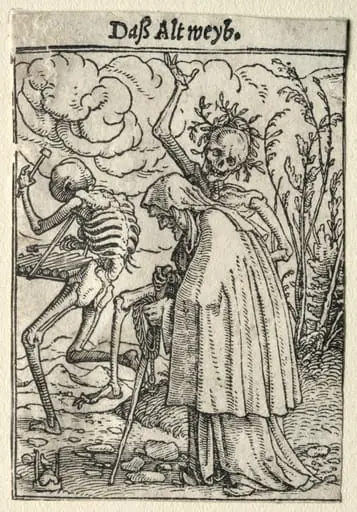
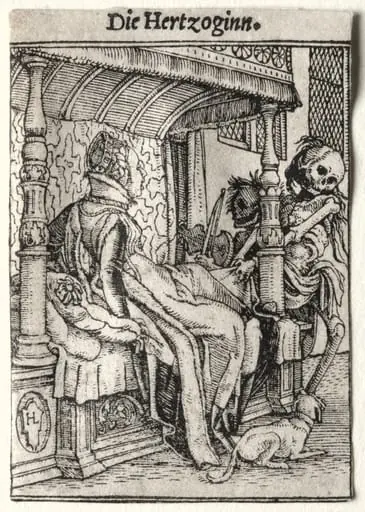
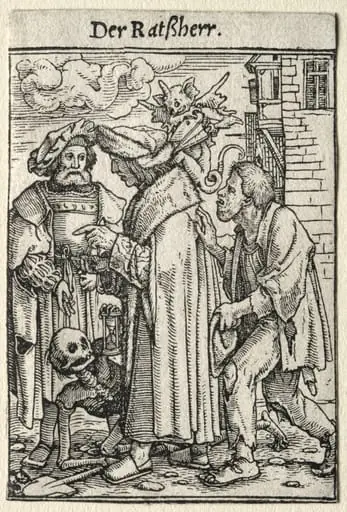
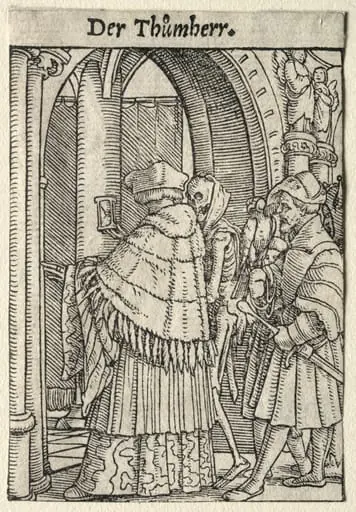
Dance of Death: The Nun is a print by the Renaissance artist Hans Holbein the Younger. It dates from 1526 and is held in the collection of the Cleveland Museum of Art.
About this work
Overview
Created circa 1526 by Hans Holbein the Younger, this woodcut forms part of his larger *Dance of Death* series. The print presents a dimly lit interior where a kneeling nun is confronted by two skeletal figures, one in monastic garb and another dressed as a wealthy gentleman. The composition underscores the medieval allegory that death unites all social ranks.
Subject & Meaning
The central nun, hands clasped in prayer, is approached by a monk‑clad skeleton holding a staff and a richly attired skeleton playing a flute while leaning on a chair. The juxtaposition of religious devotion and secular indulgence illustrates the universal reach of mortality, suggesting that neither ecclesiastical authority nor worldly wealth can evade death’s summons.
Technique & Style
Executed as a black‑and‑white woodcut, the image relies on stark contrasts and fine line work characteristic of the Northern Renaissance. Holbein’s precise incising renders detailed textures—shelves, symbols on the walls, and the folds of clothing—while the chiaroscuro effect creates a somber atmosphere that heightens the moral gravity of the scene.
History & Provenance
The nun’s print remains attributed to Holbein the Younger, distinguishing his work from that of his father, Hans Holbein the Elder.
Holbein produced the *Dance of Death* series alongside portraits, satirical prints, and Reformation‑related propaganda, reflecting the artist’s diverse output in 16th‑century Europe. The series circulated widely through print, reinforcing the era’s preoccupation with death and social equality. The nun’s print remains attributed to Holbein the Younger, distinguishing his work from that of his father, Hans Holbein the Elder.
Artist & collection

Artist
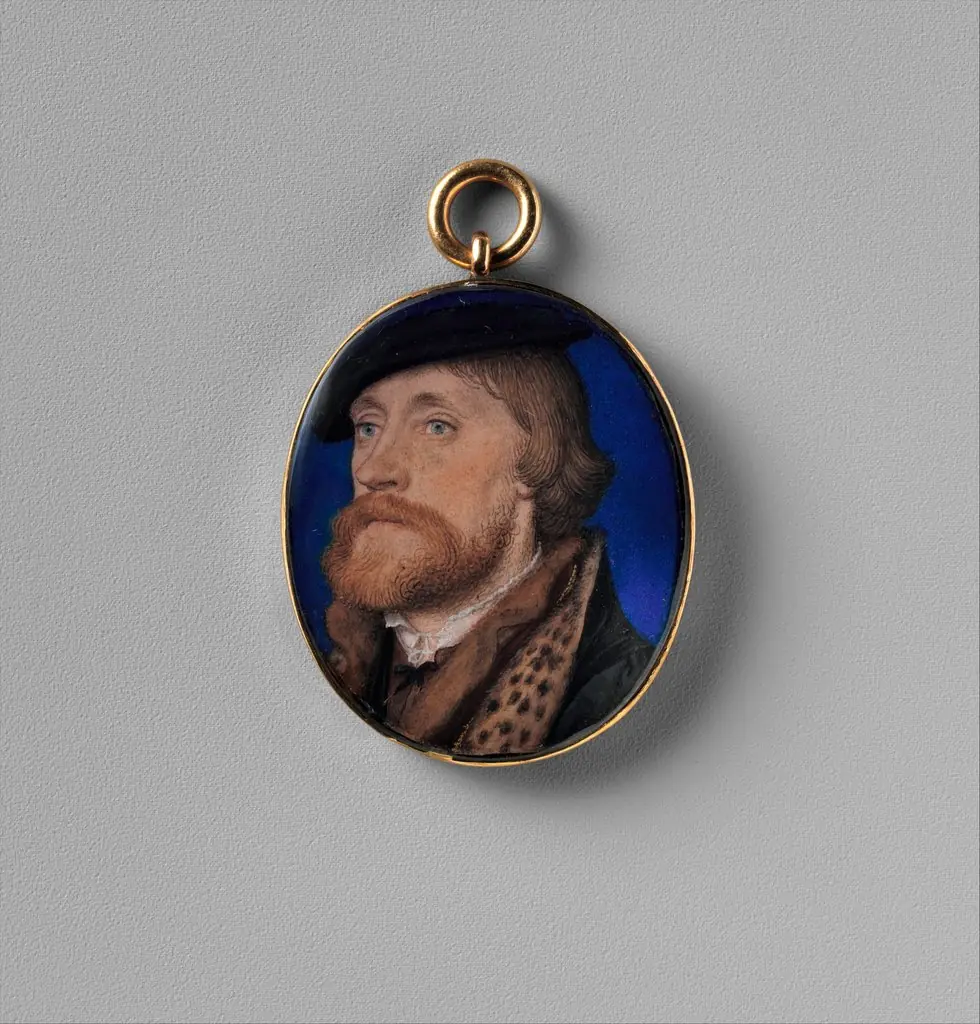
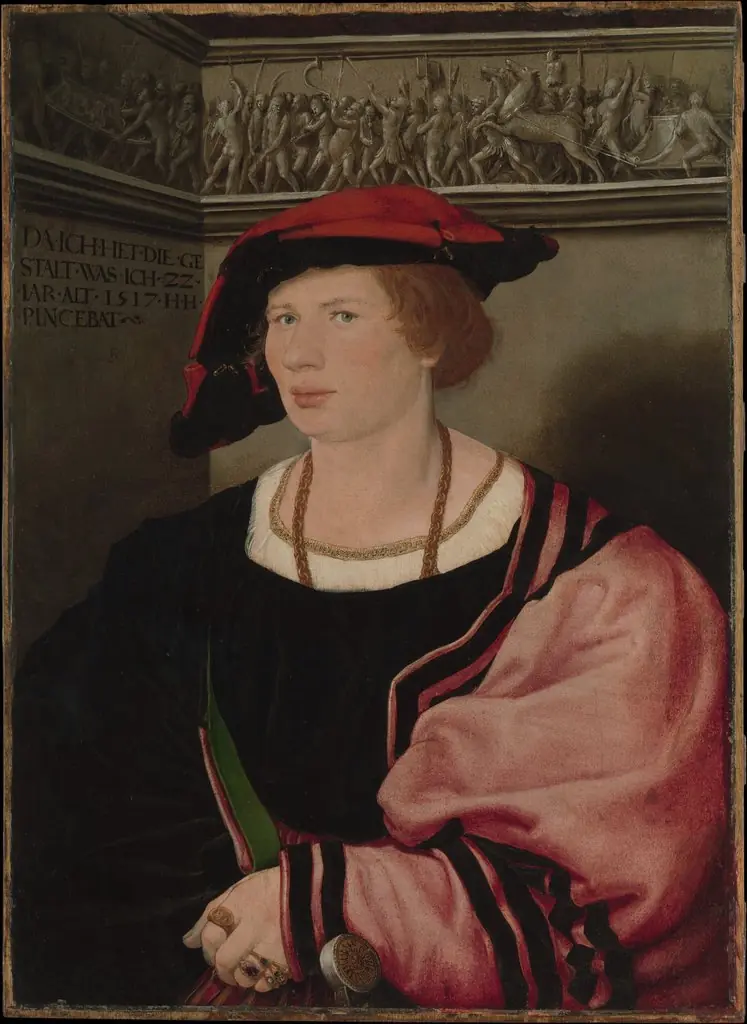
Hans Holbein the Younger (UK: HOL-byne, US: HOHL-byne, HAWL-; German: Hans Holbein der Jüngere; c.