Artwork
Dance of Death: The Ploughman
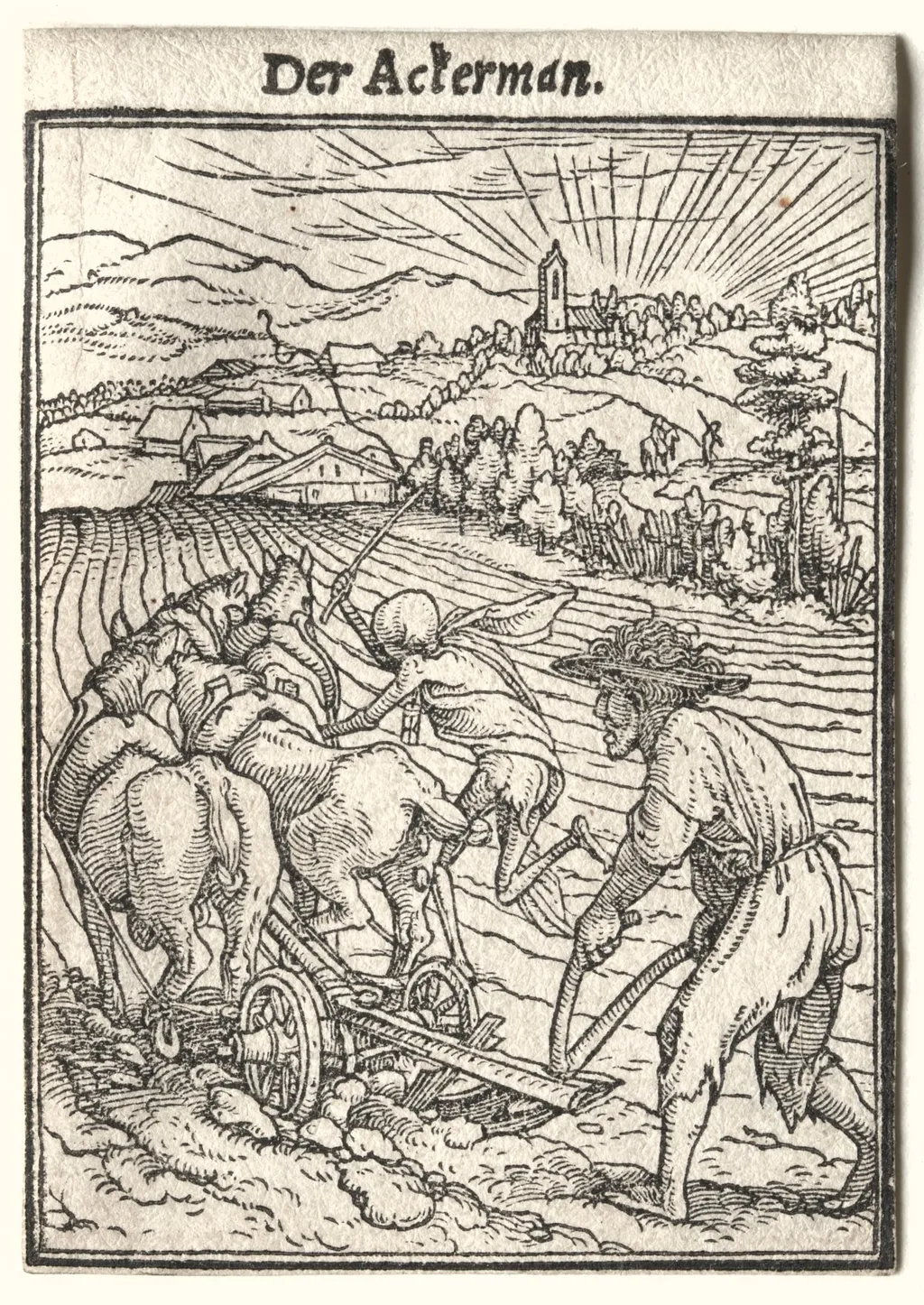
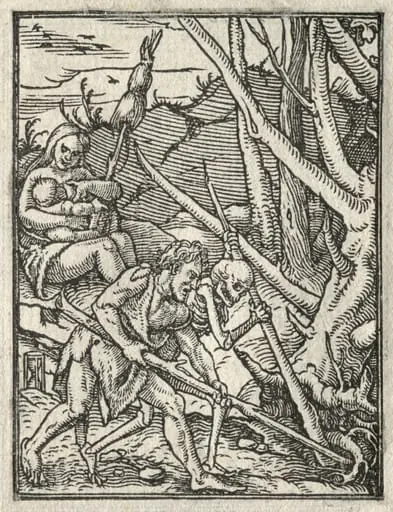
Dance of Death: The Ploughman is a print by the Renaissance artist Hans Holbein the Younger. It dates from 1526 and is held in the collection of the Cleveland Museum of Art.
About this work
Overview
Created circa 1526, this woodcut is one of Hans Holbein the Younger’s illustrations for his *Dance of Death* series. The print shows a ploughman at work in a countryside setting, accompanied by two horses, while a skeletal figure guides the scene, embodying the medieval allegory that death visits every occupation.
Subject & Meaning
The composition juxtaposes a laboring farmer with a personified Death, emphasizing the inevitability of mortality regardless of social status. By placing the grim figure alongside ordinary agricultural activity, Holbein underscores a moral lesson common to Reformation-era art: all lives are equally subject to the same end.
Technique & Style
Executed as a woodcut, the image relies on fine line work to render the ploughman’s posture, the musculature of the horses, and the rolling landscape. Holbein’s Northern Renaissance sensibility appears in the meticulous attention to texture and spatial depth, creating a realistic yet allegorical scene.
History & Provenance
Holbein, a German‑Swiss artist known for portraiture and book design, produced the *Dance of Death* series while active in Basel. The series circulated as printed pamphlets, reaching a broad audience during the early Reformation, though the original blocks and early impressions have not survived in a single collection.
Context
The work reflects contemporary preoccupations with death and moral instruction, themes amplified by the religious upheavals of the 1520s. Holbein’s engagement with satire and didactic imagery aligns the print with other European *Danse Macabre* traditions that warned viewers of life's transience.
Artist & collection
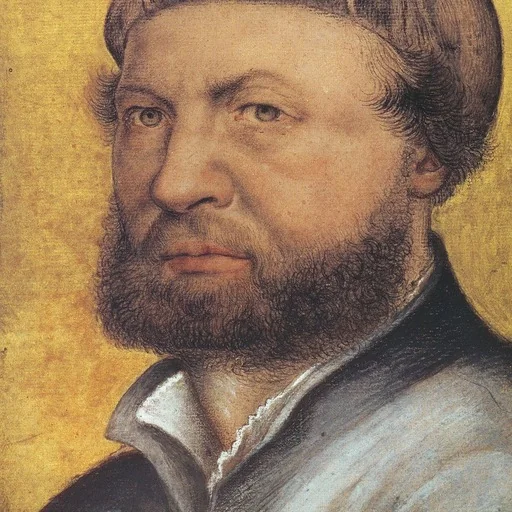
Artist
Hans Holbein the Younger (UK: HOL-byne, US: HOHL-byne, HAWL-; German: Hans Holbein der Jüngere; c.