Artwork
Elijah Anoints Elisha
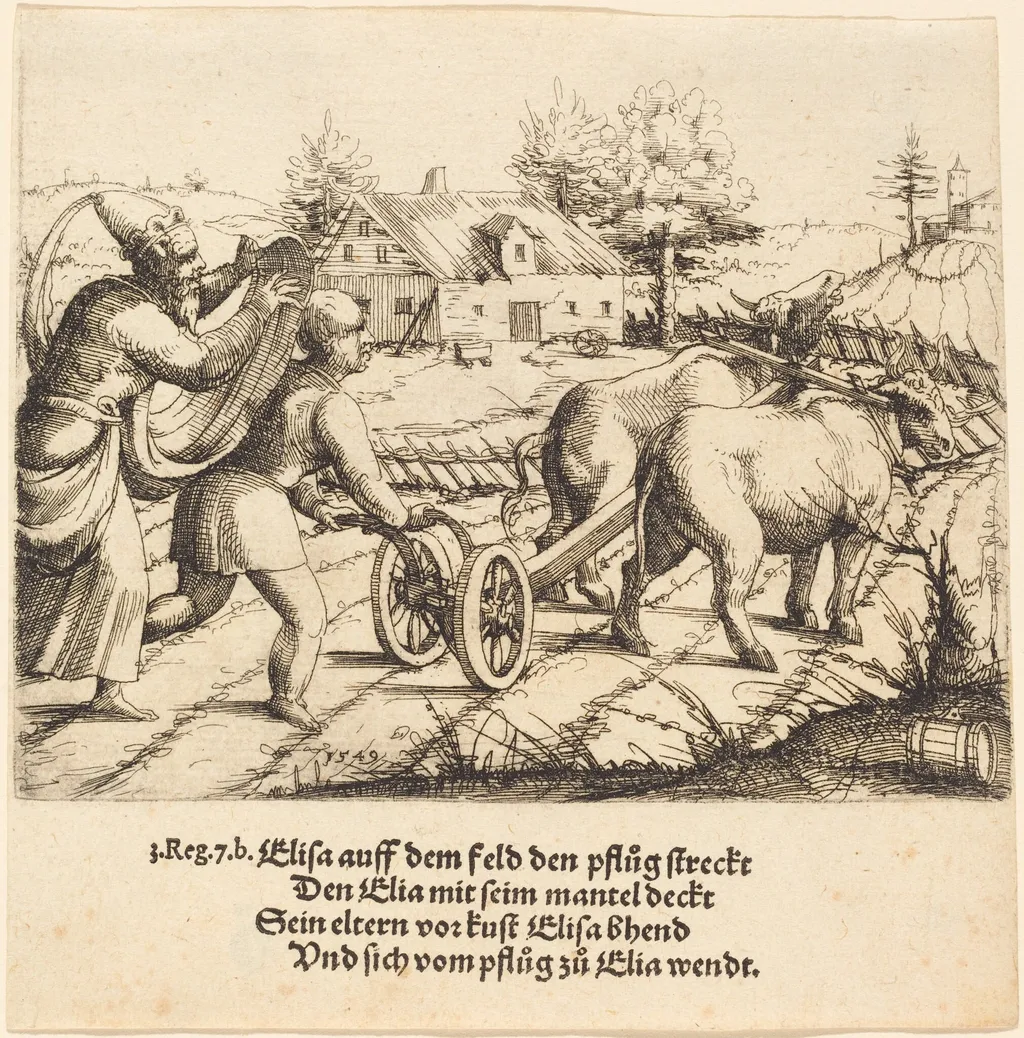
Elijah Anoints Elisha is an ink print by the Renaissance artist Augustin Hirschvogel. It dates from 1549 and is held in the collection of the National Gallery of Art.
About this work
Overview
This work belongs to a brief but significant phase of his career focused on etching, during which he refined the medium’s capacity for subtle tonal variation.
Augustin Hirschvogel, a German artist active in the mid-16th century, produced this etching in 1549 as part of a series of small landscape prints. Known for his precision in line and spatial composition, Hirschvogel combined artistic skill with mathematical rigor, often integrating topographical detail into biblical scenes. This work belongs to a brief but significant phase of his career focused on etching, during which he refined the medium’s capacity for subtle tonal variation.
Subject & Meaning
The scene illustrates the biblical moment from 1 Kings 19, when the prophet Elijah selects Elisha as his successor by casting his mantle over him while he works in the field. Elisha is shown plowing with oxen, a symbol of his humble origins, while Elijah holds the anointing vessel. The quiet transition of divine authority is rendered without theatricality, emphasizing duty over spectacle, in keeping with Protestant interpretations of the period.
Technique & Style
Hirschvogel employed fine, controlled etching lines to build texture and depth, using cross-hatching and delicate tonal gradations to suggest the solidity of earth, fabric, and foliage. The landscape is rendered with careful attention to spatial recession, a hallmark of his cartographic training. The figures are integrated into the environment rather than dominating it, reflecting a naturalistic approach that aligns with Northern Renaissance conventions of the time.
History & Provenance
Created during Hirschvogel’s most productive period as a printmaker, the etching circulated among collectors in southern Germany and Austria. Few impressions survive, and those that do are held in institutional collections such as the Albertina and the British Museum. Its production coincided with the rise of print culture in the Reformation era, when biblical imagery was widely disseminated for private devotion and education.
Context
Hirschvogel worked within the orbit of the Danube School, a loose network of artists who blended landscape observation with religious themes. Unlike the more dramatic altarpieces of the era, his prints favored intimate, contemplative scenes. This etching reflects the influence of humanist scholarship and the growing interest in biblical narratives as subjects for personal meditation, particularly in Protestant regions where visual piety took new forms.
Legacy
Though Hirschvogel is less known today than contemporaries like Dürer, his etchings contributed to the evolution of landscape as a coherent compositional element in printmaking. His precise draftsmanship and integration of narrative within natural settings influenced later generations of Northern European printmakers, particularly those interested in the intersection of science, observation, and religious subject matter.
Artist & collection
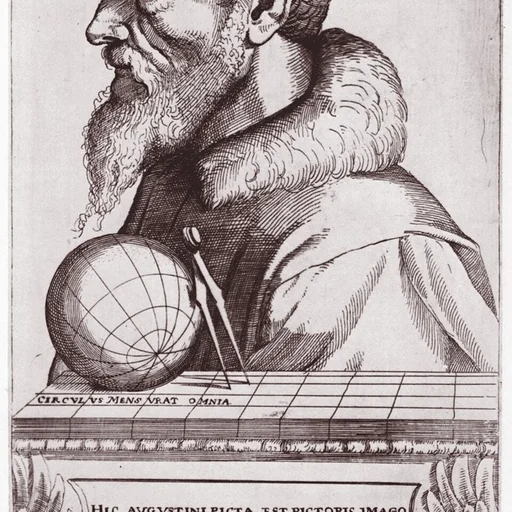
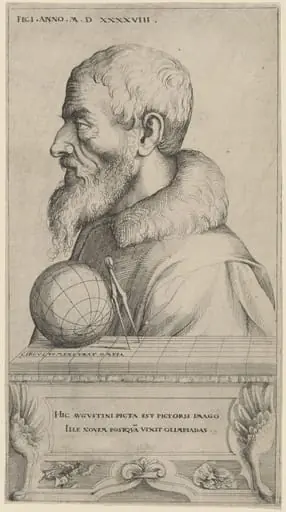
Artist
Augustin Hirschvogel (1503 – February 1553) was a German artist, mathematician, and cartographer known primarily for his etchings.

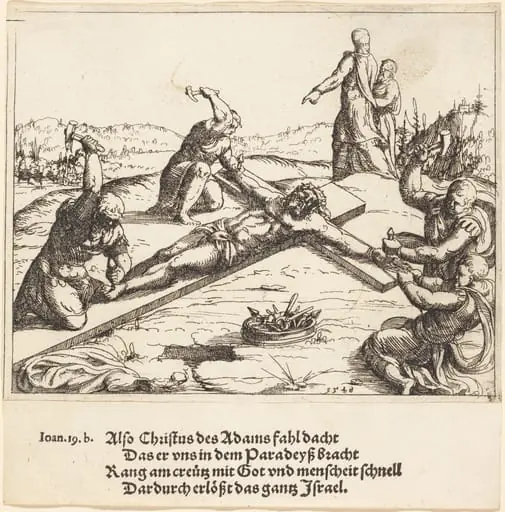
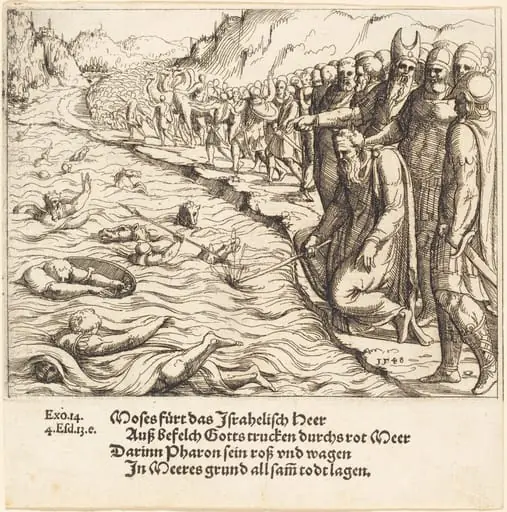
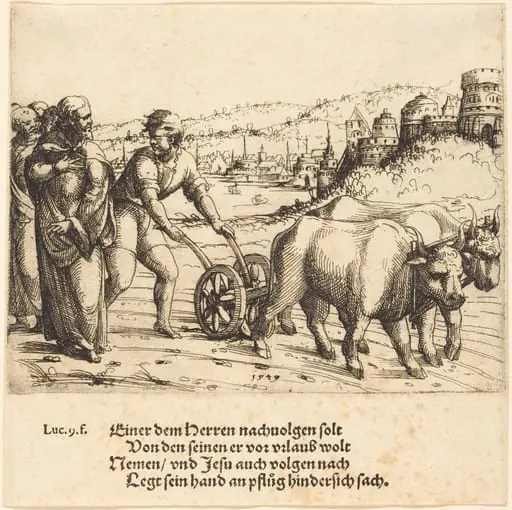 No One Who Puts His Hand on the Plow and Looks Back ia a Follower of Christ
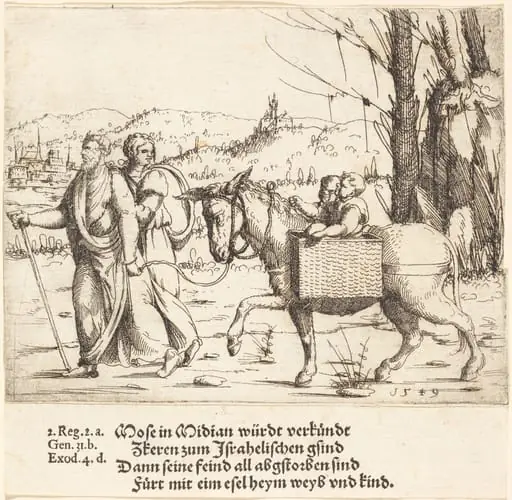 Moses Returns to Egypt from Midian
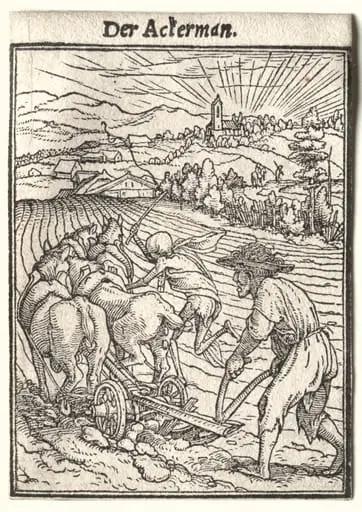 Dance of Death: The Ploughman
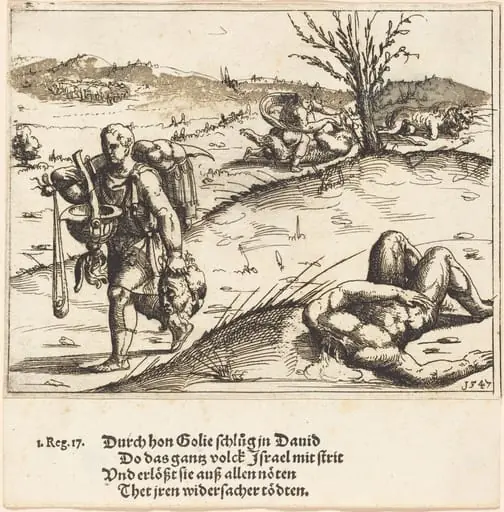 David Beheads Goliath
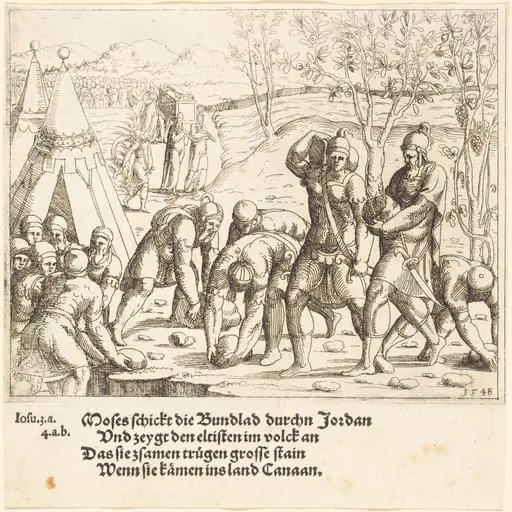 The Twelve Stones, and the Waters of the Jordan are Divided
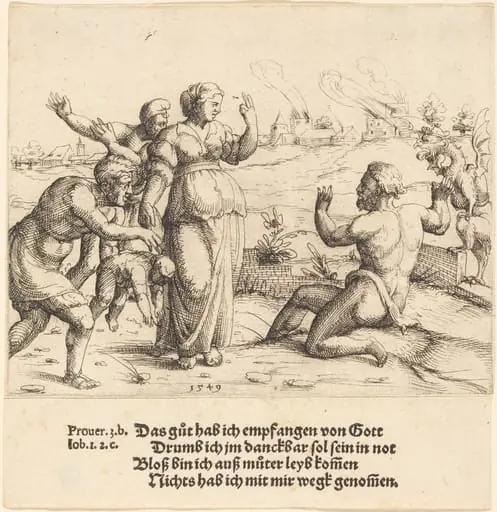 Job Learns of His Misfortunes
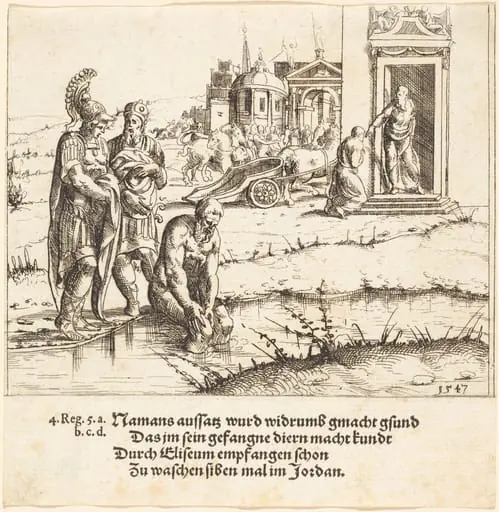 Naaman is Cured of Leprosy
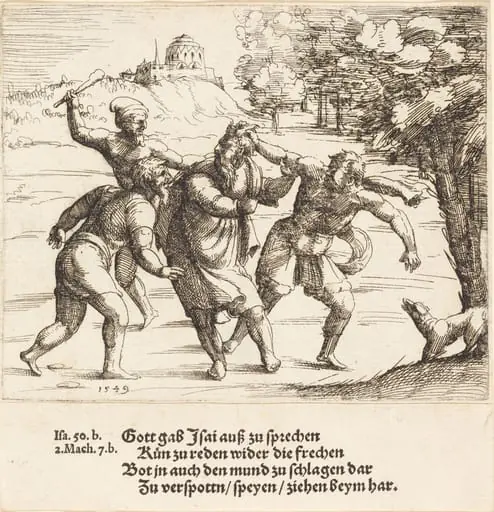 Isaiah Accepts Mockery because of His Faith
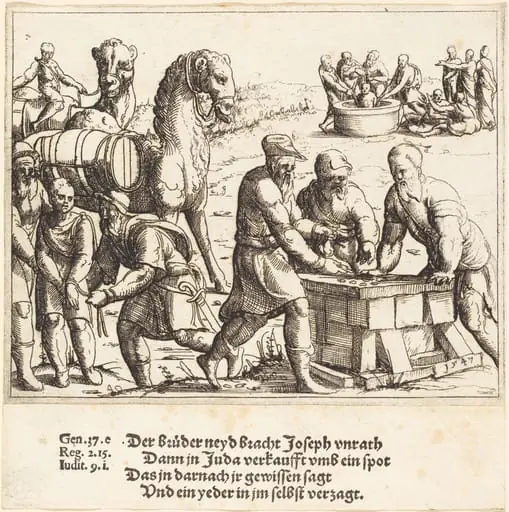 Joseph Sold to the Ishmaelites
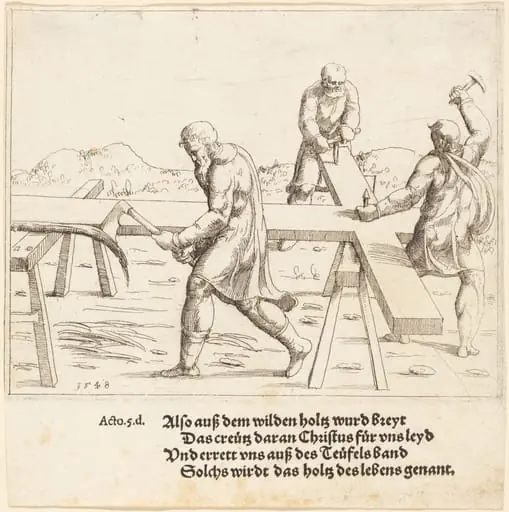 The Preparation of the Cross
 The Sacrifice of Isaac
 Elijah is Taken up to Heaven