Artwork
Summer
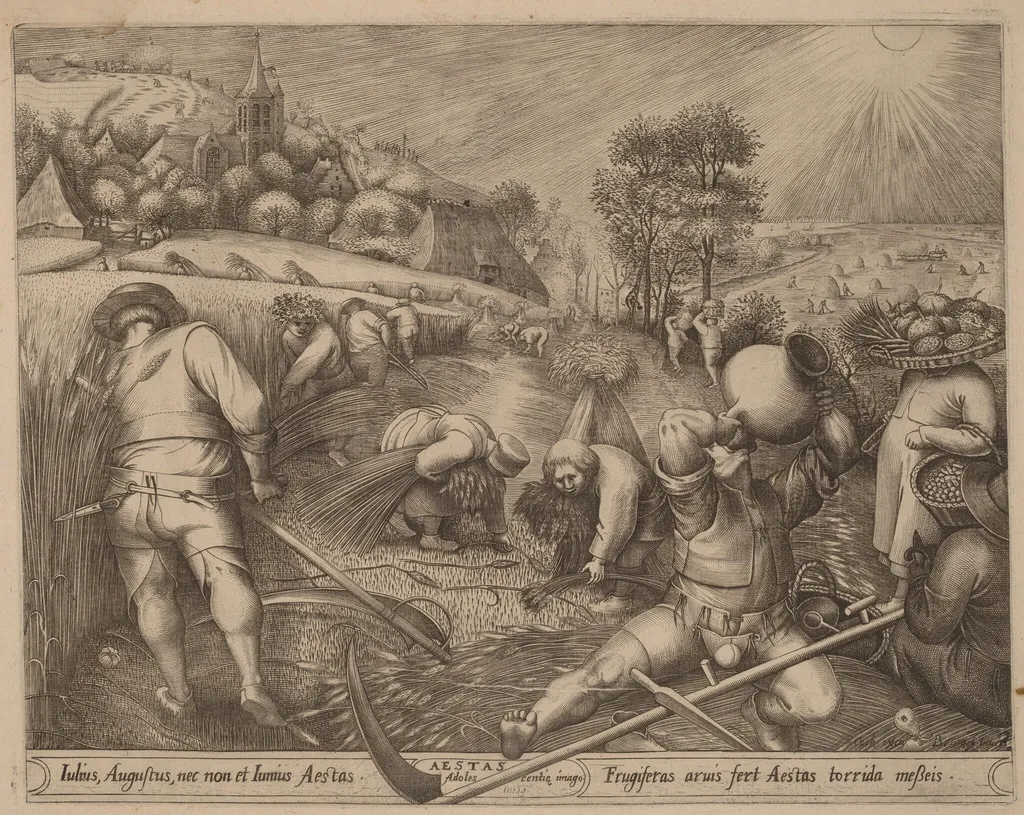
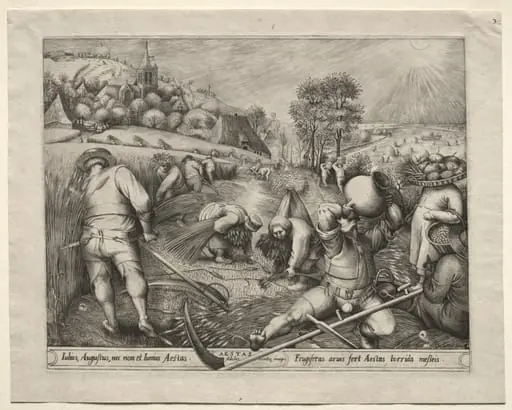
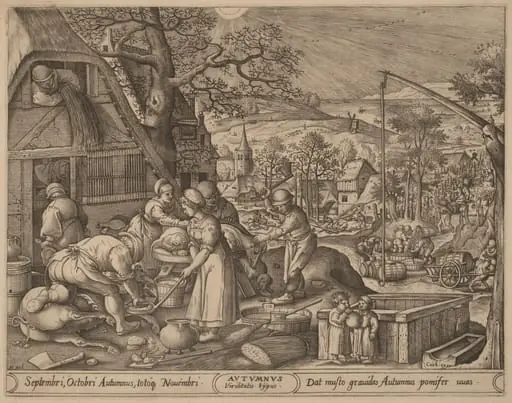
Summer is an ink print by the Renaissance artist Pieter van der Heyden. It dates from 1570 and is held in the collection of the National Gallery of Art.
About this work
Overview
Summer is an engraving created by Pieter van der Heyden around 1570, exemplifying the flourishing printmaking of the mid-16th century in Flanders.
Subject & Meaning
The engraving captures a vibrant summer scene, focusing on agricultural laborers using scythes in a field, with others bundling cut grass, set against a backdrop of trees, buildings, and a church steeple, likely symbolizing the seasonal cycle of rural life.
Technique & Style
Executed in a detailed, realistic manner, the work features intricate lines, textures, and cross-hatching, enhancing depth and dimensionality. The strategic use of light and shadow further enriches the scene's atmosphere and spatial depth.
History & Provenance
While specific provenance details are not provided, the work aligns with van der Heyden's practice of producing reproductive prints after prominent Flemish artists, though the original design's author is not specified here.
Context
Created during a period when printmaking served as a key medium for disseminating artistic designs, *Summer* reflects the era's appreciation for depicting everyday and seasonal themes.
Artist & collection

Artist
Pieter van der Heyden (c. 1530 - after March 1572) was a Flemish printmaker who is known for his reproductive engravings after works by leading Flemish painters and designers of the 16th century.