Artwork
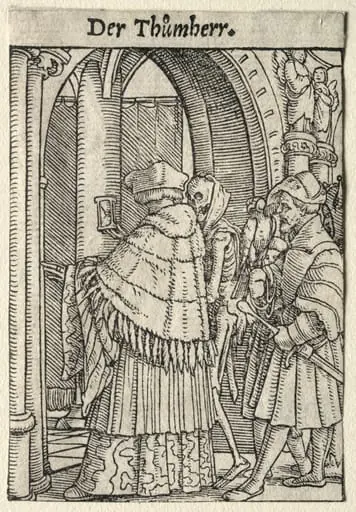
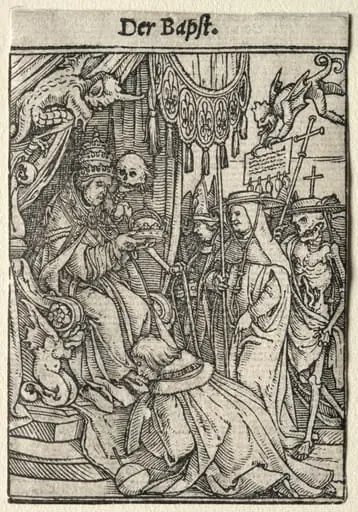
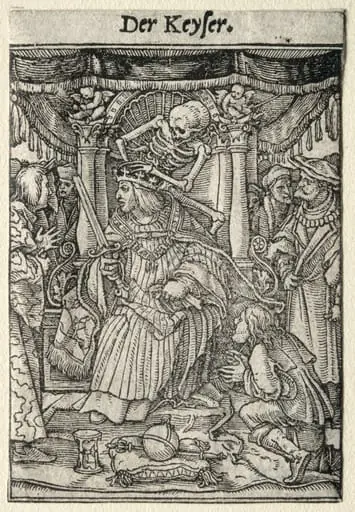
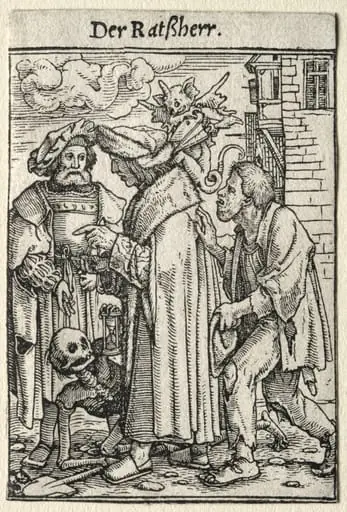
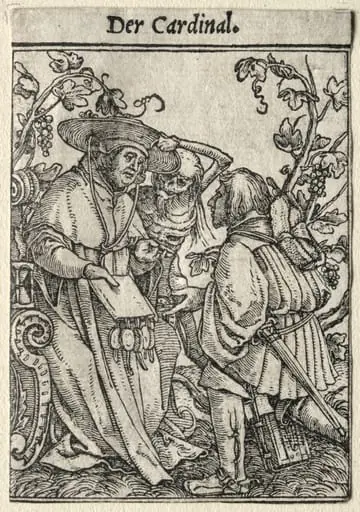
The Dance of Death: The Cardinal; The Empress
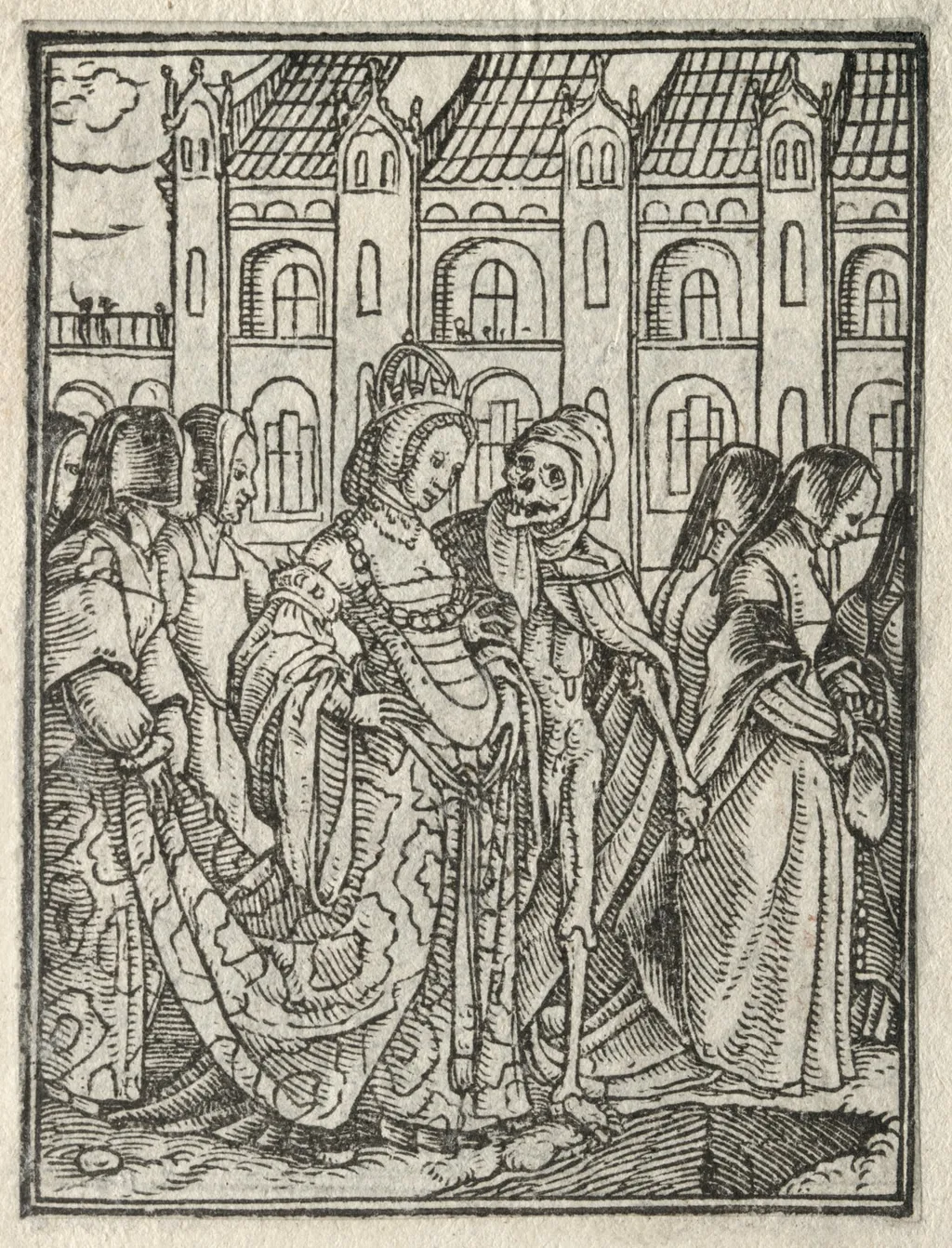
The Dance of Death: The Cardinal; The Empress is a print by the Renaissance artist Hans Holbein the Younger. It dates from 1526 and is held in the collection of the Cleveland Museum of Art.
About this work
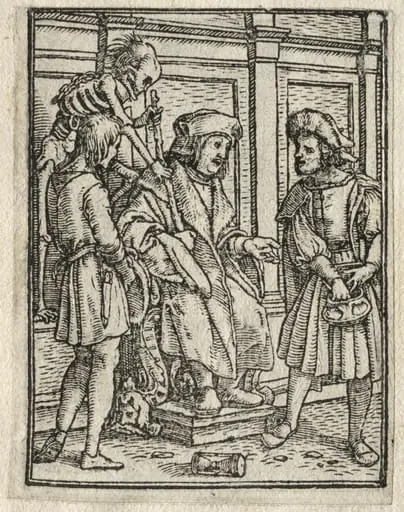
Holbein made many Dance of Death scenes, warning that power means nothing when the end comes.
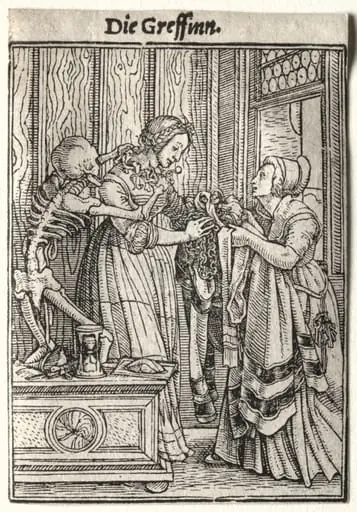
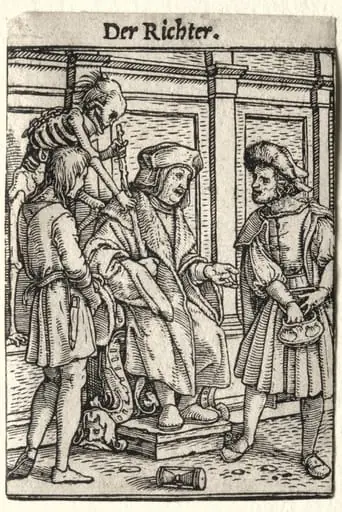
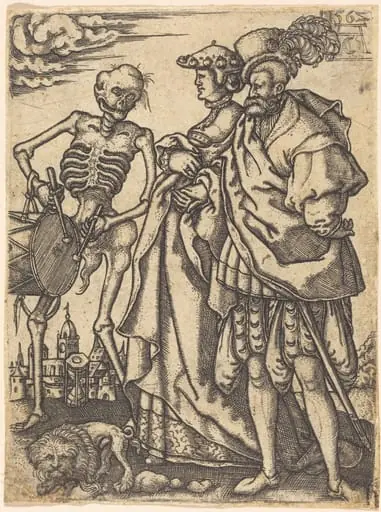
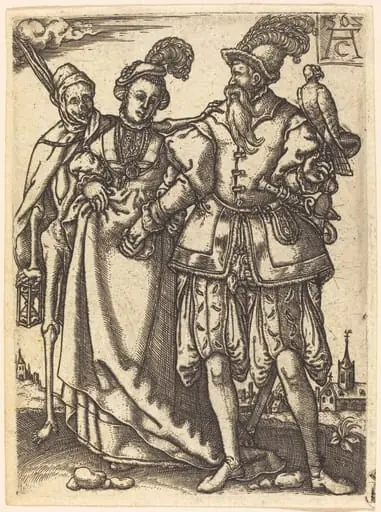
This painting shows a skeleton leading a cardinal and an empress in a dark dance. The skeleton holds a staff with a scythe tied to it, a classic Death symbol. The empress wears a crown and rich robes, but her face is blank with fear.
Death isn’t picky. It drags both high and low in this 1526 woodcut. Holbein made many Dance of Death scenes, warning that power means nothing when the end comes.
Look up this series’ next print: *The Dance of Death: The Knight*.
Overview
Created around 1526, this woodcut by Hans Holbein the Younger forms part of his larger series on the Dance of Death. The image depicts a skeletal figure guiding a cardinal and an empress through a shadowy procession, emphasizing the universal reach of mortality regardless of rank.
Subject & Meaning
The composition juxtaposes the regal authority of the empress—crowned and robed in opulent fabrics—with the stark, skeletal embodiment of Death, whose scythe‑topped staff underscores the theme that earthly power offers no protection against the inevitable end.
Technique & Style
Holbein employs the precise line work and chiaroscuro typical of Northern Renaissance woodcuts, rendering intricate details in the figures’ attire while maintaining the stark contrast between the living and the skeletal. The medium allows for fine texture in the folds of the robes and the bone structure of Death.
History & Provenance
Holbein, a German painter of Swiss descent, produced this print during a period when he was active in both portraiture and religious illustration, often aligning his work with Reformation ideas. The series circulated widely in the early 16th century, influencing contemporary views on mortality and social hierarchy.
Context
The Dance of Death series reflects a broader European preoccupation with memento mori motifs, especially in the wake of the plague and religious upheaval. By pairing high‑ranking figures with the same skeletal figure, Holbein reinforces the egalitarian message that death spares no one, a sentiment resonant with Reformation critiques of worldly authority.
Artist & collection
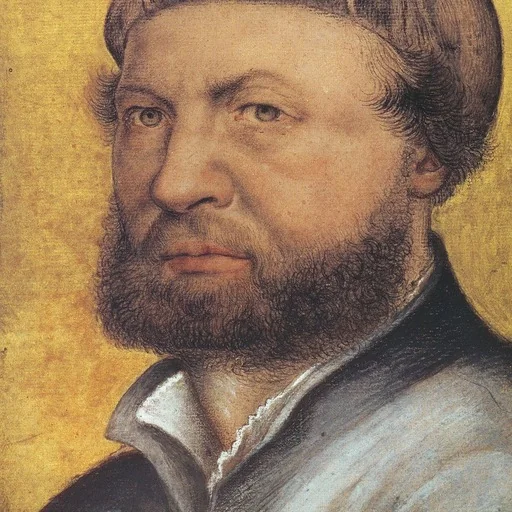
Artist
Hans Holbein the Younger (UK: HOL-byne, US: HOHL-byne, HAWL-; German: Hans Holbein der Jüngere; c.