Artwork
Dance of Death: The Cardinal
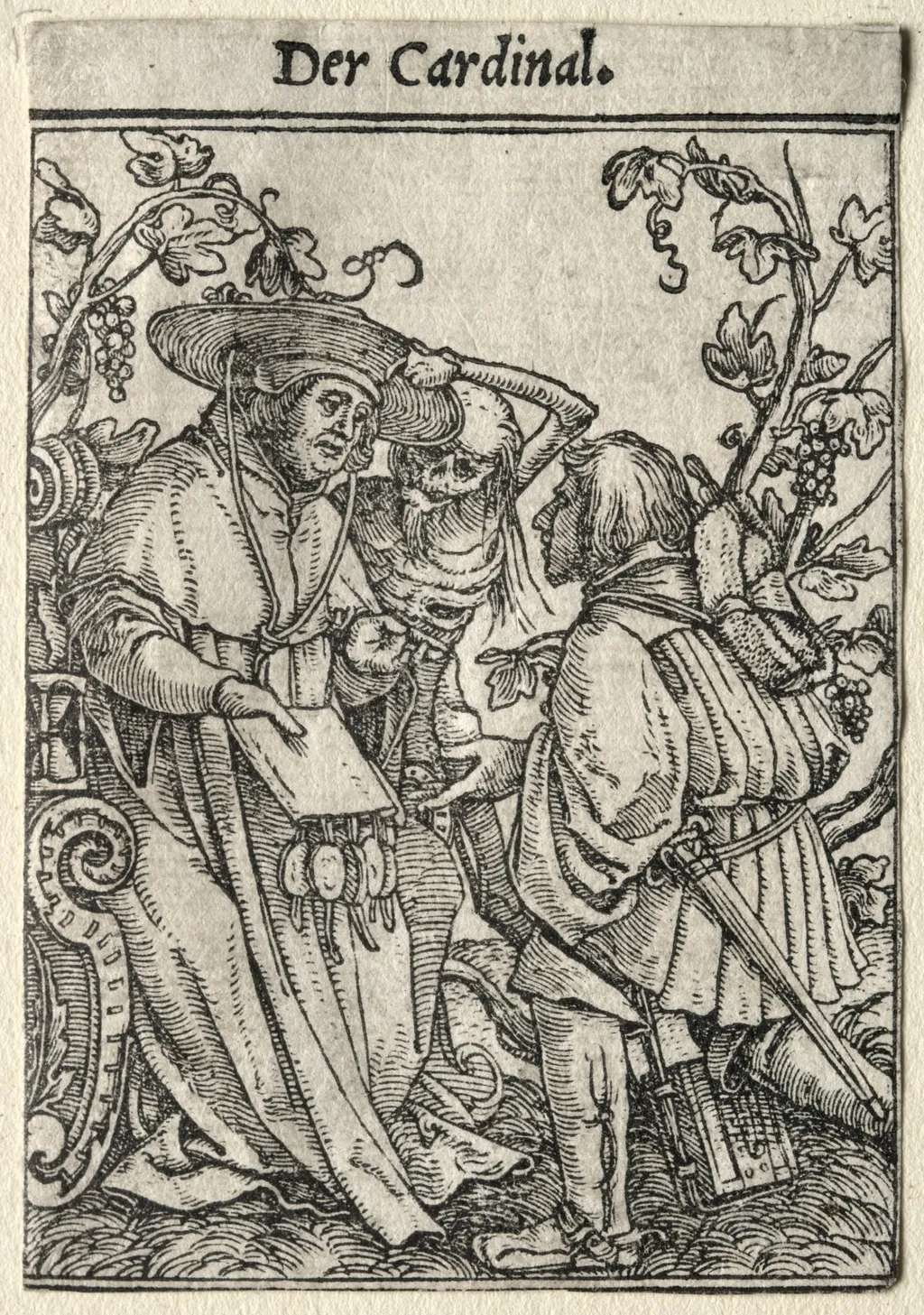
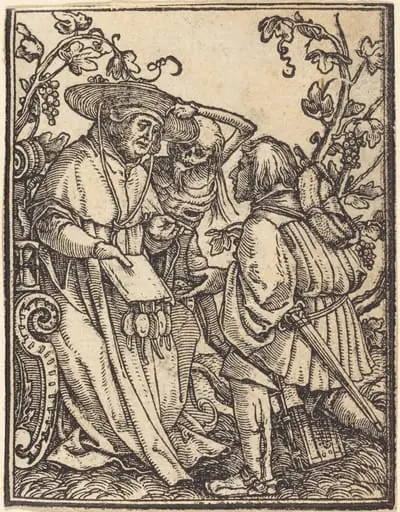
Dance of Death: The Cardinal is a print by the Renaissance artist Hans Holbein the Younger. It dates from 1526 and is held in the collection of the Cleveland Museum of Art.
About this work
Overview
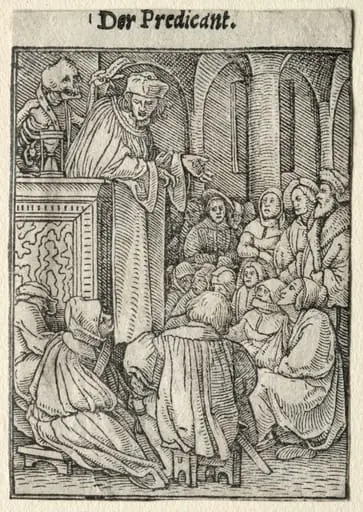
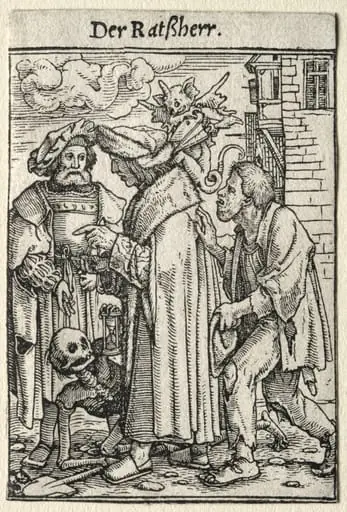
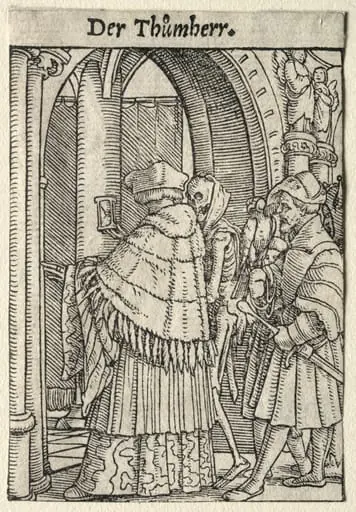
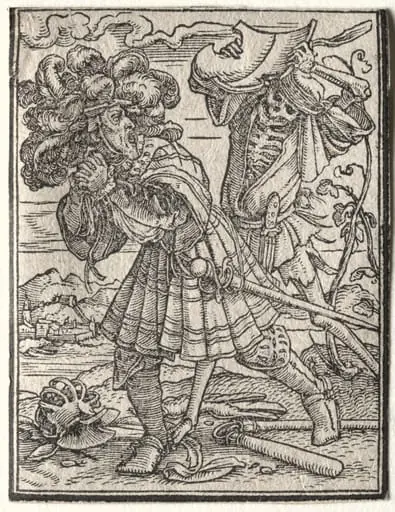
Dance of Death: The Cardinal is a woodcut created by Hans Holbein the Younger around 1526, part of a series illustrating the medieval allegory of the Dance of Death. It features a cardinal accompanied by a skeleton, symbolizing the universal reach of mortality.
Subject & Meaning
The print depicts a high-ranking church official (the cardinal) alongside a skeleton, highlighting the theme of mortality transcending social status. The cardinal, adorned with a large hat and long robe, holds a paper, while the skeleton, bearing a branch with leaves and grapes, stands beside him. Their mutual gaze underscores the inescapability of death.
Technique & Style
Executed in the Northern Renaissance style, the woodcut showcases Holbein's detailed and realistic technique. Against a light background with darker accents, the figures of the cardinal and skeleton are rendered with precision, reflecting Holbein's prowess as a printmaker.
History & Provenance
Created circa 1526, this work is part of Holbein's broader output that included portraits, religious pieces, and Reformation propaganda. Notably, Holbein the Younger distinguished himself from his father, Hans Holbein the Elder, to become a leading 16th-century portraitist and printmaker.
Artist & collection
Artist
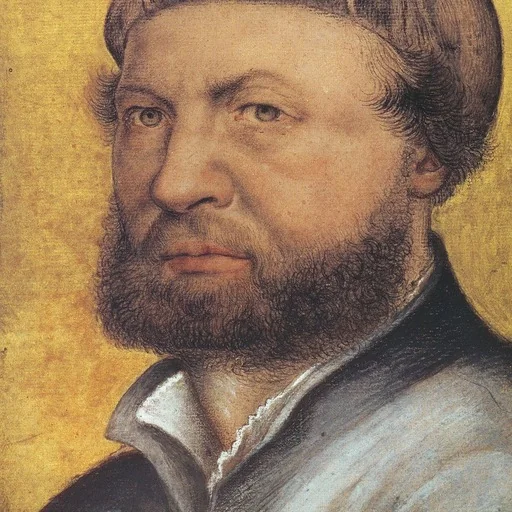
Hans Holbein the Younger (UK: HOL-byne, US: HOHL-byne, HAWL-; German: Hans Holbein der Jüngere; c.