Artwork
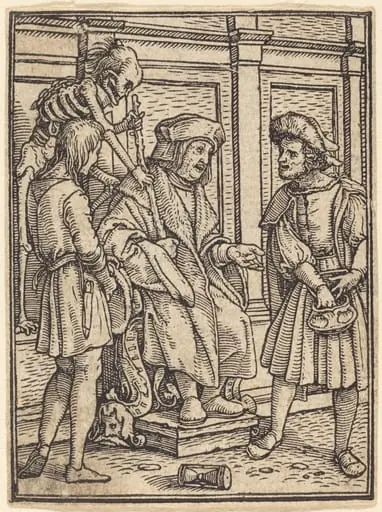
The Dance of Death: The Judge
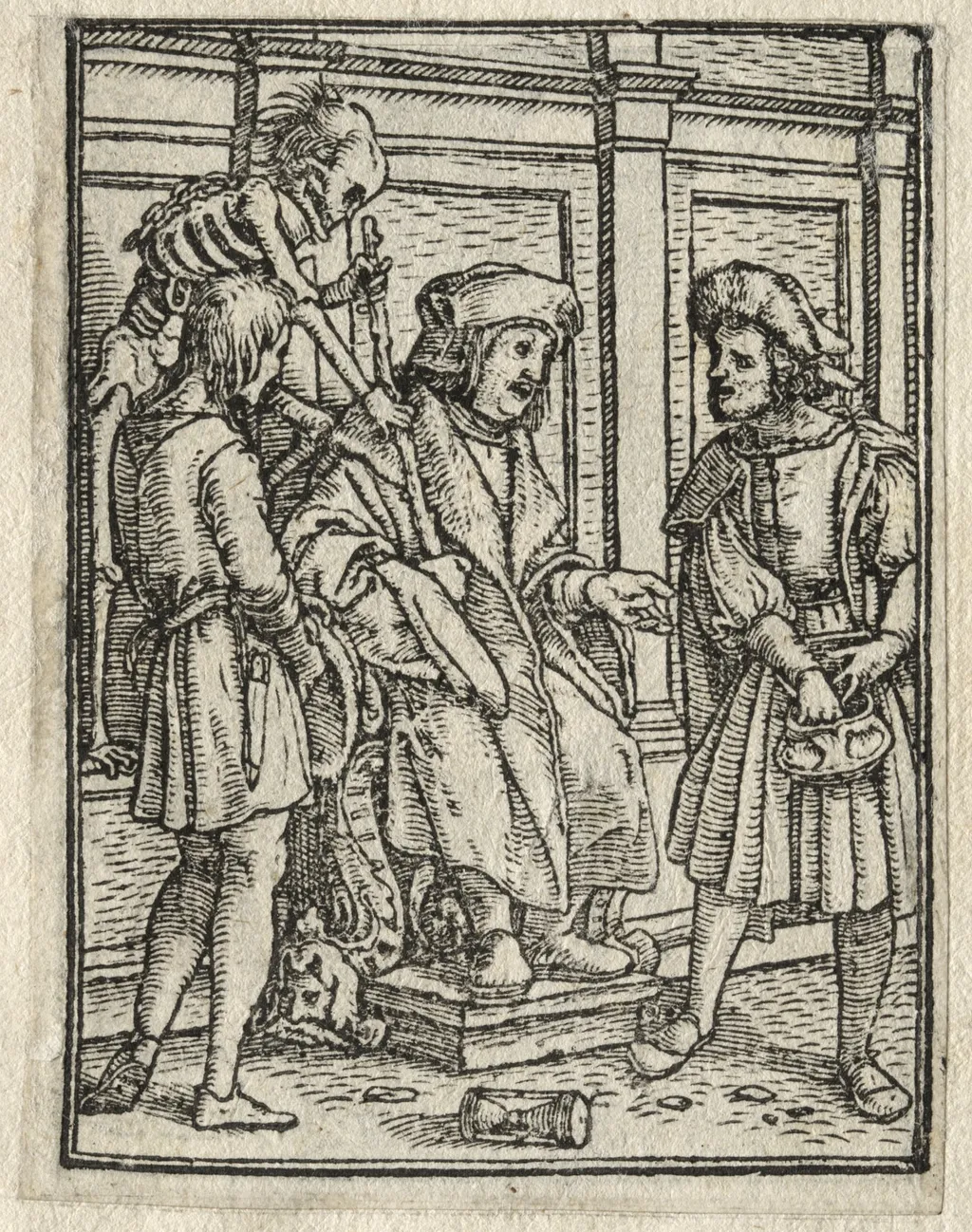
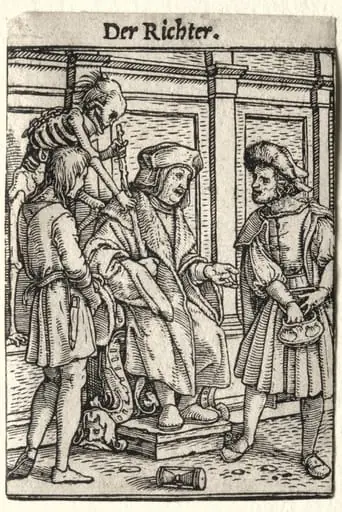
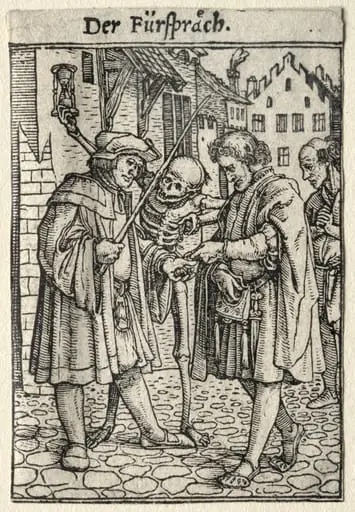
The Dance of Death: The Judge is a print by the Renaissance artist Hans Holbein the Younger. It dates from 1526 and is held in the collection of the Cleveland Museum of Art.
About this work
Overview
Executed in precise black-and-white lines, it belongs to a broader tradition of Northern Renaissance woodcuts and engravings designed for mass distribution.
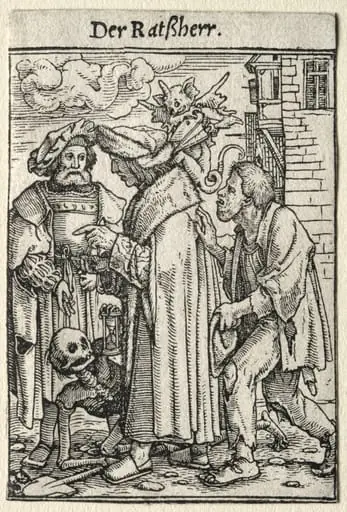
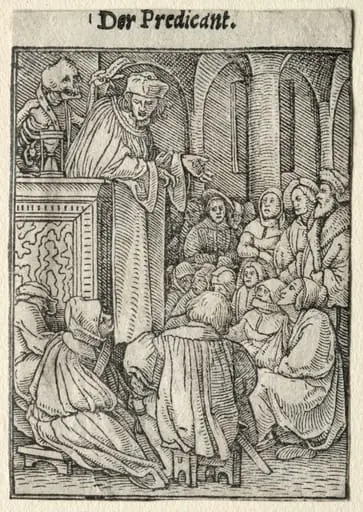
Created around 1526 by Hans Holbein the Younger, this engraving is one of forty-one plates in the series known as The Dance of Death. Executed in precise black-and-white lines, it belongs to a broader tradition of Northern Renaissance woodcuts and engravings designed for mass distribution. Holbein, active in Basel and London, used the medium to convey moral and social commentary, embedding his imagery in printed books accessible to a widening literate public.
Subject & Meaning
The scene portrays Death as a skeletal figure confronting a seated judge, a symbol of earthly authority. The judge, clad in formal attire and surrounded by symbols of legal power, is shown in a moment of quiet confrontation, his gaze lowered as if acknowledging his own vulnerability. A second figure in armor stands rigidly nearby, suggesting that even military strength offers no defense. The composition underscores a central theme: death impartially claims all ranks, regardless of status or power.
Technique & Style
Holbein employed fine, controlled engraving lines to render texture and form with clarity. The skeletal figure is rendered with sharp, angular contours, contrasting with the softer folds of the judge’s garments and the metallic sheen of the armor. The room’s wooden walls and tiled floor are suggested through minimal yet precise hatching, grounding the scene in a tangible space. The absence of color heightens the starkness of the message, emphasizing the universality of mortality.
History & Provenance
The print was originally published as part of a book series in Lyon, France, around 1538, though Holbein designed the images earlier in Basel. The series gained wide circulation across Europe, particularly in Protestant regions where moral and religious themes resonated with reformist ideals. Surviving impressions are held in major collections, including the Cleveland Museum of Art, where the print is preserved as part of a complete set of the original sequence.
Context
Produced during the early years of the Protestant Reformation, the image reflects a cultural preoccupation with mortality and divine judgment. As religious authority fragmented and social hierarchies were questioned, The Dance of Death offered a visual reminder that earthly power was transient. The judge, a figure of institutional control, becomes a target of this critique, revealing a broader skepticism toward the permanence of human institutions.
Legacy
Holbein’s series influenced later artistic treatments of death in Northern Europe, shaping how mortality was visualized in print culture. Its unflinching depiction of equality before death resonated beyond its time, contributing to the development of allegorical imagery in both religious and secular contexts. The work remains a key example of how printmaking could serve as a vehicle for ethical reflection in an era of rapid social change.
Artist & collection
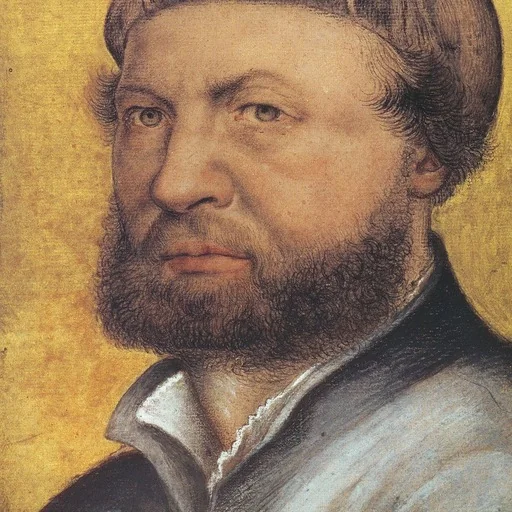
Artist
Hans Holbein the Younger (UK: HOL-byne, US: HOHL-byne, HAWL-; German: Hans Holbein der Jüngere; c.