Artwork
Domitia Calvilla
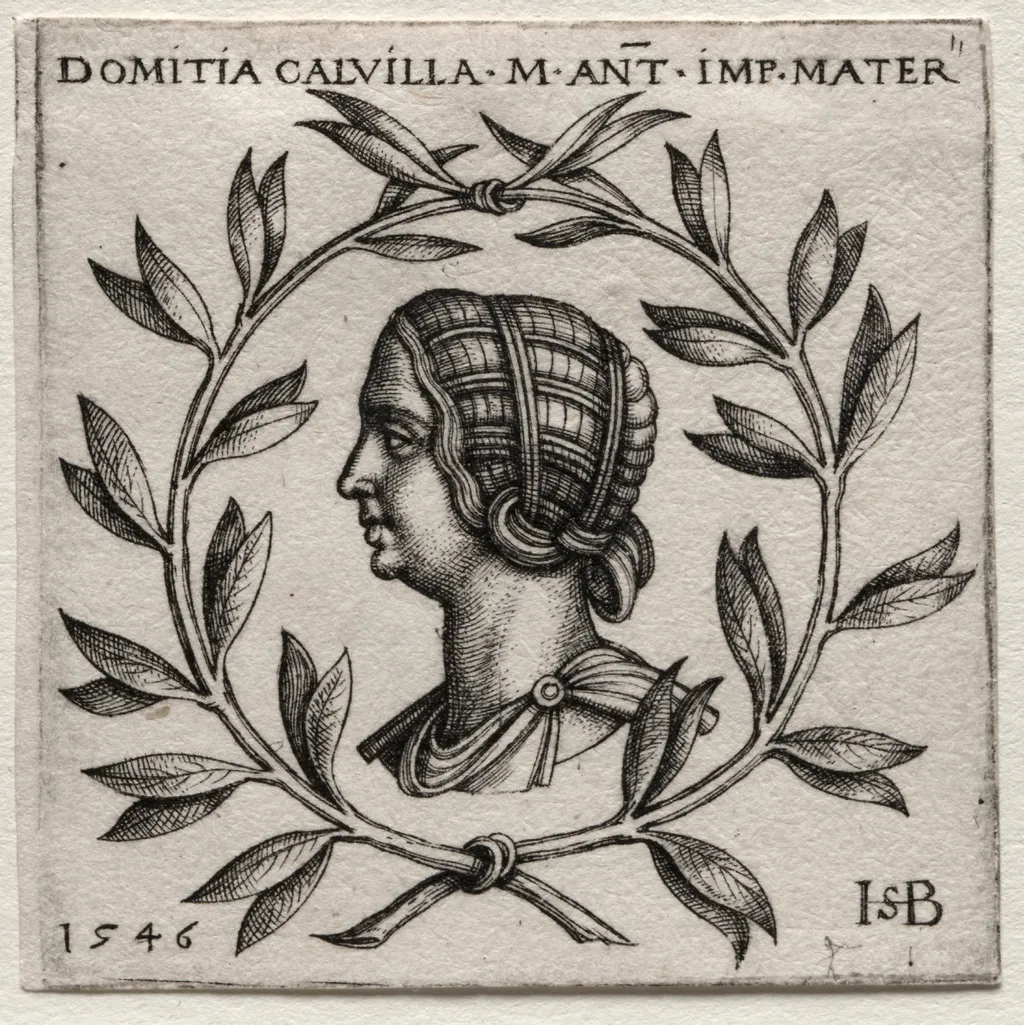
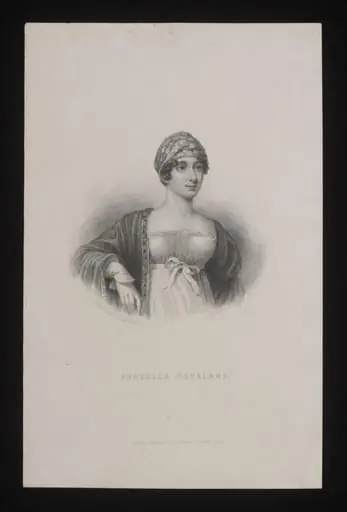
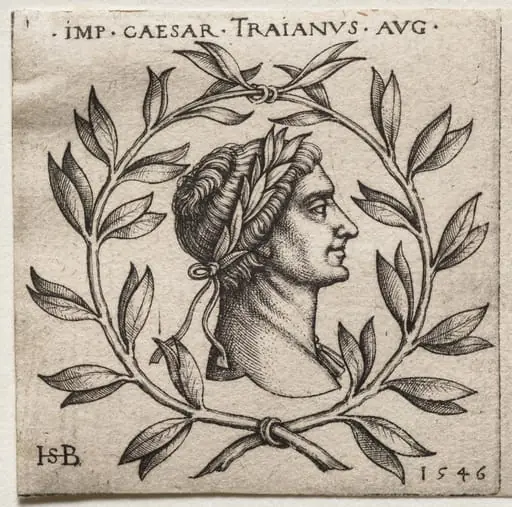
Domitia Calvilla is a print by the Renaissance artist Sebald Beham. It dates from 1546 and is held in the collection of the Cleveland Museum of Art.
About this work
This is a black-and-white drawing of a woman’s head wrapped in a headscarf with a net-like pattern underneath. Her hair is pulled back, and she wears a few simple curls. A laurel wreath frames her face, tied with a bow at the bottom.
The name "Domitia Calvilla" is written at the top, along with the year 1546. The artist’s initials, "ISB," appear in the corner.
Next, look up Renaissance.
Overview
A member of the group known as the Little Masters, he specialized in finely detailed prints, often depicting classical or mythological subjects.
Hans Sebald Beham, a German artist active in the mid-16th century, produced this small engraving in 1546. A member of the group known as the Little Masters, he specialized in finely detailed prints, often depicting classical or mythological subjects. This work, held by the Cleveland Museum of Art, exemplifies his skill in rendering subtle textures and precise line work on a miniature scale, characteristic of his extensive output in engraving and woodcut.
Subject & Meaning
The figure is identified as Domitia Calvilla, a name likely drawn from Roman antiquity, though no historical record confirms her existence. The laurel wreath and restrained hairstyle suggest an idealized portrait of virtue or nobility, common in Renaissance humanist imagery. The inscription and classical allusion reflect the period’s fascination with reviving ancient Roman identity, even when the subject is invented rather than documented.
Technique & Style
Beham employed fine-line engraving to capture the delicate texture of the netted headscarf and the soft curl of hair beneath. The composition is tightly framed, focusing attention on the face and headpiece. His use of controlled hatching and minimal tonal variation creates a sense of quiet dignity. The initials 'ISB'—for Iohannes Sebaldus Beham—are discreetly placed, consistent with his practice of signing small works with subtle marks.
History & Provenance
The engraving entered the collection of the Cleveland Museum of Art through documented acquisitions, though its earlier ownership remains unrecorded. As part of Beham’s prolific printmaking career, it circulated among collectors and scholars in early modern Europe. Its survival in good condition reflects its status as a sought-after example of Nuremberg’s printmaking tradition, valued for craftsmanship rather than monumental scale.
Context
Created during the height of the Northern Renaissance, this print reflects the era’s interest in classical antiquity and humanist ideals. Artists like Beham responded to the revival of Roman portraiture by inventing idealized female figures, often named after obscure historical or literary sources. The small format suited domestic display and scholarly exchange, aligning with the growing market for prints as objects of intellectual and aesthetic contemplation.
Legacy
Beham’s engravings, including this one, contributed to the standardization of miniature portraiture in print form. His influence extended to later generations of Northern European artists who adopted his detailed line work and classical themes. Though not widely known today, his work remains a key reference in studies of 16th-century print culture and the intersection of art, antiquity, and private collecting.
Artist & collection
Artist
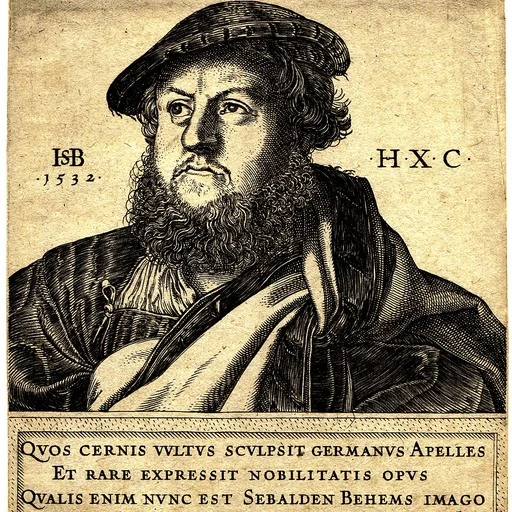
Sebald Beham (1500–1550) was a German painter and printmaker, mainly known for his very small engravings.