Artwork
The Holy Family under a Tent
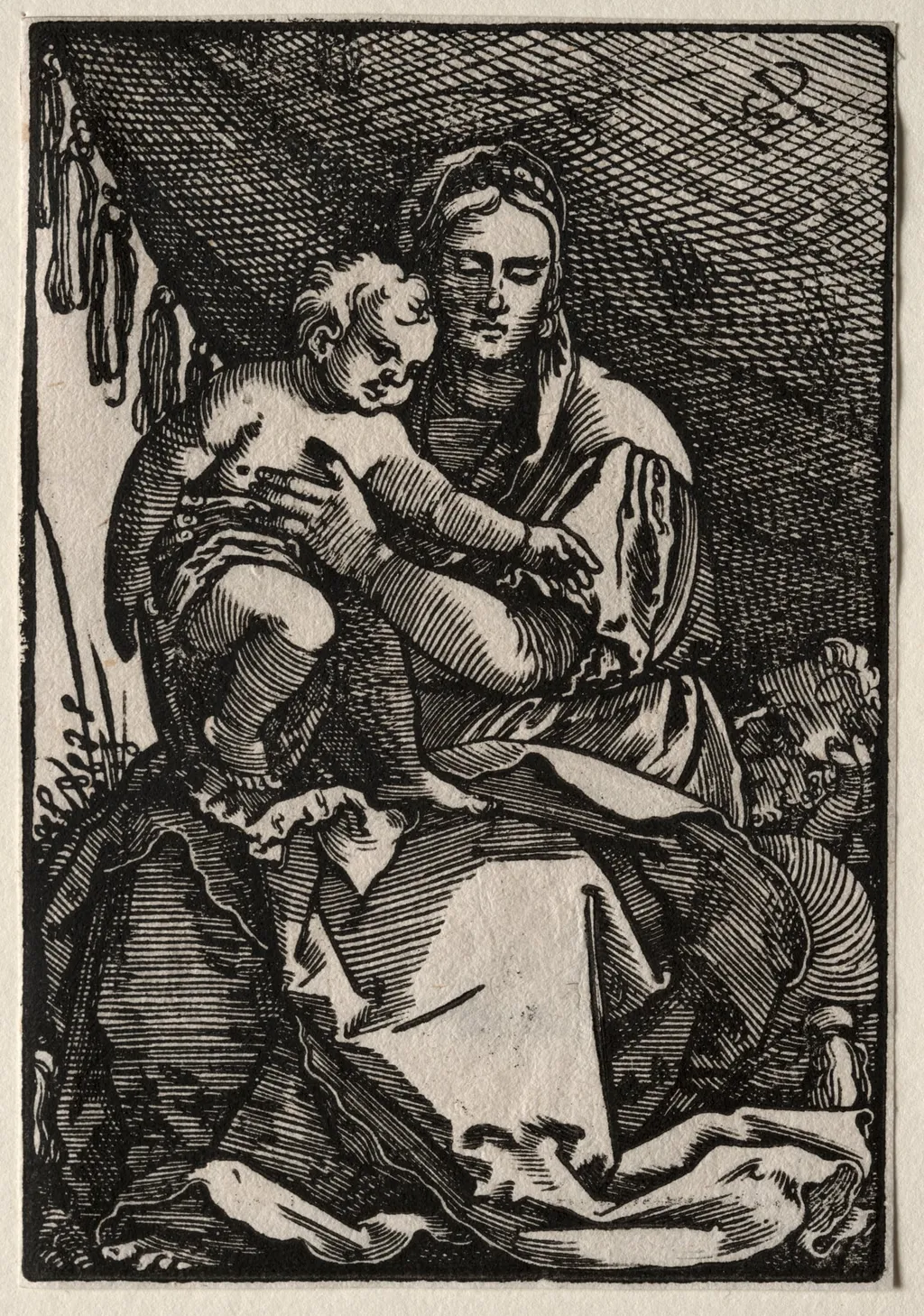
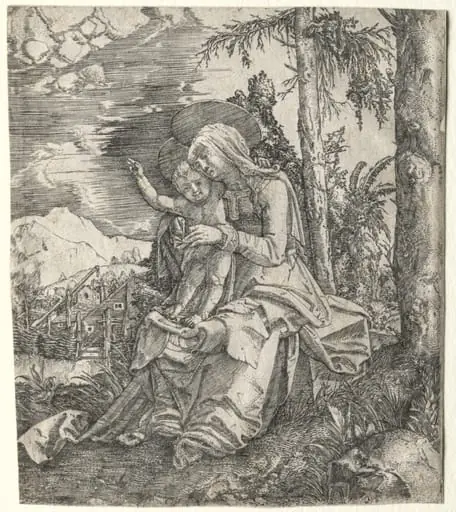
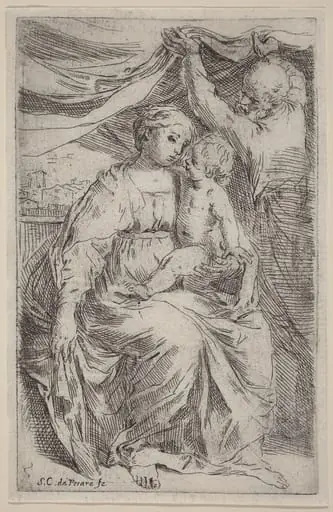
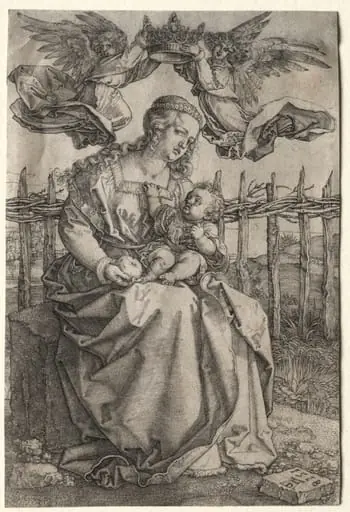
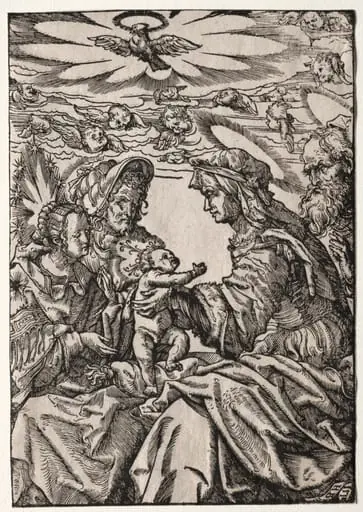
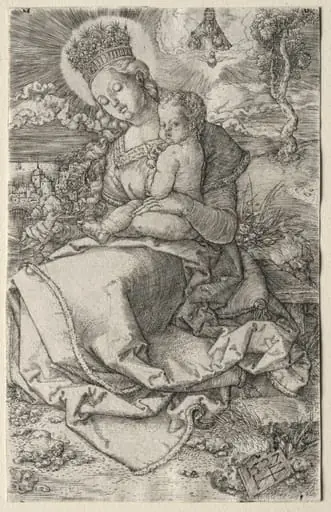
The Holy Family under a Tent is a print by Sebald Beham. It dates from 1535 and is held in the collection of the Cleveland Museum of Art.
About this work
Overview
The work is held in the Cleveland Museum of Art’s collection and exemplifies the intimate scale and technical precision characteristic of his output.
Created around 1535 by Hans Sebald Beham, this black-and-white engraving depicts the Holy Family within a simple tented enclosure. Beham, a Nuremberg-born artist active in the early 16th century, was part of a group known as the Little Masters, who specialized in finely detailed, small-format prints. The work is held in the Cleveland Museum of Art’s collection and exemplifies the intimate scale and technical precision characteristic of his output.
Subject & Meaning
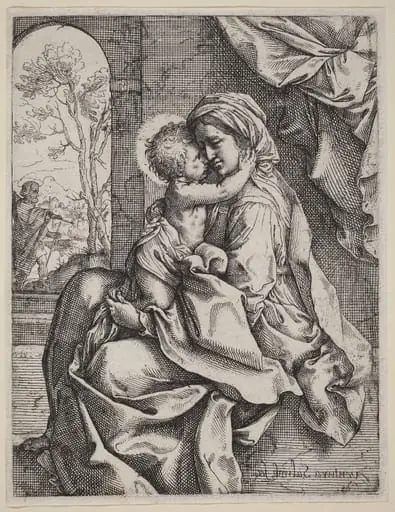
The scene portrays Mary, Joseph, and the infant Jesus in a moment of quiet domesticity. Mary, seated on the ground, cradles the child while draped in a loosely folded garment. Joseph stands nearby, his presence implied rather than fully rendered. The tent suggests temporary shelter, evoking the humility of Christ’s early life. The calm expressions and minimal setting emphasize spiritual serenity over grandeur, aligning with devotional ideals of the period.
Technique & Style
Beham employed fine, controlled lines and contrasting tones to model form and depth. The use of chiaroscuro—sharp shifts between light and shadow—gives volume to the figures and fabric, despite the medium’s limitations. The folds of Mary’s robe are rendered with rhythmic, incised strokes, while the background is simplified to focus attention on the central group. The result is a compact, highly resolved image that achieves sculptural presence through ink alone.
History & Provenance
The print was produced during Beham’s mature period, after his exile from Nuremberg due to religious and political tensions. He settled in Frankfurt, where he continued producing engravings for a growing market of private collectors. This work entered the Cleveland Museum of Art’s collection in the 20th century, likely through a broader acquisition of Northern Renaissance prints, and remains a representative example of his graphic oeuvre.
Context
In the decades following the Reformation, religious imagery in Germany shifted toward personal, contemplative subjects. Small engravings like this one catered to private devotion, replacing large altarpieces in many Protestant households. Beham’s focus on intimate family moments reflected broader trends in devotional art, where emotional resonance and accessibility replaced ceremonial grandeur.
Legacy
Beham’s prints influenced later generations of Northern European engravers through their technical refinement and emotional restraint. Though not widely exhibited today, his works remain studied for their ability to convey narrative and depth within minimal space. This engraving endures as a quiet testament to the adaptability of religious imagery in a changing spiritual landscape.
Own this work as a print
Artist & collection
Artist
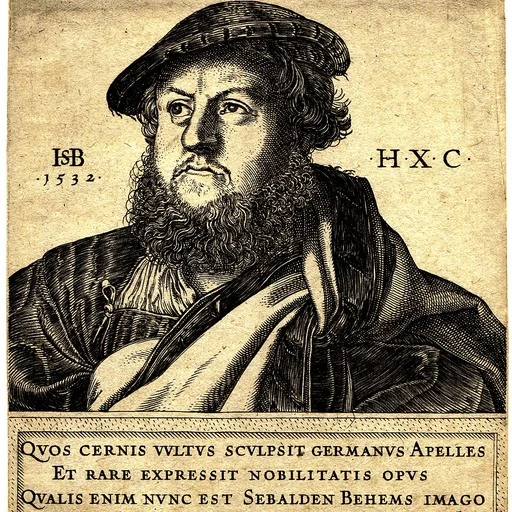
Sebald Beham (1500–1550) was a German painter and printmaker, mainly known for his very small engravings.