Artwork
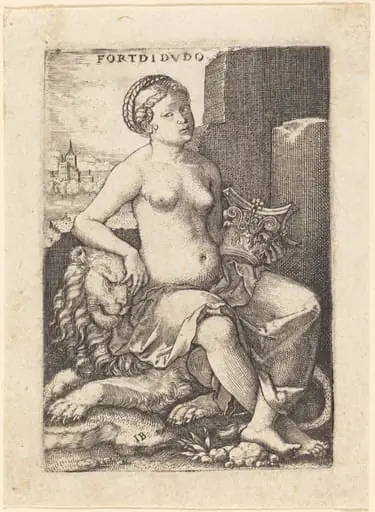
The Knowledge of God and the Seven Cardinal Virtues: Fortitude - Fortitudo
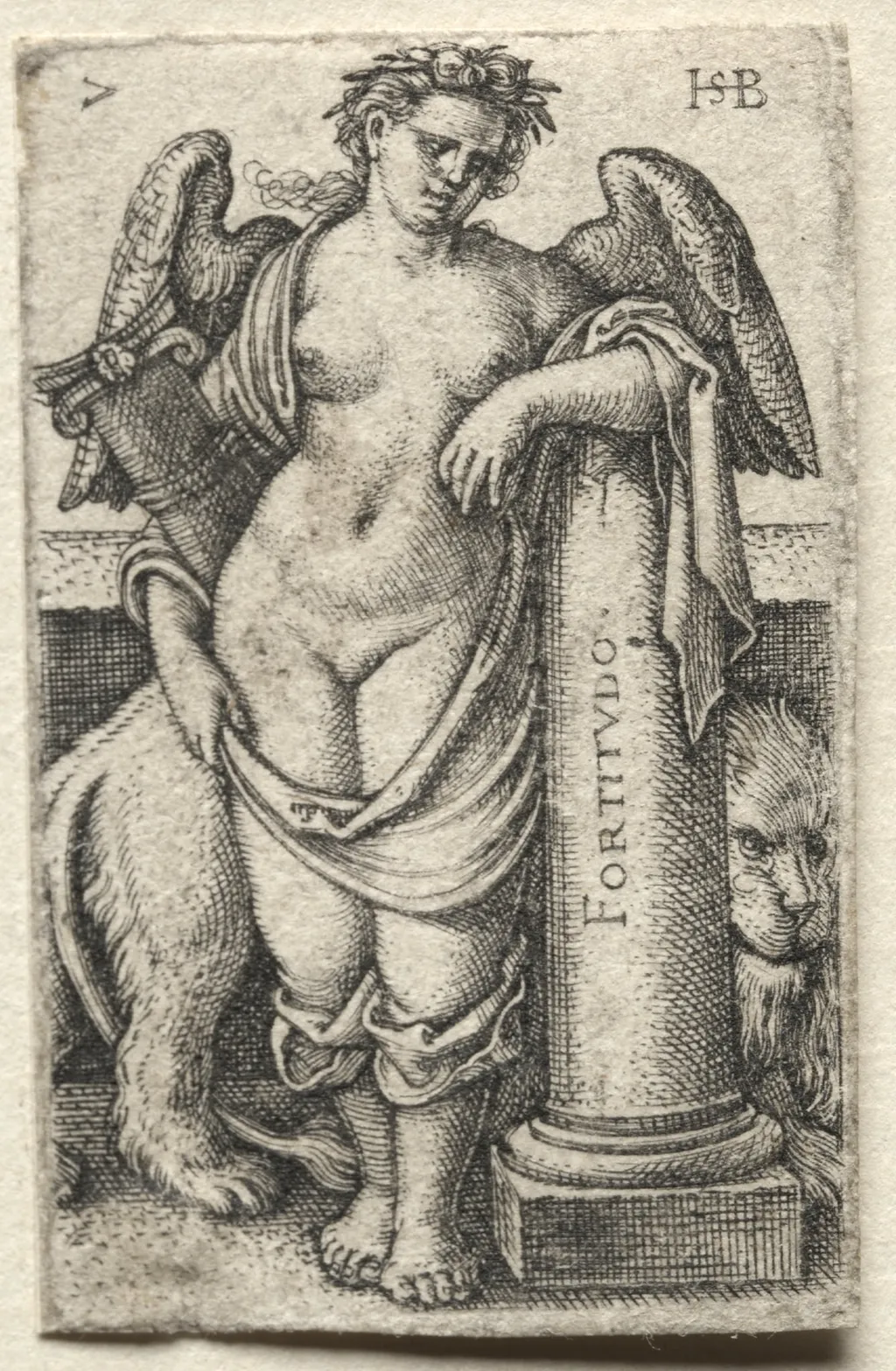
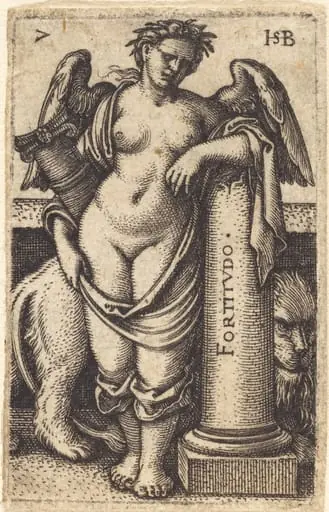
The Knowledge of God and the Seven Cardinal Virtues: Fortitude - Fortitudo is a print by Sebald Beham. It dates from 1535 and is held in the collection of the Cleveland Museum of Art.
About this work
Overview
This piece, held by The Cleveland Museum of Art, exemplifies his mastery of line and symbolic composition within a compact format.
Created around 1535 by Hans Sebald Beham, this engraving is one of seven works in a series illustrating the cardinal virtues. Beham, a German artist associated with the Little Masters, produced finely detailed small-scale prints that reflected the legacy of Albrecht Dürer’s technical precision. This piece, held by The Cleveland Museum of Art, exemplifies his mastery of line and symbolic composition within a compact format.
Subject & Meaning
The figure represents Fortitude, personified as a robust female form with wings, embodying moral and physical strength. She leans against a column inscribed with 'FORTITVDO,' her spear and shield signifying readiness and defense. A lion’s head emerging from the base alludes to courage and dominion over fear. The imagery draws from classical and Christian traditions, merging allegorical representation with enduring ideals of steadfastness.
Technique & Style
Beham employed fine-line engraving to achieve intricate detail, characteristic of the Little Masters’ approach. The figure’s musculature and drapery are rendered with controlled, precise strokes, while the lion’s head and column base add textural contrast. The composition is tightly framed, emphasizing symbolic clarity over spatial depth. Light and shadow are suggested through line density rather than tonal gradation, reflecting the limitations and strengths of the medium.
History & Provenance
The engraving was produced during Beham’s mature period in Nuremberg, a center for printmaking in early 16th-century Germany. It was likely circulated among educated patrons interested in moral philosophy and religious iconography. The work entered The Cleveland Museum of Art’s collection in the 20th century, where it remains part of a broader holdings of Northern Renaissance prints.
Context
This print emerged amid the Protestant Reformation, a time when visual allegories of virtue and vice were used to convey ethical teachings. Though Catholic in origin, the seven cardinal virtues retained cultural relevance across confessional lines. Beham’s series responded to a demand for portable, instructive imagery, bridging humanist ideals with devotional practice in a rapidly changing religious landscape.
Legacy
Beham’s Fortitude exemplifies how small-scale prints extended moral and philosophical discourse beyond elite audiences. His precise technique influenced later generations of engravers, and the allegorical format persisted in Northern European art well into the 17th century. The work remains a key example of how visual symbolism was refined to communicate abstract virtues with clarity and authority.
Artist & collection
Artist
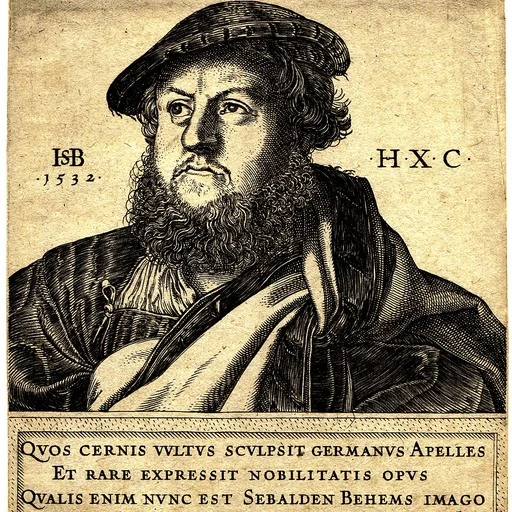
Sebald Beham (1500–1550) was a German painter and printmaker, mainly known for his very small engravings.