Artwork
Fortitudo (Fortitude)
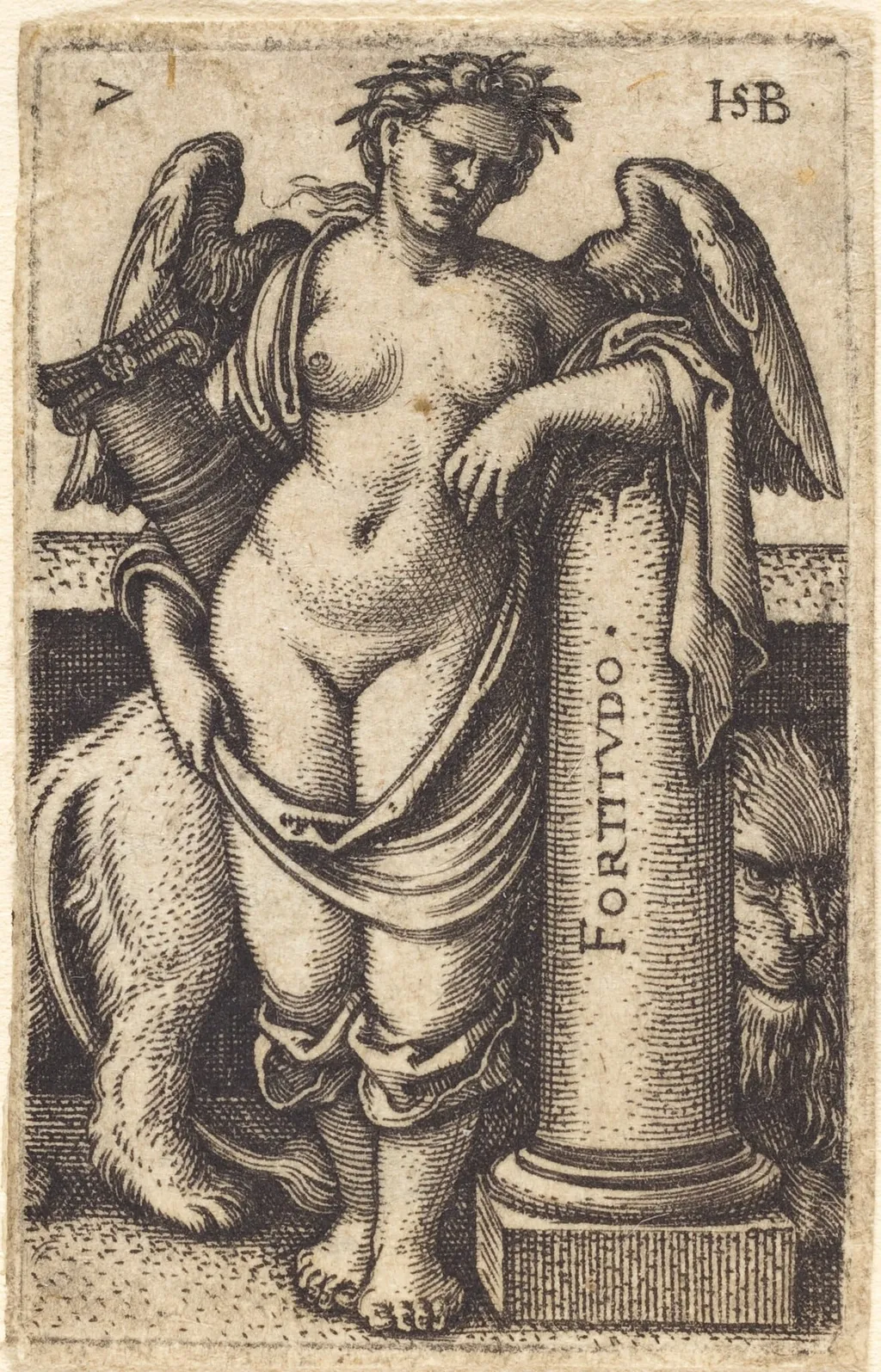
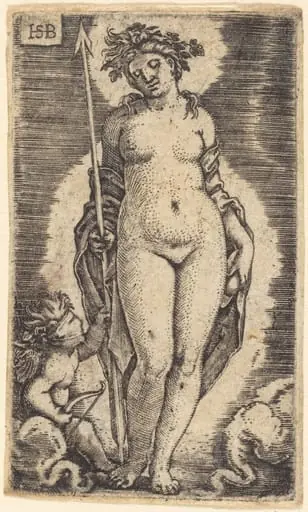
Fortitudo (Fortitude) is an ink print by the Renaissance artist Sebald Beham. It dates from 1539 and is held in the collection of the National Gallery of Art.
About this work
Overview
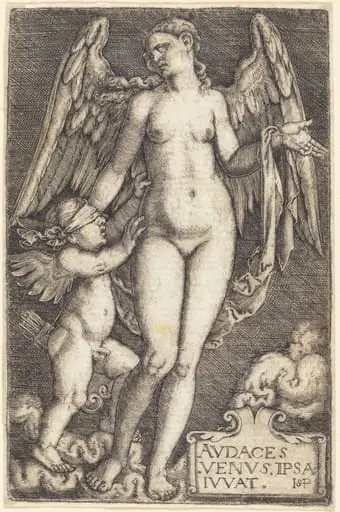
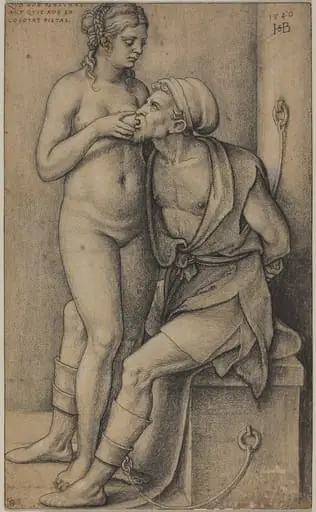
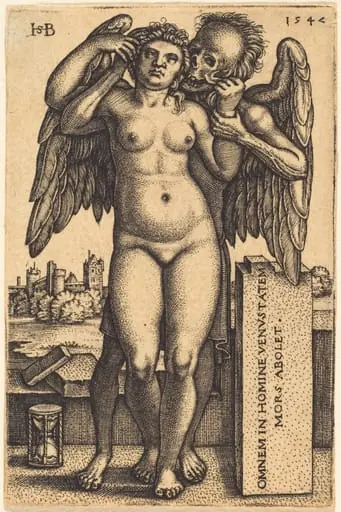
Sebald Beham, a German printmaker associated with the so‑called Little Masters, produced the engraving *Fortitudo* in 1539. Executed in black‑and‑white, the print presents an allegorical female figure that embodies the concept of strength, a subject common in Renaissance emblematic art.
Subject & Meaning
The central figure is a partially nude woman with wings, holding a tall column inscribed with the Latin term *Fortitudo*, meaning fortitude or courage. Her muscular form, disheveled hair and confident pose convey the virtue of inner strength as a personified ideal.
Technique & Style
Beham employs his characteristic fine line work, using precise hatching and cross‑hatching to model the figure’s anatomy and create depth. The engraving’s intricate detail, especially in the musculature and drapery, reflects the meticulous approach typical of the Little Masters’ small‑scale prints.
History & Provenance
Created while Beham was active in Nuremberg, the work belongs to a prolific period in which he produced roughly 250 engravings, alongside etchings and woodcuts, following the artistic legacy of Albrecht Dürer. The print later entered collections of early modern prints, though its exact ownership trail remains sparsely documented.
Context
*Fortitudo* emerges from a mid‑16th‑century German tradition of allegorical imagery used for moral instruction and decorative purposes. The work aligns with contemporary emblem books that paired visual symbols with Latin captions to convey virtues to an educated audience.
Artist & collection
Artist
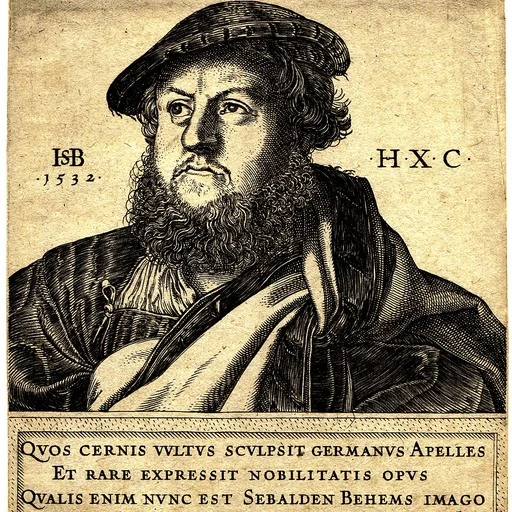
Sebald Beham (1500–1550) was a German painter and printmaker, mainly known for his very small engravings.