Artwork
Biserica din Cluj
Biserica din Cluj is an unspecified painting by Teodor Harșia. It is held in the collection of the Gavrila Simion Eco-Museum Research Institute Tulcea.
About this work
Overview
A faint horizontal band near the lower edge suggests a distant horizon or roofline, though no distinct architecture is discernible.
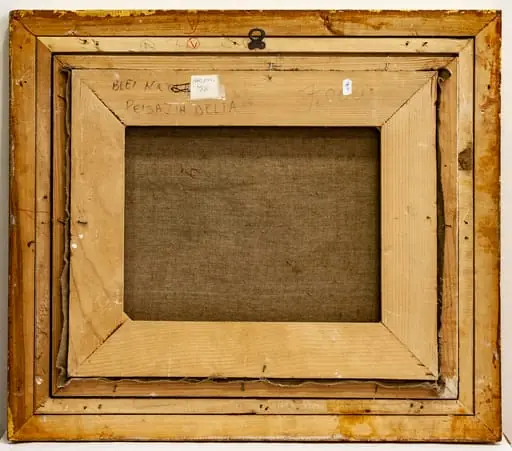
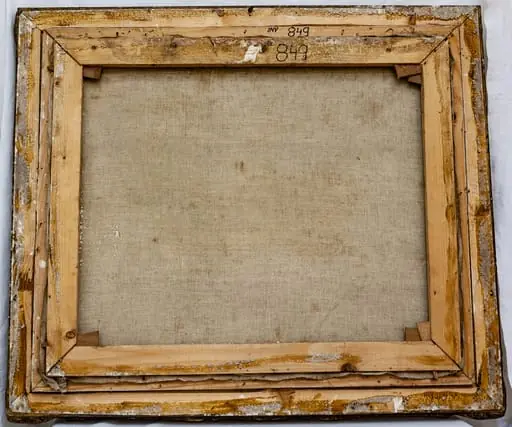
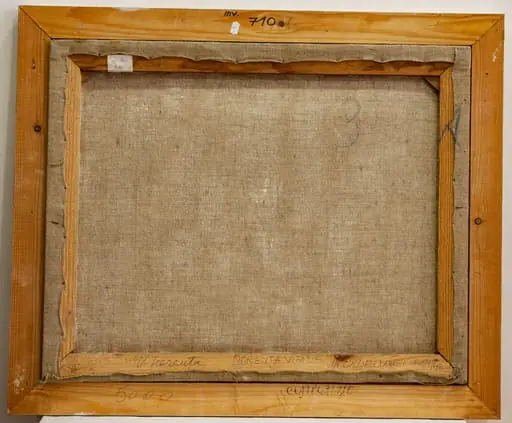
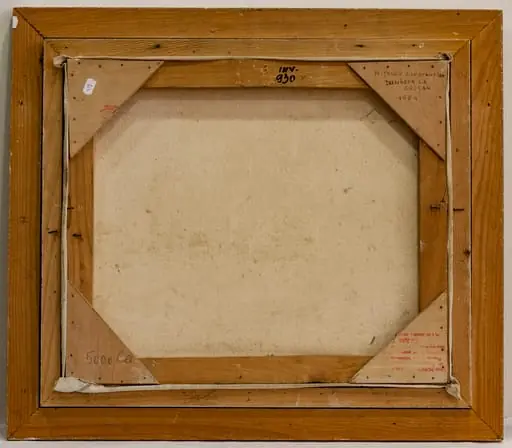
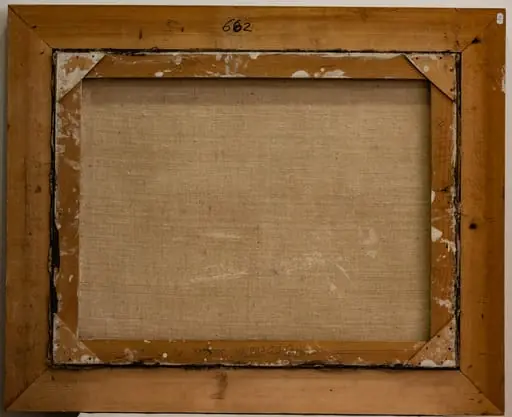
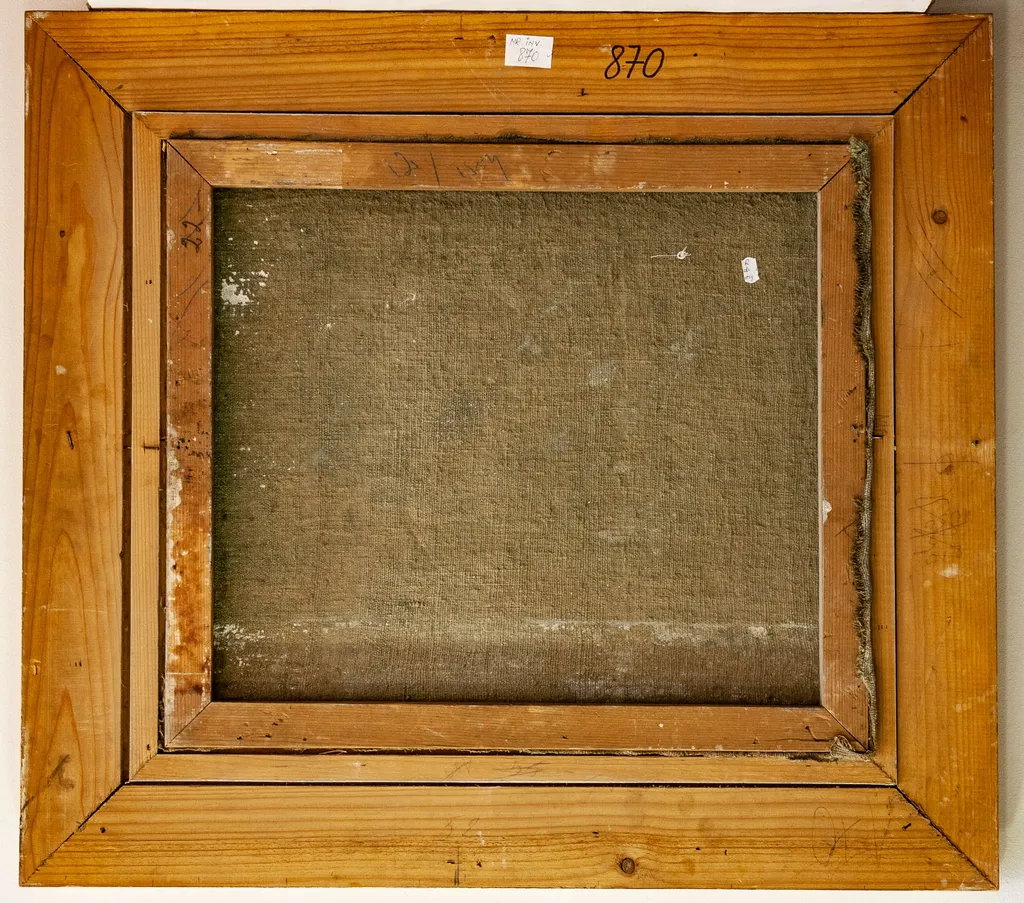
The work titled “Biserica din Cluj” is a modestly sized oil painting set in a weathered wooden frame. The canvas is dominated by muted greens and grays, creating a dim atmosphere. A faint horizontal band near the lower edge suggests a distant horizon or roofline, though no distinct architecture is discernible. The frame shows cracks, peeling paint, and adhesive labels, indicating extensive handling.
Subject & Meaning
Although the title references a church in the Romanian city of Cluj, the visual field offers only an ambiguous, shadowy landscape. The lack of identifiable structural elements invites speculation that the piece may evoke the memory of a sacred space rather than depict it directly, perhaps reflecting a nostalgic or contemplative mood toward a lost or distant landmark.
Technique & Style
The artist employed a limited palette of subdued greens and grays, applied thinly to produce a veil of atmosphere. Brushwork appears restrained, with soft edges that blur forms into a near‑abstract field. The overall effect is one of fading light and temporal decay, suggesting the painting has undergone significant aging or overpainting, which contributes to its muted tonality.
History & Provenance
The painting is part of the collection of the Museum of Ethnography, though specific acquisition details are not documented in the available record. The presence of adhesive labels and numbers on the frame indicates it has been catalogued and possibly displayed in multiple contexts within the institution’s holdings.
Context
Cluj, a historic city in Transylvania, hosts numerous ecclesiastical structures, making the title a reference point for regional cultural identity. Within an ethnographic museum, the work may serve to illustrate local religious architecture or collective memory, aligning visual art with broader anthropological narratives about community and place.
Artist & collection
Artist
Teodor Harșia painted the streets and buildings of Transylvania in the early 20th century, leaving behind quiet scenes like Biserica din Cluj.
Museum
Gavrila Simion Eco-Museum Research Institute Tulcea
Continue through works from the same source collection.