Artwork
Medicina - Theologia - Lex
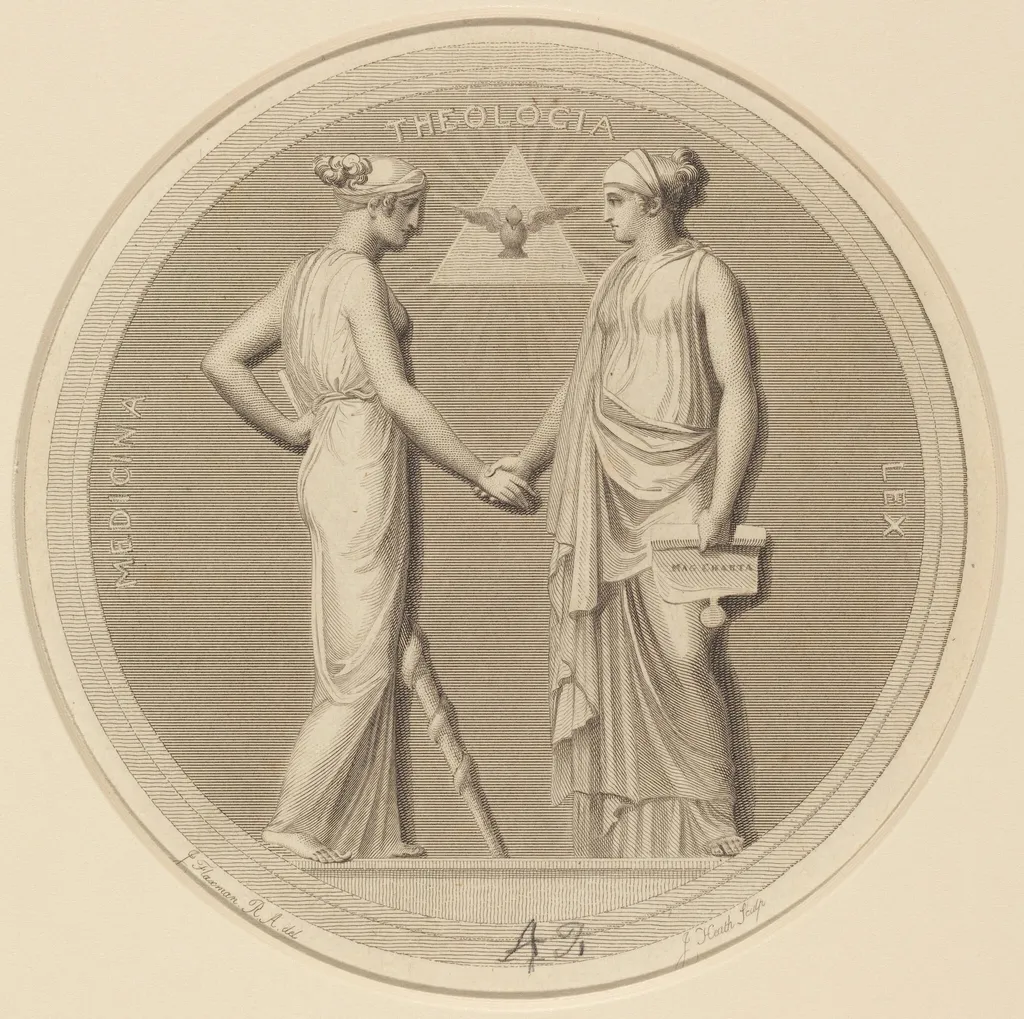
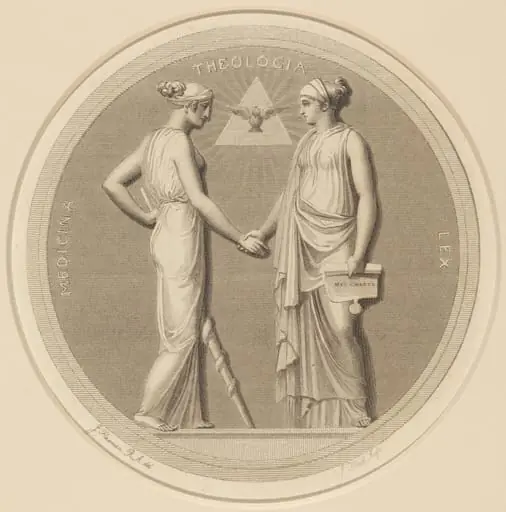
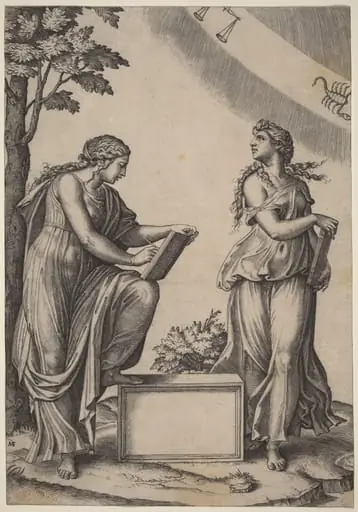
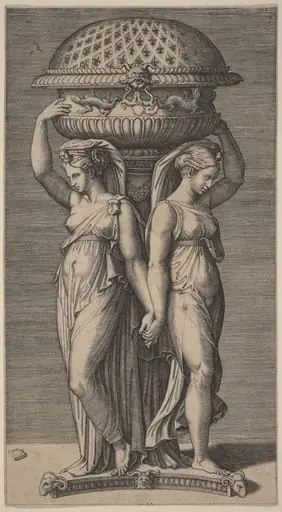
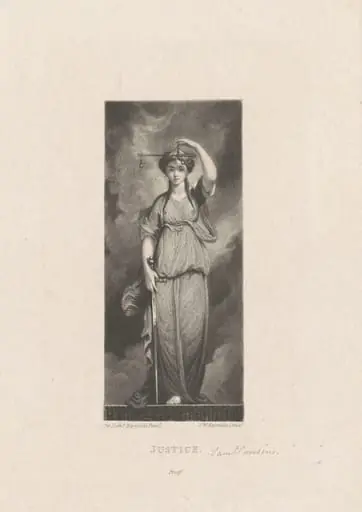
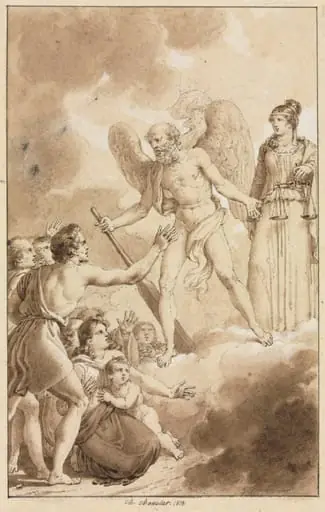
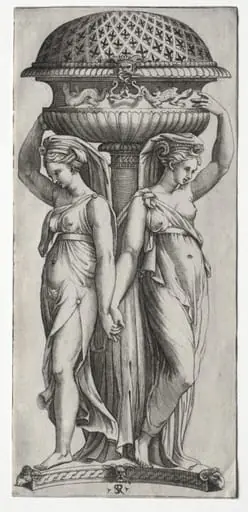
Medicina - Theologia - Lex is an ink print by the Romanticist artist James Heath. It dates from 1796 and is held in the collection of the National Gallery of Art.
About this work
Overview
Heath, an engraver active under royal patronage, employed fine line work to render form and texture with clarity.
James Heath’s 1796 etching *Medicina - Theologia - Lex* is a black-and-white print that visually contrasts two allegorical figures representing theological and legal authority. Created during a period when printmaking was a primary medium for disseminating intellectual ideas, the work reflects the precision and tonal nuance characteristic of etching techniques. Heath, an engraver active under royal patronage, employed fine line work to render form and texture with clarity.
Subject & Meaning
The two robed figures symbolize Theologia and Lex, likely representing divine law and human law as complementary pillars of societal order. The figure on the left, marked by a tall, pointed hat and a scroll, suggests ecclesiastical authority, while the figure on the right, with a simpler headpiece and a tablet, embodies civil jurisprudence. Their parallel stance implies harmony between spiritual and legal systems, a common Enlightenment-era ideal.
Technique & Style
Heath used etching to achieve fine, controlled lines and subtle gradations of tone. The detailed folds of the robes and the texture of the scroll and tablet were rendered through incised lines on a metal plate, then inked and pressed onto paper. The absence of color focuses attention on form and symbolism, while the crispness of the lines reflects the technical discipline expected in professional engraving of the time.
History & Provenance
Created in 1796, the print emerged during a period when British printmakers often produced allegorical works for educated audiences. Heath, who held the title of Engraver to King George III, was known for his scholarly subjects and precise execution. While specific early ownership records are sparse, the print aligns with a broader tradition of didactic imagery circulated among institutions and private collectors interested in moral and intellectual themes.
Context
In late 18th-century Britain, visual allegories of law, religion, and medicine were common in academic and civic settings, reflecting Enlightenment values that sought to systematize knowledge. Heath’s print fits within this tradition, positioning theology and law as foundational to societal stability. The omission of Medicina from the visual field—despite its inclusion in the title—suggests a symbolic or textual emphasis rather than literal representation.
Legacy
Though not widely reproduced today, *Medicina - Theologia - Lex* remains a representative example of British neoclassical printmaking. It illustrates how engravers translated philosophical concepts into visual form for literate audiences. The work contributes to the historical record of how authority, knowledge, and morality were visually negotiated in pre-industrial Europe, preserving a moment when print served as a vehicle for intellectual discourse.
Artist & collection
Artist
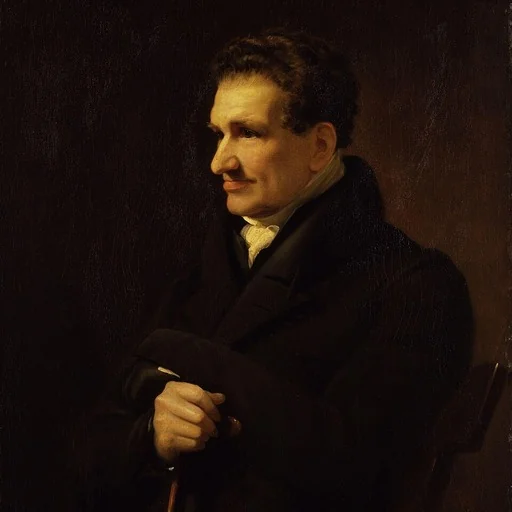
James Heath (19 April 1757 – 15 November 1834) was a British engraver. He enjoyed the patronage of George III and successive monarchs.