Artwork
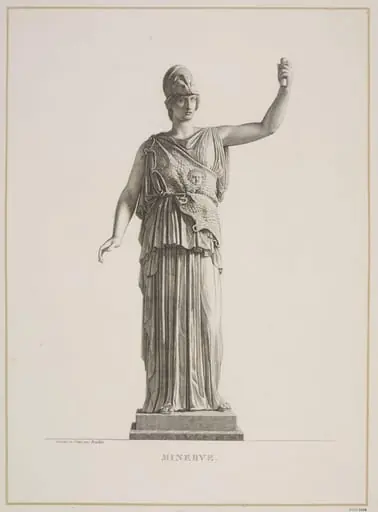
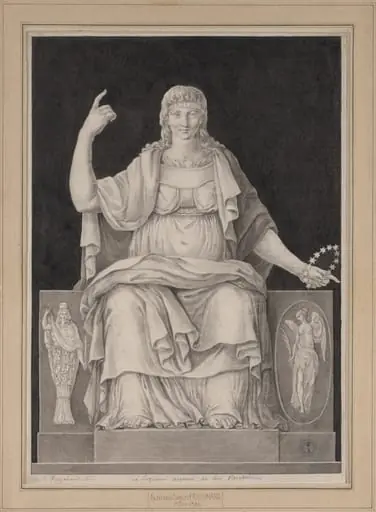
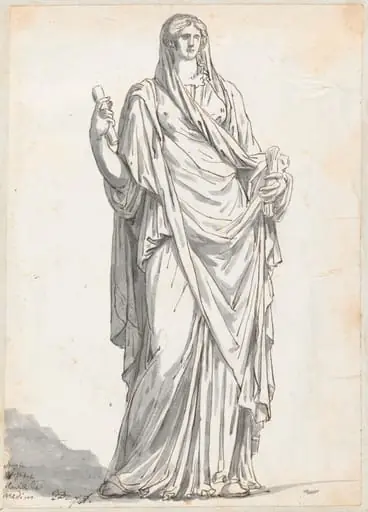
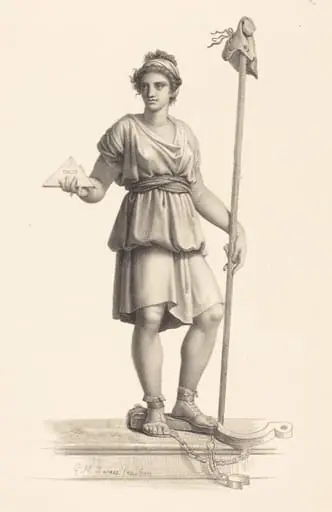
Statue of Minerva
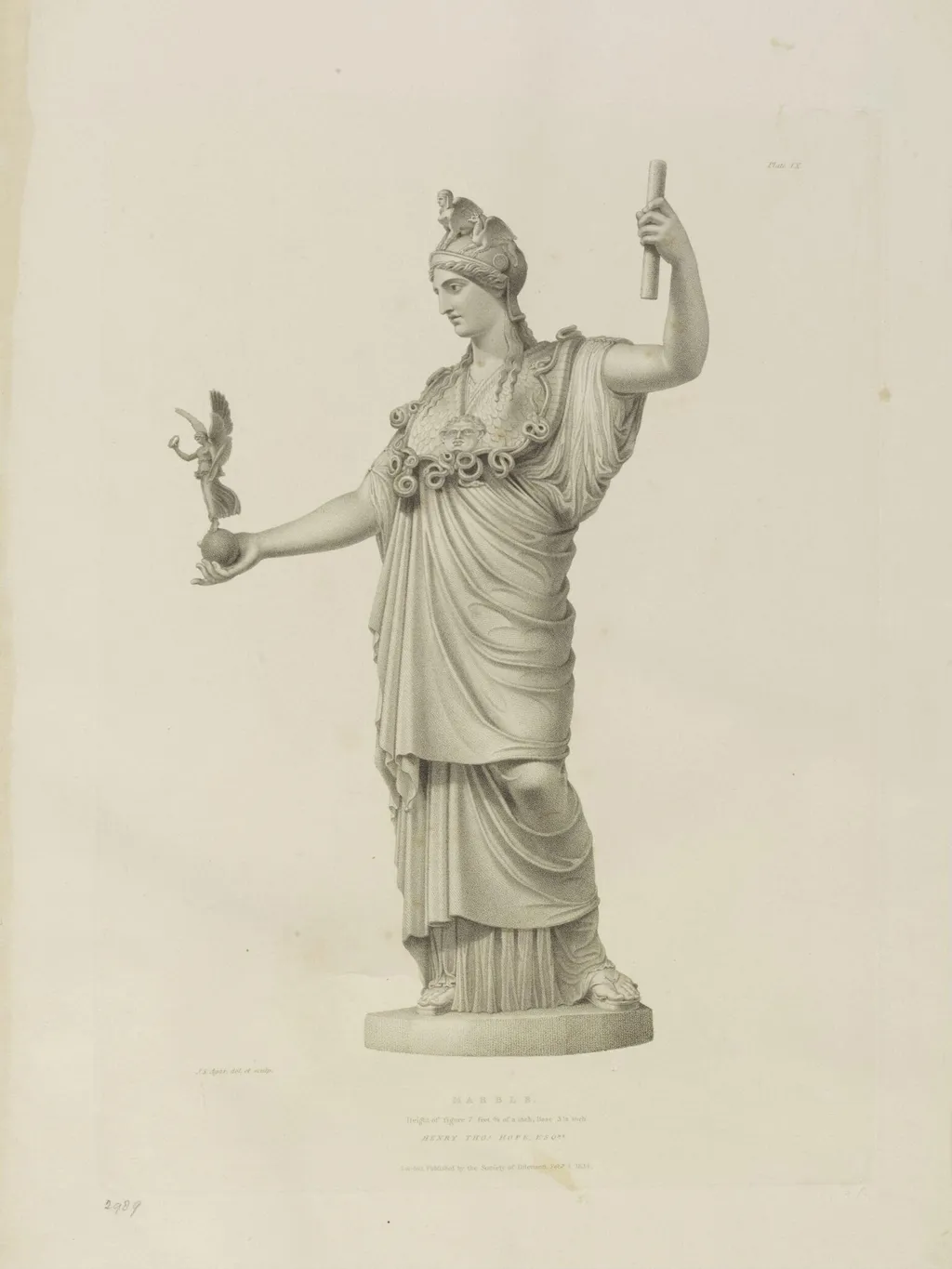
Statue of Minerva is a print by John Samuel Agar. It dates from 1850 and is held in the collection of the Victoria and Albert Museum.
About this work
Overview
John Samuel Agar’s c.1850 print entitled Statue of Minerva depicts a standing female figure rendered in a classical pose. The image is part of the Victoria and Albert Museum’s collection, where it is catalogued as a work on paper. The composition centers on a tall, robed woman equipped with a spear and an owl, evoking the Roman goddess of wisdom and war.
Subject & Meaning
The figure is identified as Minerva, the Roman deity associated with strategic warfare and intellectual pursuits. She is shown wearing a crested helmet and a breastplate that overlay her draped garments, emphasizing both martial protection and feminine authority. The owl perched on her arm serves as a traditional emblem of wisdom, reinforcing the goddess’s role as a patron of knowledge.
Technique & Style
Agar employed line work and chiaroscuro to suggest volume in the print, using clear contours to define the folds of the fabric and the metallic sheen of the armor. The medium, a print rather than a sculptural relief, required the artist to convey texture and depth through tonal variation and precise hatching, resulting in a crisp, graphic representation of the statue.
History & Provenance
Created around the middle of the nineteenth century, the print reflects the Victorian era’s fascination with classical antiquity. It entered the Victoria and Albert Museum’s holdings as part of its broader acquisition of works illustrating mythological subjects and printmaking techniques, and it remains listed in the museum’s catalogue of prints and drawings.
Artist & collection

Artist
John Samuel Agar (1773–1858) was an English portrait painter and engraver, who exhibited his works at the Royal Academy from 1796 to 1806 and at the British Institution until 1811.