Artwork
untitled
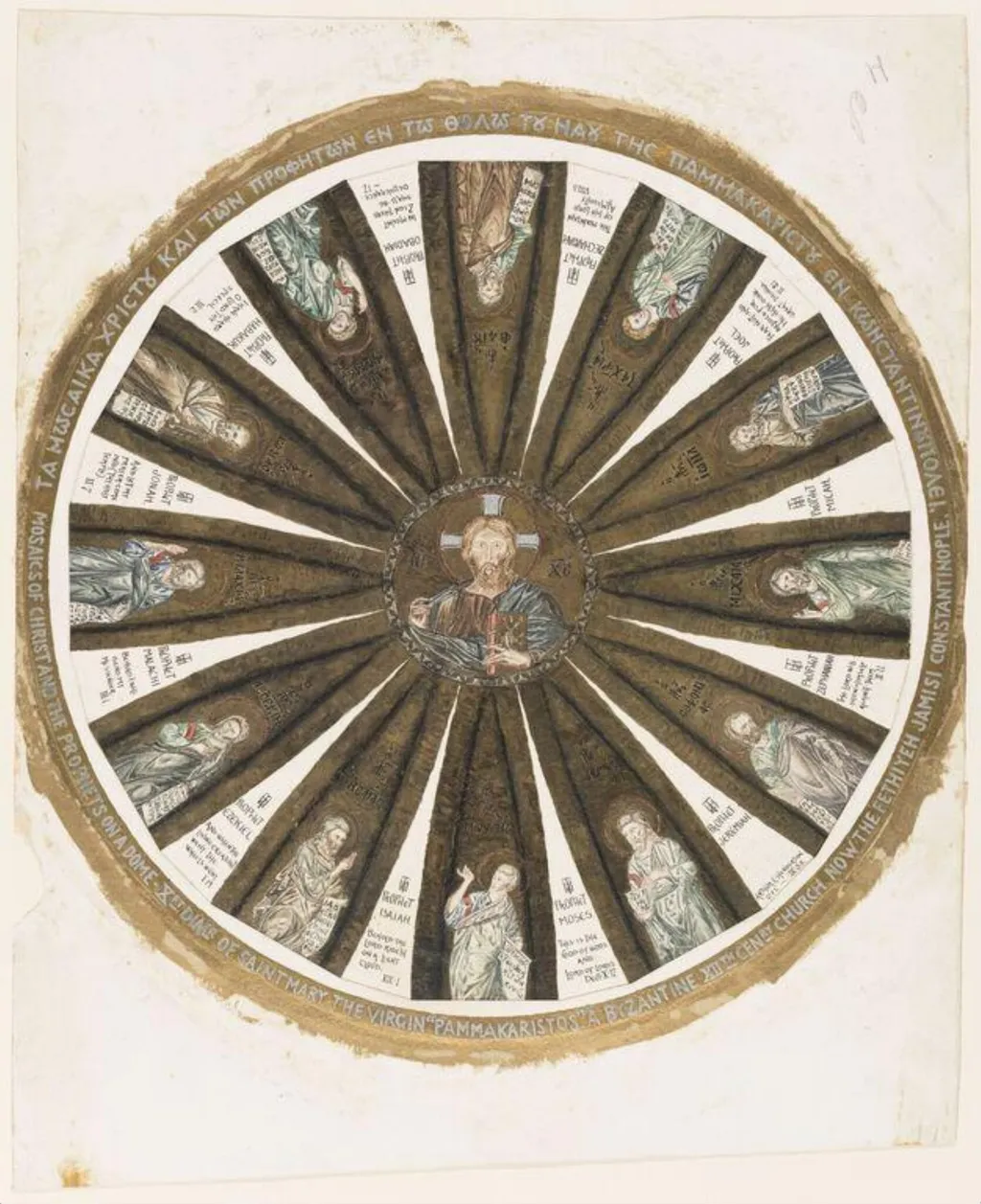
untitled is a watercolor work on paper by the Impressionist artist Arthur Edward Henderson. It dates from 1898 and is held in the collection of the Victoria and Albert Museum.
About this work
Overview
It is a circular composition, approximately 30 centimeters in diameter, and is part of the Victoria and Albert Museum’s collection.
This watercolor on paper, dated 1898, is the work of Arthur Edward Henderson. It is a circular composition, approximately 30 centimeters in diameter, and is part of the Victoria and Albert Museum’s collection. The piece combines figurative elements with decorative framing, suggesting a devotional or narrative intent. Its format and materials align with late 19th-century British interest in medieval aesthetics and illuminated manuscripts.
Subject & Meaning
A central figure, seated and holding a book, anchors the composition, suggesting a figure of wisdom or authority. Surrounding this figure are twelve small, radiating scenes, each depicting solitary or grouped figures in simple poses. These vignettes may represent moral, spiritual, or allegorical moments, possibly drawn from religious or classical sources. The Greek text along the rim implies a connection to Hellenic or early Christian traditions, reinforcing a contemplative tone.
Technique & Style
Henderson employed watercolor with precision, using flat, unmodulated tones for the surrounding figures and delicate washes for the background. Gold lines outline each scene, mimicking the gilded borders of medieval panels or stained glass. The central figure is rendered with slightly more detail, creating visual hierarchy. The overall effect is stylized and symbolic, prioritizing clarity and rhythm over naturalism, echoing the influence of the Arts and Crafts movement.
History & Provenance
The work entered the Victoria and Albert Museum’s collection shortly after its creation, likely acquired as part of the museum’s broader effort to document British decorative arts and watercolor traditions. No record of prior ownership or exhibition prior to 1898 exists. Its preservation in a major public institution suggests early recognition of its craftsmanship, though it was never widely reproduced or publicly displayed beyond museum settings.
Context
Created during a period when British artists revisited medieval and Byzantine visual languages, this piece reflects the influence of the Pre-Raphaelites and the Arts and Crafts movement. Artists like William Morris and Edward Burne-Jones had popularized symbolic, handcrafted imagery. Henderson’s use of circular form, gold accents, and textual elements aligns with this revival, positioning the work within a broader cultural interest in sacred and allegorical art.
Legacy
Though not widely known outside institutional circles, the painting remains a quiet example of late Victorian watercolor experimentation with form and symbolism. It contributes to the understanding of how religious and classical motifs were reinterpreted in secular art contexts. Its presence in the V&A underscores its value as a specimen of craftsmanship rather than as a landmark in artistic innovation.
Artist & collection
Artist
Arthur Edward Henderson carried a Winsor & Newton tin of watercolors in his coat pocket for decades, sketching cathedrals between trains.

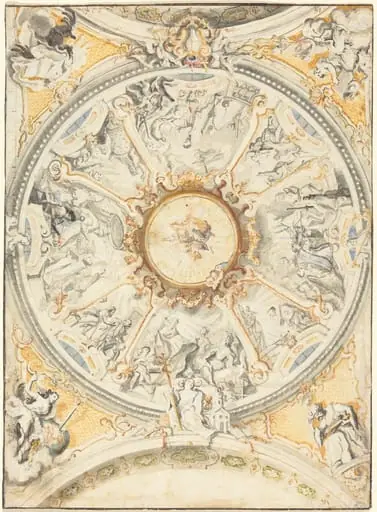 The Life of Ignatius Loyola
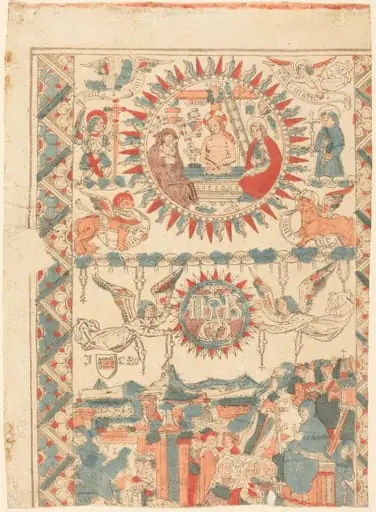 Saint Bonaventure Arriving and Preaching in Lyon
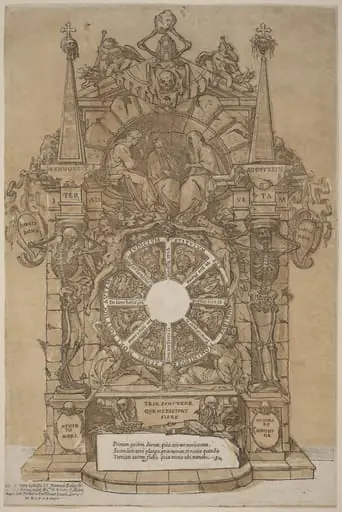 Allegory on Death
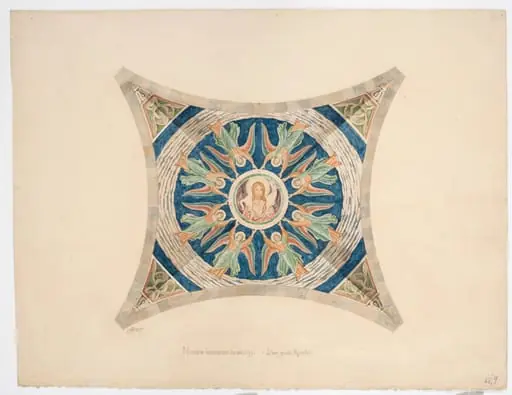 Udkast til freskerne i Viborg Domkirke. Nordre korsarms-hvælvning
 The Last Judgment
 Saint Bonaventure Arriving and Preaching in Lyon
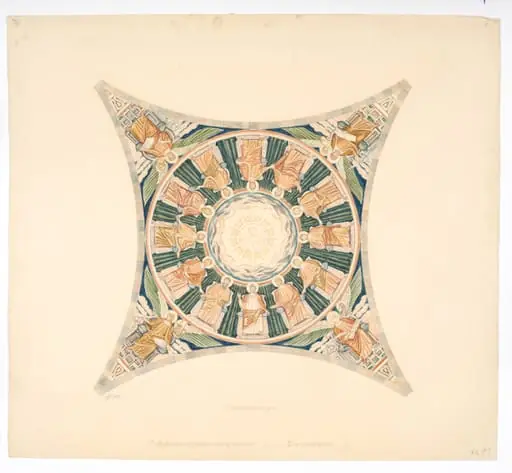 Udkast til freskerne i Viborg Domkirke. Midterhvælvingen
 The Assumption of the Virgin
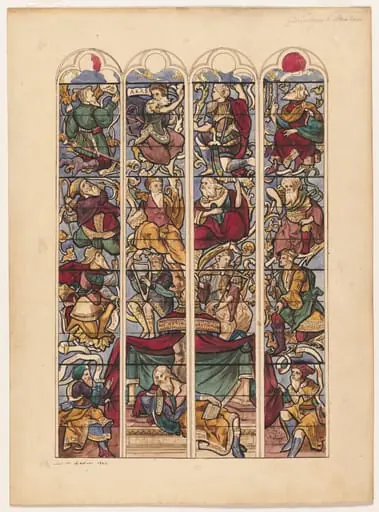 Study for Four Stained Glass Windows "Généalogie d'Abraham"
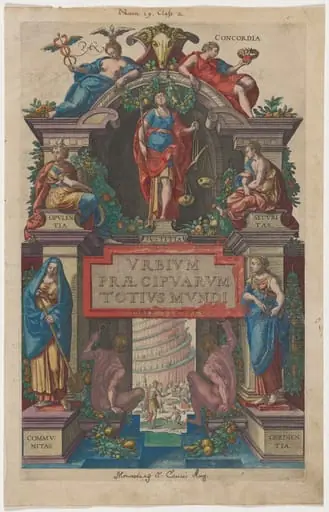 Title Page to Urbium Praecipuarum Totius Mundi
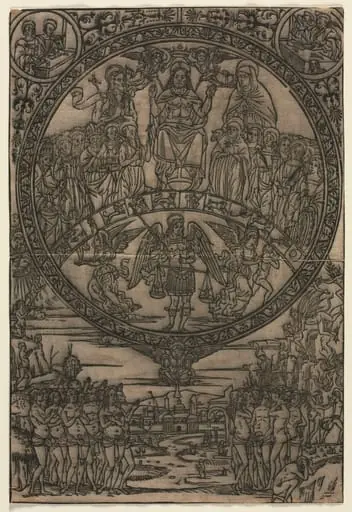 The Last Judgment in the Presence of the Saints and the Archangel Michael
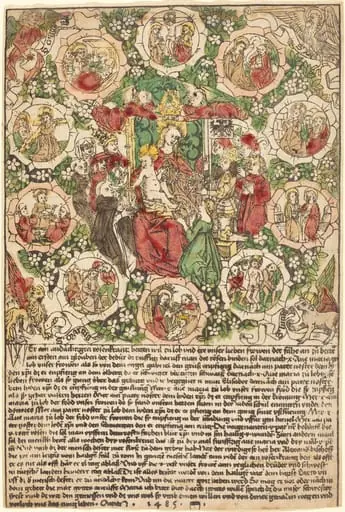 Madonna with the Rosary