Artwork
untitled
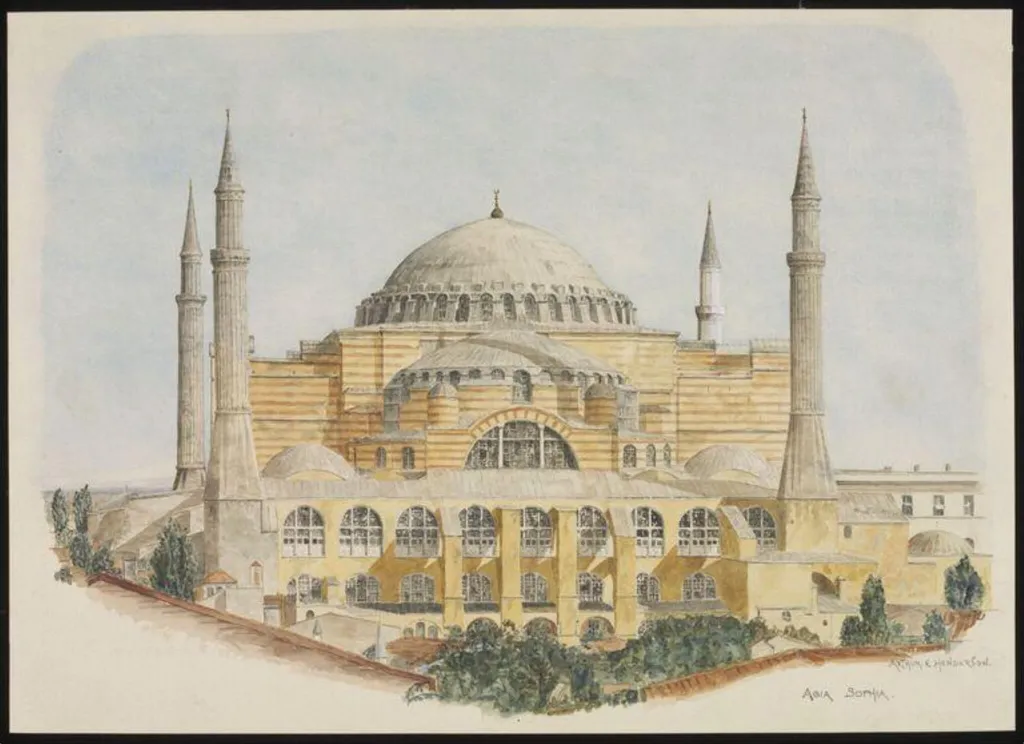
untitled is a watercolor work on paper by the Impressionist artist Arthur Edward Henderson. It dates from 1890 and is held in the collection of the Victoria and Albert Museum.
About this work
Overview
The composition emphasizes quiet observation rather than dramatic emphasis, with no title assigned by the artist, leaving interpretation open to the viewer.
This watercolor, dated around 1890, is attributed to Arthur Edward Henderson and resides in the Victoria and Albert Museum’s collection. Executed in delicate washes, it depicts an architectural structure with prominent spires and a central dome. The composition emphasizes quiet observation rather than dramatic emphasis, with no title assigned by the artist, leaving interpretation open to the viewer.
Subject & Meaning
The building portrayed suggests a religious or civic edifice, its symmetrical form and elevated spires hinting at institutional grandeur. A winding path and scattered figures near the entrance introduce human scale, grounding the structure in daily life. The absence of overt narrative or symbolic elements invites contemplation of architecture as a quiet presence within its surroundings.
Technique & Style
Henderson employed transparent watercolor washes to render form without rigid outlines, allowing tones to blend softly across the surface. Light brown walls and varied roof shapes are suggested through layered glazes, while foliage and figures are indicated with minimal, fluid strokes. The effect is one of atmospheric harmony, prioritizing light and texture over precise detail.
History & Provenance
The work entered the Victoria and Albert Museum’s collection as part of its broader effort to document British watercolor practices of the late 19th century. Its origin prior to acquisition is undocumented, but its inclusion suggests it was considered representative of the period’s observational approach to architecture in watercolor.
Context
Created during a time when watercolor was widely used for topographical and architectural studies, this piece reflects a trend toward intimate, non-dramatic depictions of built environments. Unlike grand historical paintings, it captures a moment of quiet observation, aligning with Victorian-era interests in detail, serenity, and the everyday.
Legacy
Though not widely exhibited or reproduced, the work remains a quiet example of late 19th-century British watercolor practice. It contributes to the V&A’s archive of domestic and architectural studies, preserving a modest yet thoughtful approach to capturing structure and atmosphere through water-based media.
Artist & collection
Artist
Arthur Edward Henderson carried a Winsor & Newton tin of watercolors in his coat pocket for decades, sketching cathedrals between trains.

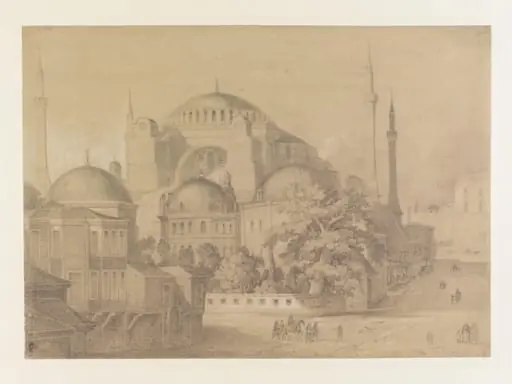 Vue des Turbé, ou Tombes Impériales
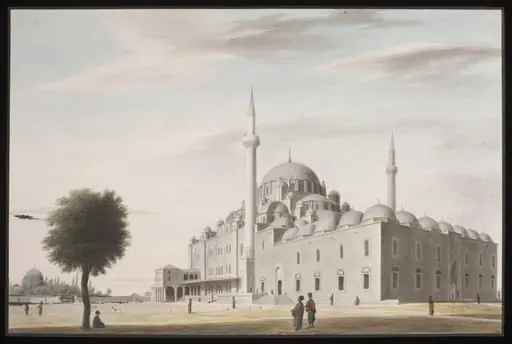 View of the Fatih Mehmet Camii
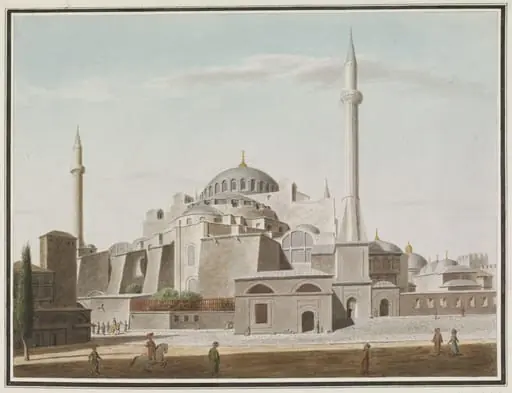 Haghia Sophia
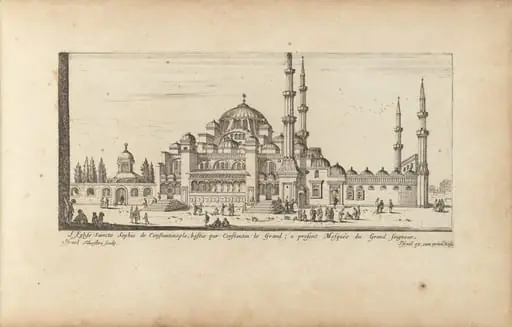 L'Eglise Saincte Sophie de Constantinople, bastie par Constantin le Grand; a present Mosquée du Grand seigneur
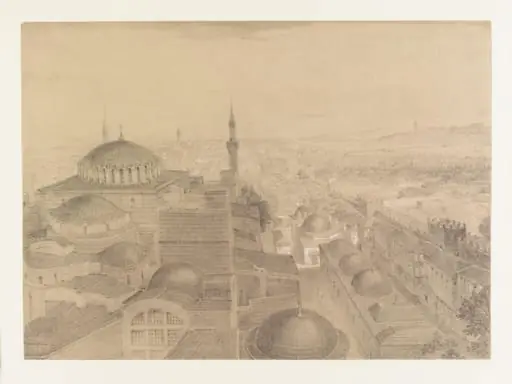 Panorama de Constantinople
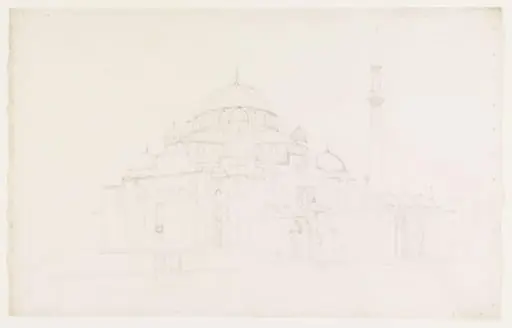 Sehzade Camii, Constantinople
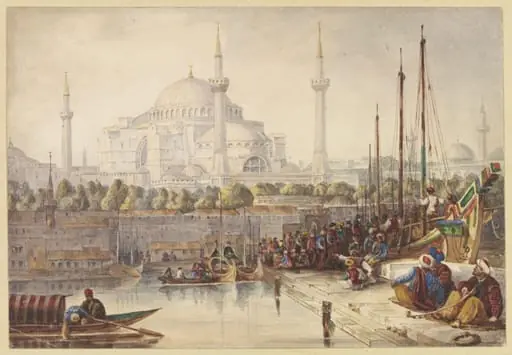 St.Sophia, from the Bosphorus
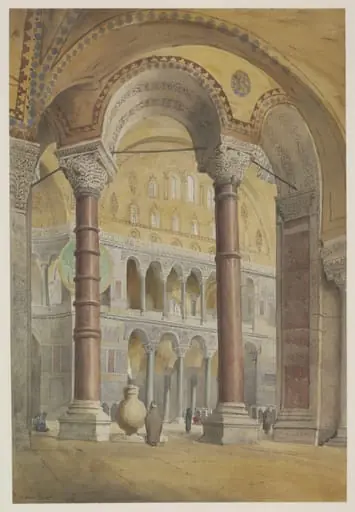 Interior of Santa Sophia, Constantinople
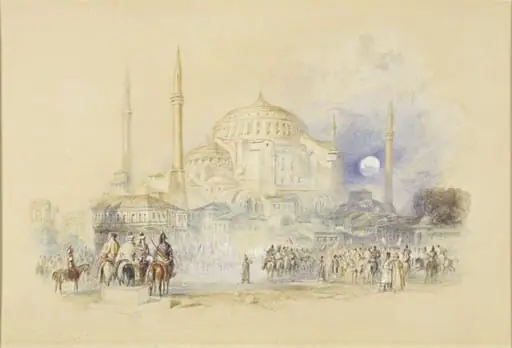 Hagia Sophia, Constantinople
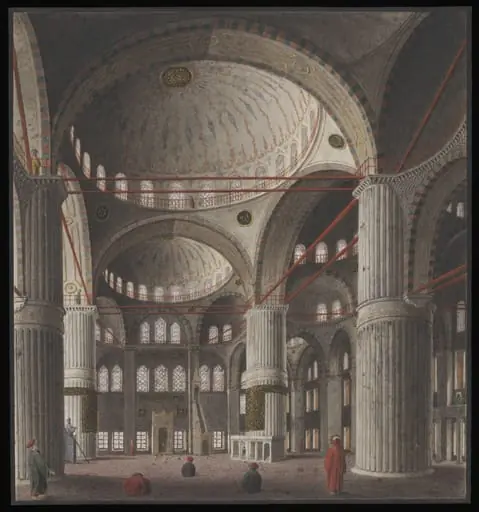 The interior of Sultan Ahmet Camii
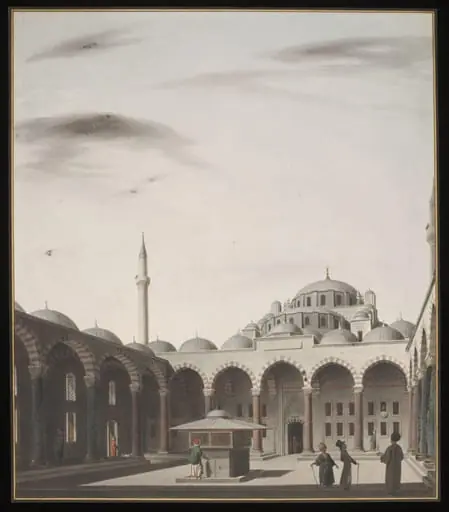 View of the Courtyard of the Fatih Mehmet Camii
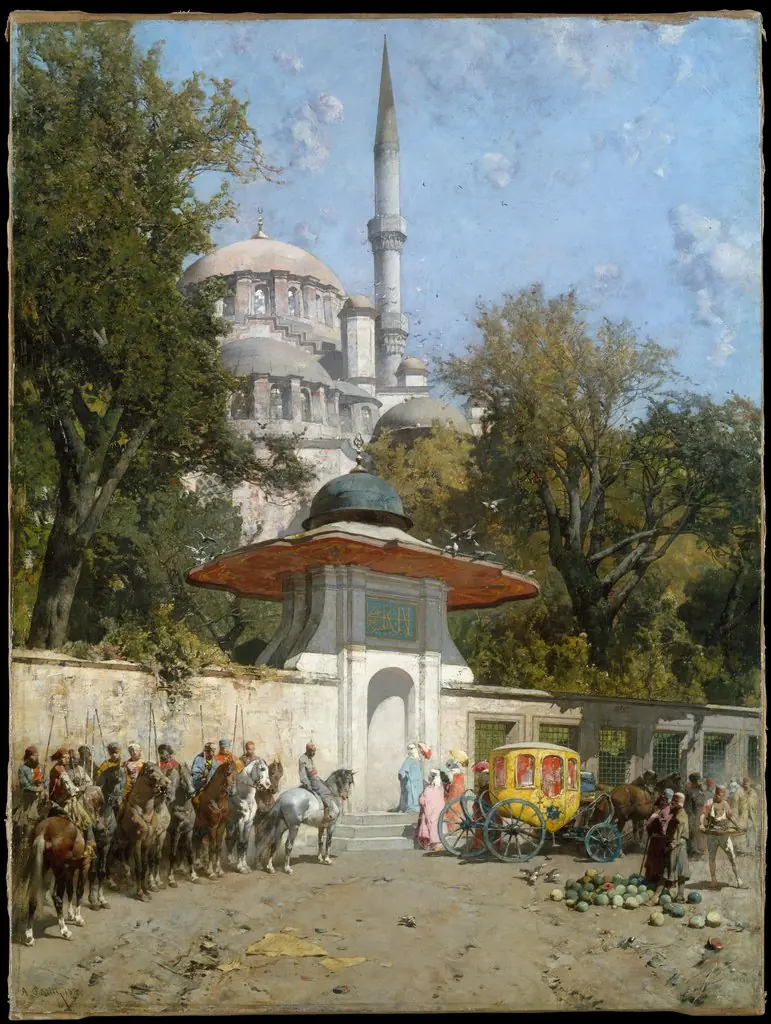 A Mosque