Artwork
The Life of Ignatius Loyola
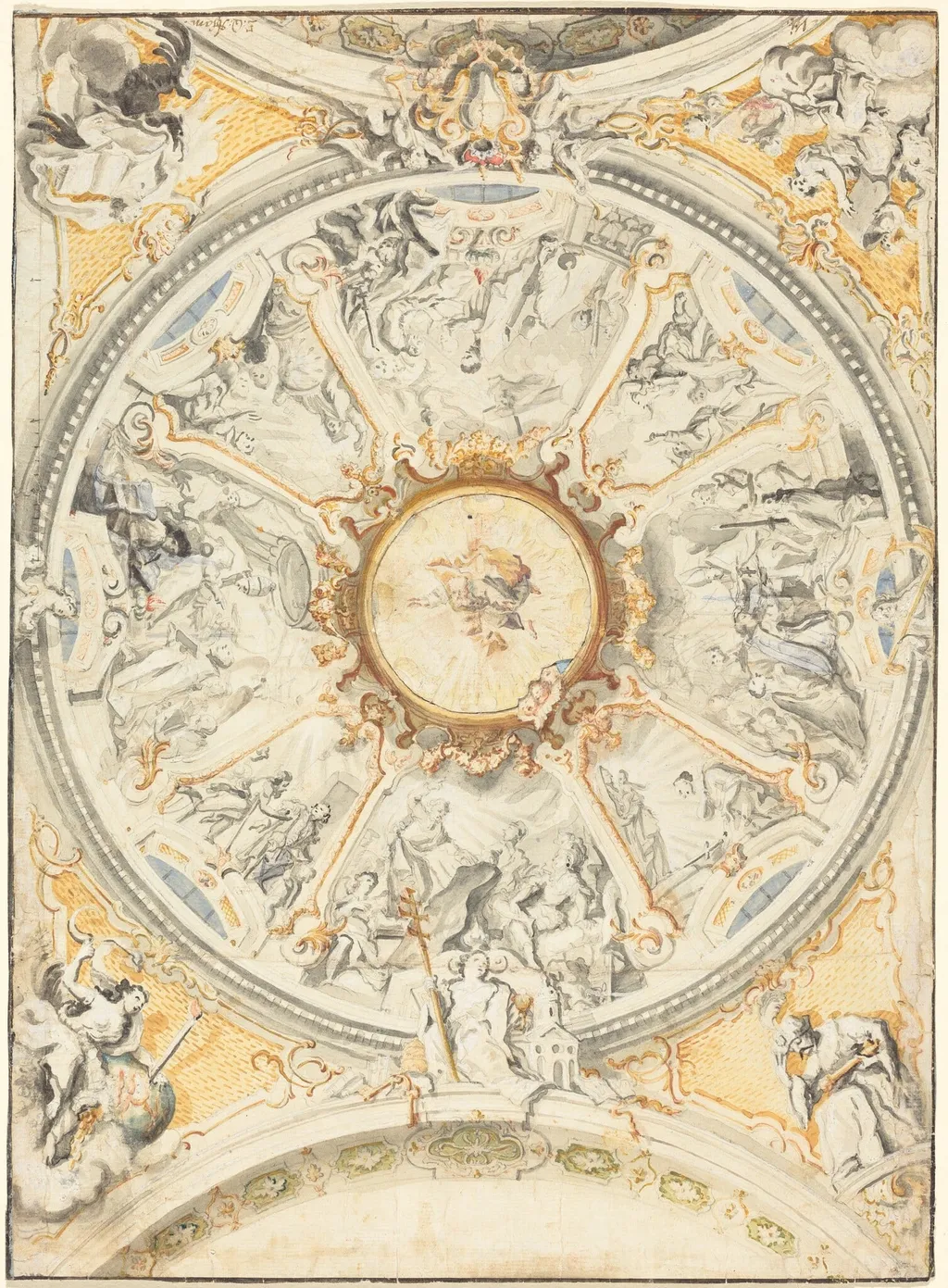
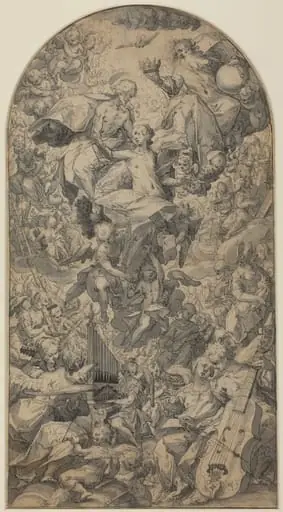
The Life of Ignatius Loyola is a paint drawing by the Baroque artist Egid Quirin Asam. It dates from 1748 and is held in the collection of the National Gallery of Art.
About this work
Overview
Egid Quirin Asam’s drawing entitled *The Life of Ignatius Loyola* was executed in 1748. Rendered on laid paper, the work combines brushwork, gray wash, watercolor over a graphite underdrawing, and highlights of white. It presents a compact, circular composition populated by numerous diminutive figures set within a dynamic, swirling framework.
Subject & Meaning
The central motif is a radiant circle containing a face, interpreted as a symbolic representation of Ignatius Loyola. Surrounding this focal point are figures suspended in cloud‑like forms, some bearing scrolls or gesturing, suggesting narrative episodes from the saint’s biography and his spiritual influence.
Technique & Style
Asam employs a limited palette of soft grays, whites, and faint touches of brown and green, creating a subdued tonal range that emphasizes line and movement.
Asam employs a limited palette of soft grays, whites, and faint touches of brown and green, creating a subdued tonal range that emphasizes line and movement. The initial graphite sketch is visible beneath the washes, while the white highlights intensify the luminous effect of the central circle. The composition’s swirling lines and densely packed figures reflect the dramatic dynamism characteristic of late Baroque drawing.
History & Provenance
Created in the mid‑18th century, the drawing is attributed to Asam, a prominent German artist known for his contributions to ecclesiastical decoration. The work’s provenance prior to its current museum placement is not extensively documented, but its date and signature align with Asam’s active period in Bavaria.
Context
The piece belongs to a broader tradition of visualizing the lives of saints for devotional and didactic purposes during the Counter‑Reformation. By portraying Ignatius Loyola amid celestial and martial imagery, Asam aligns the saint’s spiritual journey with the heroic and theatrical sensibilities of Baroque religious art.
Artist & collection


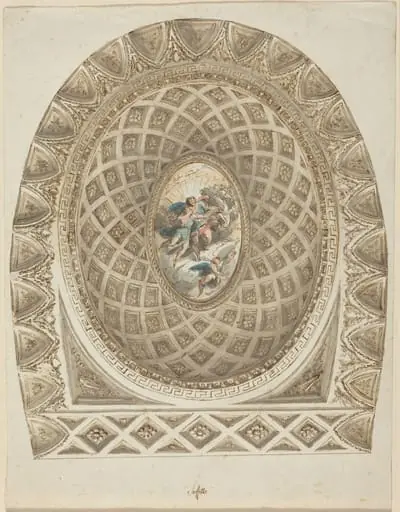 A Coffered Dome with Apollo and Phaeton
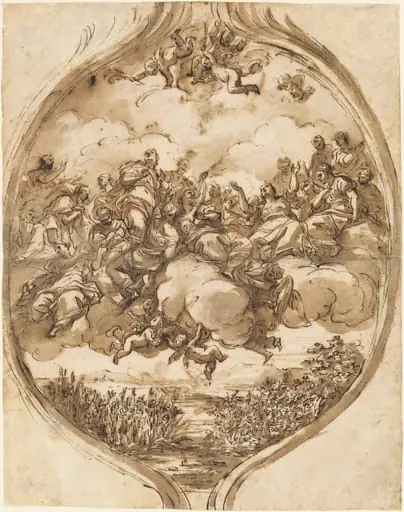 Cloud-Borne Saints above a Lake
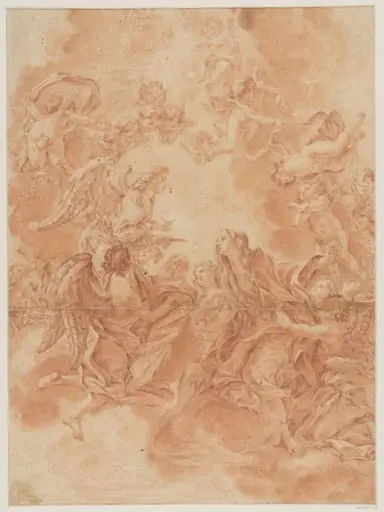 The Communion of St Mary Magdalene
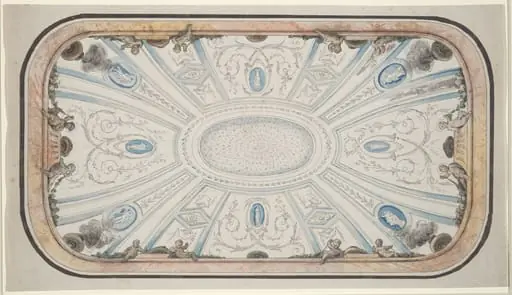 Design for a Ceiling
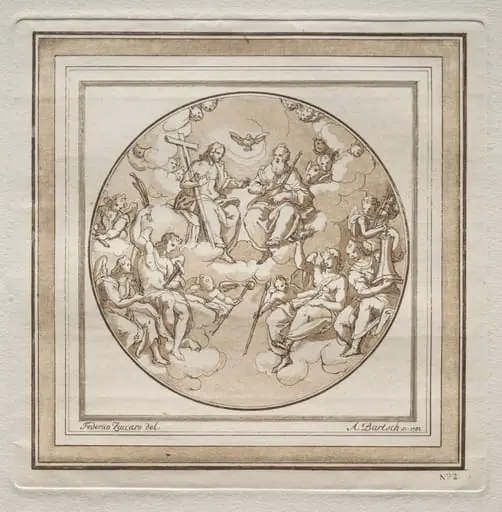 The Trinity
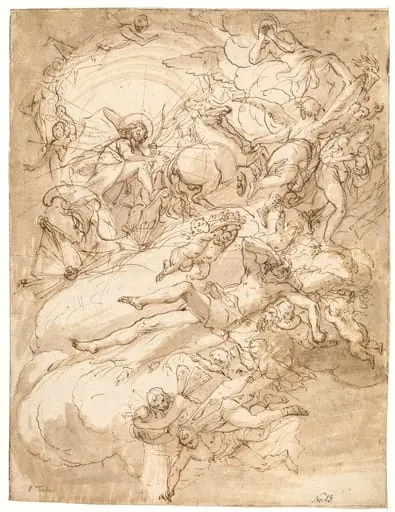 Apollo in his chariot, design for a ceiling painting
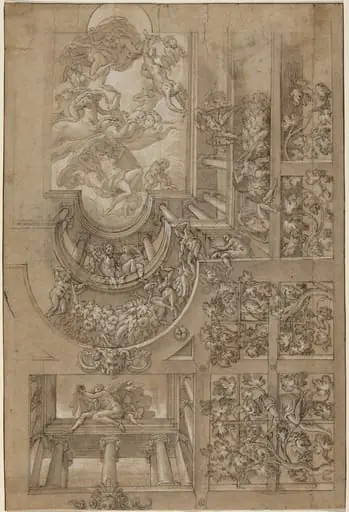 Illusionistic Ceiling with a Grape Arbor, Figures Poised on Galleries, and a Central Scene of Olympian Gods
 The Triumph of Empire, with the Four Continents
 Apollo, Diana, and Time with the Cyclic Vicissitudes of Human Life
 untitled
 The Assumption of the Virgin with Two Bishops and Other Figures
 The Coronation of the Virgin with Angel Musicians and All Saints