Artwork
Title Page to Urbium Praecipuarum Totius Mundi
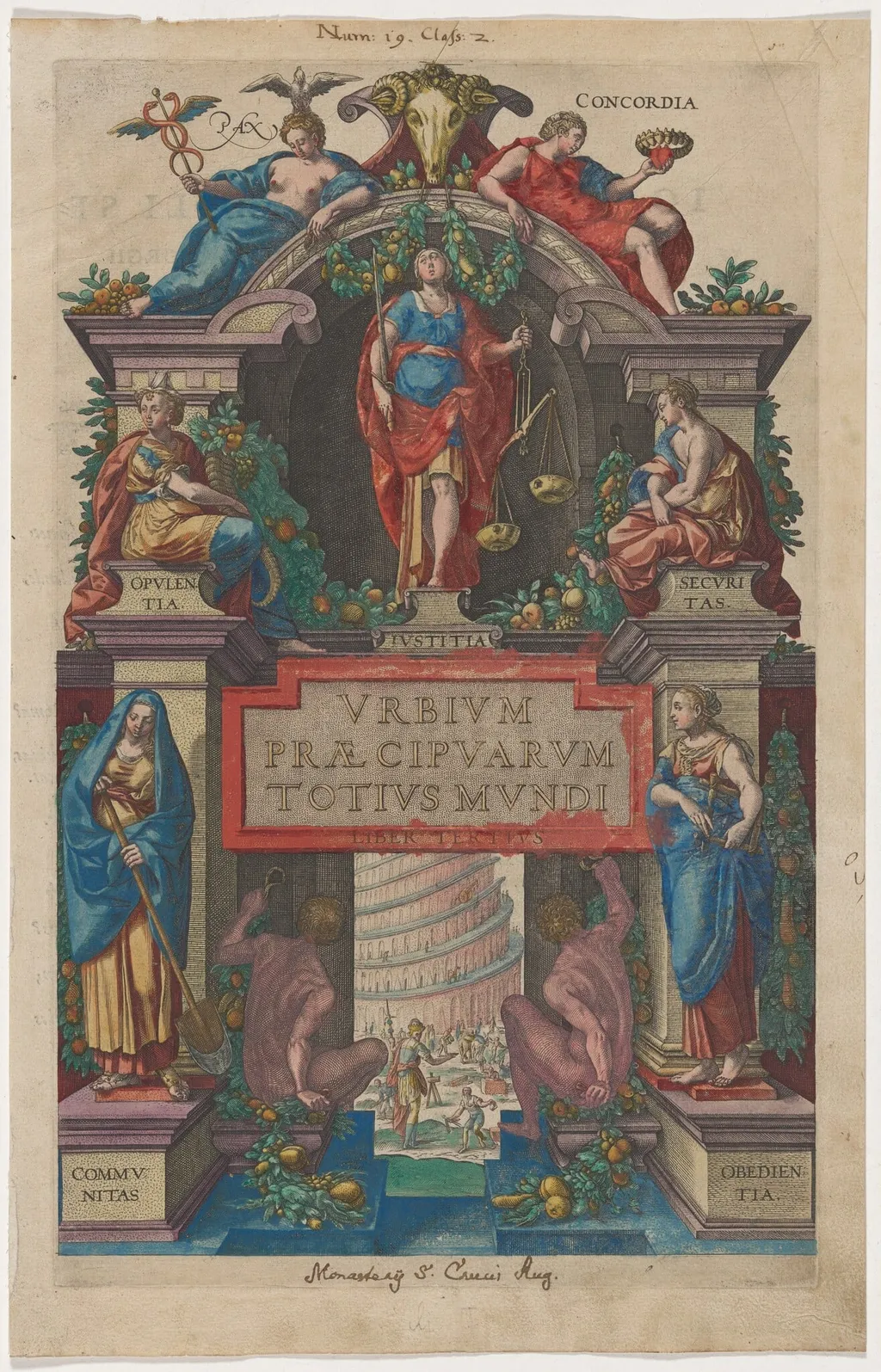
Title Page to Urbium Praecipuarum Totius Mundi is an ink print by the Romanticist artist Unknown 19th Century. It dates from 1850 and is held in the collection of the National Gallery of Art.
About this work
Overview
Rendered in fine line work and hand-colored, it combines architectural framing with symbolic figures to convey themes of justice, authority, and global order.
This engraved title page, part of a larger cartographic work, presents an allegorical composition designed to introduce a collection of the world’s principal cities. Rendered in fine line work and hand-colored, it combines architectural framing with symbolic figures to convey themes of justice, authority, and global order. The dense ornamentation reflects the decorative conventions of early modern printed books, where visual grandeur reinforced textual prestige.
Subject & Meaning
Three female figures dominate the scene, each embodying abstract ideals: the figure with the caduceus represents commerce or healing, the crowned woman signifies sovereignty, and the central figure holding scales and a sword personifies justice. Together, they frame the title, suggesting that the cities listed are governed by these principles. Surrounding flora and fruit allude to abundance and the natural world’s harmony with human civilization.
Technique & Style
Executed as a copperplate engraving, the image relies on precise incised lines to define form and texture, later enhanced with hand-applied watercolor. The intricate detailing—down to individual leaves and decorative flourishes—demonstrates the engraver’s technical skill. The composition is deliberately crowded, typical of the period’s preference for visual richness, where every element contributes to a layered, symbolic narrative.
History & Provenance
Created as the frontispiece for a 17th-century atlas of global cities, the print was likely produced in a Dutch or Flemish publishing house known for elaborate cartographic works. Its survival in multiple copies suggests broad distribution among scholarly and elite audiences. The hand-coloring indicates individual customization, common in luxury editions where buyers could choose palette preferences.
Context
This title page emerged during a period when European publishers sought to elevate geographic knowledge through visual symbolism. The fusion of classical iconography with contemporary cartography reflected humanist ideals, positioning cities not merely as locations but as embodiments of civic virtue. Similar allegorical frontispieces appeared in scientific and political texts, reinforcing the era’s belief in order and rational governance.
Legacy
Though not widely reproduced today, the design exemplifies the integration of allegory and cartography in early modern print culture. Its visual language influenced later emblem books and institutional publications that used symbolic figures to legitimize knowledge. As a specimen of artisanal printmaking, it remains a reference point for studying how visual rhetoric shaped the reception of geographic information.
Artist & collection

Artist

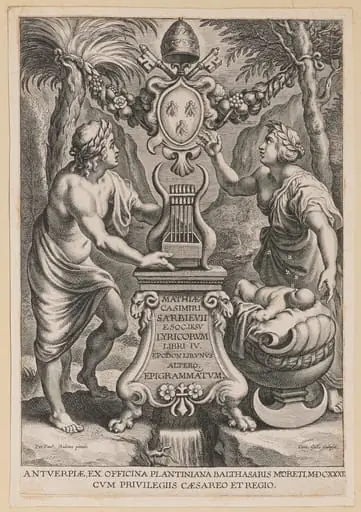 Title Page for M.C. Sarbievski, Lyricorum Libri IV
 Das Feur
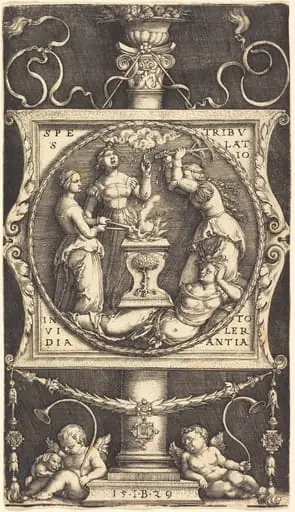 Emblem with Hope, Tribulation, Envy, and Tolerance
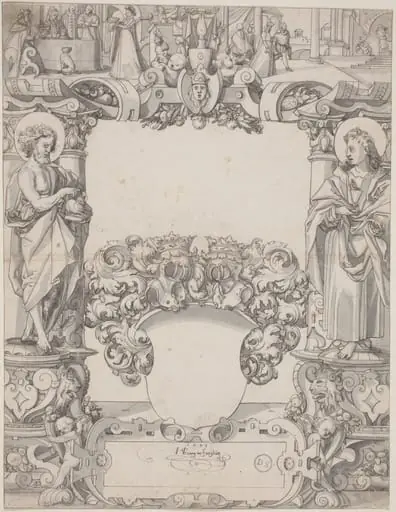 Glass Design with Saint John the Baptist and Saint John the Evangelist
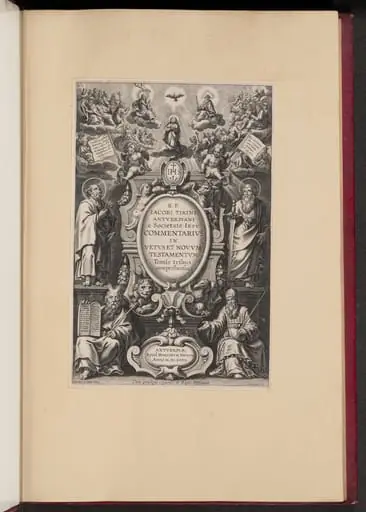 Title Page for R.P. Jacobi Tirini's "Commentarius in Vetvs et Novvm Testamentvm"
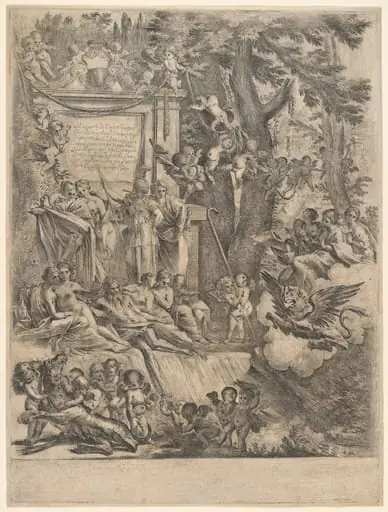 Allegory in Honor of the Arrival of Cardinal Franciotti as Bishop of Lucca
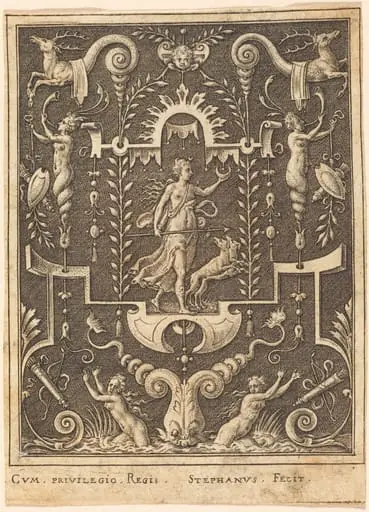 Diana
Diana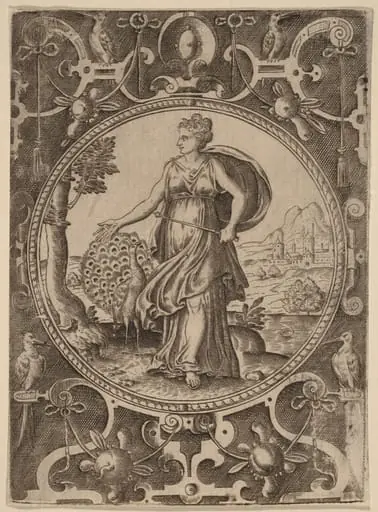 Juno
Juno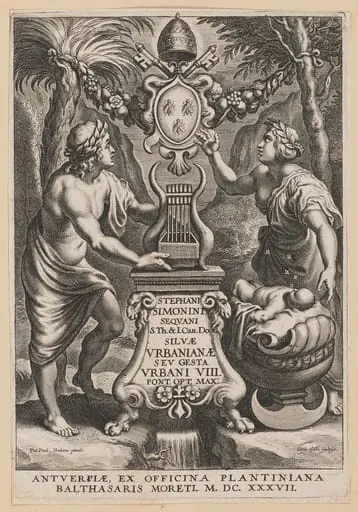 Title Page for Stephanus Simonini, Silvae Urbaninae
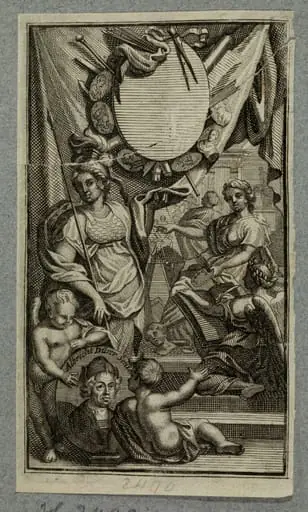 Frontispiece with portrait of Albrecht Dürer d.Ä.