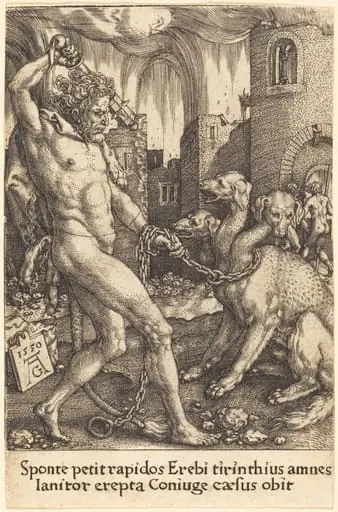
Artwork
Hercules and Cacus
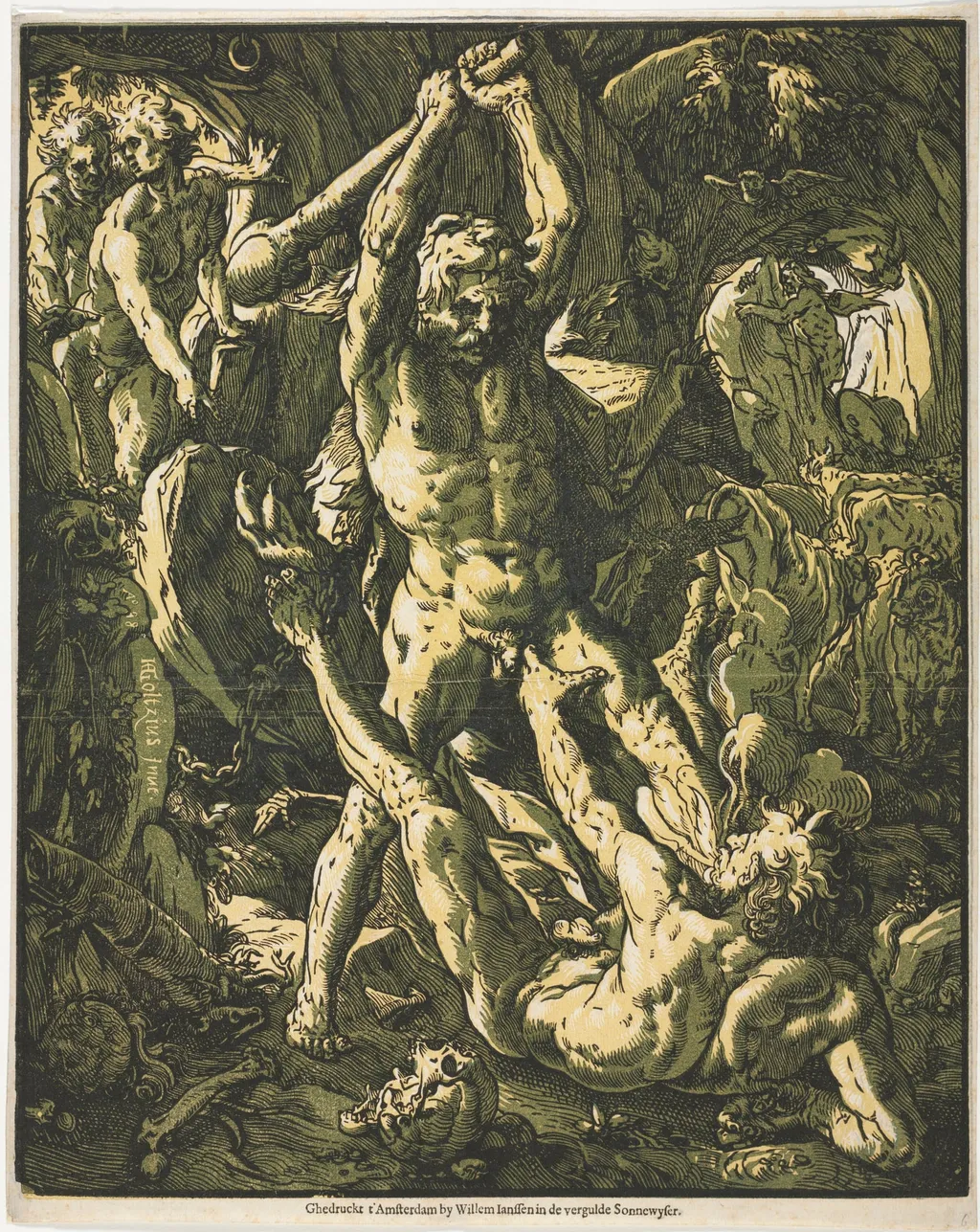
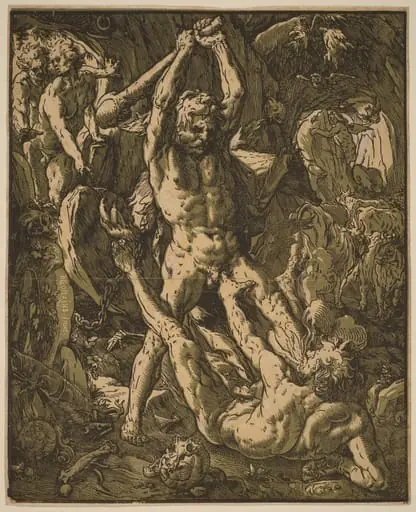
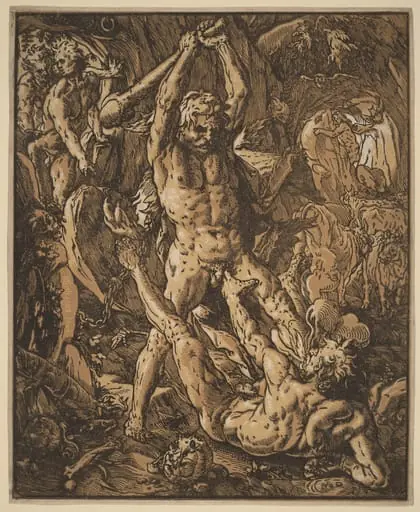
Hercules and Cacus is a print by the Renaissance artist Hendrik Goltzius. It dates from 1588 and is held in the collection of the Cleveland Museum of Art.
About this work
Overview
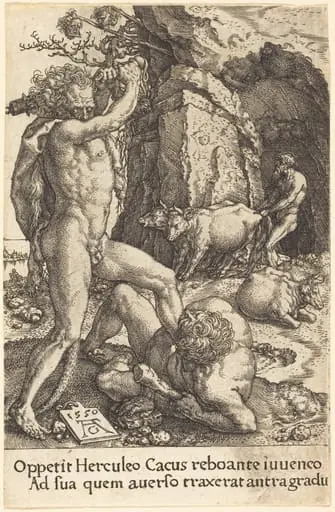
This chiaroscuro woodcut depicts the mythological confrontation between Hercules and Cacus, a fire-breathing giant who stole cattle from the hero.
This chiaroscuro woodcut depicts the mythological confrontation between Hercules and Cacus, a fire-breathing giant who stole cattle from the hero. The scene captures the climactic moment of their struggle, with Hercules raising his club for a final blow as Cacus, wounded and sprawled among bones, exhales flames in desperation. A secondary action in the background reveals Hercules’ earlier act: rolling away a boulder to free the stolen herd.
Subject & Meaning
The narrative draws from Roman myth, in which Hercules restores order by defeating Cacus, a monstrous thief who terrorized the region. The composition emphasizes justice and strength: Hercules, the rightful avenger, confronts the chaotic force of Cacus, whose fire symbolizes destructive greed. The presence of the liberated cows reinforces the theme of restitution and moral restoration.
Technique & Style
The print employs chiaroscuro through layered woodblocks to achieve dramatic contrasts of light and shadow. Bold, angular forms define the figures, while the use of yellow and olive green creates a tense, unnatural atmosphere. The background scene is rendered with finer lines, distinguishing spatial depth and temporal sequence from the violent foreground.
History & Provenance
Created by Hendrick Goltzius around 1589, this print is one of his most ambitious chiaroscuro works. It was produced using multiple woodblocks, each inked in a different hue to simulate color gradients. The print circulated widely among collectors and artists in Northern Europe, influencing later interpretations of classical themes in printmaking.
Context
Goltzius worked during a period of renewed interest in classical antiquity and Mannerist aesthetics. His choice of Hercules as subject aligned with humanist ideals of virtue overcoming vice. The technical innovation of multi-block color printing reflected broader experimentation in printmaking, where artists sought to rival the tonal richness of paintings.
Legacy
The print became a reference for later artists studying dynamic composition and color layering in woodcut. Its fusion of mythological narrative with technical precision contributed to the elevation of printmaking as a serious artistic medium. Goltzius’s approach to chiaroscuro influenced generations of Northern European printmakers well into the 17th century.
Artist & collection
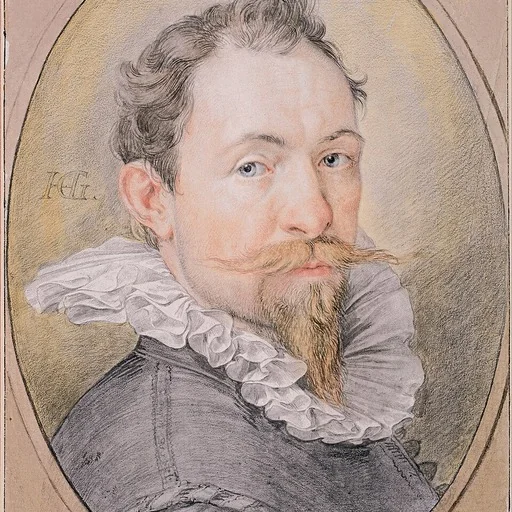
Artist
Hendrick Goltzius (German: , Dutch: ; né Goltz; January or February 1558 – 1 January 1617) was a German-born Dutch printmaker, draftsman, and painter.