Artwork
Seven Deities: Nox (Night)
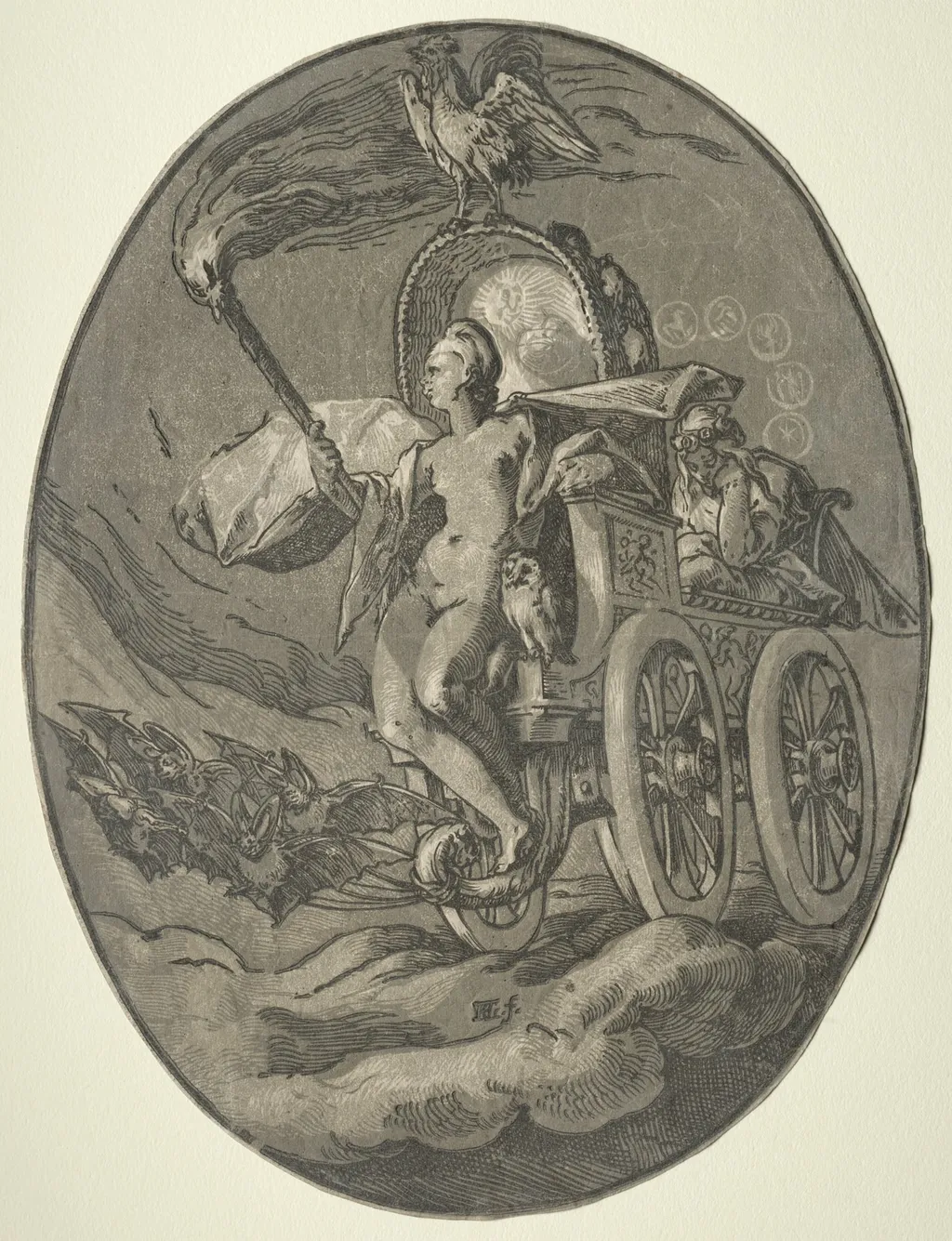
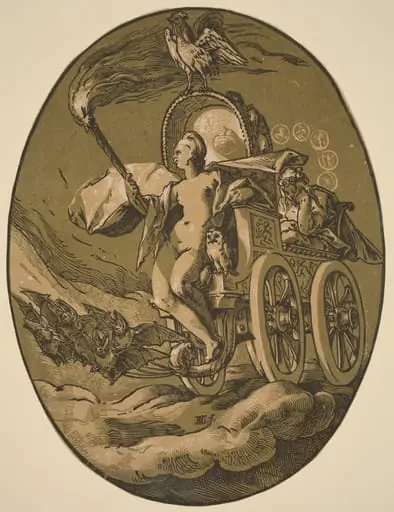
Seven Deities: Nox (Night) is a print by the Renaissance artist Hendrik Goltzius. It dates from 1589 and is held in the collection of the Cleveland Museum of Art.
About this work
Overview
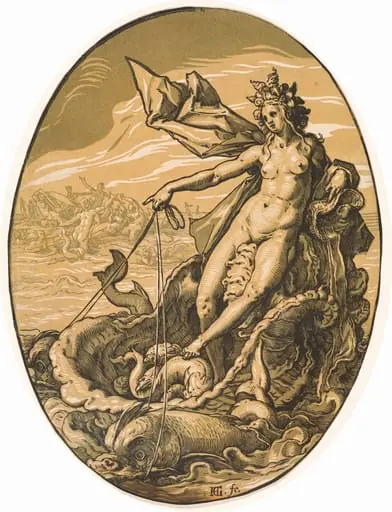
This chiaroscuro woodcut is one of seven oval prints depicting deities in their natural domains, created by the Dutch artist Hendrick Goltzius. It portrays Nox, the personification of night, in motion across a darkened sky. The work exemplifies Goltzius’s mastery of tonal contrast through layered woodblocks, producing a range of grays that evoke depth and atmosphere without color.
Subject & Meaning
Nox is depicted driving a chariot drawn by bats, flanked by an owl—symbol of nocturnal wisdom—and a rooster, herald of dawn. Behind her, the rising sun illuminates the earth’s orb, while Sleep reclines peacefully, suggesting the gentle transition from night to day. The imagery reflects classical mythology’s cyclical view of time, where darkness and light are interdependent forces.
Technique & Style
The muted palette of early impressions reflects the artist’s original intent before later, more colorful editions emerged.
Goltzius employed multiple woodblocks to achieve subtle gradations of gray, a hallmark of chiaroscuro printing. Each tone was carved and printed separately, requiring precise alignment. The technique allowed for dramatic shifts between shadow and light, enhancing the illusion of volume and movement. The muted palette of early impressions reflects the artist’s original intent before later, more colorful editions emerged.
History & Provenance
Early impressions of Nox were printed in restrained tones, consistent with Goltzius’s control over the process. Later reprints, often more vividly colored, were produced by other publishers, notably Willem Jansz Blaeu in Antwerp, who capitalized on the popularity of such prints. These later versions likely diverged from Goltzius’s hand, indicating a shift from artistic to commercial production.
Context
In late 16th-century Netherlands, chiaroscuro woodcuts were rare and technically demanding. Goltzius elevated the medium, aligning it with the intellectual currents of humanist antiquity. His series of divine figures responded to a growing interest in mythological symbolism among collectors and scholars, blending classical themes with innovative printmaking techniques.
Legacy
Goltzius’s approach influenced subsequent generations of printmakers, both in the Netherlands and beyond. Though later reprints diluted the original tonal subtlety, his work established chiaroscuro woodcut as a serious artistic medium. His integration of myth, light, and technical precision set a precedent for how classical subjects could be reimagined through the printed image.
Artist & collection
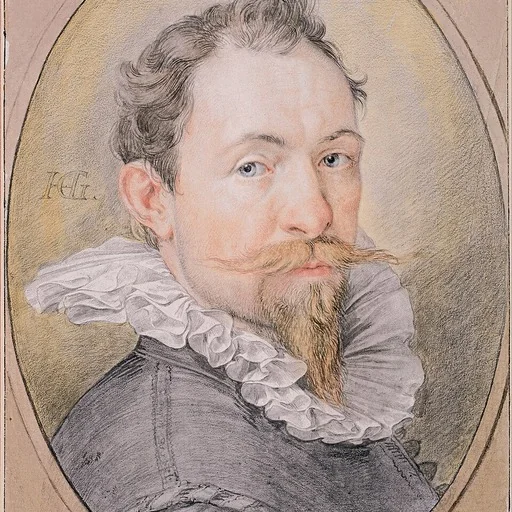
Artist
Hendrick Goltzius (German: , Dutch: ; né Goltz; January or February 1558 – 1 January 1617) was a German-born Dutch printmaker, draftsman, and painter.