Artwork
St. Bartholomew
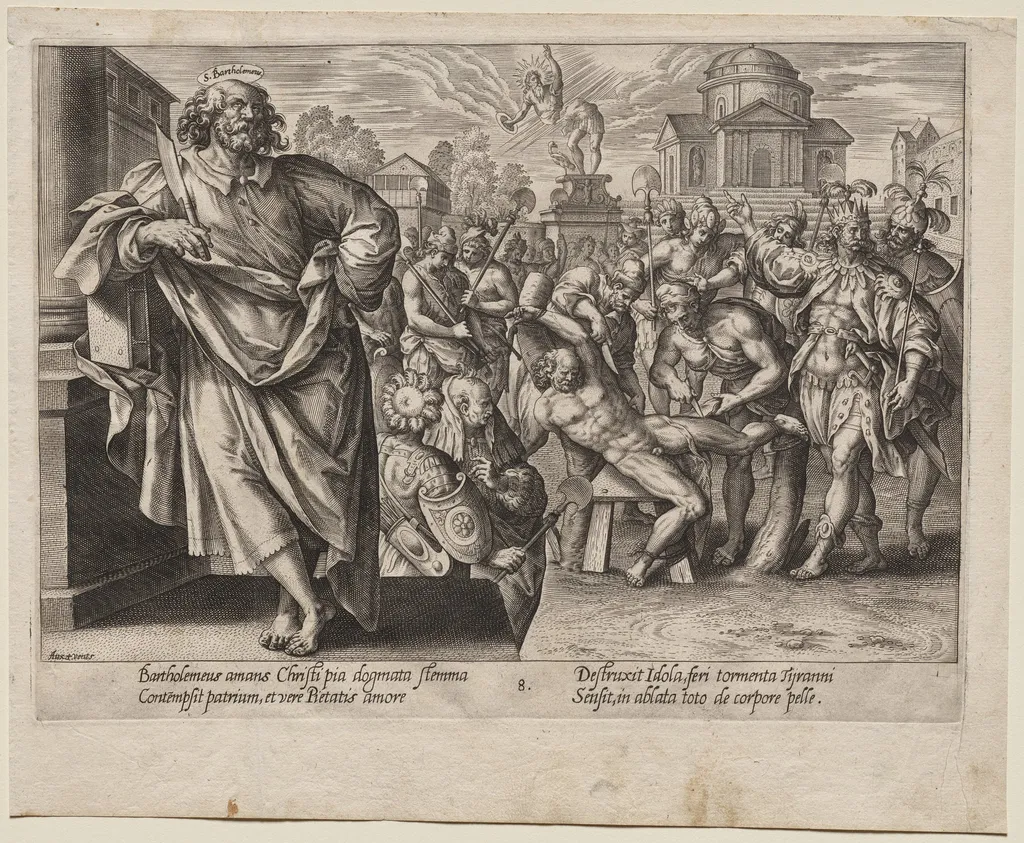
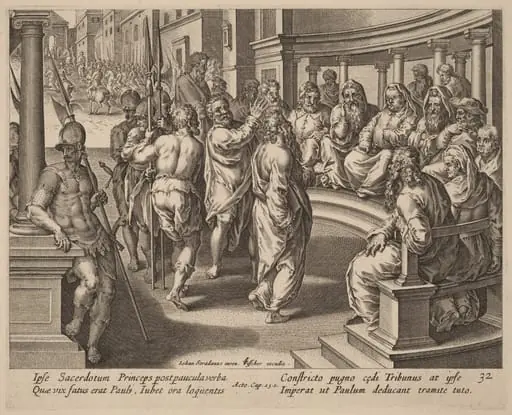
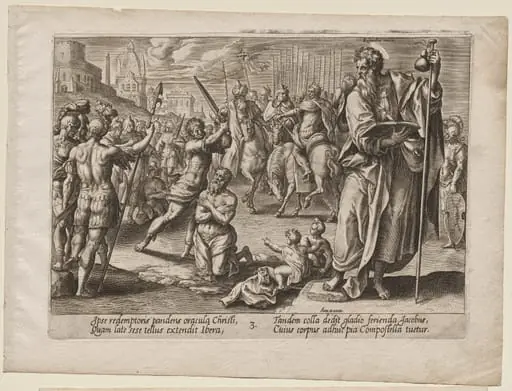
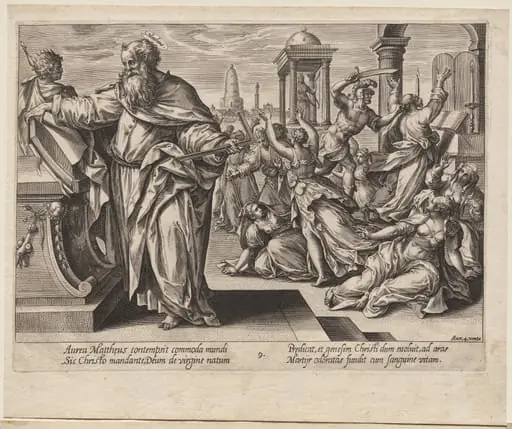
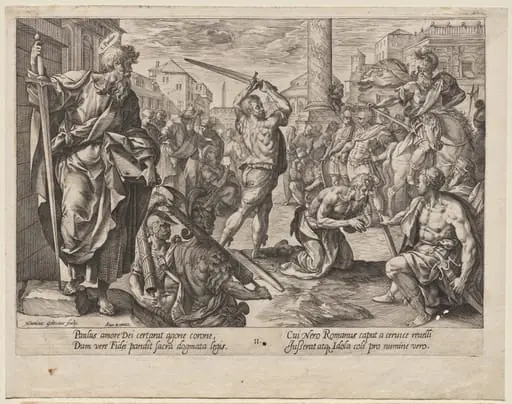
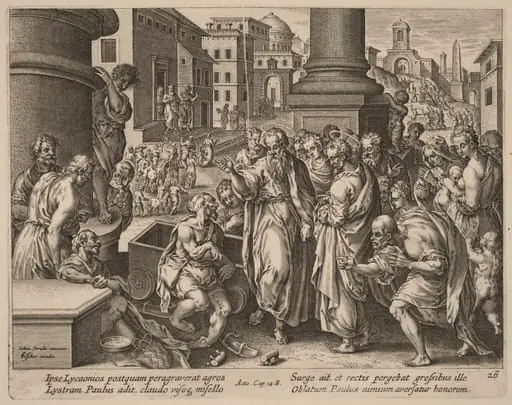
St. Bartholomew is a print by the Renaissance artist Hendrik Goltzius. It dates from 1578 and is held in the collection of the Cleveland Museum of Art. Created around 1578 by Dutch printmaker Hendrick Goltzius, this black‑and‑white engraving titled St.
About this work
Overview
Created around 1578 by Dutch printmaker Hendrick Goltzius, this black‑and‑white engraving titled St. Bartholomew is part of the collection at the Cleveland Museum of Art. The work exemplifies the artist’s skill in rendering complex narratives within a single, densely populated scene.
Subject & Meaning
The central figure, a bearded man in robes identified by an inscription as St. Bartholomew, gestures toward a tumultuous crowd. The assemblage includes seated individuals, musicians, combatants and idle figures, suggesting a chaotic tableau that may allude to themes of faith confronting disorder or moral collapse.
Technique & Style
Goltzius employs a pronounced chiaroscuro effect, using stark contrasts between deep shadows and bright highlights to model the figures and give the composition a three‑dimensional quality. The intricate line work and varied hatching demonstrate his mastery of engraving techniques.
History & Provenance
The print has remained in the public domain since its early circulation in the late 16th century and was acquired by the Cleveland Museum of Art, where it is displayed as part of the museum’s European prints collection.
Context
St. Bartholomew reflects the late‑Renaissance fascination with dramatic religious subjects rendered in graphic media. Goltzius, active in Haarlem, was known for his elaborate compositions and for adapting the dramatic lighting popularized by Italian masters to Northern European printmaking.
Artist & collection
Artist
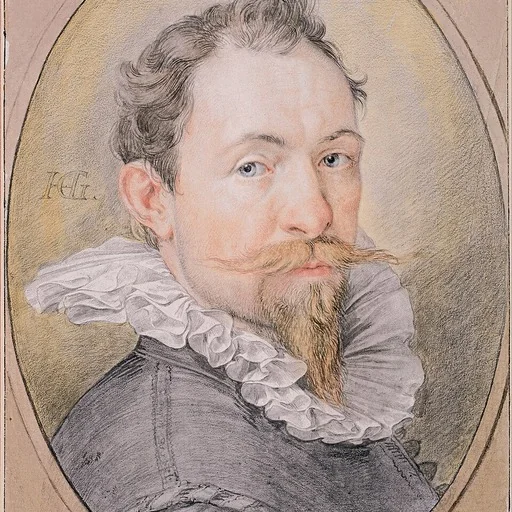
Hendrick Goltzius (German: , Dutch: ; né Goltz; January or February 1558 – 1 January 1617) was a German-born Dutch printmaker, draftsman, and painter.