Artwork
The Deaths of Ananias and Sapphira
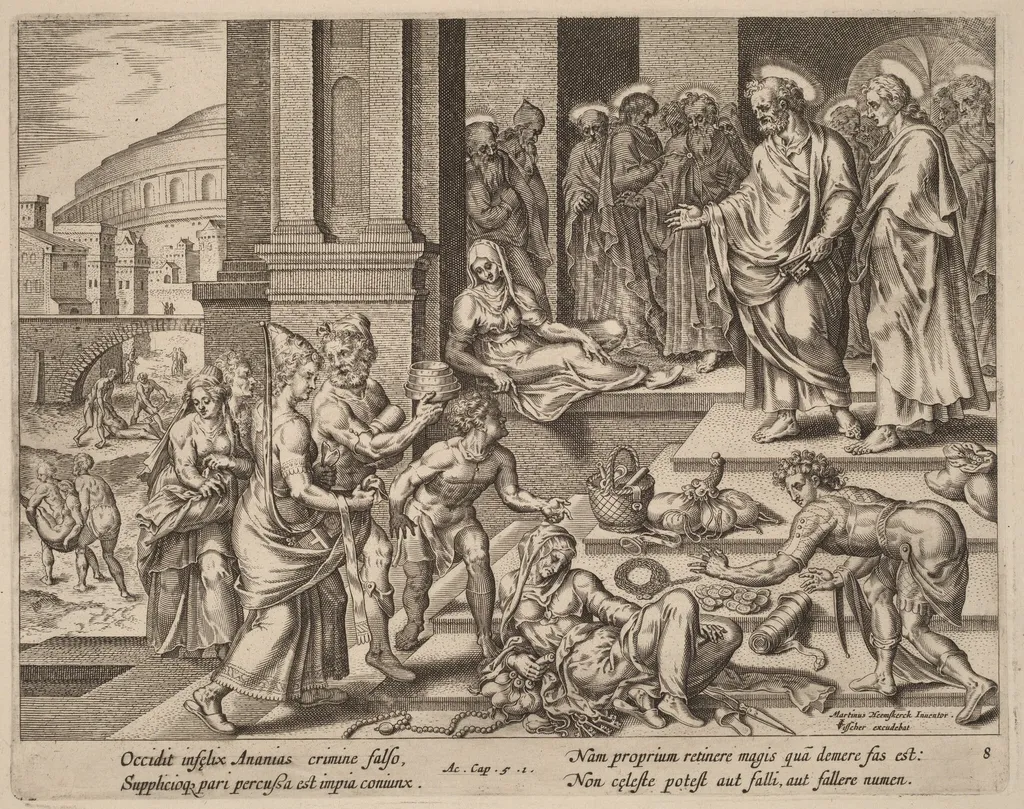
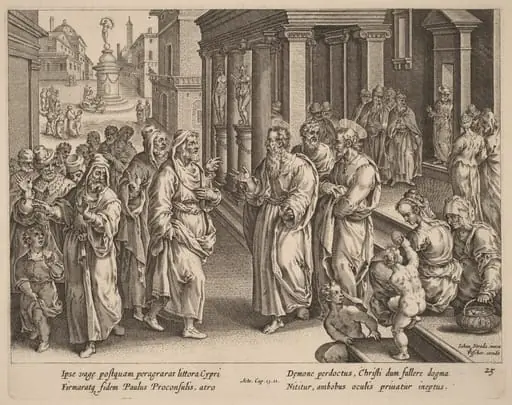
The Deaths of Ananias and Sapphira is an ink print by the Renaissance artist Philip Galle. It dates from 1574 and is held in the collection of the National Gallery of Art.
About this work
Overview
Philip Galle’s 1574 engraving, titled *The Deaths of Ananias and Sapphira*, presents a densely populated biblical tableau in which the two figures are punished for deceit. Executed in the Northern Renaissance printmaking tradition, the work uses fine engraving lines to convey a dramatic, multi‑figure composition that emphasizes the moral narrative.
Subject & Meaning
The image illustrates the New Testament episode in which Ananias and Sapphira die after lying about the proceeds of a sale to the early Christian community. Latin captions at the bottom reinforce the theme of divine retribution for dishonesty, while the juxtaposition of the couple’s demise with surrounding onlookers underscores the communal impact of their fraud.
Technique & Style
Galle employed meticulous line work to carve the scene into a metal plate, allowing for sharp contrasts and intricate detailing of clothing, architecture, and objects such as coins and broken jars. The composition is split into two zones: a left side with a muscular figure brandishing a sword, and a right side where robed men attend a woman on a bed, creating a sense of controlled chaos typical of late‑16th‑century engravings.
History & Provenance
Philip Galle, a Dutch publisher and engraver active in the late 1500s, was known for both reproducing older master paintings and creating original designs. This print, dated 1574, reflects his role in disseminating religious narratives across Europe through affordable, reproducible media, though specific ownership records for surviving copies are limited.
Context
The work belongs to a period when Northern European artists frequently engaged biblical subjects to address moral and theological concerns of the Reformation era. Engravings like Galle’s served both devotional and didactic purposes, reaching a broad audience beyond elite patrons.
Artist & collection
Artist
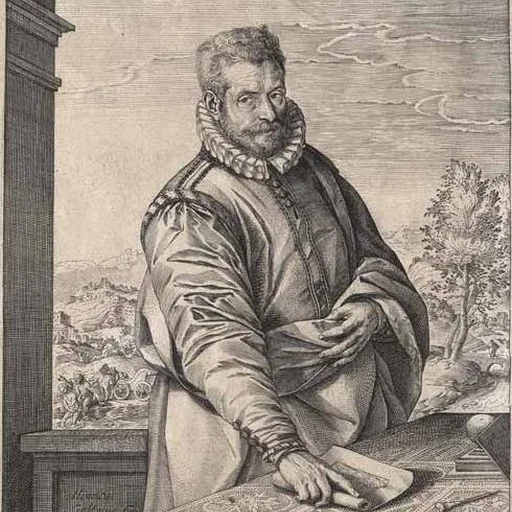
Philip (or Philips) Galle (1537 – March 1612) was a Dutch publisher, best known for publishing old master prints, which he also produced as designer and engraver. He is especially known for his reproductive engravings of paintings.

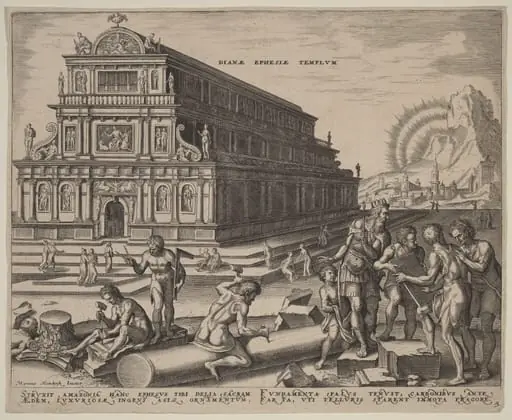 Dianae Ephesiae Templum (The Temple of Diana at Ephesus)
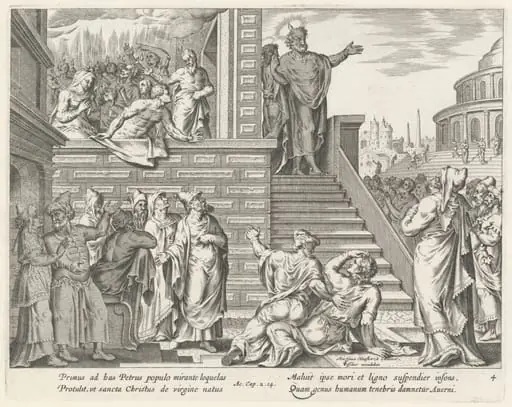 Saint Peter Speaks to the People about Christ
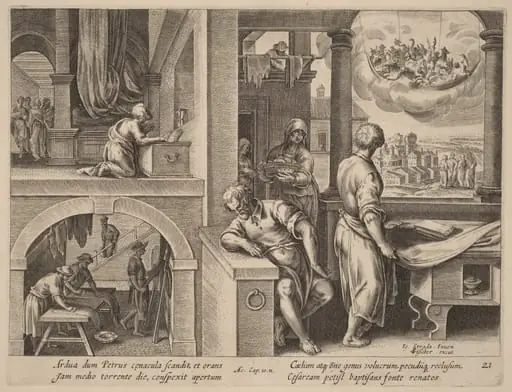 The Vision of Saint Peter
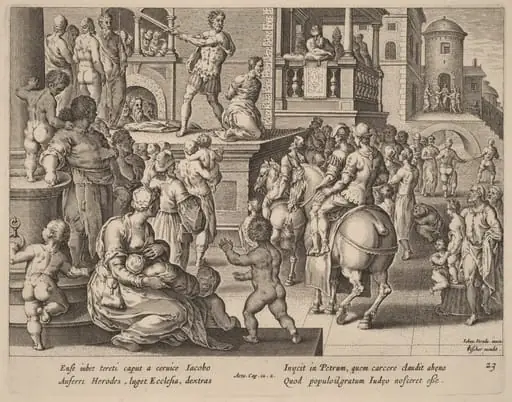 Beheading of Saint James
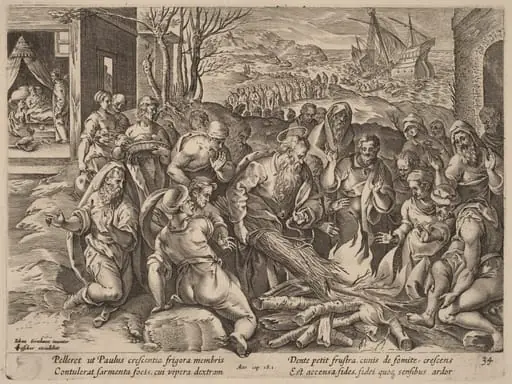 Saint Paul Shipwrecked on the Island of Melita
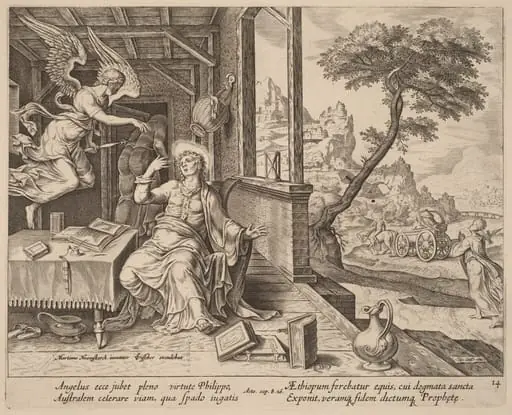 The Angel Orders Saint Philip to Accompany the Ethiopian Eunuch
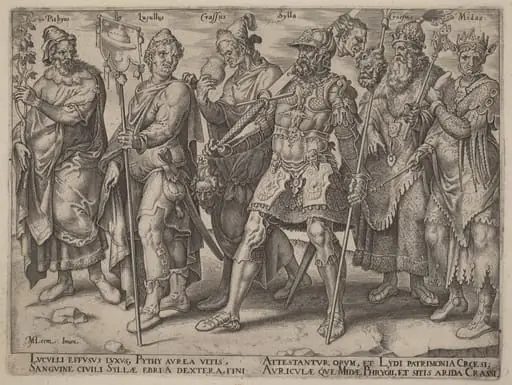 Notorious Examples of Wealth from Antiquity
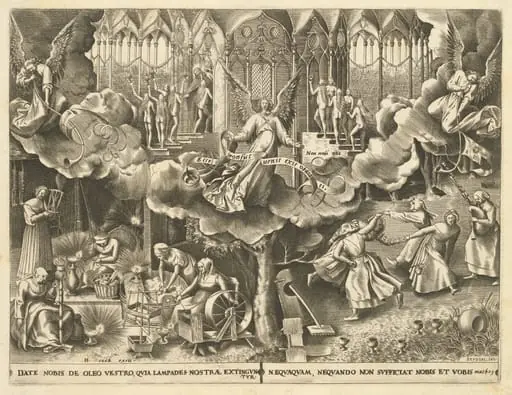 The Parable of the Wise and Foolish Virgins
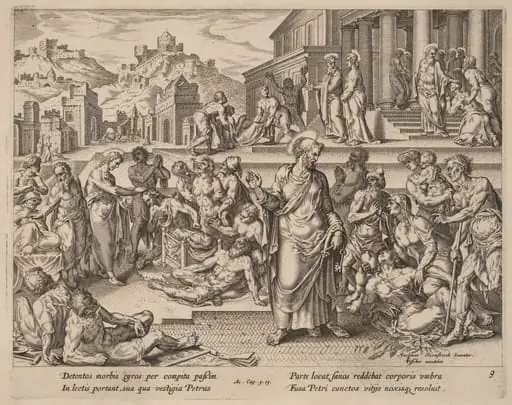 Saint Peter Healing the Sick with His Shadow
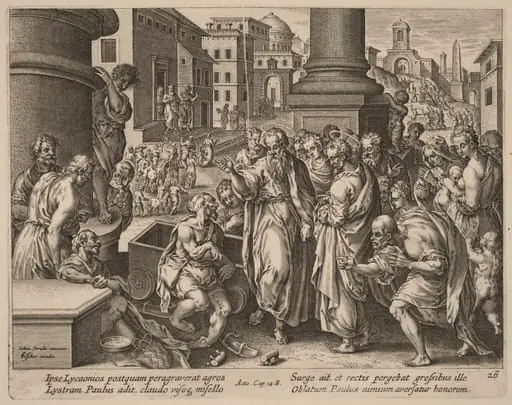 Saint Paul Heals the Lame Man at Lystra
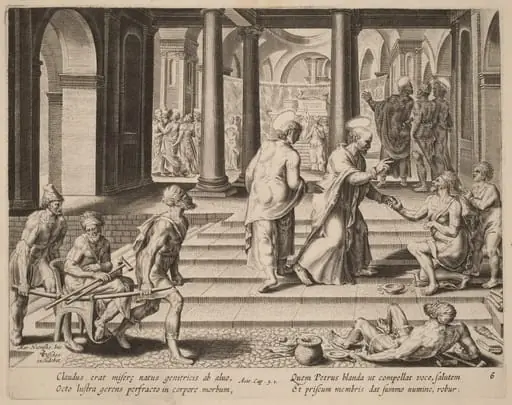 Saints Peter and John Heal a Cripple at the Gate of the Temple
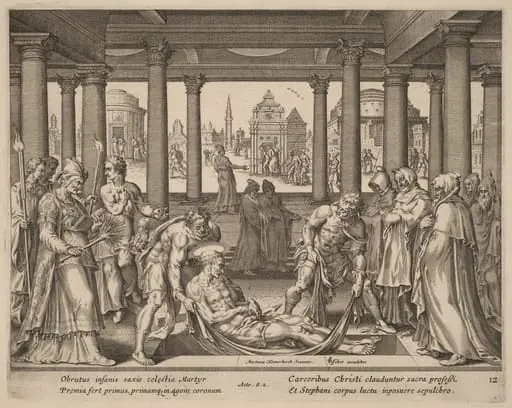 Devout Men Carrying Saint Stephen to His Burial
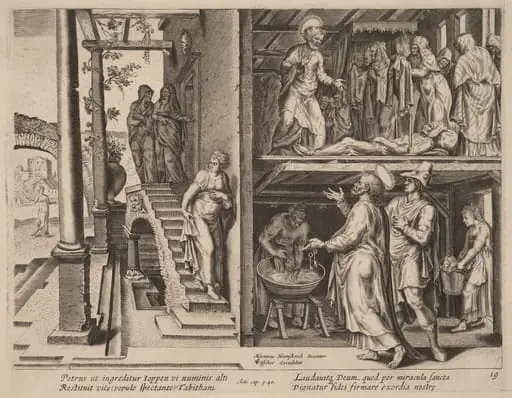 The Raising of Tabitha
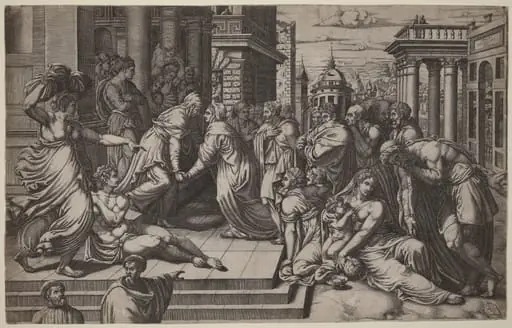 The Visitation
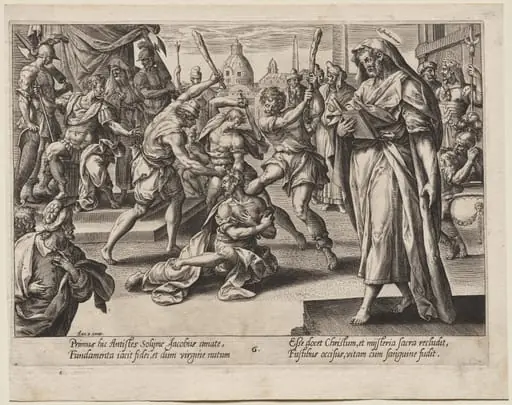 St. James the Less
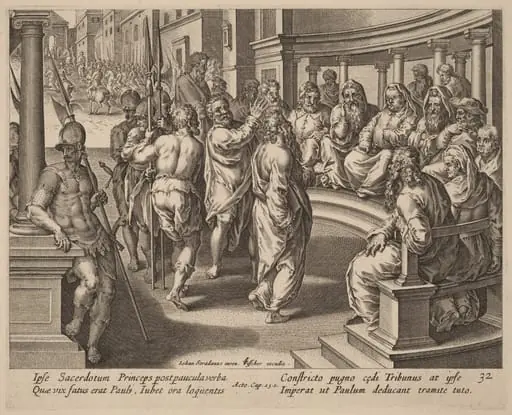 Saint Paul before the High Priest
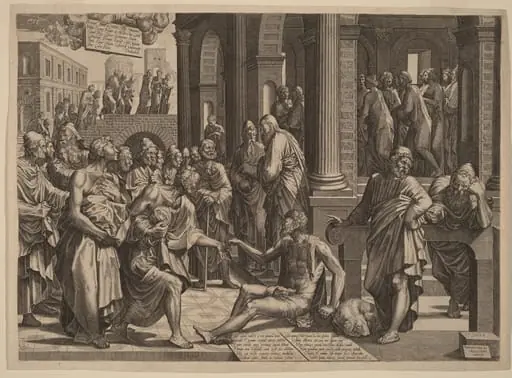 Apostles Peter and John Healing the Paralytic
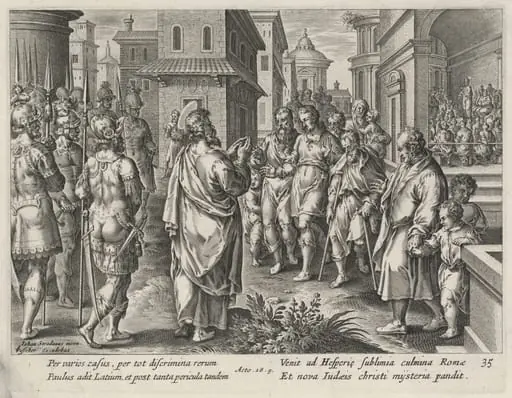 Saint Paul Preaching in Rome
 Saint Paul Disputes the Sorcerer