Artwork
Solomon Led to Idolatry by His Wives
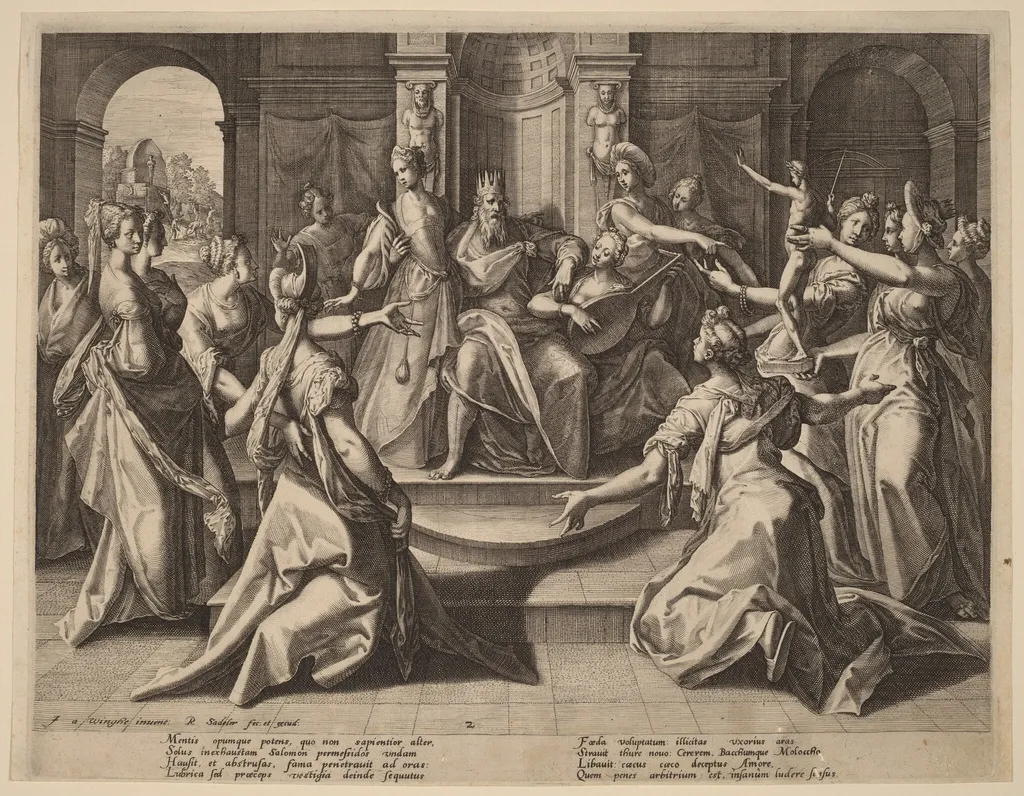
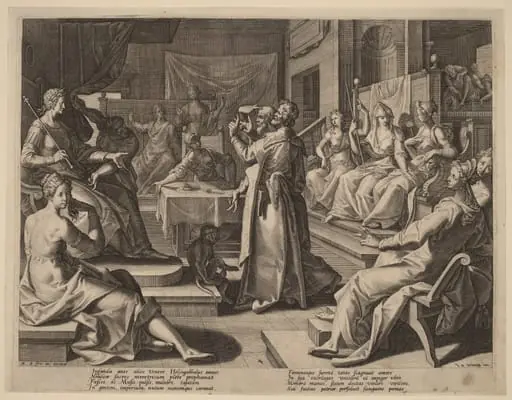
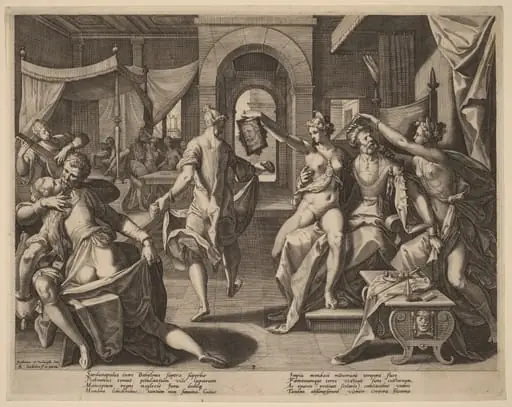
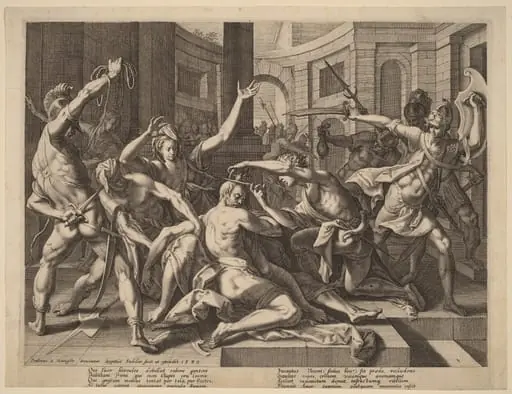
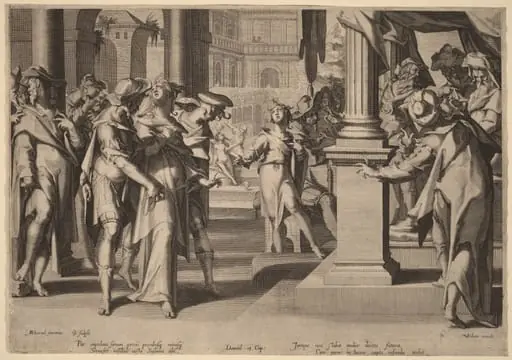
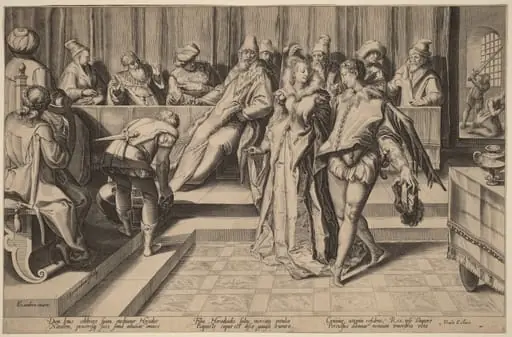
Solomon Led to Idolatry by His Wives is an ink print by the Renaissance artist Raphael Sadeler I. It dates from 1589 and is held in the collection of the National Gallery of Art.
About this work
Overview
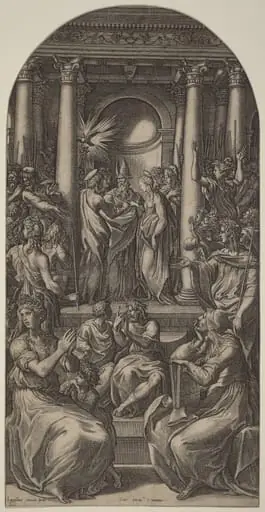
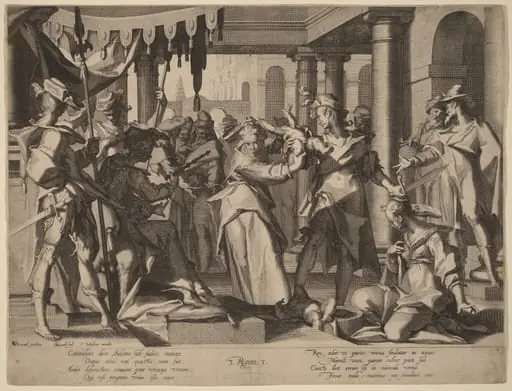
Raphael Sadeler I’s 1589 engraving, titled *Solomon Led to Idolatry by His Wives*, presents a densely populated composition on laid paper. At its centre sits an elderly, bearded king on a throne, surrounded by numerous women in flowing garments. Architectural elements such as columns and statuary frame the scene, lending it the atmosphere of a grand hall or temple.
Subject & Meaning
The image visualises the biblical narrative in which King Solomon, influenced by his foreign wives, turns toward foreign deities. The women, each gesturing toward different objects—a crown, a lyre, or other symbols—suggest the competing temptations that draw the monarch away from his covenantal duties. Their varied expressions, from solemn to urgent, underscore the moral tension of the story.
Technique & Style
Sadeler employs the fine line work characteristic of late‑Renaissance engraving. Small, closely spaced hatches create subtle gradations of shadow, while sharper, broader strokes define architectural forms and the drapery of the figures. The contrast between deep blacks and delicate whites enhances the three‑dimensional illusion on the flat surface of the laid paper.
History & Provenance
Created in 1589, the print belongs to the prolific Sadeler family of Antwerp engravers, who were known for disseminating religious and mythological subjects across Europe. While specific ownership records are scarce, the work has appeared in several 17th‑century collections of biblical prints and is now held by institutions that focus on early modern graphic art.
Artist & collection