Artwork
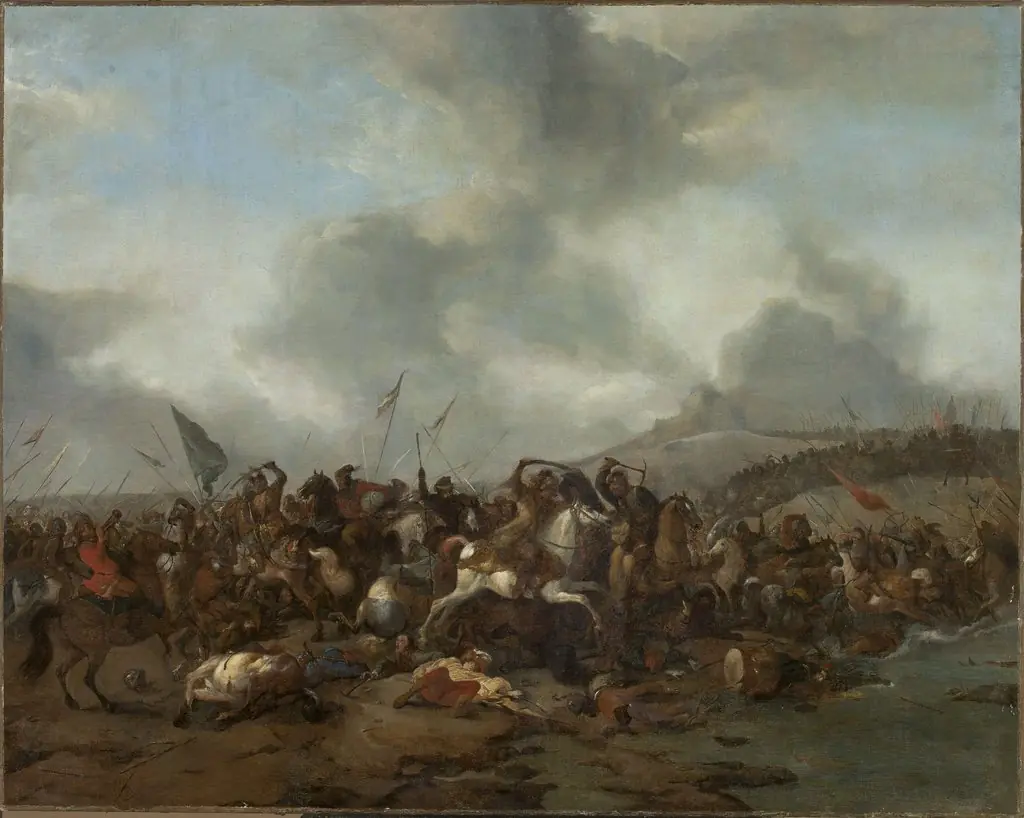
Battle outside the walls of Antioch (23 june 1098) between the crusaders, commanded by Bohemnon, and the army of Kerbogha.
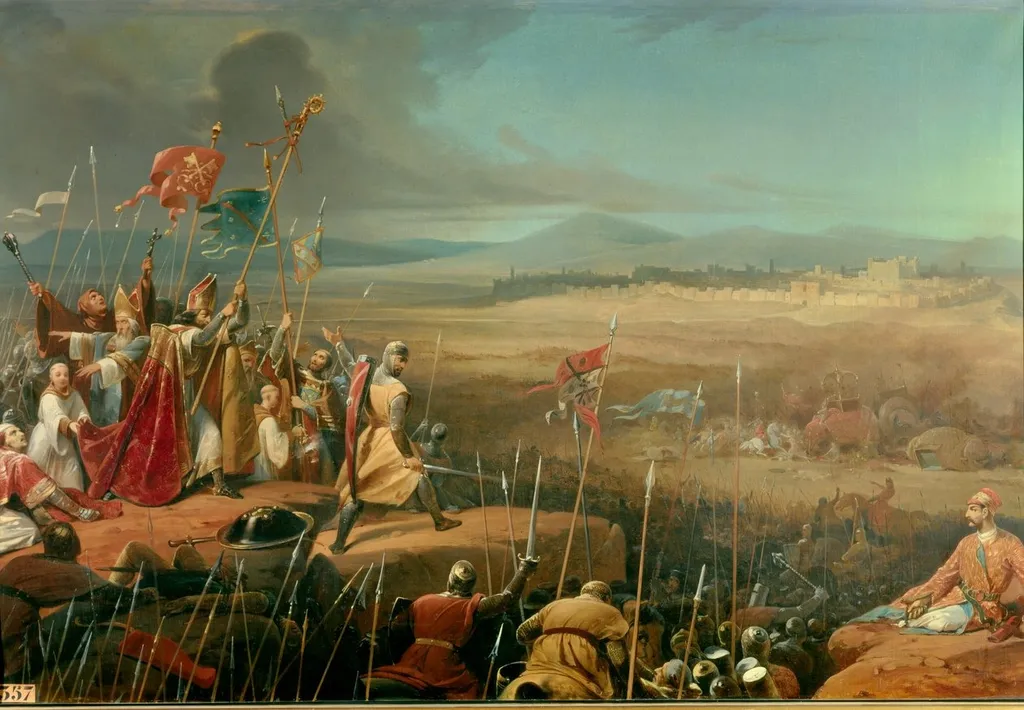
Battle outside the walls of Antioch (23 june 1098) between the crusaders, commanded by Bohemnon, and the army of Kerbogha. is an oil painting by Henri Frédéric Schopin. It dates from 1838 and is held in the collection of the Palace of Versailles.
About this work
Overview
Schopin, a Prix de Rome laureate, chose a historical military encounter as his subject, aligning with the academic tradition of grand narrative painting.
Painted in 1838 by French artist Henri Frédéric Schopin, this oil work illustrates a pivotal moment from the First Crusade: the confrontation near Antioch on June 23, 1098. Schopin, a Prix de Rome laureate, chose a historical military encounter as his subject, aligning with the academic tradition of grand narrative painting. The piece resides in the Palace of Versailles, where it contributes to a broader collection of state-commissioned historical imagery.
Subject & Meaning
The scene captures the clash between Crusader forces under Bohemond and the approaching army led by Kerbogha. Religious and military figures are grouped in the foreground, their gestures and banners suggesting both unity and desperation. The distant city walls and looming clouds imply a siege’s gravity, while the composition frames the battle as a decisive trial of faith and endurance, reflecting 19th-century romanticized views of medieval crusading.
Technique & Style
Schopin employs chiaroscuro to model figures and heighten emotional intensity, directing attention toward the central combatants. The palette contrasts warm armor tones against cool sky and shadowed terrain, reinforcing the tension between light and darkness. Brushwork varies from detailed armor to looser, atmospheric backgrounds, creating a layered sense of depth. The arrangement of figures follows a diagonal thrust, guiding the viewer’s eye from foreground chaos to the distant horizon.
History & Provenance
Commissioned during the July Monarchy, the painting was completed shortly after Schopin’s return from Rome, where he had studied classical and Renaissance models. It entered the Palace of Versailles collection as part of a state initiative to commemorate France’s historical ties to European religious wars. Its placement among other military scenes underscores its role in constructing national narratives of valor and divine purpose.
Context
In the 1830s, European artists frequently revisited medieval crusades as allegories for contemporary nationalism and religious identity. Schopin’s depiction aligns with a broader trend of historicizing religious conflict through dramatic, emotionally charged compositions. The painting reflects both Romantic fascination with the past and the French state’s interest in legitimizing its cultural authority through visual history.
Legacy
Though not widely exhibited today, the painting remains a representative example of mid-19th-century French academic history painting. It illustrates how historical events were reinterpreted through contemporary aesthetic and ideological lenses. Its preservation in Versailles ensures its continued presence within institutional narratives of European military and religious heritage.
Artist & collection
Artist
Henri Frédéric Schopin (12 June 1804 - 21 October 1880) was a French painter. He was the winner of the Prix de Rome for painting in 1831.

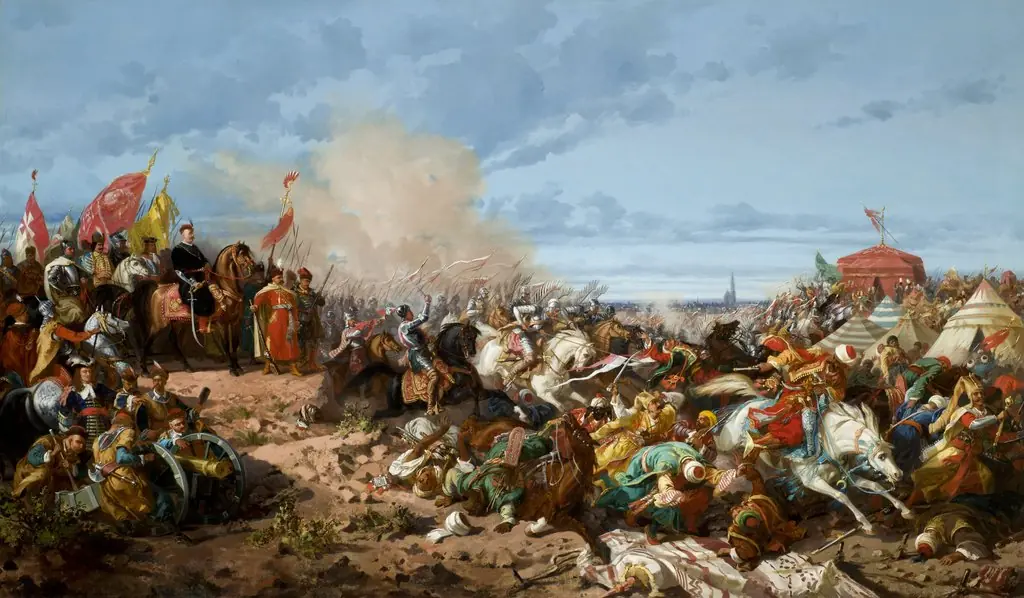 Sobieski at Vienna
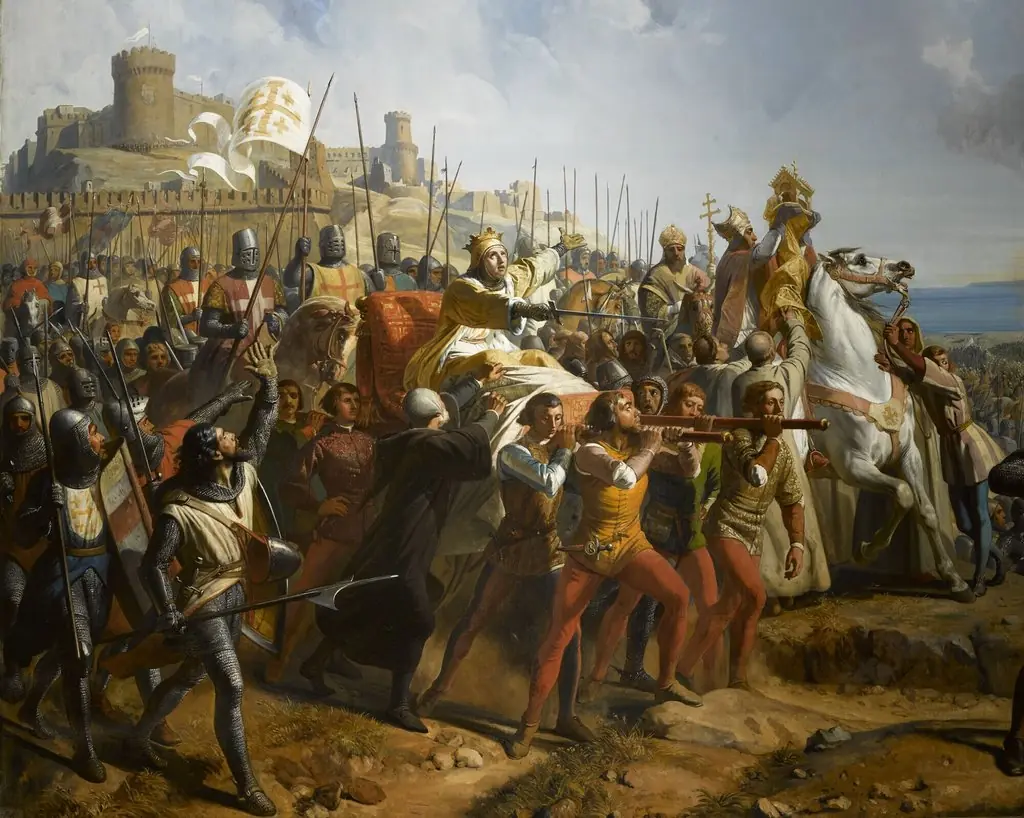 Battle of Ascalon, 18 November 1177
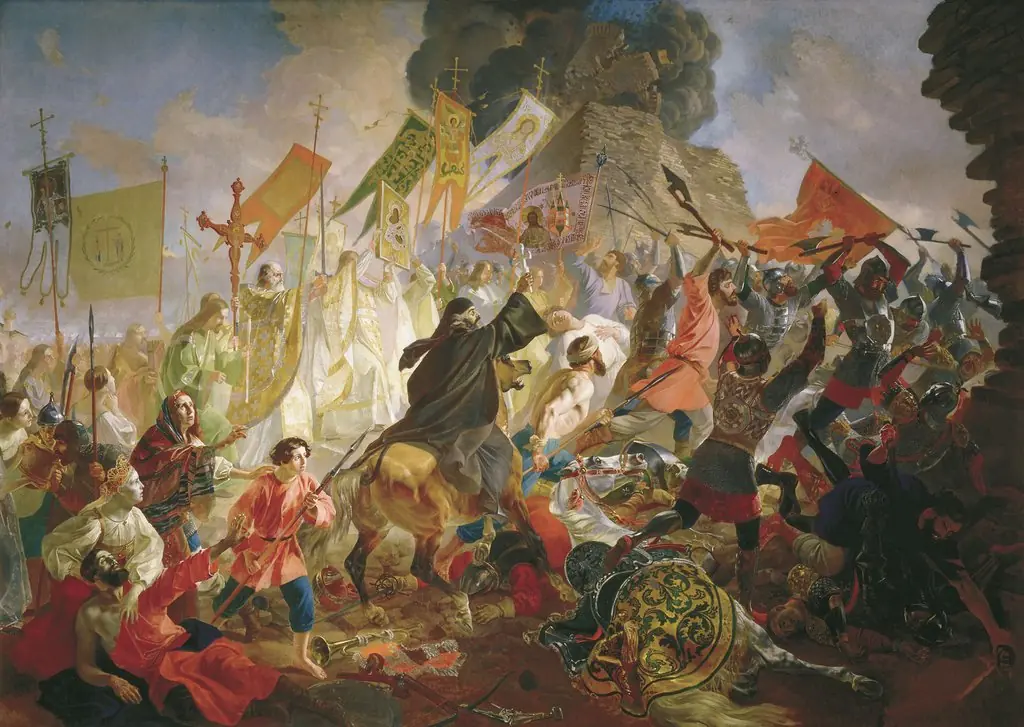 Осада Пскова польским королём Стефаном Баторием в 1581 году
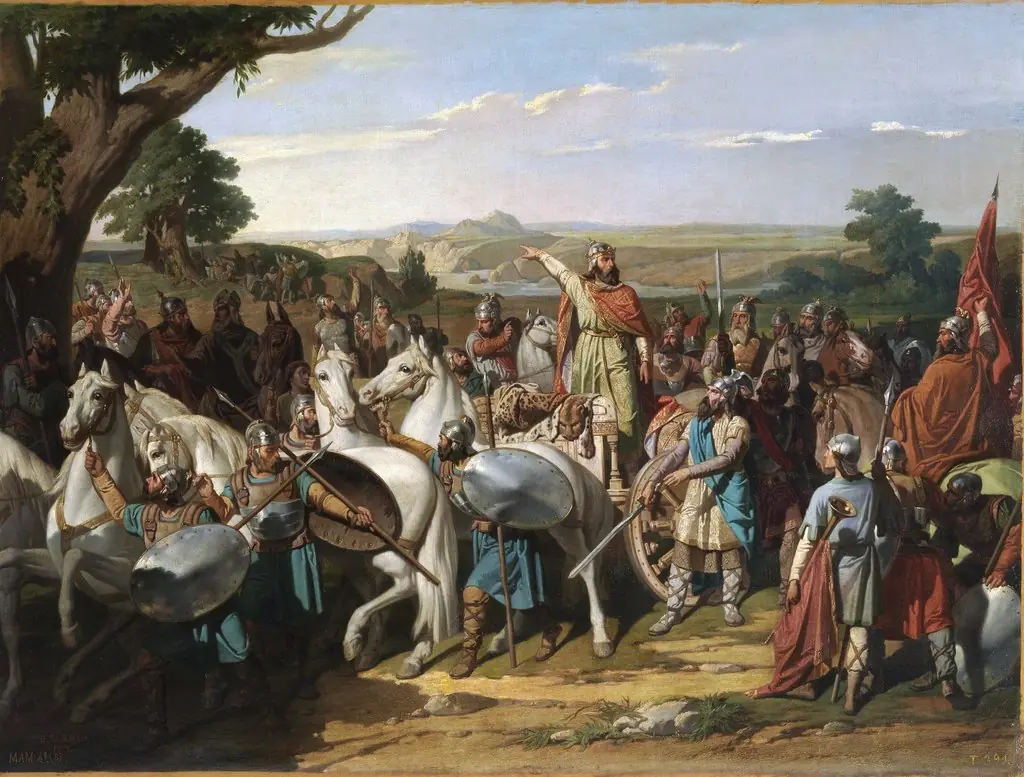 El rey don Rodrigo arengando a los jefes de su ejército antes de dar la batalla del Guadalete
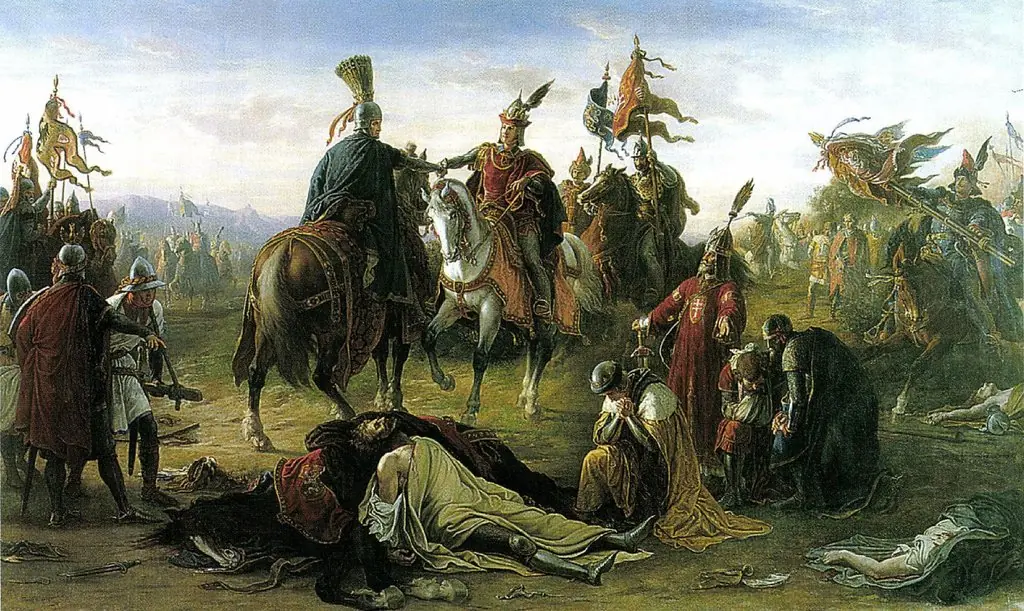 The Meeting of King Ladislas IV and Rudolph of Habsburg on the Battlefield of Marchfeld
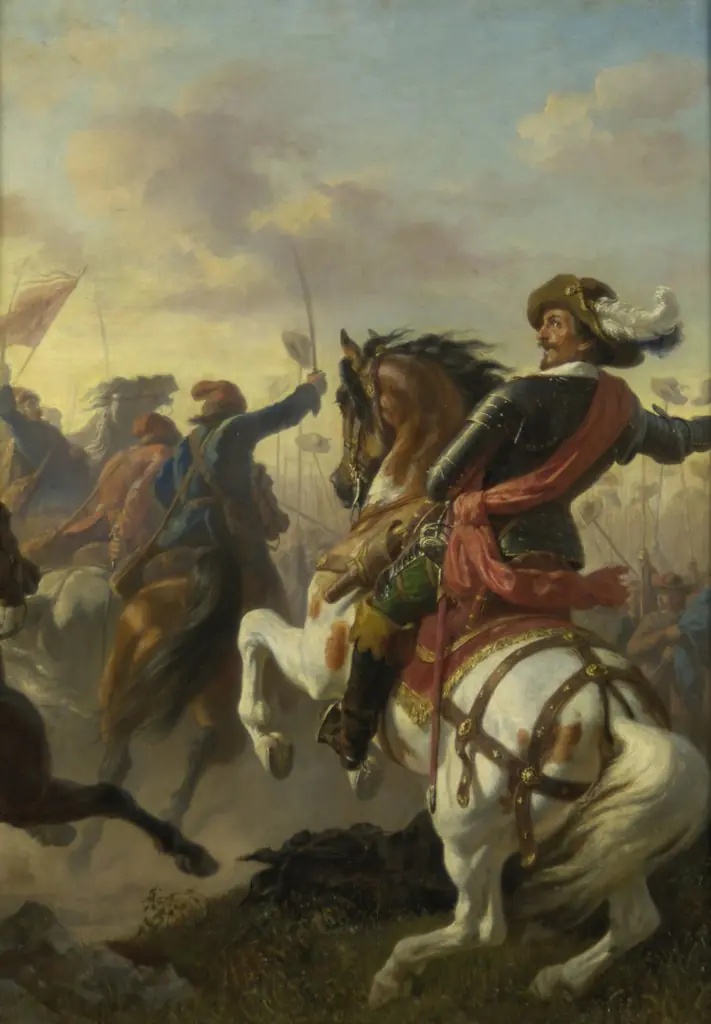 Boucquoi's victory at Zablat (Budweis) 1619
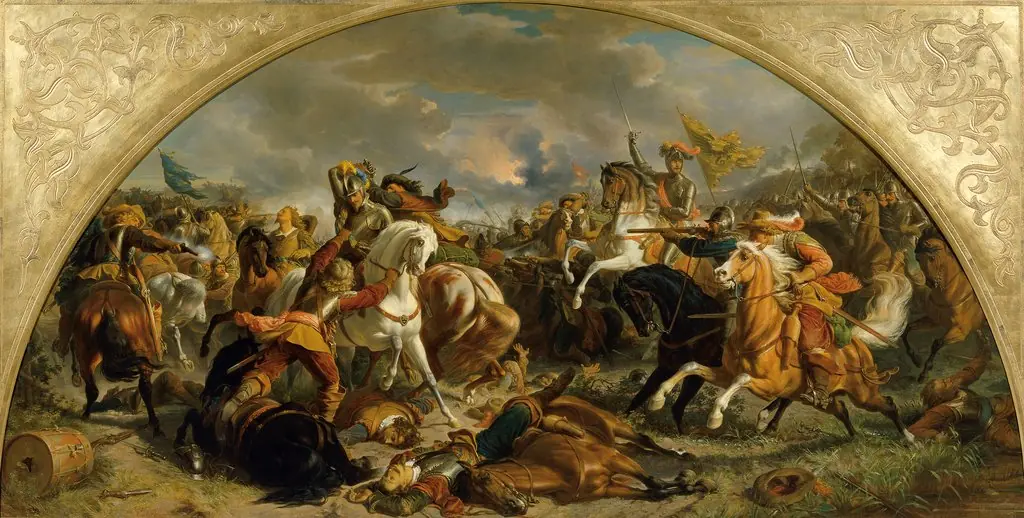 The storming of Schweidnitz in 1761
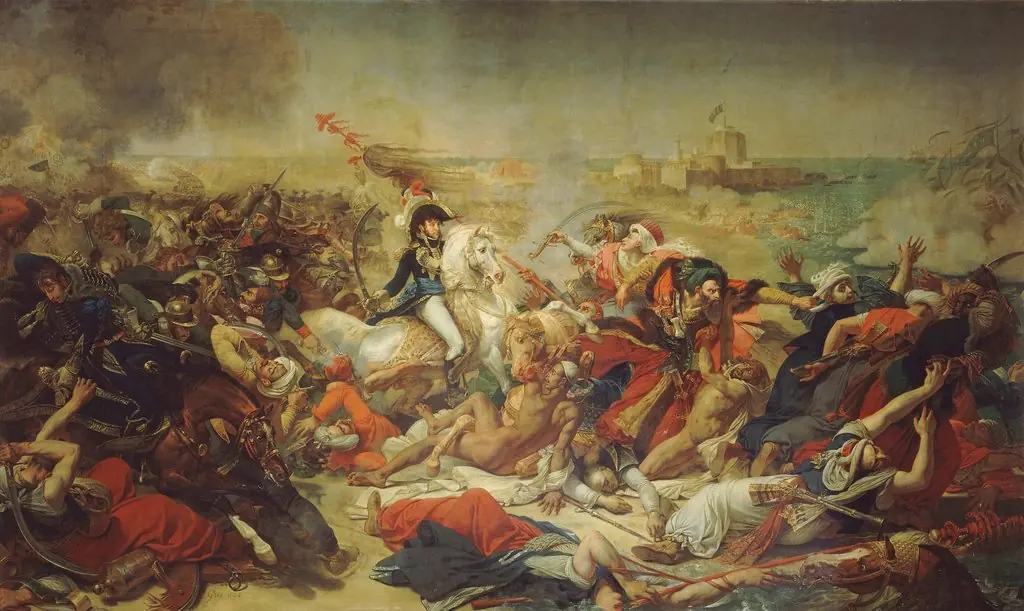 Bataille d'Aboukir, 25 Juillet 1799
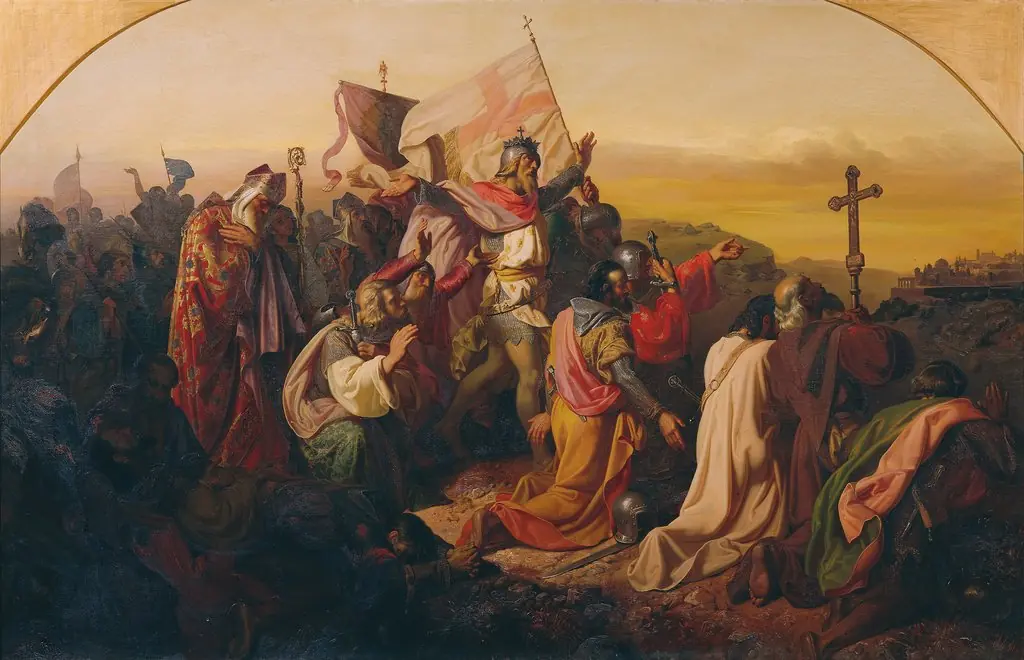 Gottfried von Bouillon und Kreuzfahrer
 Battle
 Battle Scenery
 Battle of the Turks