Artwork
The Madonna of Ivory
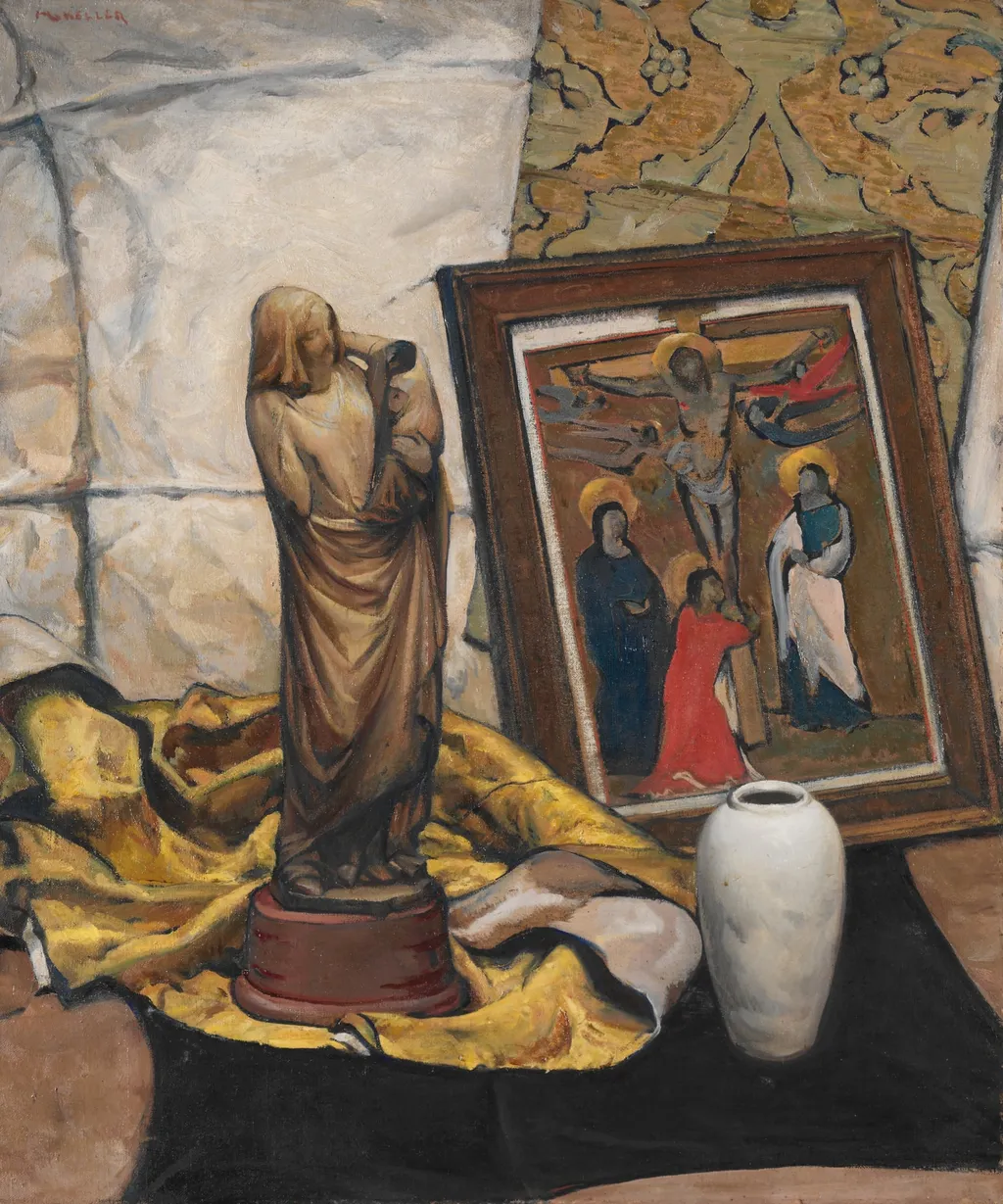
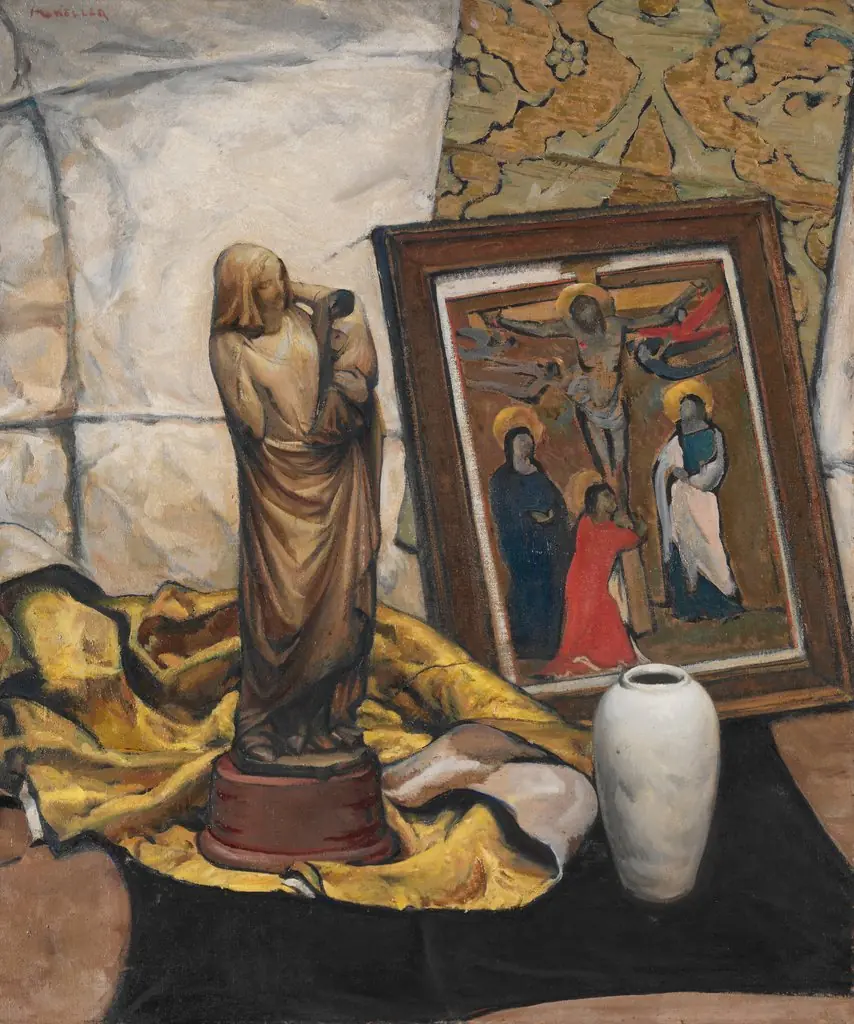
The Madonna of Ivory is an unspecified painting by the American Impressionist artist Henry Keller. It dates from 1924 and is held in the collection of the Cleveland Museum of Art.
About this work
Overview
This work reflects his interest in quiet, contemplative subjects rendered with sensitivity to light and texture.
Created in 1924 by Henry Keller, an American artist of German origin, *The Madonna of Ivory* is a watercolor painting that blends religious symbolism with still-life composition. Keller, a central figure in Ohio’s early 20th-century art scene, was known for his leadership in the Cleveland School and his teaching at the Cleveland School of Art. This work reflects his interest in quiet, contemplative subjects rendered with sensitivity to light and texture.
Subject & Meaning
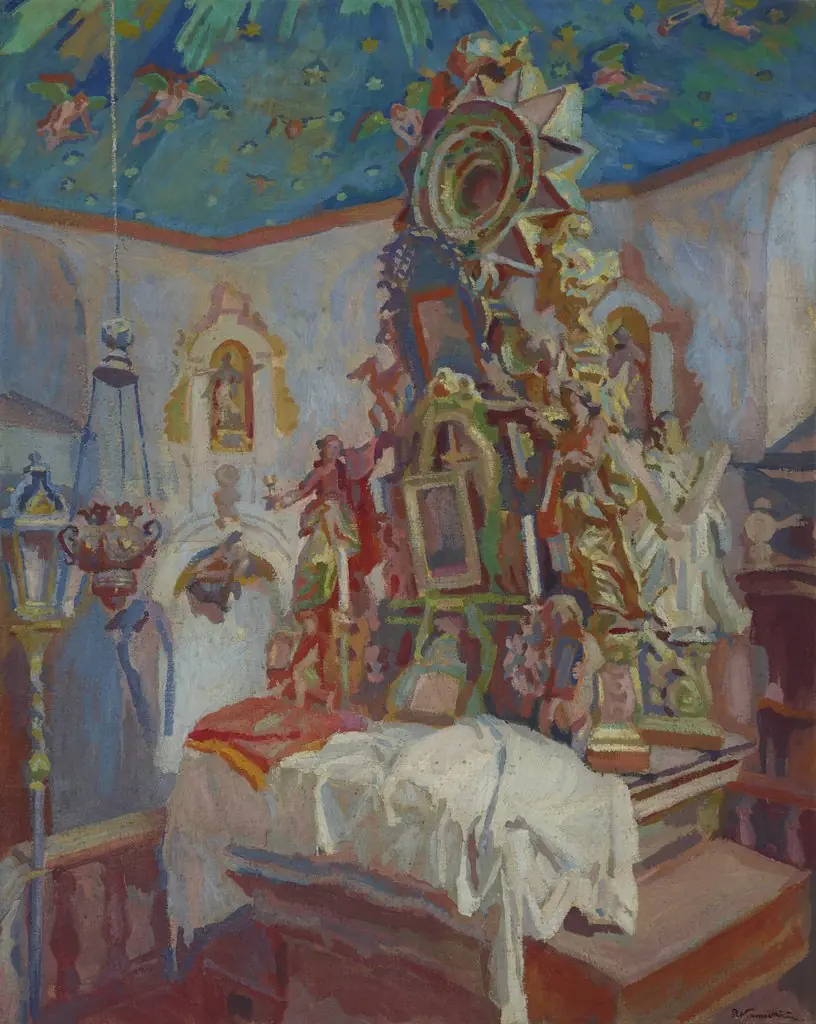
The painting centers on a white ivory statue of the Virgin Mary, positioned to the left, evoking devotion through stillness. Behind it, a framed image of a crucifixion scene introduces a layered spiritual narrative, while a white vase in the foreground adds a note of purity. The arrangement suggests a private devotional space, where sacred imagery is preserved and revered, not displayed publicly but privately contemplated.
Technique & Style
Keller employed watercolor with a restrained palette of warm tones and soft gradients to create a hushed, intimate atmosphere. Delicate brushwork captures the translucence of the ivory statue and the texture of the wooden base. Subtle chiaroscuro defines form without harsh contrast, reinforcing the painting’s meditative mood. The background elements are rendered with loose, suggestive strokes, keeping focus on the central figures.
History & Provenance
Painted during Keller’s mature period, *The Madonna of Ivory* emerged from his time in Cleveland, where he shaped a generation of regional artists. Though its early ownership is undocumented, the work aligns with his known practice of exploring sacred themes through domestic settings. It remains part of the broader corpus of American Impressionist watercolors produced in the Midwest during the 1920s.
Context
In the 1920s, American artists increasingly turned to personal, introspective subjects amid broader cultural shifts. Keller’s work reflects this trend, merging religious iconography with the quiet realism of still life. Unlike overtly devotional art, his approach avoids grandeur, instead inviting quiet reflection—a response to both artistic modernism and the spiritual yearnings of postwar America.
Legacy
Though not widely exhibited beyond regional circles, *The Madonna of Ivory* exemplifies Keller’s influence on Ohio’s watercolor tradition. His integration of spiritual themes into everyday compositions inspired students like Burchfield and Travis to explore emotional depth through ordinary scenes. The painting endures as a quiet testament to the role of art in personal devotion during a time of artistic experimentation.
Artist & collection
Artist
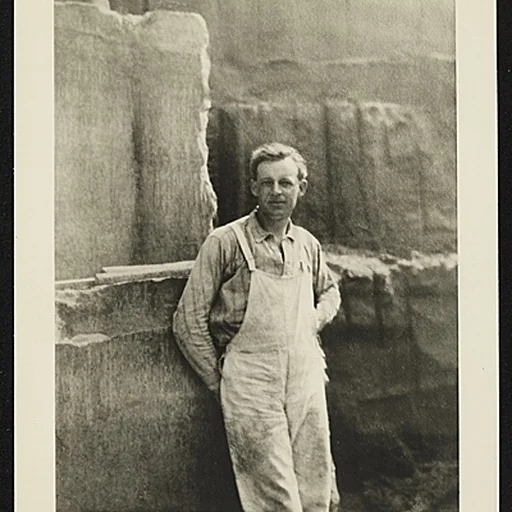
Henry George Keller (April 3, 1869 – August 3, 1949) was an American artist who led a generation of Ohio watercolor painters of the Cleveland School.