Artwork
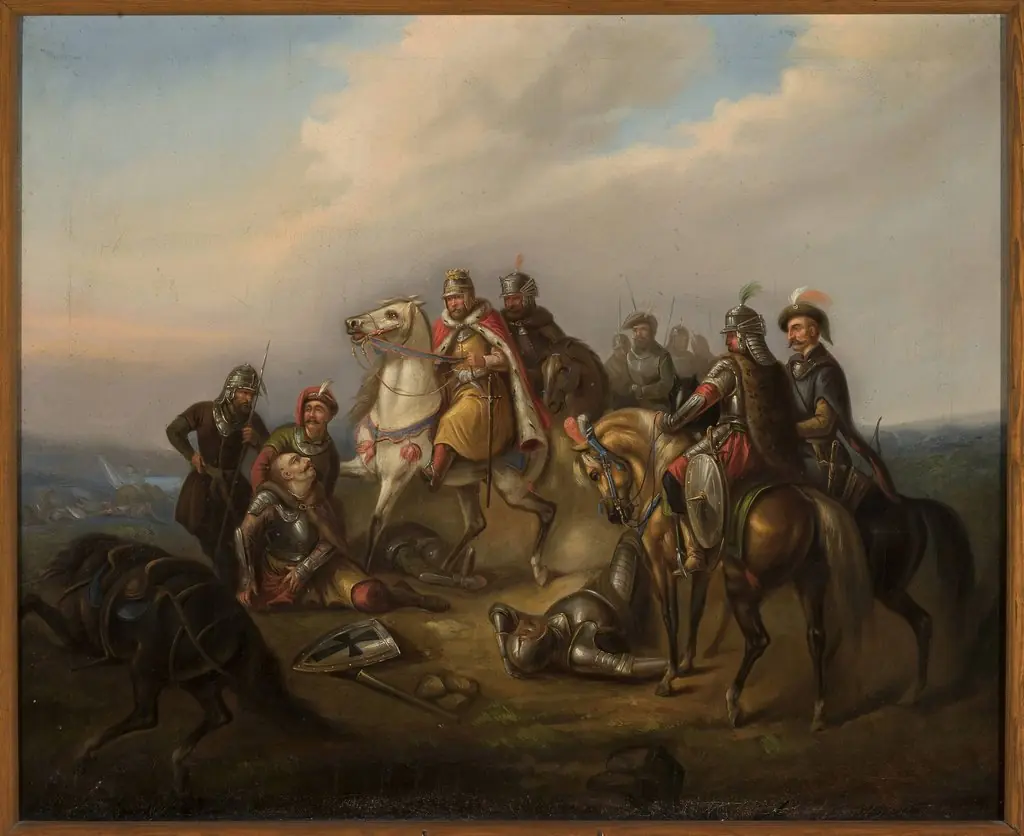
After the battle – The Swedes in Poland in 1655
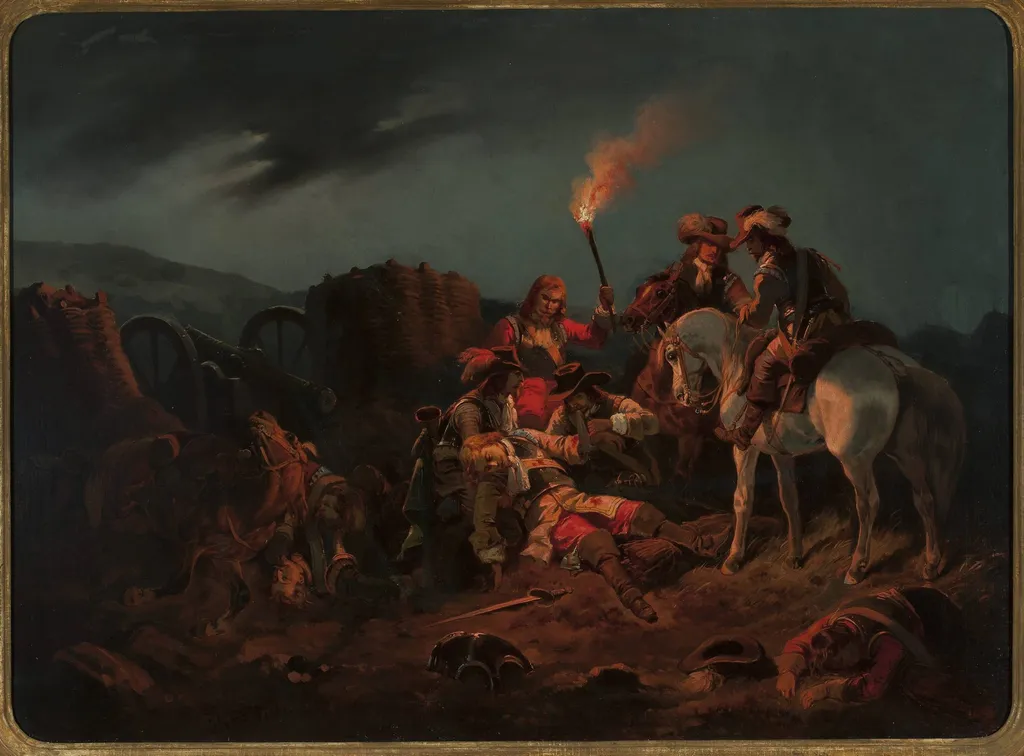
After the battle – The Swedes in Poland in 1655 is an oil painting by Henryk Pillati. It dates from 1873 and is held in the collection of the National Museum in Warsaw.
About this work
Overview
Belonging to the history painting tradition, it reflects 19th-century interest in national historical narratives.
Painted around 1873 by Polish artist Henryk Pillati, this oil work portrays a moment following a military engagement during the Swedish invasion of Poland in 1655. Belonging to the history painting tradition, it reflects 19th-century interest in national historical narratives. The piece is part of the National Museum in Warsaw’s collection, where it contributes to a broader effort to visually document Poland’s turbulent past through academic realism.
Subject & Meaning
The scene captures the aftermath of conflict, with Swedish soldiers scattered across a desolate landscape. One figure holds a torch, casting light on the carnage, while another lies motionless on the ground. The composition avoids glorification, instead emphasizing exhaustion and loss. The absence of clear victors suggests a meditation on the human cost of war, aligning with 19th-century historical painting’s tendency to evoke moral reflection rather than triumph.
Technique & Style
Pillati employed chiaroscuro to model forms and deepen the emotional tone, using stark contrasts between shadow and muted light. The figures are rendered with precise detail in their period uniforms and headgear, reflecting classical training. The background fades into dark, rolling hills under a brooding sky, reinforcing the somber mood. Brushwork is controlled and deliberate, prioritizing narrative clarity over expressive spontaneity, consistent with academic conventions of the time.
History & Provenance
Created in the late 19th century, the painting emerged during a period of Polish national revival under foreign partition. Pillati, known for historical illustrations, contributed to cultural memory through such works. The painting entered the National Museum in Warsaw’s holdings shortly after its completion, where it has remained as part of a curated collection documenting Poland’s military history and artistic response to occupation.
Context
The Swedish Deluge of 1655–1660 devastated the Polish-Lithuanian Commonwealth, leaving deep scars in collective memory. By the 1870s, Polish artists revisited these events to assert historical continuity and resilience. Pillati’s work fits within a wave of academic history painting that sought to educate and unify a fragmented nation, using visual storytelling to reinforce identity amid political suppression.
Legacy
Though not widely exhibited beyond national collections, the painting remains a representative example of 19th-century Polish historical art. It reflects the era’s commitment to documenting national trauma through disciplined technique and restrained emotion. Its preservation in the National Museum underscores its role as a quiet testament to the enduring impact of war on cultural consciousness.
Artist & collection
Artist
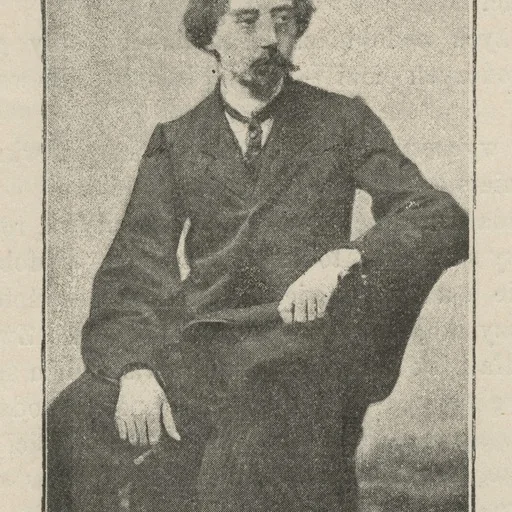
Henryk Pillati (19 January 1832 – 16 April 1894) was a Polish illustrator, caricaturist and history painter, in the Classical style.

 Skirmish at Night between Norwegian and Swedish Cavalry
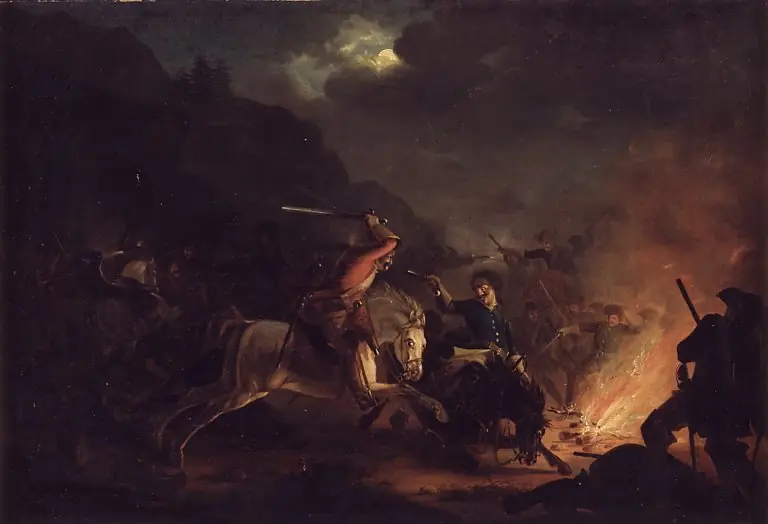 Skirmish at Night between Norwegian and Swedish Cavalry
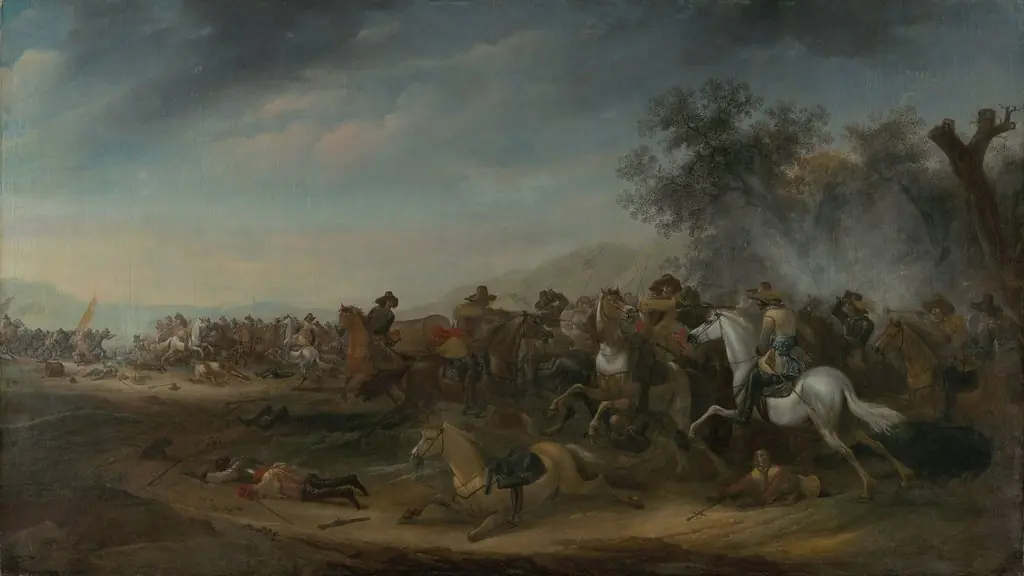 Feldschlacht
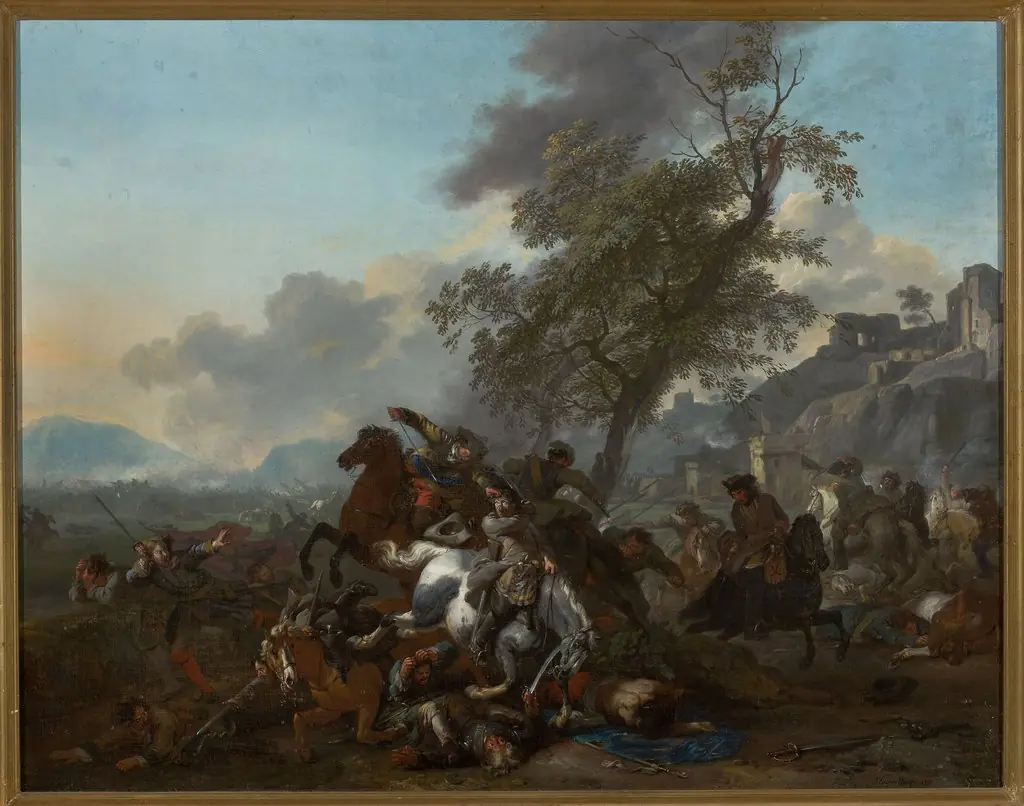 Battle
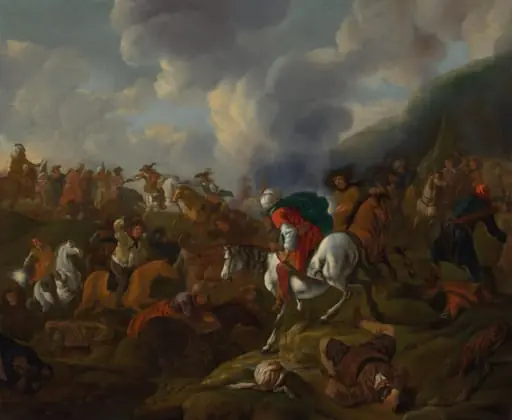 A Cavalry Encounter between Turkish Troops and the Troops of the Austrian Emperor
 Election Scene, Catonsville, Baltimore County
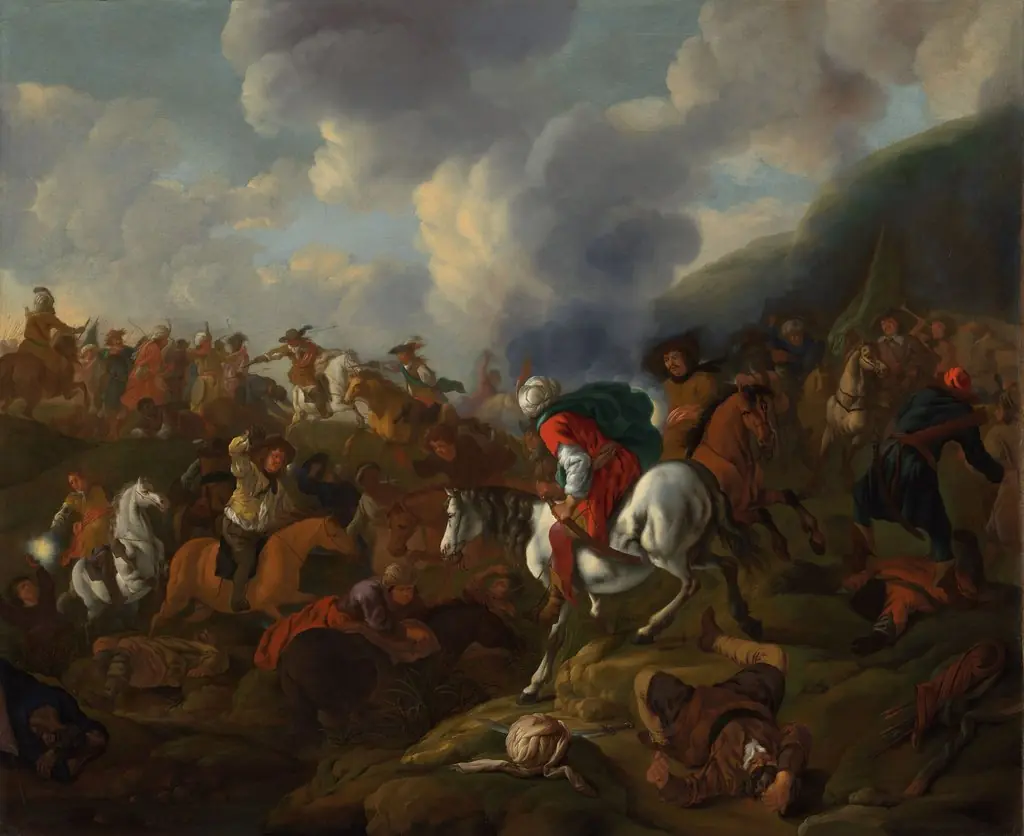 A Cavalry Encounter between Turkish Troops and the Troops of the Austrian Emperor
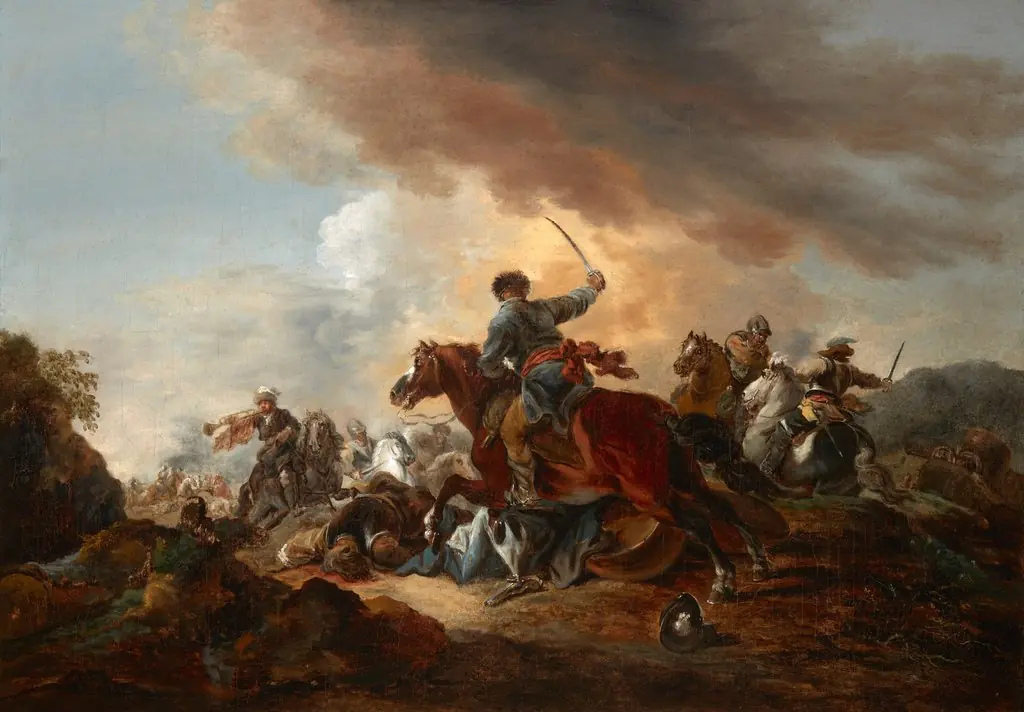 Battle Scene
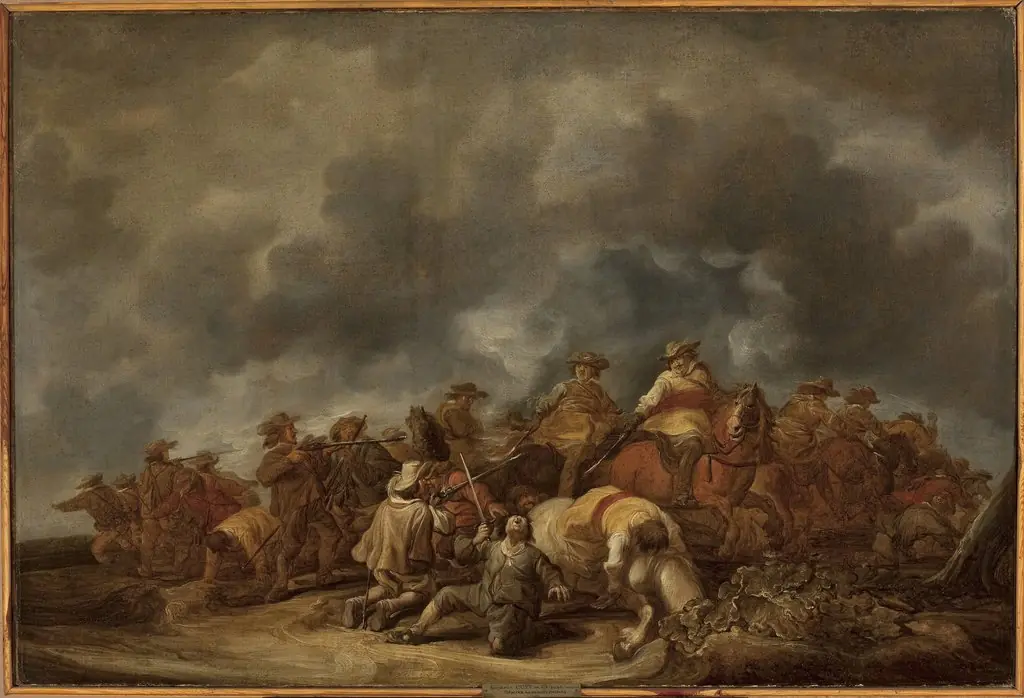 Skirmish of cavalry and infantry
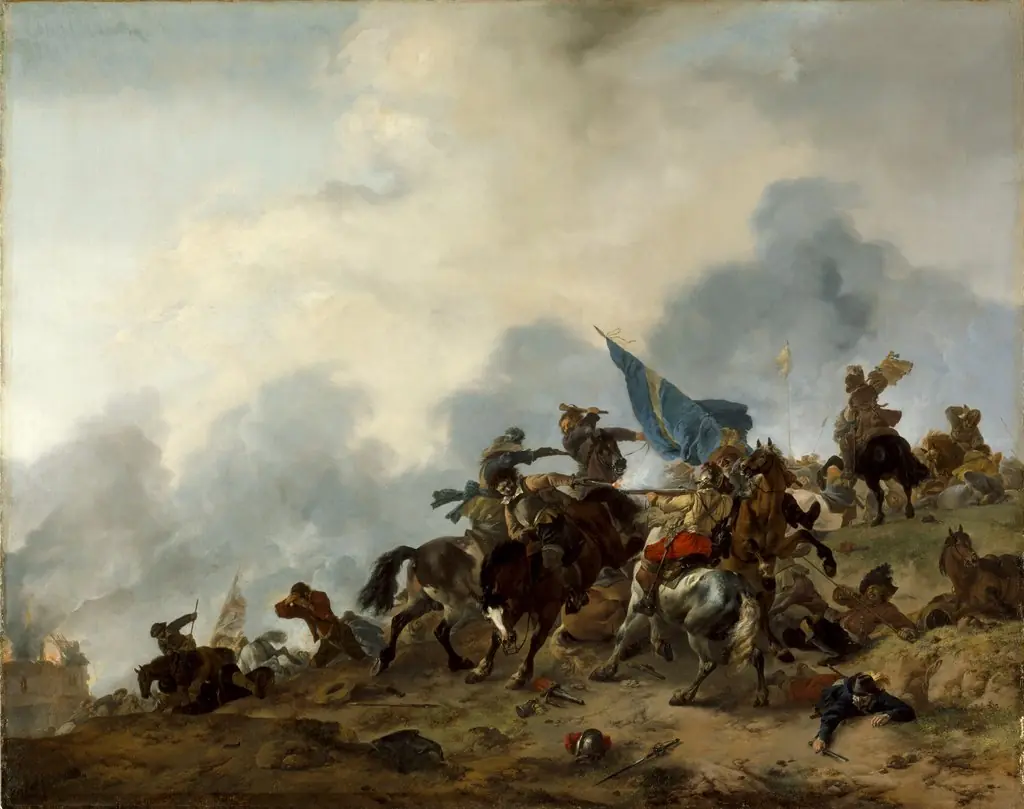 Battle Scene
 Cavalry Skirmish at a Fortress
 After the battle