Artwork
Reception des Candidats dans le St. Ministere, à Zurich; Presentation et Ordination Solemnelle d’un Nouveau Pasteur dans une Eglise de la Campagne de Zurich (Reception of the Candidates and Presentation and Ordination of a New Pastor)
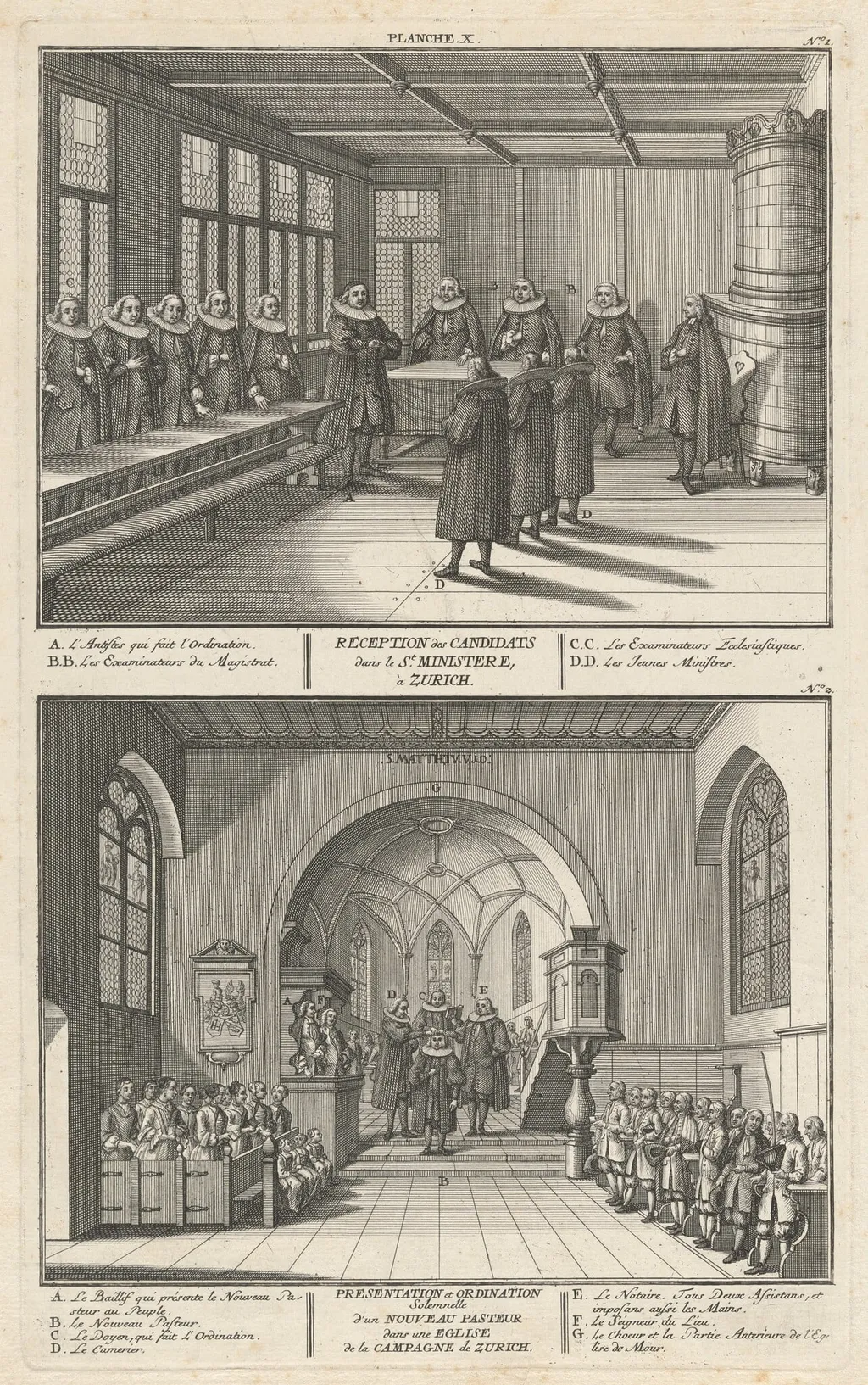
Reception des Candidats dans le St. Ministere, à Zurich; Presentation et Ordination Solemnelle d’un Nouveau Pasteur dans une Eglise de la Campagne de Zurich (Reception of the Candidates and Presentation and Ordination of a New Pastor) is an ink print by the Romanticist artist David Herrliberger. It dates from 1751 and is held in the collection of the National Gallery of Art.
About this work
Overview
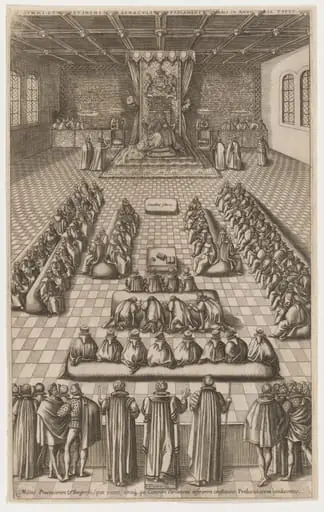
Created in 1751 by Swiss artist David Herrliberger, this engraving depicts two moments in the ordination of a new pastor in the Zurich countryside.
Created in 1751 by Swiss artist David Herrliberger, this engraving depicts two moments in the ordination of a new pastor in the Zurich countryside. Executed on laid paper using the intaglio technique, the print captures ceremonial details with precision. It is part of the collection at the National Gallery of Art in Washington, D.C., and reflects the religious customs of Protestant Switzerland in the mid-18th century.
Subject & Meaning
The print illustrates the formal process of selecting and installing a new minister. The upper scene shows candidates being examined by church officials, while the lower scene portrays the solemn ordination within a church. Labeled figures—examiners, elders, new ministers—emphasize the structured, communal nature of ecclesiastical authority. The work underscores the importance of doctrinal approval and public affirmation in Reformed church tradition.
Technique & Style
Herrliberger used fine, controlled lines carved into a metal plate to produce this detailed engraving. The composition is divided horizontally, with clear spatial separation between the two scenes. Figures are rendered with uniformity and clarity, prioritizing legibility over emotional expression. Text annotations identify roles, reinforcing the print’s function as a documentary record rather than a decorative piece.
History & Provenance
The engraving was produced in Zurich during a period of religious institutional stability. It likely served as a record for church communities or as a model for similar ceremonies. Acquired by the National Gallery of Art in Washington, D.C., its preservation reflects broader interest in European religious prints as historical artifacts rather than purely artistic objects.
Context
In 18th-century Switzerland, Protestant church ordinations were public, regulated events governed by strict ecclesiastical protocols. This print aligns with a tradition of documenting religious rites through print, particularly in regions where literacy and civic participation were valued. Similar engravings circulated to reinforce communal identity and doctrinal continuity among Reformed congregations.
Legacy
Though not widely known outside specialized collections, the engraving remains a valuable primary source for understanding Swiss Protestant ceremonial life. Its meticulous labeling and dual-scene format offer insight into how religious authority was visually codified and transmitted. It contributes to the study of print culture in early modern Europe, where images functioned as both records and instruments of social order.
Artist & collection

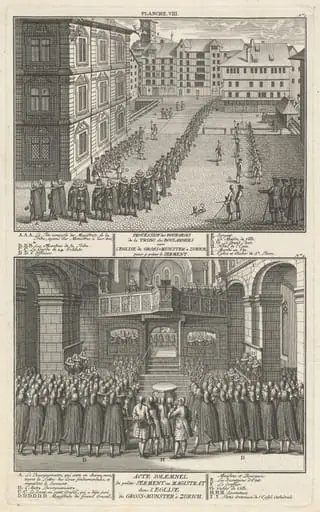 Procession des Bourgeois de la Tribu des Boulangers vers l’Eglise du Grossmunster à Zurich, pour y prêter le Serment; Acte Solemnel de prêter Serment au Magistrat dans l’eglise du Grossmunster à Zurich (Procession and Sermon at the Grossmunster)
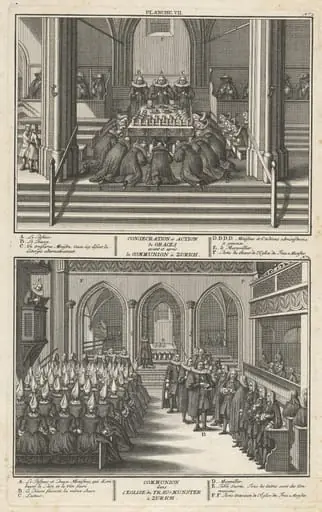 Consecration et Action de Graces avant et après la Communion à Zurich; Communion dans l’Eglise du Fraumunster à Zurich (Consecration and Communion at the Fraumunster, Zurich)
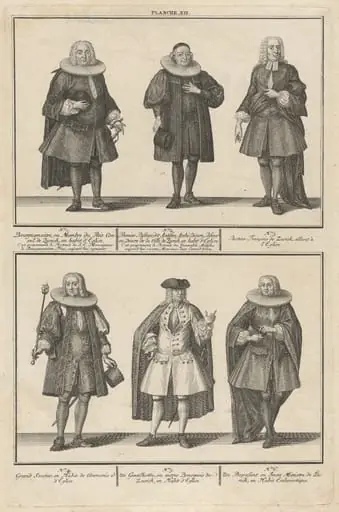 Costumes of the Men of the Reformed Church
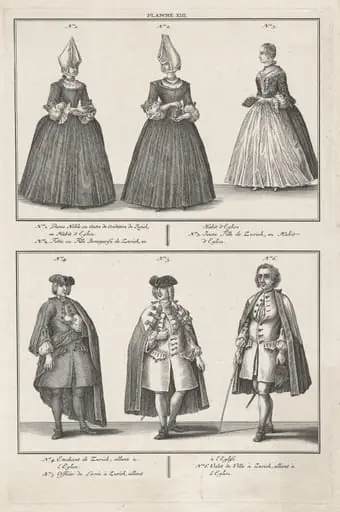 Costumes of Churchgoers of the Reformed Church
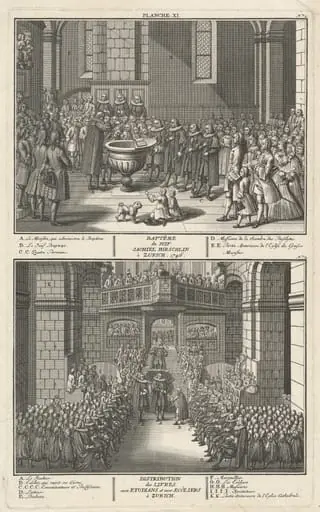 Baptême du Juif Jachiel Hirschlin à Zurich. 1746; Distribution des Livres avec Etudians et aux Ecôliers à Zurich (Baptism of Jachiel Hirschlin and Distribution of the Books)
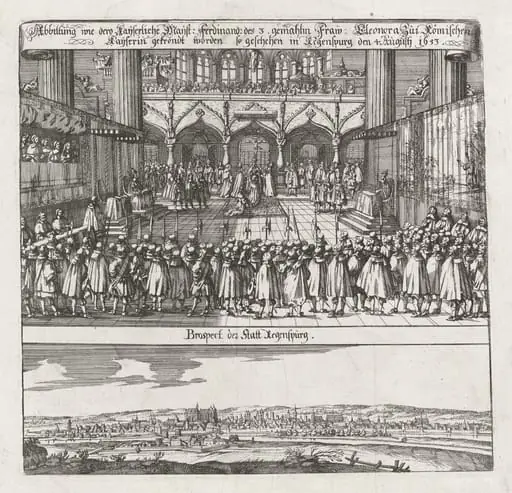 Krönung von Eleonora von Gonzaga, Gemahlin Kaiser Ferdinands III., zur Römisch-Deutschen Kaiserin ; Ansicht von Regensburg (Coronation of Eleonora von Gonzaga, wife of Emperor Ferdinand II, as Empress, with a View of Regensburg)
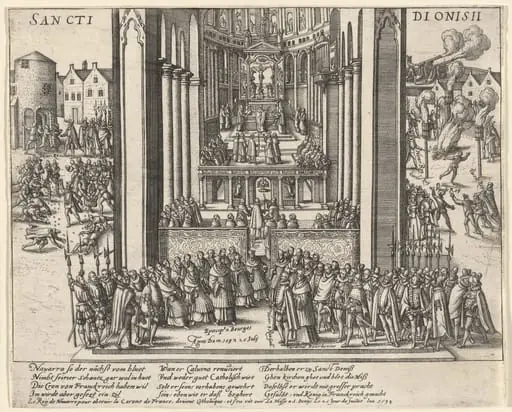 Composite Image Depicting Actions of Henri IV, King of France, upon His Abjuration of the Protestant Faith
 The Possessed
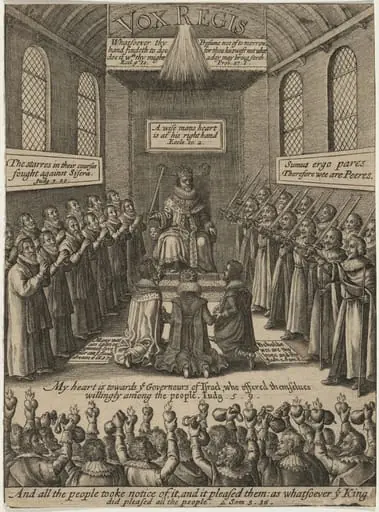 Vox Regis, by Thomas Scott
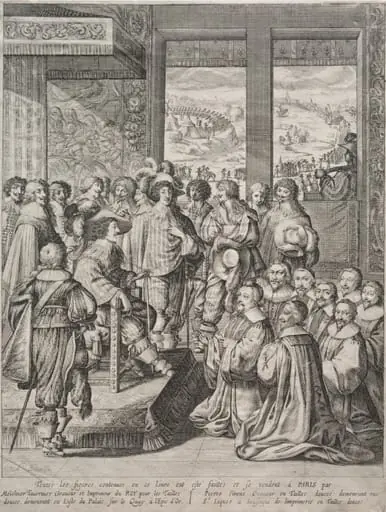 Louis XIII Receiving a Deputation of Magistrates
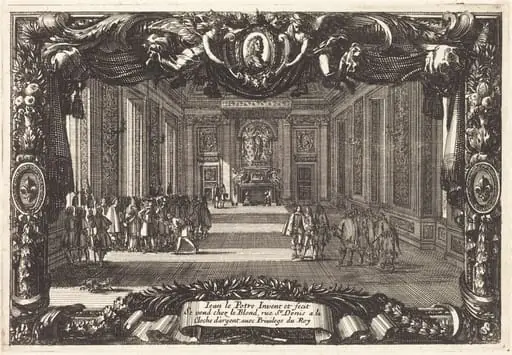 Title Page
 Queen Elizabeth in Parliament