Artwork
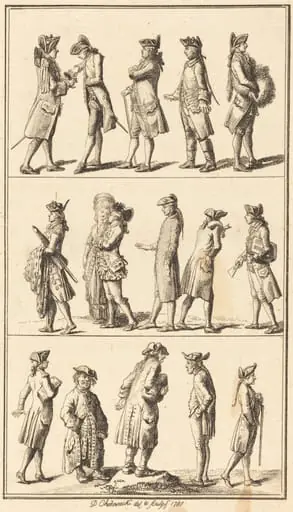
Costumes of the Men of the Reformed Church
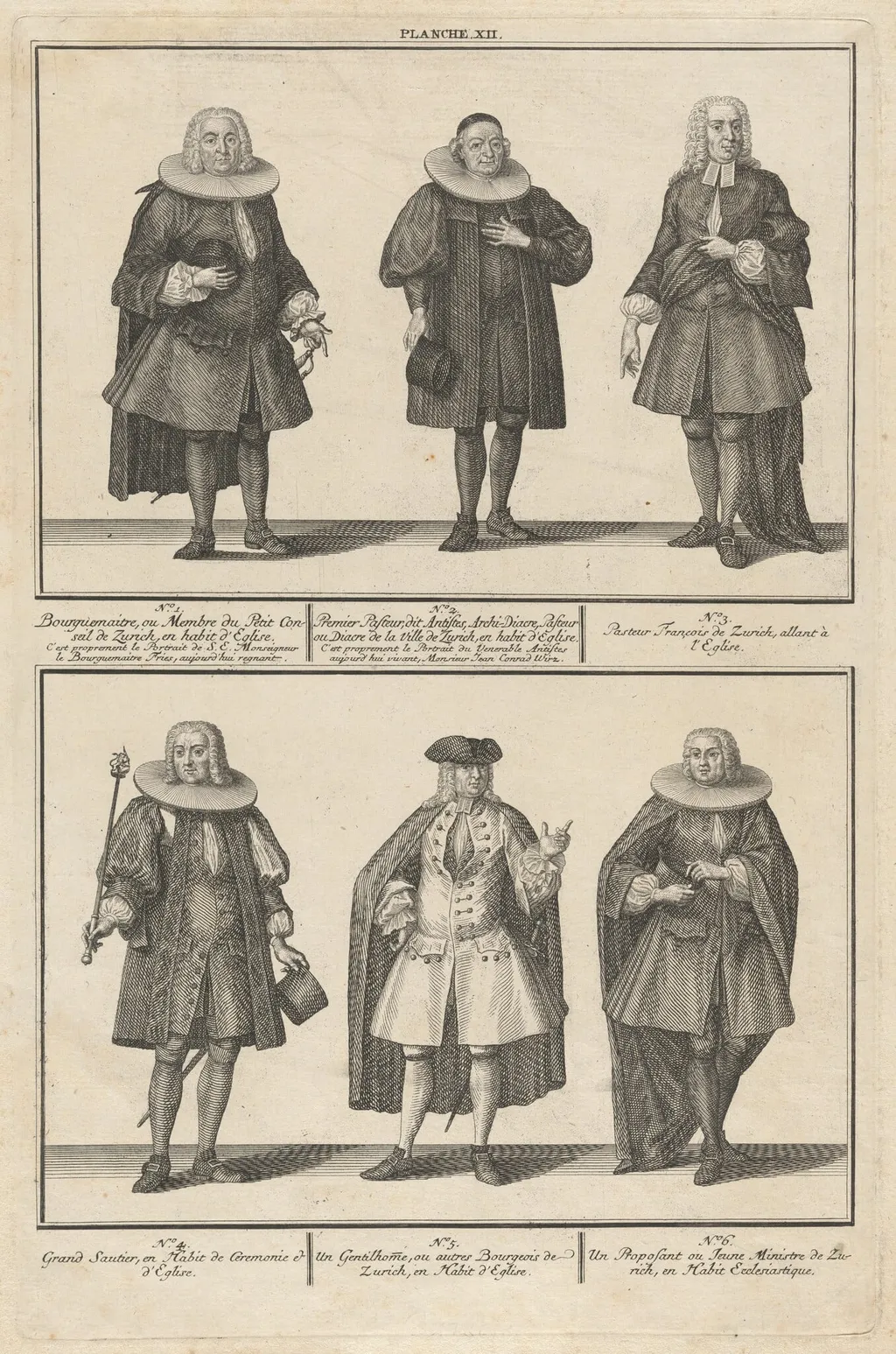
Costumes of the Men of the Reformed Church is an ink print by the Romanticist artist David Herrliberger. It dates from 1751 and is held in the collection of the National Gallery of Art.
About this work
Overview
Created in 1751 by David Herrliberger, this engraving documents the attire of male clergy in the Reformed Church during the mid-18th century.
Created in 1751 by David Herrliberger, this engraving documents the attire of male clergy in the Reformed Church during the mid-18th century. Executed on laid paper, the print presents six figures arranged in two rows, each depicted in formal ecclesiastical dress. The work functions as a visual catalog, emphasizing the standardized garments worn in religious service rather than individual identity.
Subject & Meaning
The six men represent distinct clerical roles, labeled in French with terms such as 'pastor' and 'minister.' Their clothing reflects the Reformed Church’s emphasis on modesty and order, rejecting ornate vestments in favor of sober, civic-style garments. The inclusion of gloves and books suggests ritual function and scholarly duty, reinforcing the clergy’s dual role as spiritual and intellectual leaders.
Technique & Style
Herrliberger employed fine-line engraving on metal, carefully incising details like button patterns, ruffled collars, and fabric folds. The plain background eliminates distraction, directing focus to the garments. The precision of the lines and the uniformity of the figures reflect a documentary intent, prioritizing clarity and accuracy over expressive flourish or emotional tone.
History & Provenance
The print was produced in Switzerland, where Herrliberger worked, and later entered the collection of the National Gallery of Art in Washington, D.C. Its survival suggests it was circulated among religious communities or used as a reference for clergy attire. No evidence indicates mass reproduction, implying a limited, specialized audience.
Context
In the 18th century, Protestant denominations like the Reformed Church sought to distinguish themselves from Catholic liturgical splendor by adopting plain dress. This engraving aligns with broader trends in Protestant visual culture, where clothing served as a marker of theological identity. Similar records were made across Europe to standardize clerical appearance and reinforce communal norms.
Legacy
The engraving remains a rare visual record of Reformed Church attire, offering insight into how religious authority was visually constructed through dress. It is now referenced by historians studying Protestant material culture and the evolution of clerical fashion. Its value lies not in artistic innovation but in its function as a precise, unembellished ethnographic document.
Artist & collection

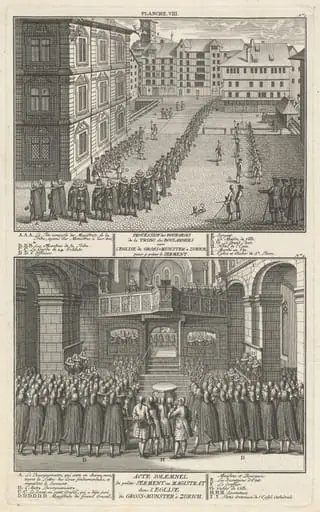 Procession des Bourgeois de la Tribu des Boulangers vers l’Eglise du Grossmunster à Zurich, pour y prêter le Serment; Acte Solemnel de prêter Serment au Magistrat dans l’eglise du Grossmunster à Zurich (Procession and Sermon at the Grossmunster)
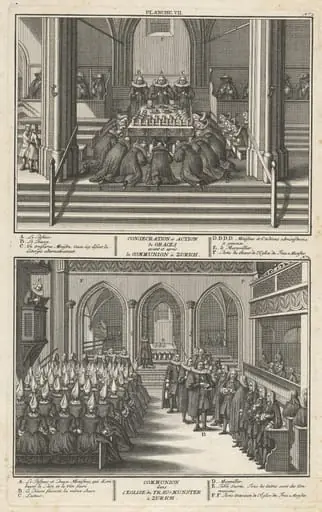 Consecration et Action de Graces avant et après la Communion à Zurich; Communion dans l’Eglise du Fraumunster à Zurich (Consecration and Communion at the Fraumunster, Zurich)
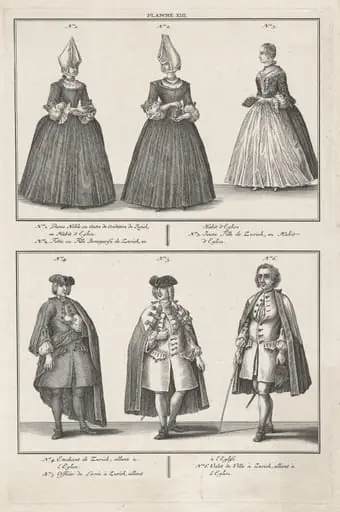 Costumes of Churchgoers of the Reformed Church
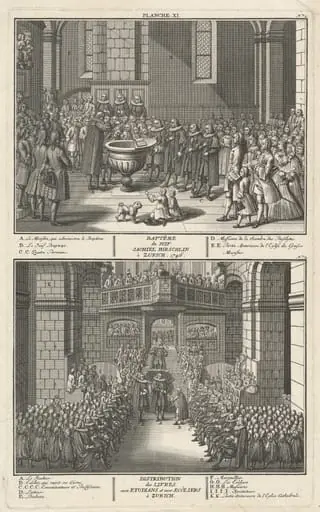 Baptême du Juif Jachiel Hirschlin à Zurich. 1746; Distribution des Livres avec Etudians et aux Ecôliers à Zurich (Baptism of Jachiel Hirschlin and Distribution of the Books)
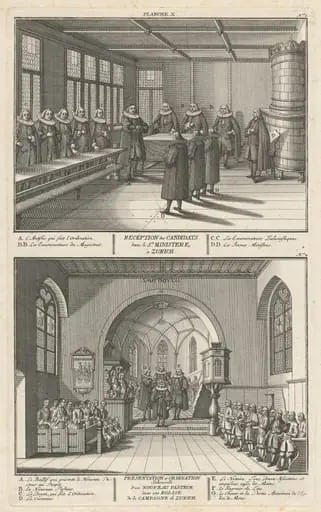 Reception des Candidats dans le St. Ministere, à Zurich; Presentation et Ordination Solemnelle d’un Nouveau Pasteur dans une Eglise de la Campagne de Zurich (Reception of the Candidates and Presentation and Ordination of a New Pastor)