Artwork
Title Page
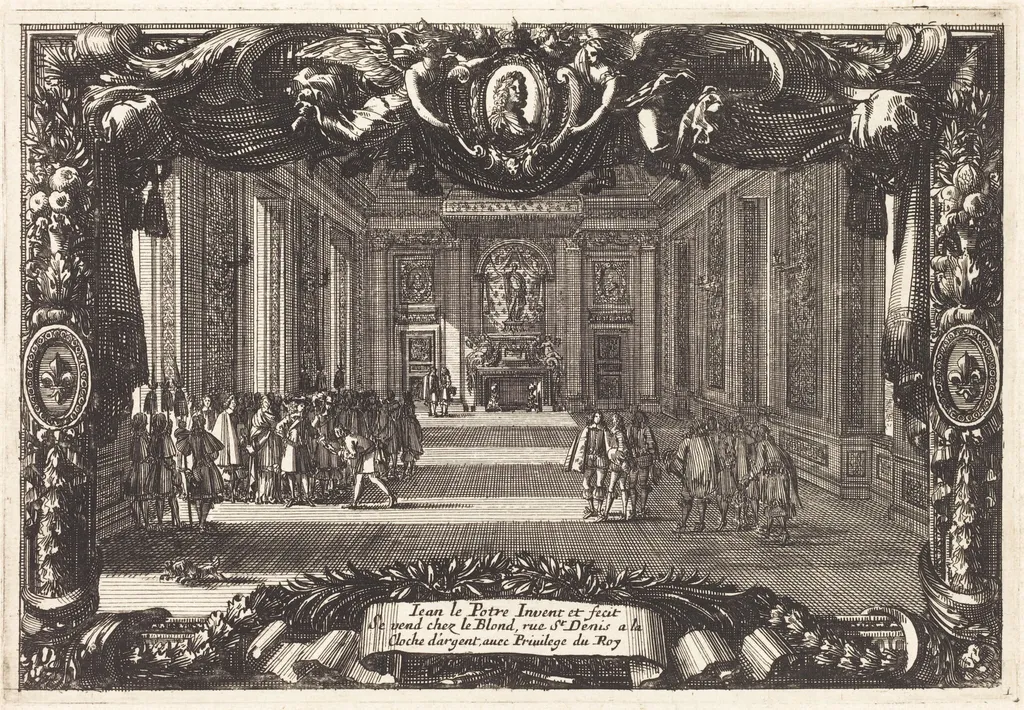
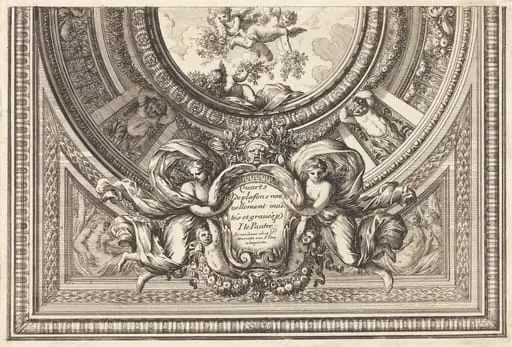
Title Page is an ink print by the Baroque artist Jean Lepautre. It dates from 1650 and is held in the collection of the National Gallery of Art.
About this work
Overview
The print’s precision and spatial depth reflect Lepautre’s skill in etching, a technique that allowed for fine line work and subtle tonal variation.
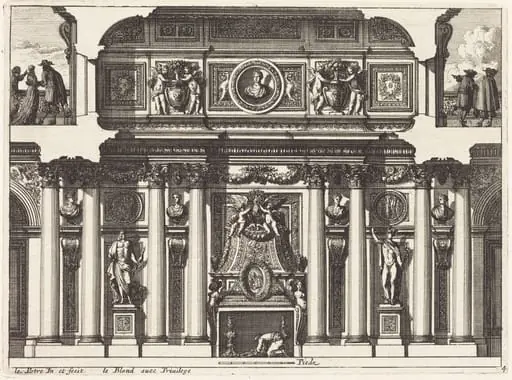
Jean Lepautre created this etching around 1650 as a decorative title page, likely intended for an illustrated publication. The composition presents an architectural interior with classical elements—tall columns, an arched rear entrance, and detailed wall carvings. Figures in 17th-century attire move through the space, suggesting a ceremonial or social gathering. The print’s precision and spatial depth reflect Lepautre’s skill in etching, a technique that allowed for fine line work and subtle tonal variation.
Subject & Meaning
The scene depicts an elegant, empty hall populated by figures in period dress, some approaching the central archway while others converse in small clusters. The absence of a clear focal event invites interpretation as a symbolic space—perhaps representing intellectual or aristocratic assembly. The inclusion of two portrait medallions on the walls may allude to lineage or authority, reinforcing the setting’s ceremonial tone without depicting a specific historical moment.
Technique & Style
Lepautre employed etching to achieve sharp, intricate detail, using acid to bite fine lines into a metal plate. The technique enabled precise rendering of textures: the folds of fabric, the grain of stone, and the patterned floor tiles. Delicate hatching and cross-hatching create depth in shadows, while the controlled contrast between light and dark enhances the architectural perspective. The result is a highly refined image that balances realism with decorative elegance.
History & Provenance
This print was produced in mid-17th century France, during a period when etching was widely used for book illustrations and decorative prints. Lepautre, active in Paris, was known for his architectural and figural compositions in print form. While the original publication it accompanied is not definitively identified, similar works were often used as frontispieces for scholarly or literary texts, linking visual art to the intellectual culture of the time.
Context
Lepautre worked in an era when French printmaking flourished under royal patronage and growing literacy. His architectural interiors reflect the influence of Italian Renaissance design, filtered through French tastes for order and ornament. Etchings like this served both aesthetic and functional roles—adorned books, circulated ideas, and demonstrated technical mastery. The emphasis on spatial clarity and refined detail aligns with broader trends in French decorative arts of the period.
Legacy
Lepautre’s etching exemplifies the sophistication of French printmaking in the Baroque era. His ability to convey architectural space and human movement with minimal yet precise lines influenced later illustrators and engravers. Though not widely exhibited today, his work remains a reference for the technical possibilities of etching and the integration of fine art into printed media during the 17th century.
Artist & collection


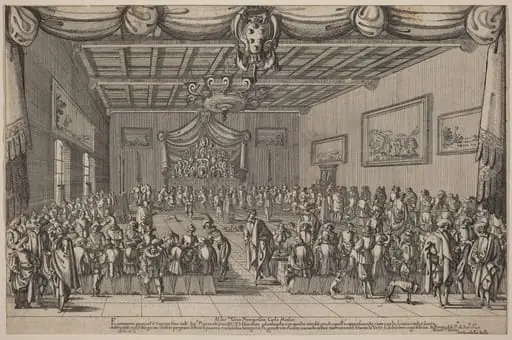 The Banquet of the Piacevoli
 The Banquet of the Piacevoli
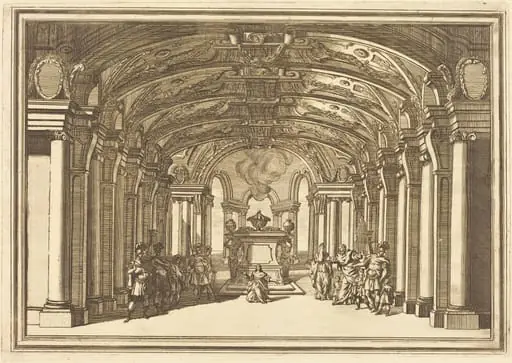 Il Greco in Troia: Plate 8
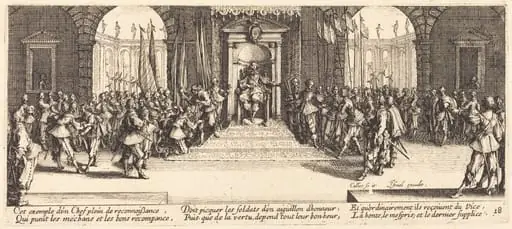 Distribution of Rewards
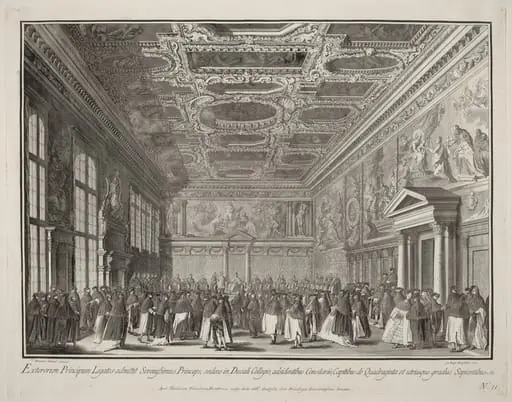 Reception by the Doge of Foreign Ambassadors in the Sala del Collegio
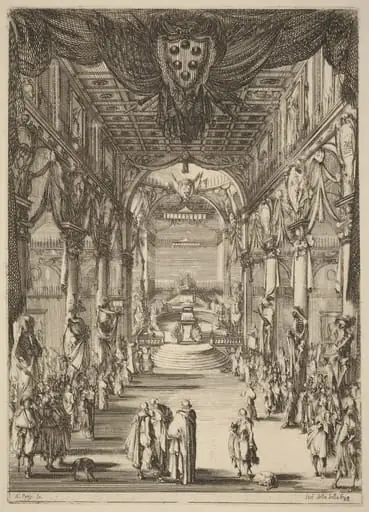 Funeral of Prince Francesco de Medici
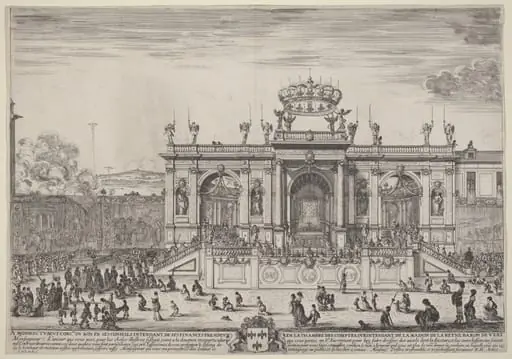 Altar for Corpus Christi Day
 The Prima Macchina for the Chinea of 1761: The Salubrious Baths
 Il Greco in Troia: Plate 10
 Perspectival View of the Salon of the Palazzo Spinola, Genoa
 H Beard Print Collection