Artwork
Consecration et Action de Graces avant et après la Communion à Zurich; Communion dans l’Eglise du Fraumunster à Zurich (Consecration and Communion at the Fraumunster, Zurich)
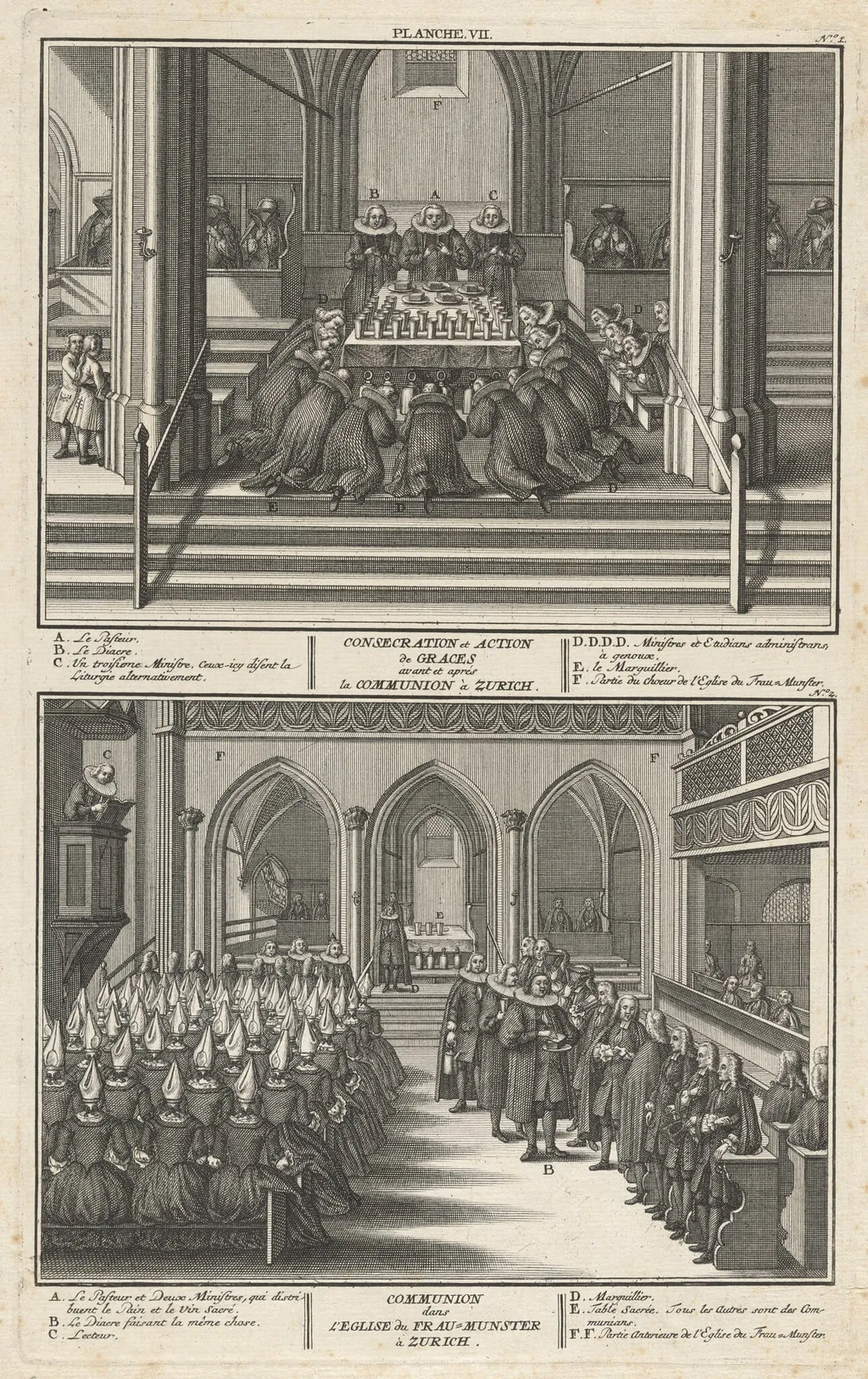
Consecration et Action de Graces avant et après la Communion à Zurich; Communion dans l’Eglise du Fraumunster à Zurich (Consecration and Communion at the Fraumunster, Zurich) is an ink print by the Romanticist artist David Herrliberger. It dates from 1751 and is held in the collection of the National Gallery of Art.
About this work
The top scene depicts a group of people gathered around a table, while the bottom scene shows a large group of people standing in a church.
This image shows two scenes of a church service. The top scene depicts a group of people gathered around a table, while the bottom scene shows a large group of people standing in a church. The scenes are rendered in a detailed, realistic style.
In the top scene, the people are dressed in formal attire and appear to be engaged in a ritual or ceremony. The bottom scene shows a large group of people, some of whom are holding candles or other objects. The church is decorated with intricate details, including arches and columns.
The image is an engraving on laid paper, created by David Herrliberger in 1751. It is an example of Romanticism, a movement that emphasized emotion and imagination. The image is held at the National Gallery of Art, Washington. Next, look up the artist David Herrliberger.
Overview
Consecration and Communion at the Fraumunster, Zurich, is a 1751 engraving by David Herrliberger, now part of the National Gallery of Art, Washington. The print presents two distinct scenes of a church service within a single composition.
Subject & Meaning
The engraving depicts two moments from a religious ritual at the Fraumunster Church in Zurich. The top scene focuses on a intimate gathering around a table, likely the consecration or a pre-communion ritual, while the bottom scene shows a larger congregation during communion, emphasizing community and worship.
Technique & Style
Executed on laid paper, the engraving showcases a detailed, realistic approach. The level of intricacy, particularly in the church's architectural elements (arches, columns), highlights Herrliberger's technical skill. While often associated with Romanticism due to its emotional and imaginative depth, the work's realism tempers this classification.
History & Provenance
Created in 1751 by David Herrliberger, the engraving's history prior to its acquisition by the National Gallery of Art, Washington, is not detailed here. It serves as a documented example of 18th-century religious art from Zurich.
Context
The work reflects the religious practices of Zurich during the 18th century, capturing the solemnity and community of Protestant communion rituals within the specific architectural context of the Fraumunster Church.
Artist & collection

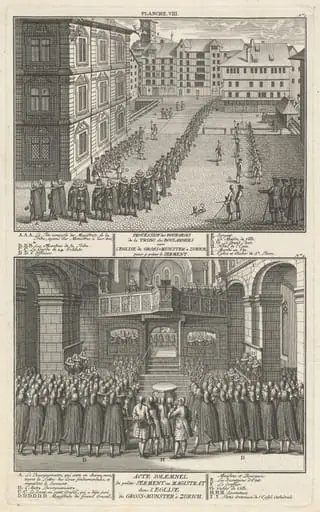 Procession des Bourgeois de la Tribu des Boulangers vers l’Eglise du Grossmunster à Zurich, pour y prêter le Serment; Acte Solemnel de prêter Serment au Magistrat dans l’eglise du Grossmunster à Zurich (Procession and Sermon at the Grossmunster)
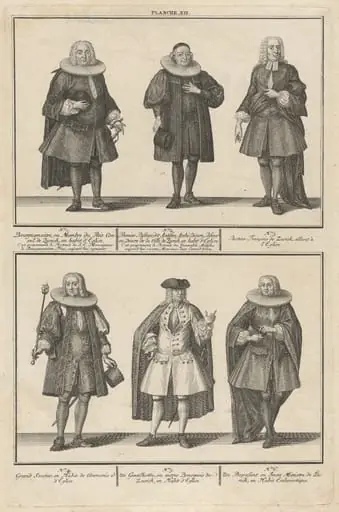 Costumes of the Men of the Reformed Church
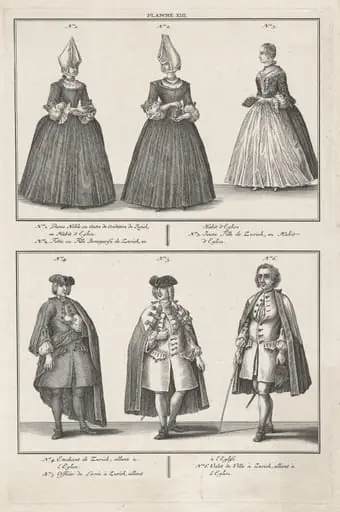 Costumes of Churchgoers of the Reformed Church
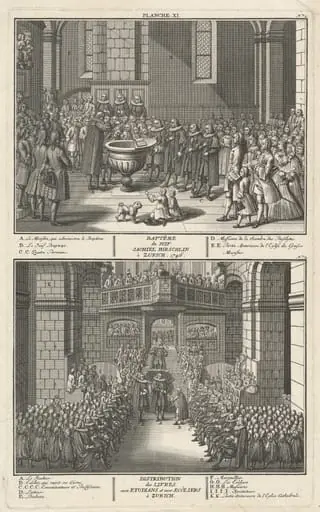 Baptême du Juif Jachiel Hirschlin à Zurich. 1746; Distribution des Livres avec Etudians et aux Ecôliers à Zurich (Baptism of Jachiel Hirschlin and Distribution of the Books)
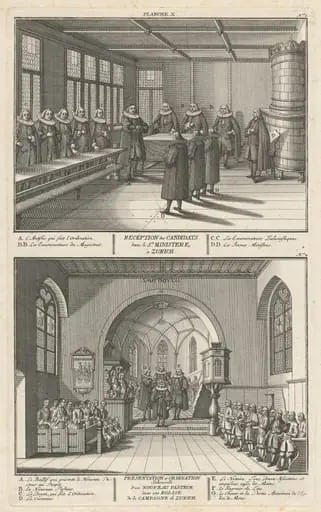 Reception des Candidats dans le St. Ministere, à Zurich; Presentation et Ordination Solemnelle d’un Nouveau Pasteur dans une Eglise de la Campagne de Zurich (Reception of the Candidates and Presentation and Ordination of a New Pastor)
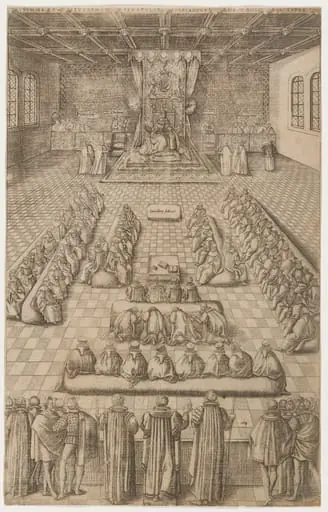 James I in Parliament
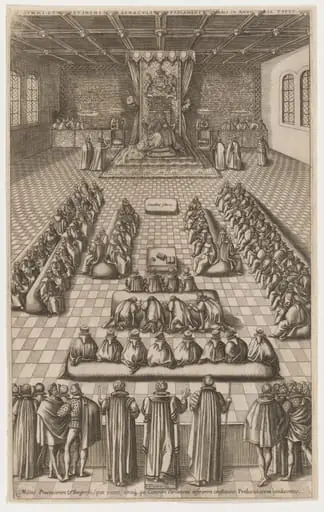 Queen Elizabeth in Parliament
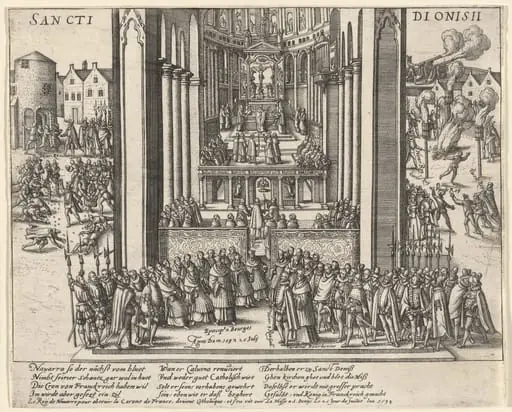 Composite Image Depicting Actions of Henri IV, King of France, upon His Abjuration of the Protestant Faith
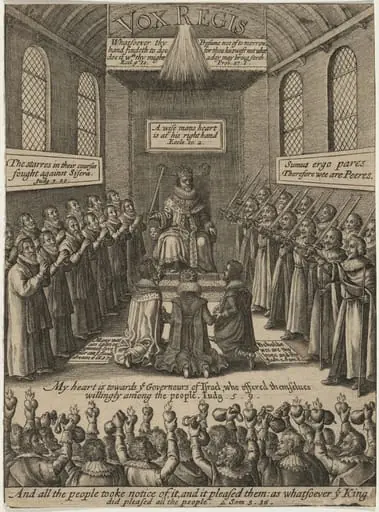 Vox Regis, by Thomas Scott
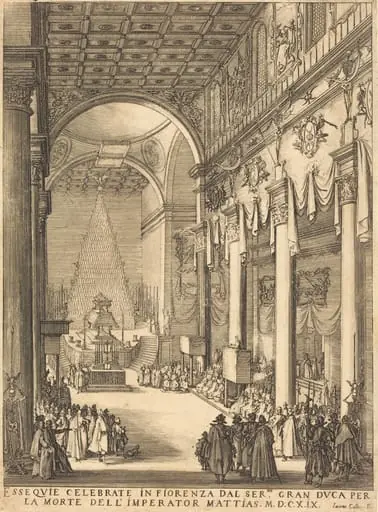 The Catafalque of the Emperor Mathias
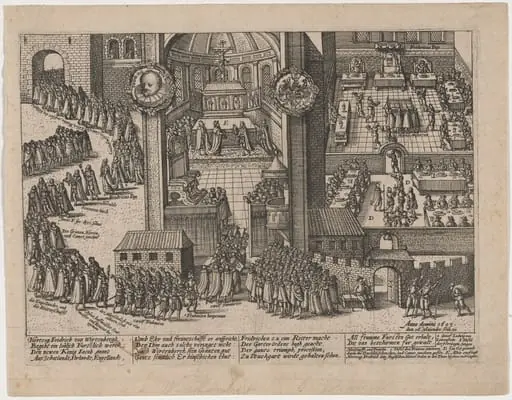 Frederick VI, Duke of Wurtenberg
 The Coronation of Cosimo I de' Medici
 The States General of France (Les Etats Generaux de France)