Artwork
Autumn
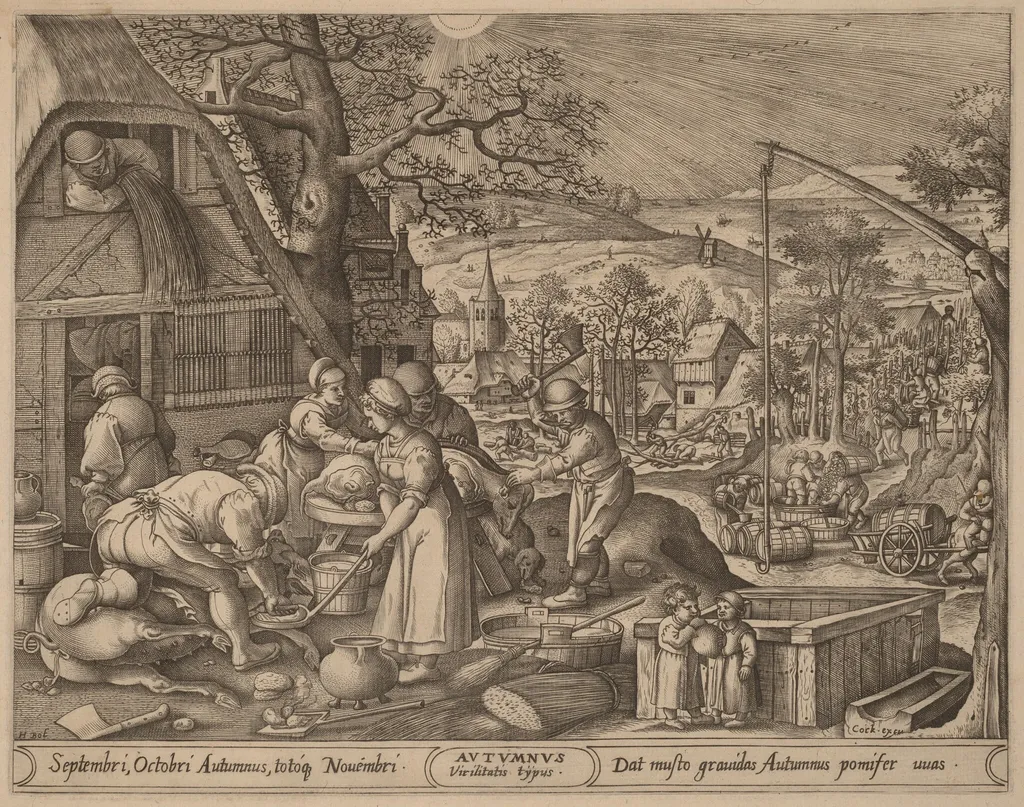
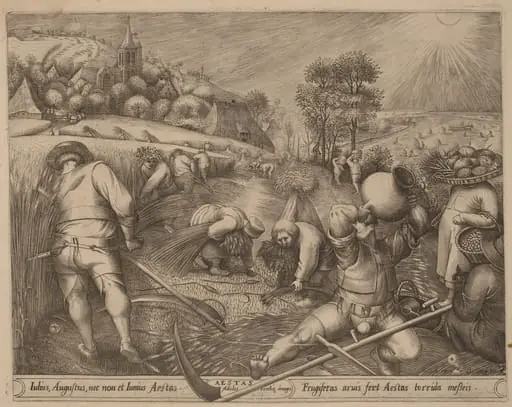
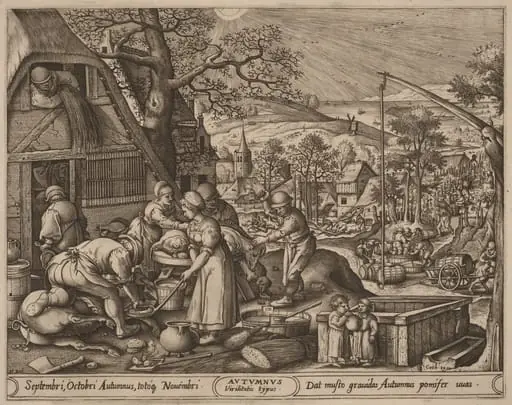
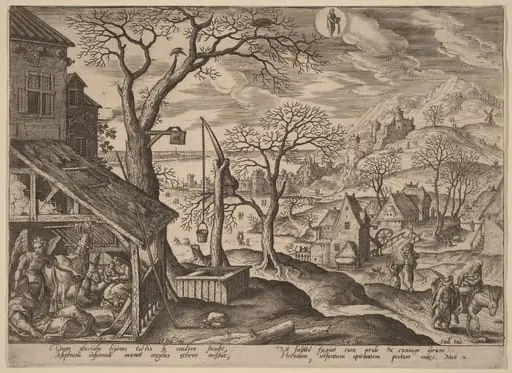
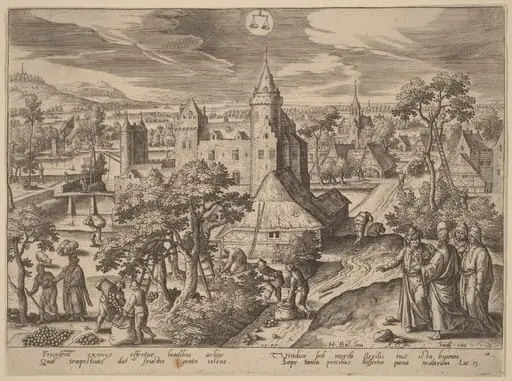
Autumn is an ink print by the Renaissance artist Pieter van der Heyden. It dates from 1570 and is held in the collection of the National Gallery of Art.
About this work
Overview
Autumn is an engraving on laid paper created by Pieter van der Heyden around 1570. As a Flemish printmaker, van der Heyden was known for reproducing works by prominent artists, contributing to the widespread dissemination of designs throughout Europe during a flourishing period for printmaking.
Subject & Meaning
The engraving depicts a bustling harvest scene in a Flemish village, highlighting autumnal agricultural activities and natural landscapes. The composition emphasizes industriousness, with figures engaged in various tasks, and a caption suggesting that hard work signifies strength.
Technique & Style
Characterized by sharp lines and dark shading, the engraving showcases van der Heyden's meticulous technique. The densely populated scene features intricate, purposeful details, with every element—from tools and animals to human figures—serving a specific role in the narrative.
History & Provenance
Created circa 1570, Autumn exemplifies the reproductive printmaking prevalent during van der Heyden's time. While specific provenance details are not provided, the work reflects the era's printmaking practices and van der Heyden's role within the Flemish artistic community.
Context
Autumn was produced during a period when printmaking played a crucial role in disseminating artistic designs across Europe. Van der Heyden's work, including this engraving, helped spread Flemish artistic influences beyond regional boundaries.
Legacy
As a representative of 16th-century Flemish printmaking, Autumn contributes to the understanding of the era's artistic practices and the significance of reproductive prints in art history. However, specific information on the work's direct impact or notable exhibitions is not provided.
Artist & collection

Artist
Pieter van der Heyden (c. 1530 - after March 1572) was a Flemish printmaker who is known for his reproductive engravings after works by leading Flemish painters and designers of the 16th century.