Artwork
Winter
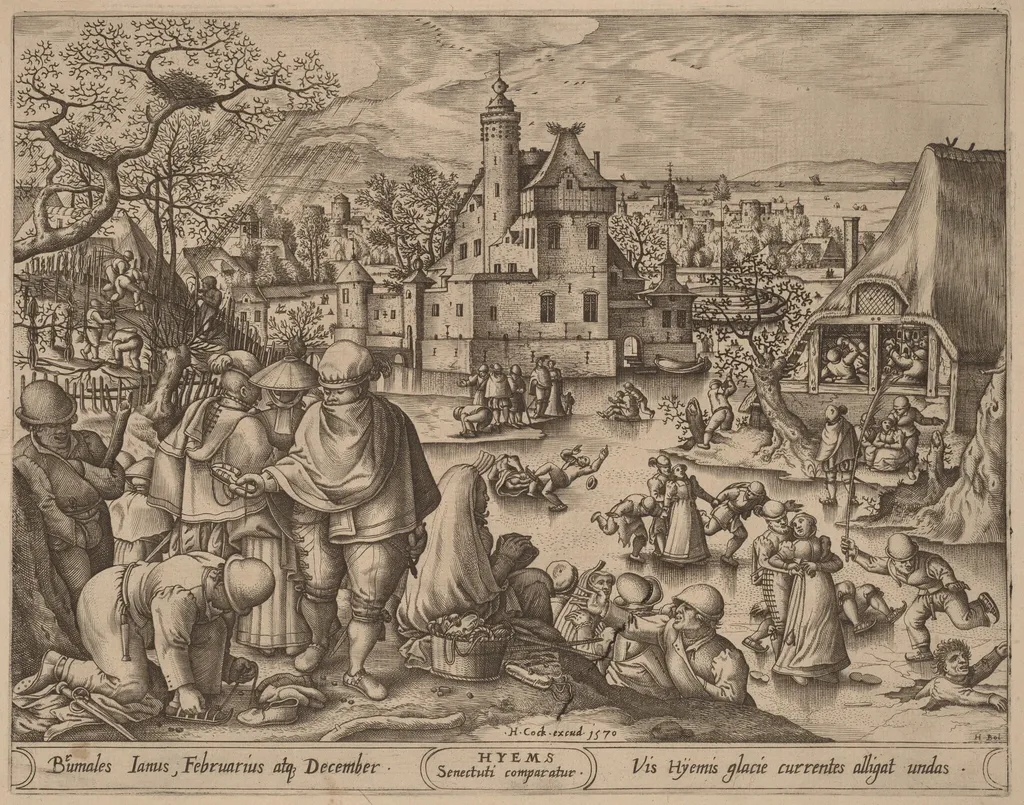
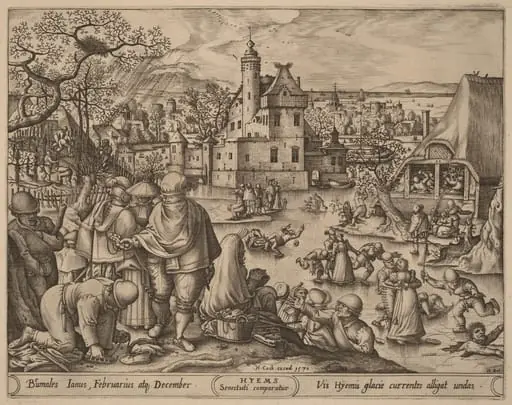
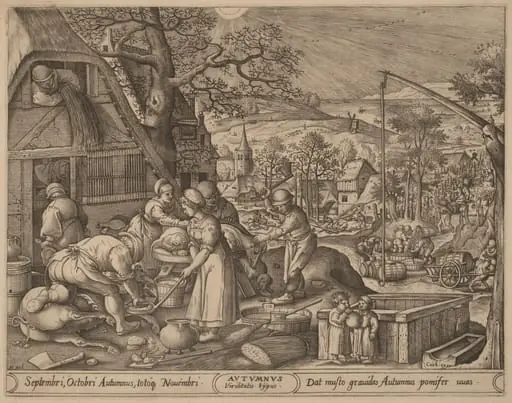
Winter is an ink print by the Renaissance artist Pieter van der Heyden. It dates from 1570 and is held in the collection of the National Gallery of Art.
About this work
Overview
Winter is an engraving created by Pieter van der Heyden, a Flemish printmaker, around 1570. This work exemplifies the role of printmaking in disseminating visual culture across 16th-century Europe.
Subject & Meaning
The engraving portrays a vibrant winter landscape, incorporating multiple tiny scenes of daily life, including leisure, labor, and rest. A central figure, clad in a large coat and holding a globe, is surrounded by dynamic activities set against a backdrop of a castle, trees, and a frozen pond with figures engaging in winter pursuits.
Technique & Style
Van der Heyden employed dense, intricate line work to achieve depth and sharp detail throughout the composition, even in the smallest figures. This technique is characteristic of the engraving process, notable for its capacity to render fine, precise images.
History & Provenance
Created in the mid-16th century, *Winter* falls within van der Heyden's oeuvre of reproductive and original prints, often based on designs by prominent Flemish artists. Specific provenance details for this work are not provided.
Context
*Winter* aligns with Northern Renaissance traditions of depicting seasonal and genre scenes, reflecting the cultural and artistic preoccupations of its time.
Legacy
While *Winter* showcases van der Heyden's skill in engraving and contributes to the broader dissemination of Northern Renaissance themes, its specific impact or legacy within the artist's corpus or the broader art historical narrative is not detailed here.
Artist & collection

Artist
Pieter van der Heyden (c. 1530 - after March 1572) was a Flemish printmaker who is known for his reproductive engravings after works by leading Flemish painters and designers of the 16th century.