Artwork
The Passion: The Crowning with Thorns
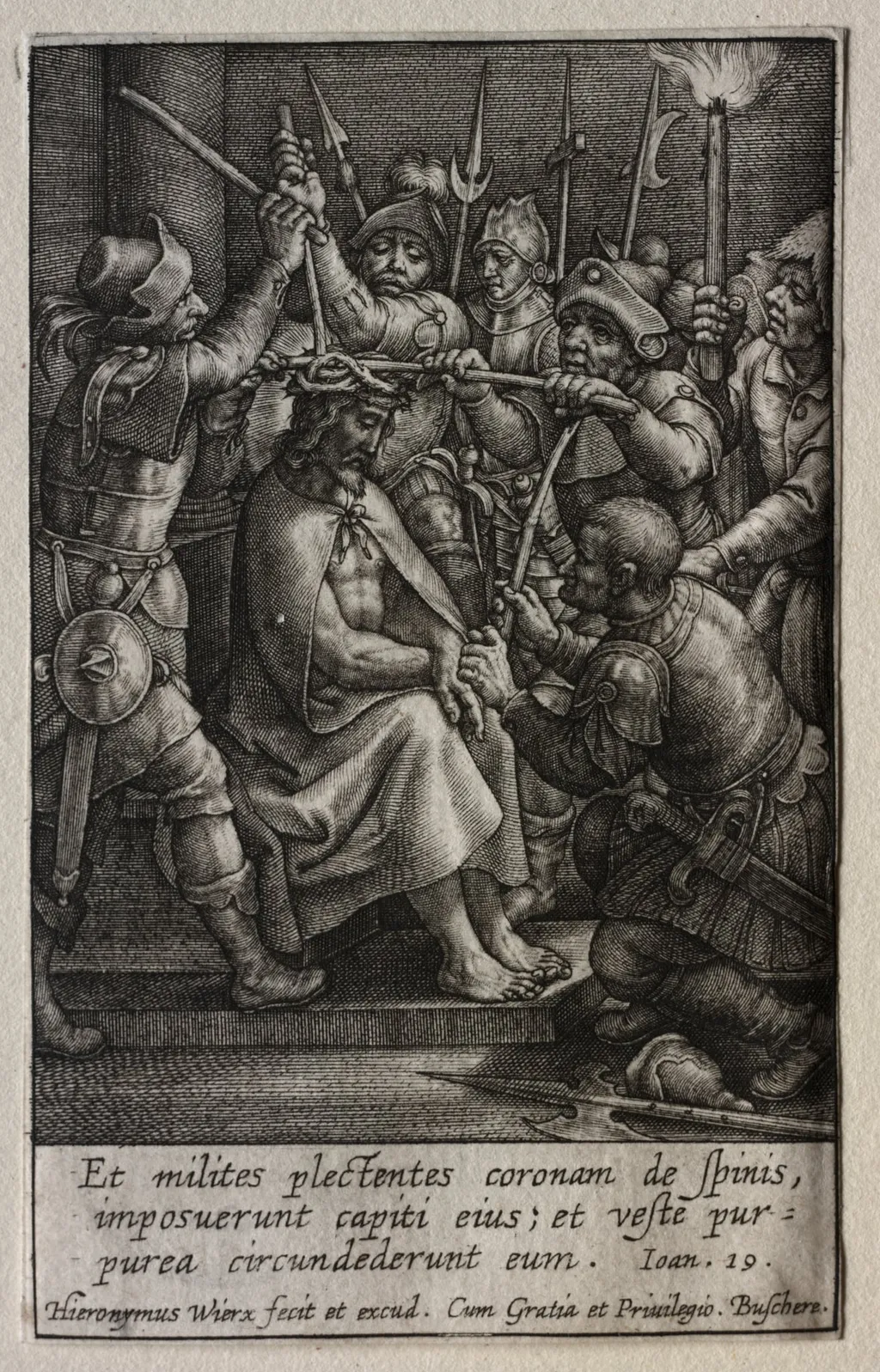
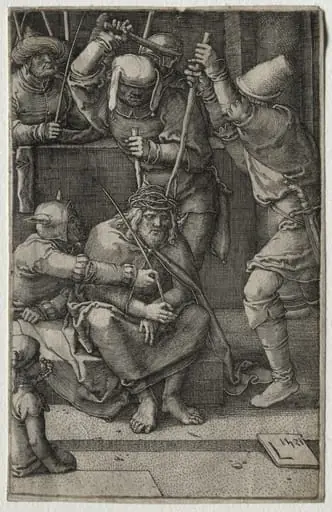
The Passion: The Crowning with Thorns is a print by the Baroque artist Hieronymus Wierix. It dates from 1619 and is held in the collection of the Cleveland Museum of Art.
About this work
Overview
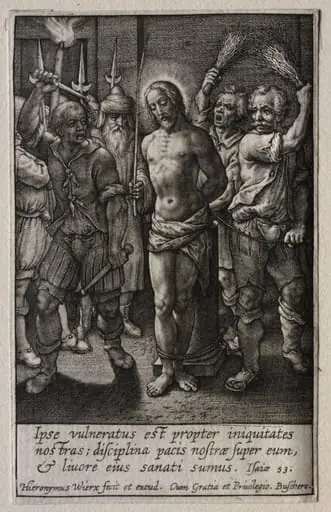
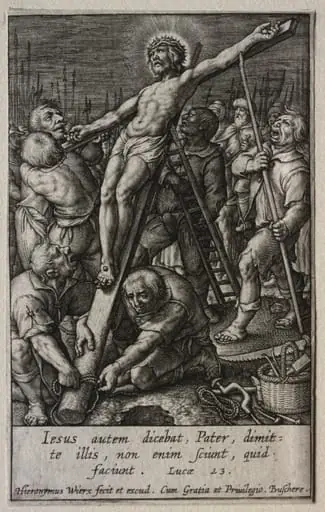
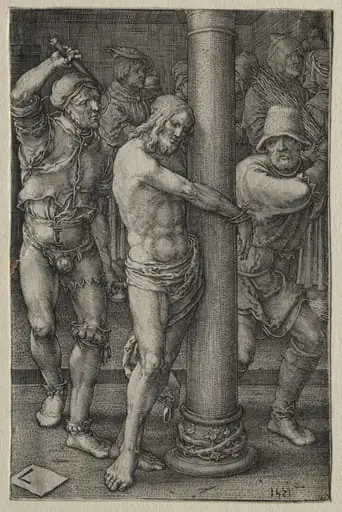
Created in 1619 by Hieronymus Wierix, this print is part of a series illustrating scenes from the Passion of Christ.
Created in 1619 by Hieronymus Wierix, this print is part of a series illustrating scenes from the Passion of Christ. Executed in engraving, it captures a moment of ritualized violence during Christ’s trial. The work is held in the collection of The Cleveland Museum of Art, where it is valued for its technical precision and emotional restraint within the Northern Renaissance tradition of religious printmaking.
Subject & Meaning
The scene depicts Christ, bound and seated, being forced to wear a crown of thorns by a group of Roman soldiers. His calm posture contrasts with the aggressive gestures of his tormentors, emphasizing his passive suffering. The act symbolizes mockery of his claimed kingship, a theological theme central to Passion narratives. The inclusion of a torch and spear subtly alludes to the coming crucifixion and the darkness that would follow.
Technique & Style
Wierix employed fine-line engraving to render intricate textures in fabric, metal, and skin. Delicate cross-hatching and controlled chiaroscuro define volume and mood, with light falling sharply on Christ’s face and robe while shadows engulf the soldiers’ faces. The composition is tightly framed, focusing attention on the central figure. The style reflects Northern European printmaking conventions, prioritizing detail over theatrical movement.
History & Provenance
The print was produced during the early 17th century, a period when religious imagery remained in demand despite Protestant iconoclasm in parts of Europe. Wierix, part of a prominent Flemish family of engravers, worked extensively for Catholic publishers. The Cleveland Museum of Art acquired the work in the 20th century, likely through a collector’s donation, as part of its growing holdings in early modern prints.
Context
This print emerged amid Counter-Reformation efforts to reinforce Catholic devotion through visual narratives. While Italian Baroque art favored dynamic movement, Northern artists like Wierix favored intimate, psychologically nuanced scenes suited to private contemplation. The work reflects the role of prints in disseminating biblical stories to lay audiences, especially where access to paintings was limited.
Legacy
Wierix’s prints were widely circulated and influenced later generations of religious illustrators. Though less celebrated than his contemporaries, his technical discipline preserved a tradition of detailed narrative engraving. Today, this piece remains a reference for scholars studying the intersection of faith, print culture, and visual storytelling in early modern Europe.
Artist & collection

Artist
Hieronymus Wierix (1553–1619) was a Flemish engraver, draughtsman and publisher. He is known for his reproductive engravings after the work of well-known local and foreign artists including Albrecht Dürer. Together with…