Artwork
Sir Francis Drake
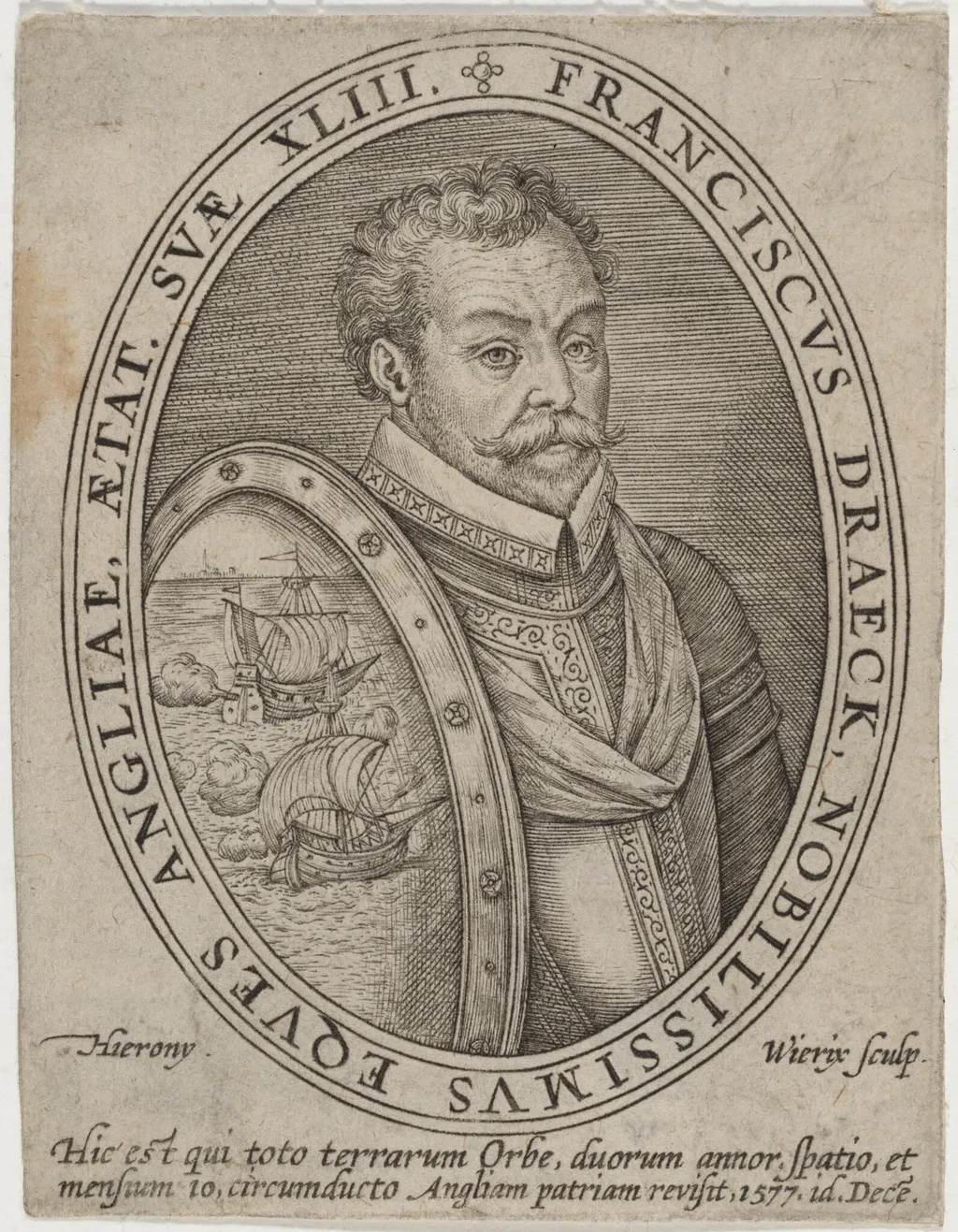
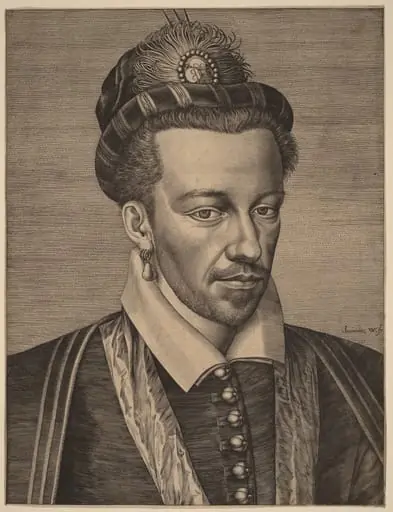
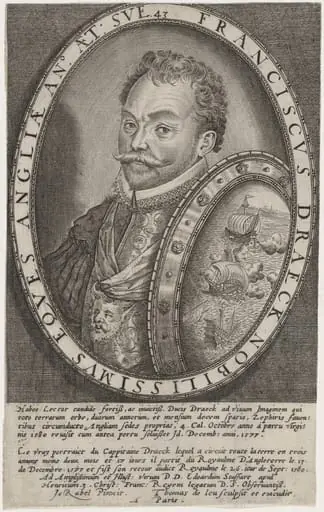
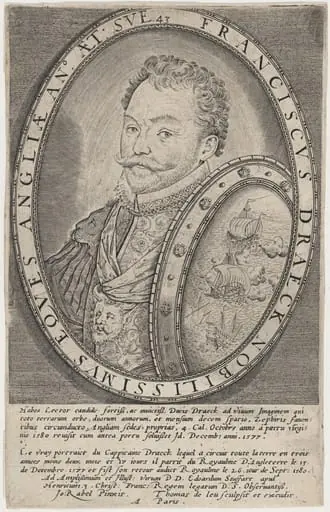
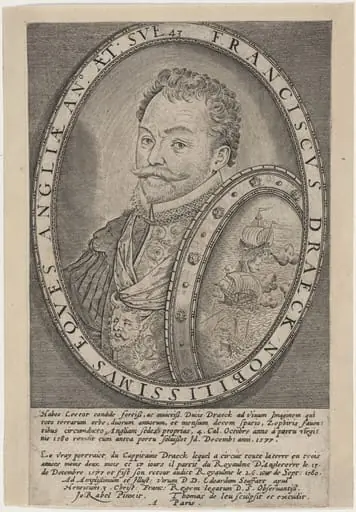
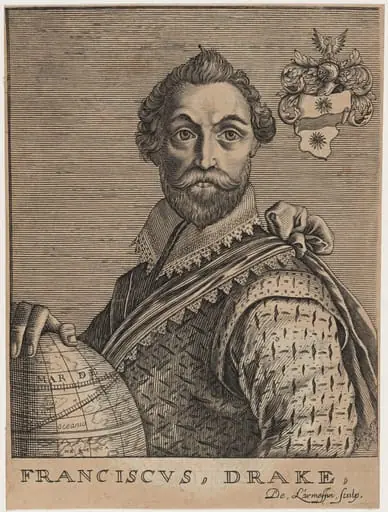
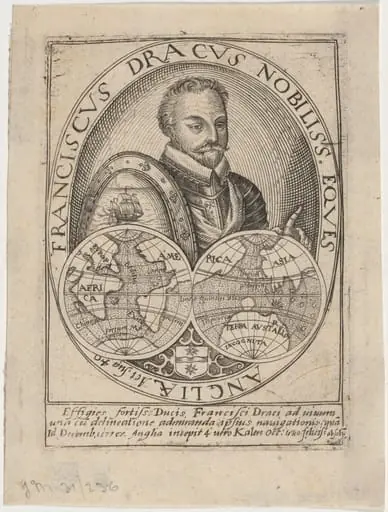
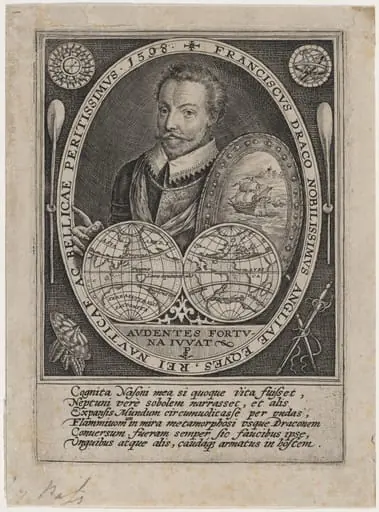
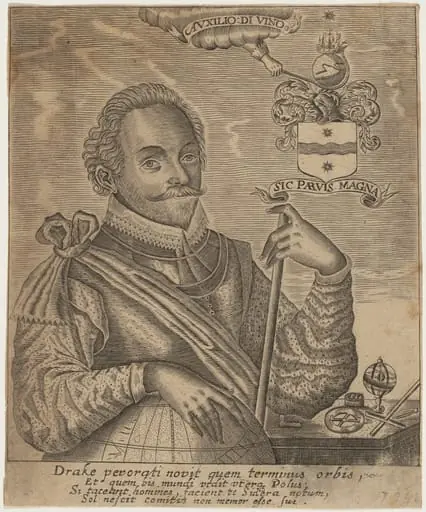
Sir Francis Drake is an ink print by the Renaissance artist Hieronymus Wierix. It dates from 1586 and is held in the collection of the National Gallery of Art.
About this work
Overview
Executed in black ink on paper, the portrait follows the reproductive print tradition common in late 16th-century Europe.
This 1586 engraving by Hieronymus Wierix portrays Sir Francis Drake, an English sea captain and privateer. Executed in black ink on paper, the portrait follows the reproductive print tradition common in late 16th-century Europe. Wierix, a Flemish artist from a family of printmakers, specialized in translating portraits into engraved form for wider circulation, often based on existing paintings or drawings.
Subject & Meaning
The portrait presents Drake in formal attire, emphasizing his status as a naval leader. His high collar, ruff, and buttoned coat reflect contemporary elite dress, while the ships in the background allude to his maritime exploits. The inscription above his head identifies him by title, reinforcing his public recognition. The image functions as a visual record of a figure central to England’s expanding naval influence during the Elizabethan era.
Technique & Style
Wierix employed etching and engraving techniques to render fine linear detail. The portrait’s sharp contours and controlled hatching define texture in fabric and facial features. The background ships are rendered with minimal strokes, suggesting movement without distraction. The composition is frontal and symmetrical, typical of portrait prints designed for clarity and reproducibility, prioritizing legibility over expressive flourish.
History & Provenance
Created in 1586, the engraving emerged during a period of heightened Anglo-Spanish tension. Drake’s raids on Spanish colonies and ships made him a celebrated figure in England and a notorious one in Spain. Wierix, based in Antwerp, likely produced the image for distribution across Europe, where public interest in explorers and military leaders was growing through printed media.
Context
In the late 1500s, engraved portraits served as tools of political and cultural communication. Wierix’s work reflects the role of print in shaping public perception of explorers and commanders. The image aligns with broader trends in Netherlandish printmaking, where families like the Wierixes reproduced and disseminated likenesses of notable figures, bridging regional audiences through shared visual culture.
Legacy
The engraving survives as an example of how portraiture was adapted for mass reproduction in the pre-photographic era. It contributed to the visual canon of Drake, influencing later depictions. While not artistically innovative, its historical value lies in its function as a documentary artifact, preserving the image of a key figure in early modern maritime history.
Artist & collection

Artist
Hieronymus Wierix (1553–1619) was a Flemish engraver, draughtsman and publisher. He is known for his reproductive engravings after the work of well-known local and foreign artists including Albrecht Dürer. Together with…